


Property investment, in shares
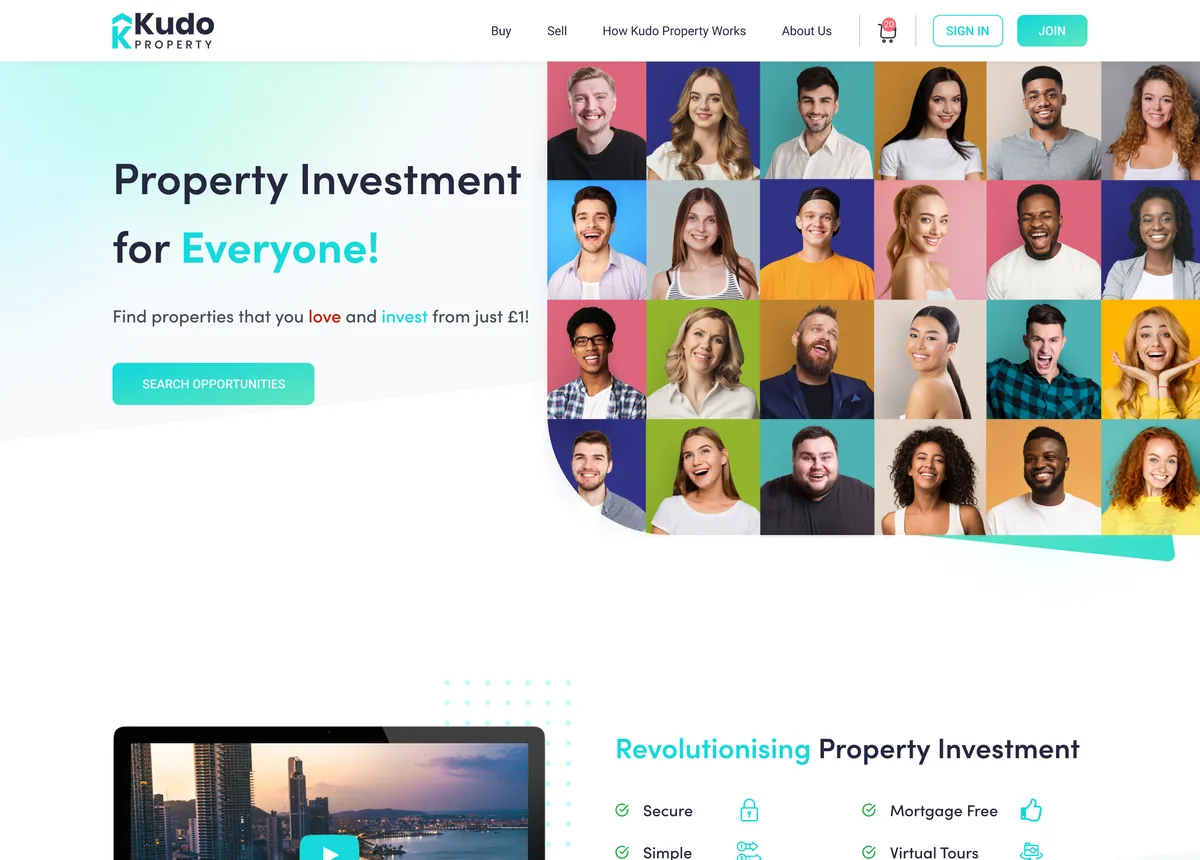
A platform that turns a house into shares anyone can buy from a pound. Investors browse listed properties, buy in on the primary market or a resale exchange, track dividends and portfolio value, and sell their shares on - all without a mortgage or a whole deposit.
Model
- Fractional shares
- From GBP 1
Two markets
- IPO primary
- Resale exchange
Who uses it
- Investors
- Sellers
- Admin
Investor tools
- Dividends
- Portfolio
- Funds
How do you let anyone own a slice of a property?
A whole property needs a deposit, a mortgage and months of paperwork. Kudo turns each listed home into shares, so an investor can own part of one from a single pound and treat property like any other holding.
A share register and a marketplace in one
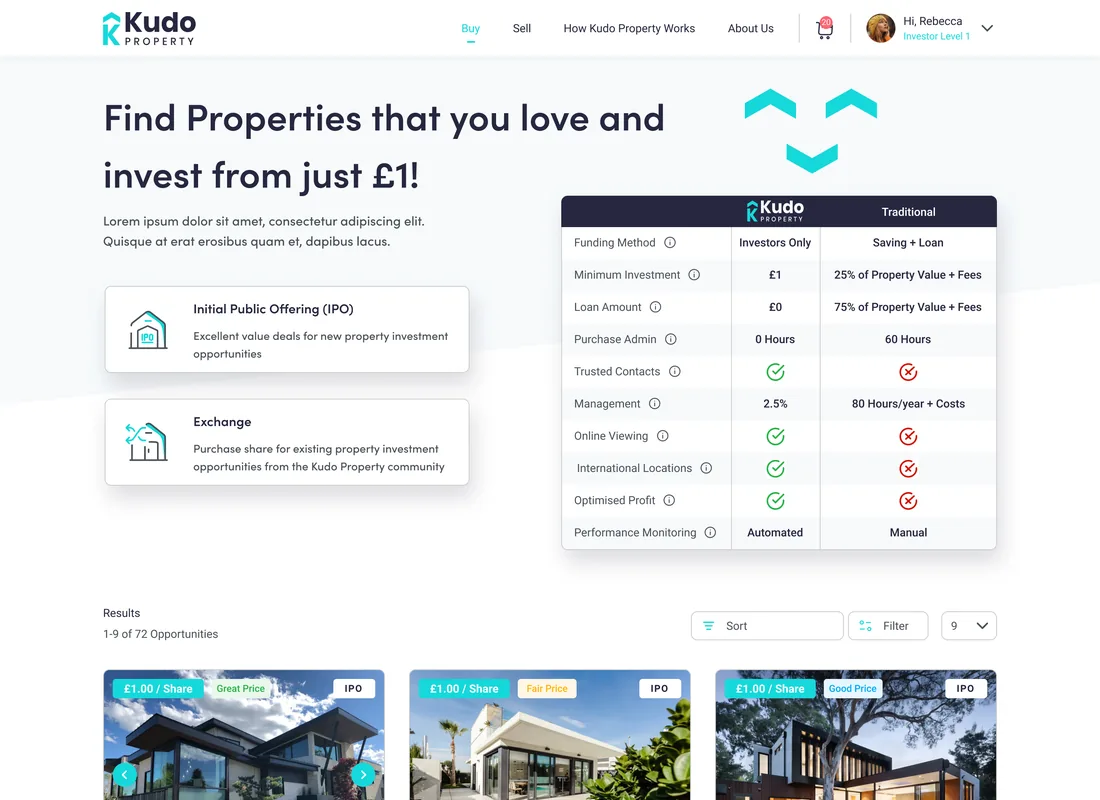
Every property is offered as shares an investor can buy on the primary market, hold for dividends, watch grow in value, and later sell to other investors on the exchange. The platform runs both the offering and the resale, plus the account that ties an investor's holdings together.
Why does fractional property need more than a listings page?
Three things make it harder than a marketplace. A fractional platform has to hold all three: a low enough entry to be for everyone, two different markets for the same asset, and an investor account that makes property legible as a portfolio.
| Investing in property | Buying a whole property | On Kudo |
|---|---|---|
| Getting in | A deposit, a mortgage and months of process | Shares from a single pound, in minutes |
| Diversifying | One property is one big bet | Small stakes across several listed homes |
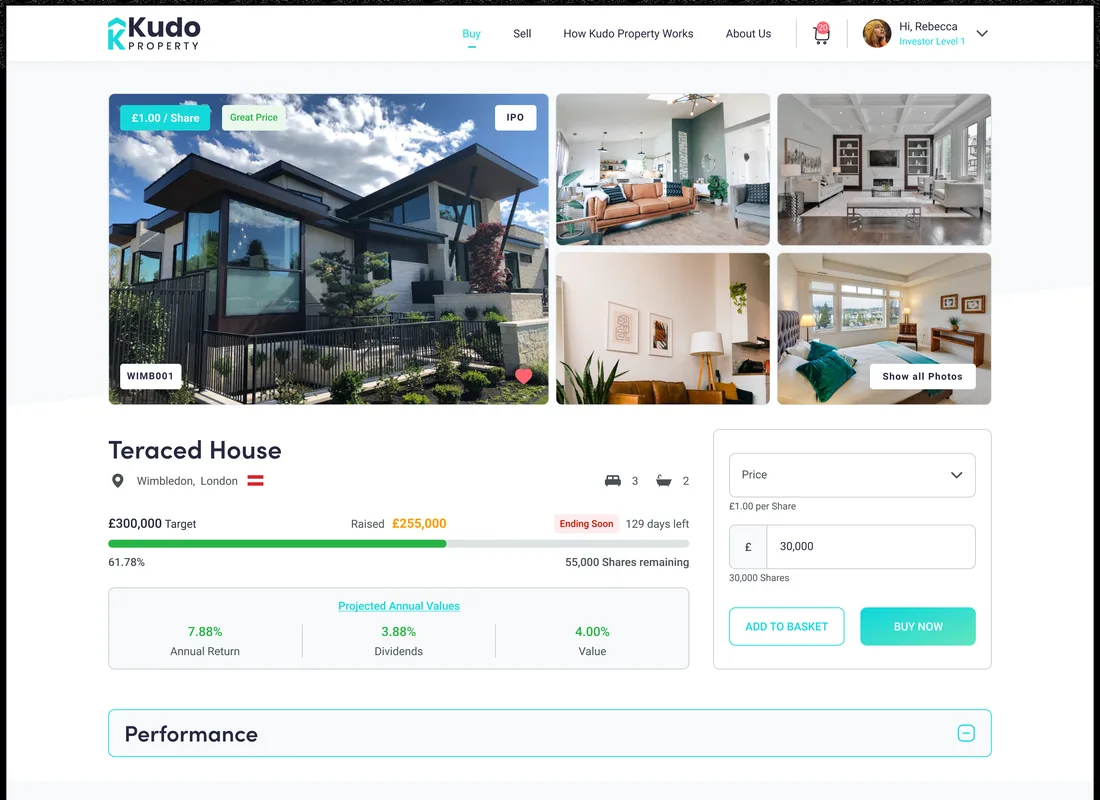
| The primary market | Sealed bids and estate agents | An open IPO with a funding target and shares remaining |
| Selling | List the whole property and wait | Sell your shares on the resale exchange |
| Income | Rent, minus management and voids | Dividends tracked automatically per holding |
| Seeing your position | A valuation once a year | Live portfolio value, total change and projected growth |
Buying, selling and managing a holding
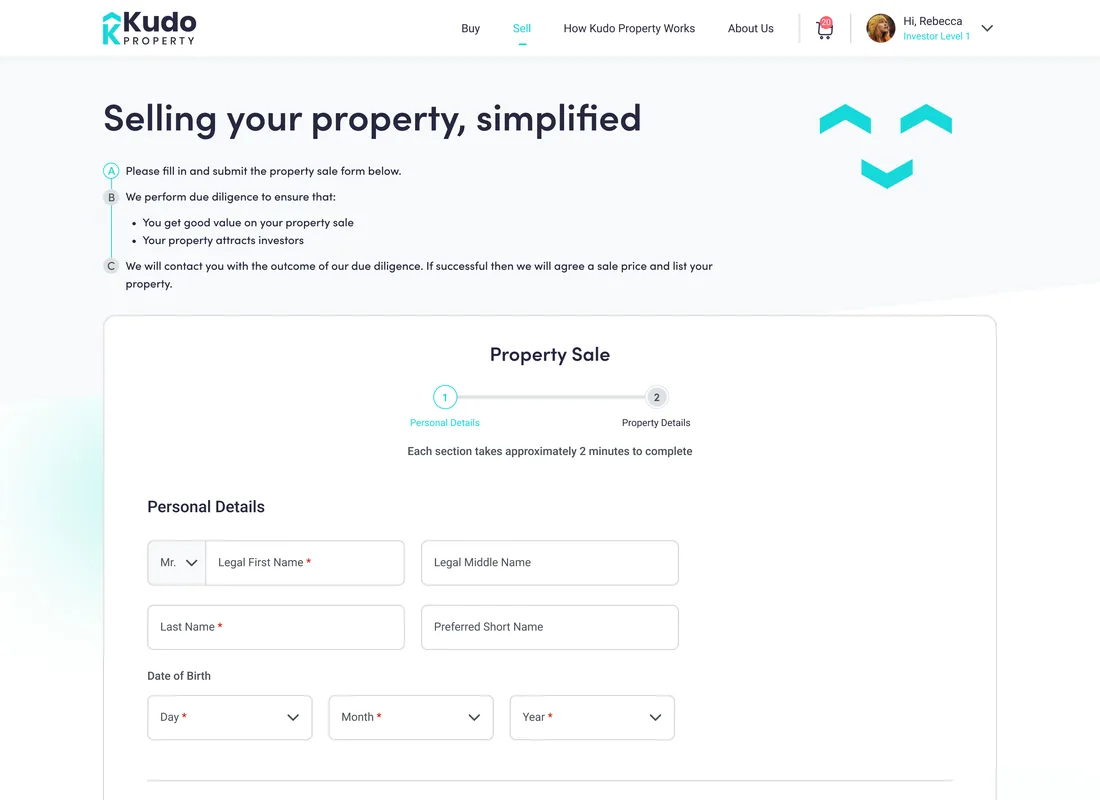
The core flows an investor moves through - from an IPO purchase to an exchange trade, a property sale, funds and a full transaction history.
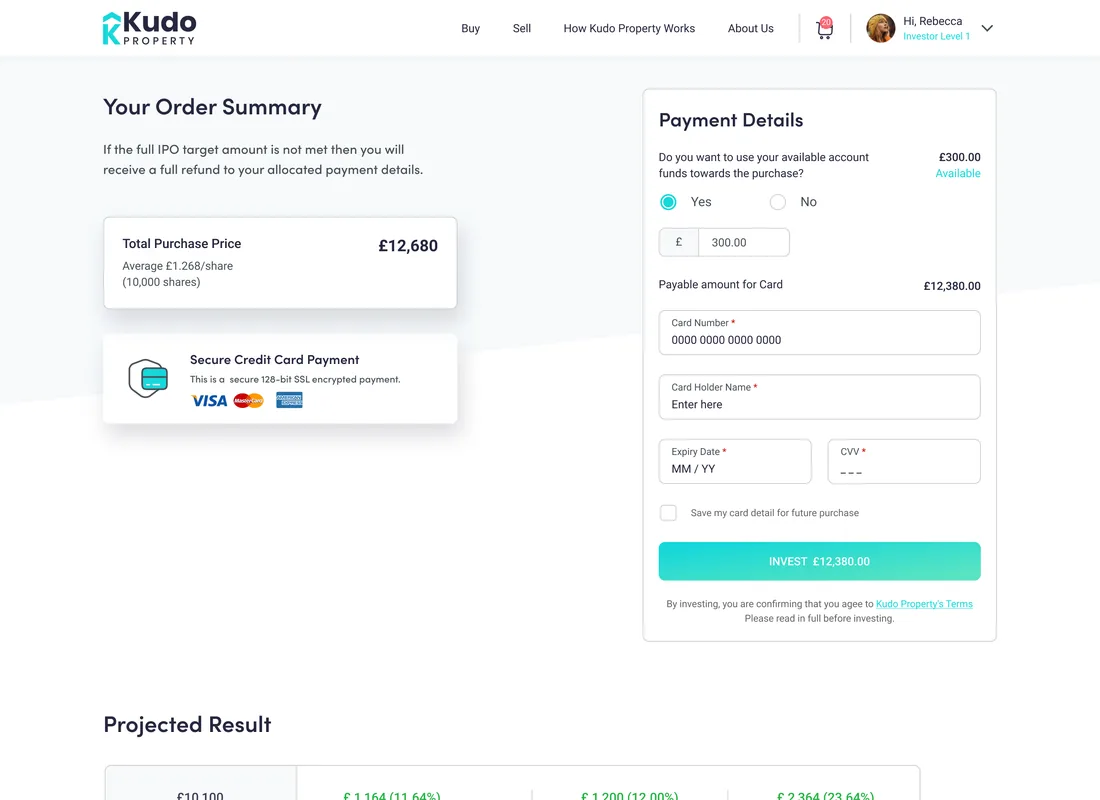
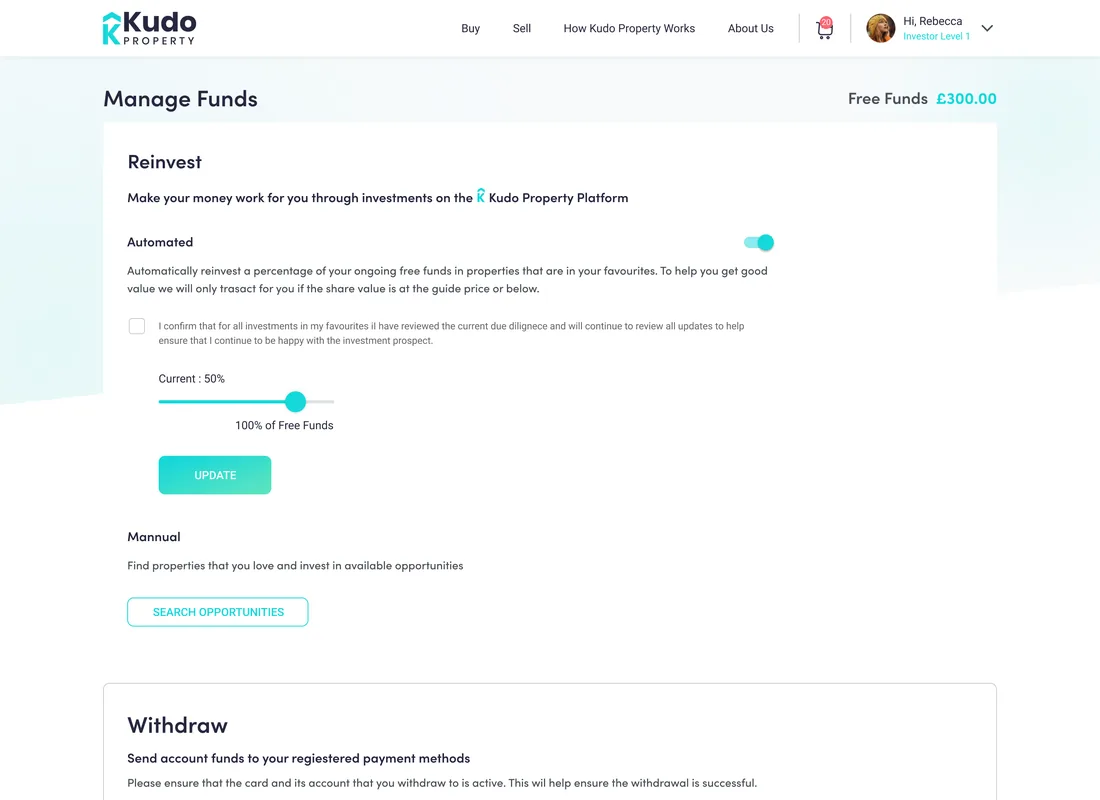
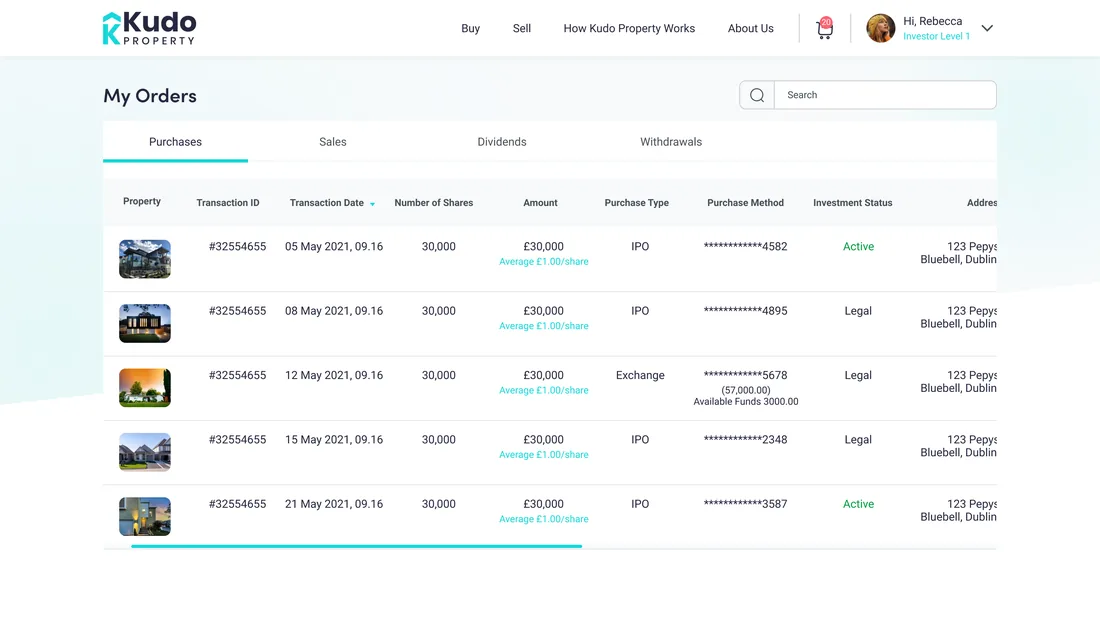
An investor's whole position on one screen
The account home turns a set of property shares into a portfolio: what it is worth now, the figures behind it, what it could become, and every holding underneath.
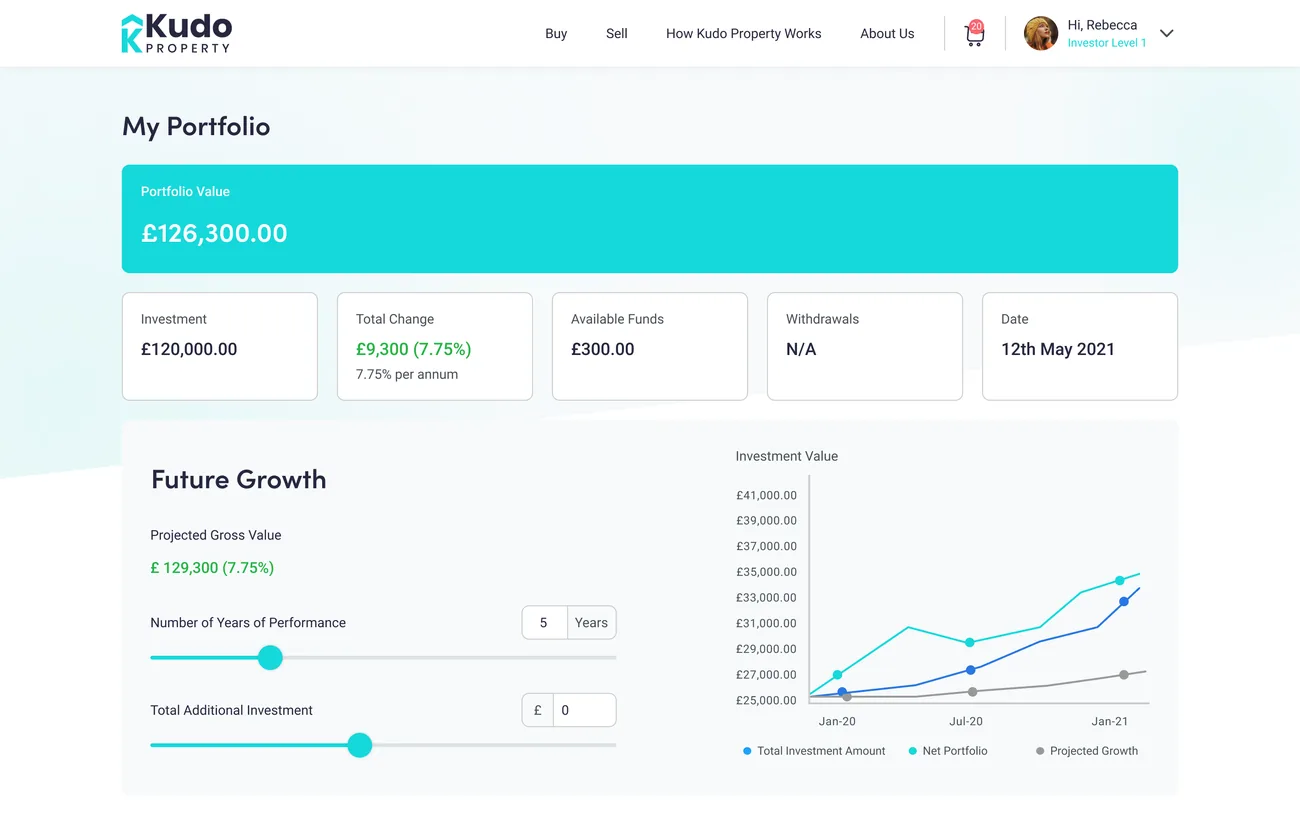
One headline number for the whole position, so an investor knows where they stand before any detail.
Total invested, available funds and withdrawals sit beside the headline as the numbers that make it up.
Total change shows the gain in both pounds and a percentage per annum, so performance is legible at a glance.
Sliders for years held and extra investment project the portfolio forward, turning a static balance into a plan.
A chart plots total invested, net portfolio and projected growth over time, so the model is visible, not just a number.
What does any fractional-investment platform need to get right?
Six things separate a fractional platform investors trust from a crowdfunding page. They came out of building this one and hold for any asset broken into shares.
- A genuinely low entry. If 'for everyone' is the promise, the minimum has to be pounds not thousands, and every flow has to make a tiny stake feel first-class.
- Two markets, one asset. A primary offering and a resale exchange behave differently - a raise versus a trade - and both have to run against the same share register.
- Liquidity as a feature. Investors need to sell, so the exchange is not an afterthought; without it a share is just a locked-in bet.
- Dividends tracked automatically. Income per holding is the reason to hold, so it has to be computed and shown, never reconciled by hand.
- Portfolio, not just transactions. Value, change and projected growth turn a list of purchases into a position an investor can reason about.
- A wallet the flows settle against. Buying, selling and dividends all move money, so a real funds balance underpins every action.
Building a fractional property investment platform
What founders and investors ask us first.
Ask us yoursWhat is fractional property investment?
It is owning a share of a property rather than the whole thing. A property is divided into shares that many investors buy, so someone can gain exposure to real estate - and the dividends and value changes that come with it - from a small amount rather than a full deposit and mortgage. Kudo runs the register of those shares and the markets to trade them.
What is the difference between the IPO and the exchange?
They are the two markets for the same shares. The IPO is the primary market: a new property is floated with a funding target and investors buy in until the raise completes. The exchange is the secondary market: once shares exist, investors buy and sell them from each other. A fractional platform needs both - one to create the shares, one to keep them liquid.
How long does it take to build a platform like this?
A fractional-investment platform is a several-month build rather than a few weeks, because it is really three things at once - a share register, two marketplaces and an investor wallet - that all have to agree. What moves the date most is the regulatory and payments scope and how the primary and secondary markets settle against the same holdings.
How are dividends and returns handled?
Each holding accrues dividends that the platform tracks automatically and shows against the property on the account home, alongside total change in pounds and as a percentage. The point is that income and performance are computed for the investor rather than reconciled by hand, so property reads like any other managed investment.
Does it handle the money as well as the shares?
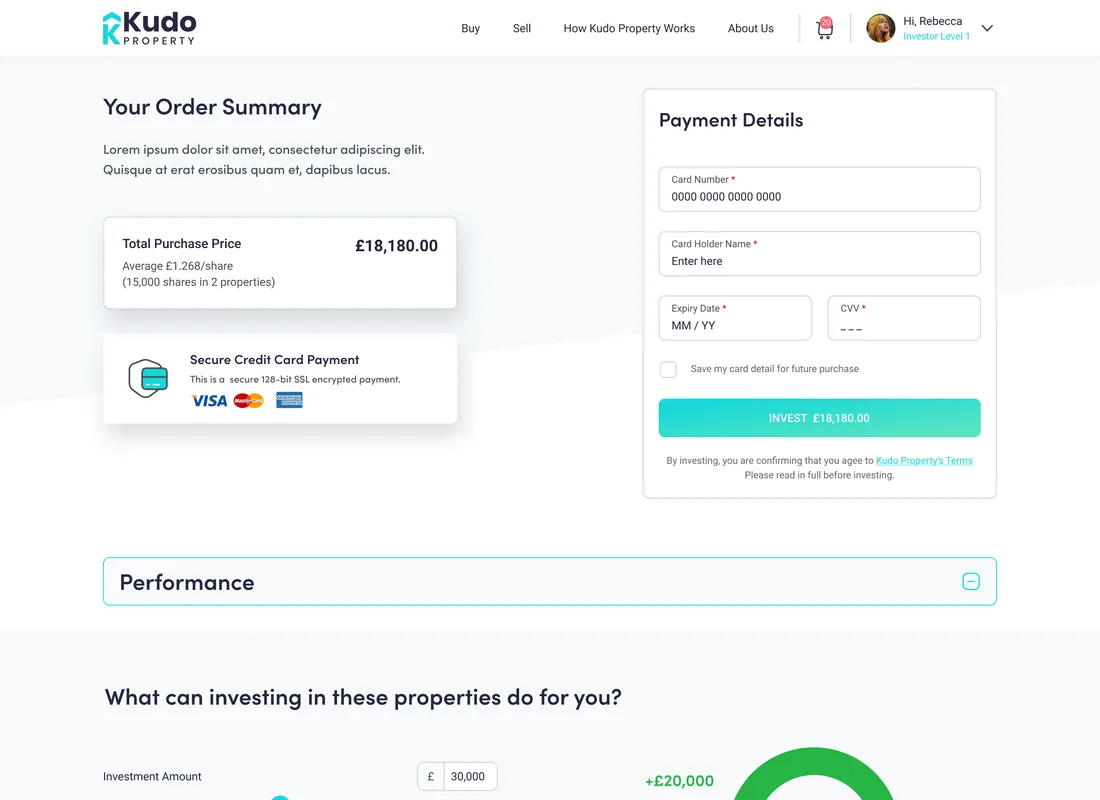
Yes. A manage-funds wallet holds an investor's available balance, and every purchase, sale, dividend and withdrawal settles against it and lands in a transactions history. Handling the cash and the shares in one place is what lets the buy, sell and dividend flows stay consistent.
Related work
Building an investment platform?
Tell us how your business actually works and we will tell you honestly what it takes to build. See more of our work or what we do.
Book a 15-minute call