


Something you'll lovetonite.
The online store for a Long Island wine and spirits shop: hundreds of curated bottles filtered by style and grape, weekly specials with real tasting notes, and same-day delivery across nearby towns - ordered on the web, through the app, or by phone, with a real store behind it.
A curated shop, not a wall of bottles
Hundreds of wines and spirits are made navigable by style and grape, and the weekly specials carry genuine tasting notes rather than marketing filler - so a shopper is guided the way the counter would guide them. Behind it sits a real store with a delivery zone, opening hours and phone ordering.
A big catalog, made browsable
Hundreds of bottles are filtered by style - red, white, rosé, sparkling - and by grape, so a shopper narrows from everything to a shortlist in a couple of clicks.
Curation carries the shop online
Weekly specials come with real tasting notes and expert picks, doing the guiding a knowledgeable shopkeeper would - the thing a plain product grid throws away.
A real store, not just a website
Store hours, a delivery zone across nearby towns, and web, app or phone ordering keep the online shop tied to the physical one it belongs to.
Why is selling wine online more than a product grid?
A generic catalog assumes the shopper already knows what they want and can buy from anywhere. Alcohol retail is the opposite - most people want guiding, the sale is tied to a local licence and delivery zone, and the best shops are as much about advice as inventory.
Most shoppers don't arrive knowing the bottle. Answer → curated picks and real tasting notes that replace the shopkeeper's advice a bare grid throws away.
Alcohol retail is bound to a place - a licence, a delivery zone, store hours. Answer → the delivery zone and store hours stay front and centre, not buried in a footer.
A catalog of hundreds of wines plus a full spirits range needs more than one way in. Answer → filter by style and by grape, so a shopper narrows fast.
wine styles to filter by - red, white, rosé, sparkling, sake & vermouth - before a shopper ever reaches the grape.
What did the Wine & Spirits Tonite store have to get right?
A bottle shop's whole value is the person behind the counter who knows what you'll like. Carrying that online, without losing it, shaped every screen.
A curated shop, made to order
- Make a big catalog browsable. Filter hundreds of bottles by style and by grape in a couple of clicks.
- Carry the shopkeeper's advice online. Weekly specials with real tasting notes and expert picks.
- Keep the real shop present. Store hours, a delivery zone and a phone number tied to Woodbury, Long Island.
- Meet shoppers on their channel. Web, mobile app or phone ordering, with same-day local delivery.
Why it was hard
- Most shoppers don't arrive knowing the bottle. A bare grid throws away the guidance a real shopkeeper would give.
- Alcohol retail is bound to a place. A licence, a delivery zone and store hours tie the shop to Woodbury, not everywhere.
- The catalog needs more than one door. Hundreds of wines plus a full spirits range is too much for a single search box.
- Advice is the product, not just inventory. The best local shops sell curation as much as bottles, and that's hard to carry into a grid.
What does the Wine & Spirits Tonite store actually offer?
Two real screens carry most of the site's weight - the catalog home and the store itself. Here's what each is doing.
Wines by style and by grape
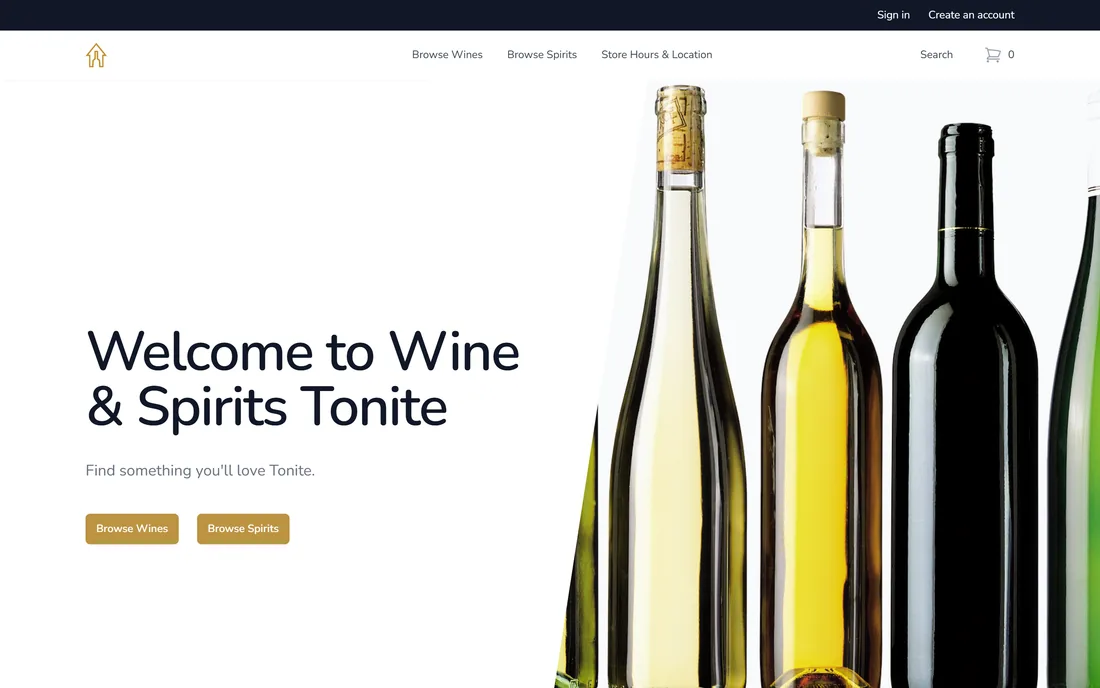
Catalog · HomeThe catalog's backbone: wines organised by style - red, white, rosé, sparkling, sake & vermouth - then a second axis by grape, for shoppers who buy by varietal.
Curation carries the shop online
Catalog · HomeWeekly specials and expert picks sit up front with genuine tasting notes, doing the work a knowledgeable shopkeeper would do in person.
A real store, not just a website
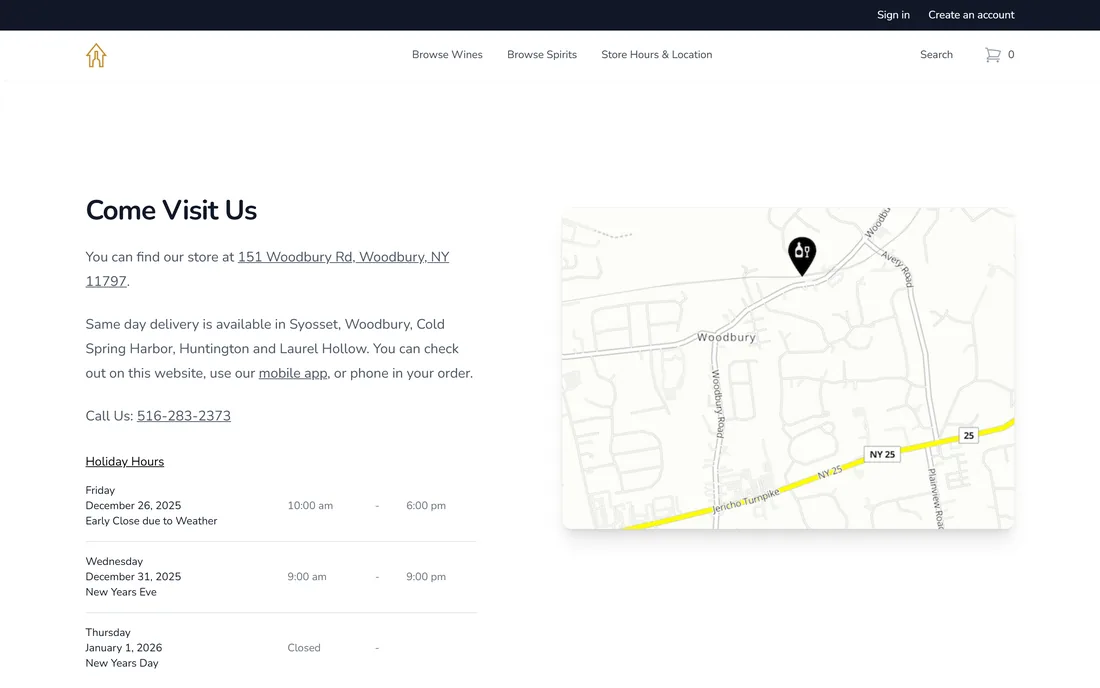
Store · Hours & locationStore hours and a delivery zone across nearby Long Island towns keep the online shop tied to the physical one behind it.
Meet the customer on their channel
Store · OrderingBuying happens on the customer's terms: order on the website, through the mobile app, or by phone, with same-day delivery across the local area.
What does the Wine & Spirits Tonite site look like in use?
Two screens carry the shop online - the catalog home shoppers land on, and the store itself behind it.
Wines organised by style and by grape, with weekly specials and tasting notes up front.
Hours, a delivery zone across nearby towns, and the real Woodbury shop behind the checkout.
The look, and why
A warm gold carries the brand against a warm mist background - the palette a bottle label would wear, not a generic storefront blue.
What does an online bottle shop have to get right?
These came out of building the Wine & Spirits Tonite store and hold for any curated, locally-rooted retailer - they separate a shop people come back to from a catalog they scroll once.
Curate, don't just list.
Most shoppers want guiding, so specials, tasting notes and picks have to carry the shopkeeper's advice that a bare product grid throws away.
Give the catalog more than one door.
Filtering by both style and grape lets very different shoppers narrow a big range fast, instead of scrolling endlessly.
Respect that the sale is local.
A licence, a delivery zone and store hours tie alcohol retail to a place, and the site has to make that boundary clear, not hide it.
Meet the customer on their channel.
Web, app and phone ordering plus same-day local delivery matter more than another feature, because convenience is what wins the repeat order.
Keep the physical shop present.
Hours, location and a real phone number reassure a buyer there is a genuine store behind the checkout.
Make the deal easy to find.
Weekly specials belong up front, because a good price on the right bottle is often what turns a browser into a buyer.
Building an online store for a local retailer
How do you build an online store for wine, spirits or other curated products?
How much does an ecommerce store cost to build?
Can the store handle local delivery zones and store hours?
Do you build a mobile app as well as the website?
How do you make a large catalog feel curated?
Taking a local shop online?
Tell us how your shop actually runs and we'll tell you honestly what it takes to build - the catalog, the curation, the delivery zone. No deck, no pitch.