


A whole aquarium, online
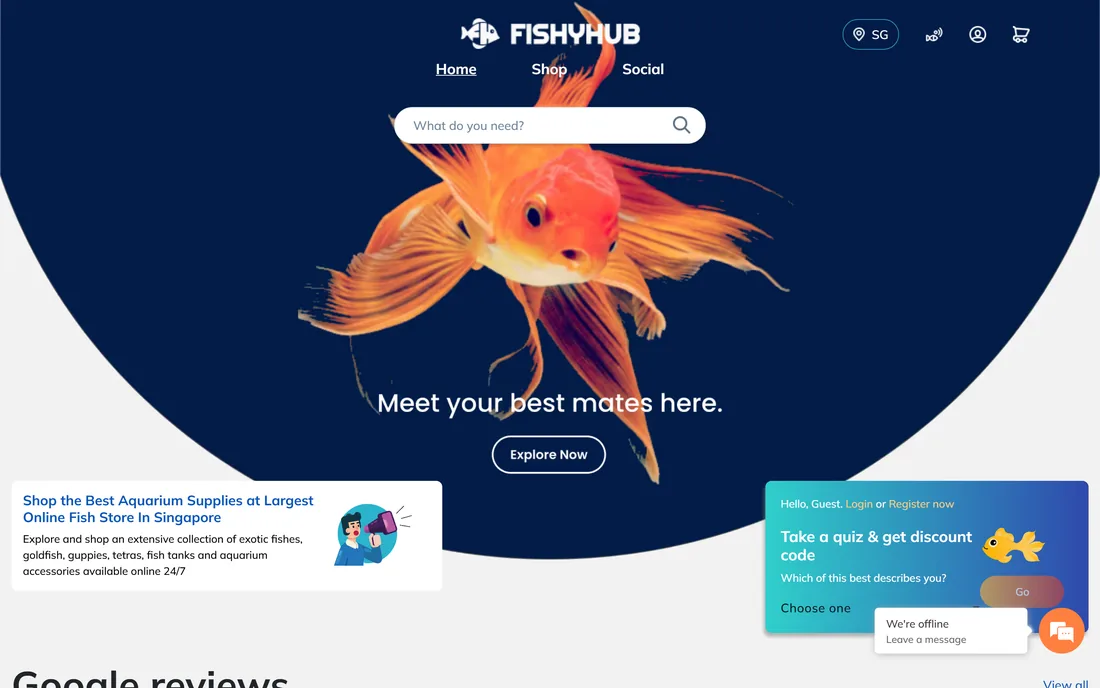
An online aquarium marketplace for Singapore that brings live fish, aquatic plants, tanks and equipment from 500+ merchants into one storefront - wrapped in a fishkeeping quiz, a community feed and a blog, so buying for a tank is discovery as much as checkout.
Category
- Aquarium marketplace
- Singapore, online 24/7
Catalog
- 15 shop categories
- 9 fish families
Marketplace
- 500+ merchants
- Shopper / seller / community
Design scope
- UX + UI design
- Storefront + marketplace + community
What is FishyHub built to do?
Fishkeeping is not one purchase - it is livestock, plants, a tank, filtration, food and know-how, often from very different sellers. FishyHub gathers all of it into a single aquarium marketplace for Singapore, so a hobbyist can stock a whole tank without hopping between shops.
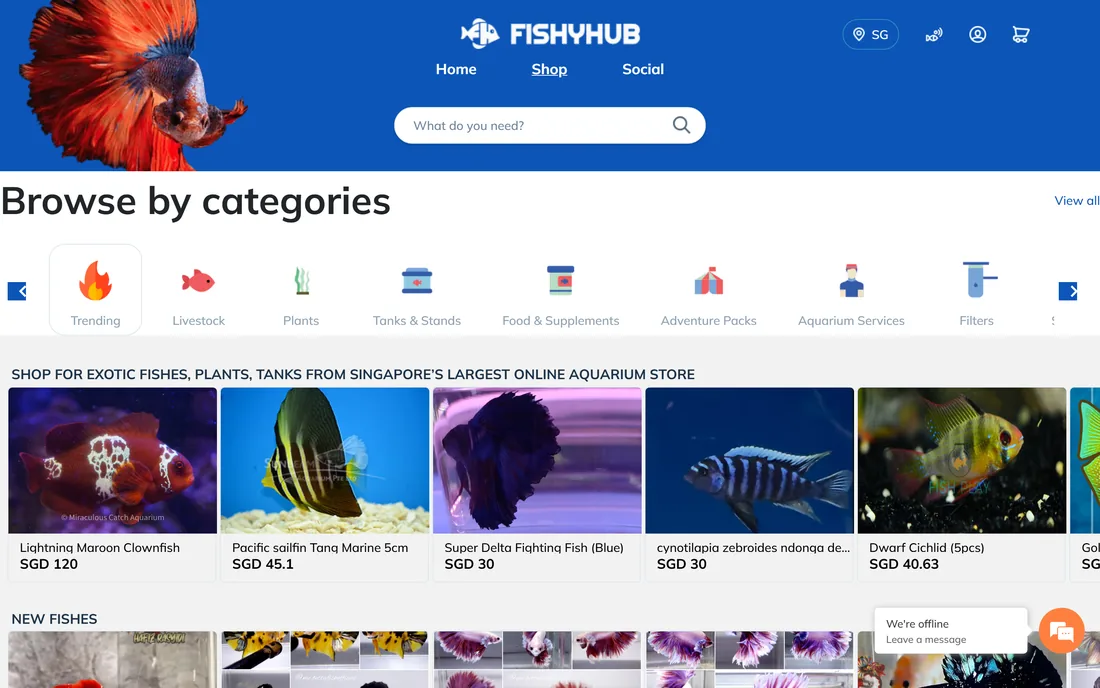
A storefront, a marketplace and a community in one
Shoppers discover and buy across a deep catalog; hundreds of merchants run their own storefronts on the platform; and a community feed, blog and reviews turn a transaction into a hobby. Each side gets its own surface on top of one shared catalog of livestock, plants, tanks and gear.
Why can't a fish store just be a normal web shop?
A generic cart assumes a single seller, a boxed product and a shopper who already knows what they want. An aquarium breaks all three: the stock is live, it comes from many small sellers, and most buyers need guidance before they can choose. Holding that in one clean storefront was the core problem.
| Buying for an aquarium | A single online pet shop | On FishyHub |
|---|---|---|
| Range of livestock | One shop's stock | 500+ merchants in one marketplace |
| Live fish handling | Generic parcel shipping | Aquarium-specific delivery and services |
| Knowing what to buy | A bare product grid | A fishkeeping quiz that matches you |
| Learning the hobby | No guidance | Community feed, blog and reviews |
| Finding a species | Basic search | 15 categories and 9 fish families |
| Starting from scratch | Buy every part separately | Adventure Packs - ready-made tank sets |
What does the storefront actually let you do?
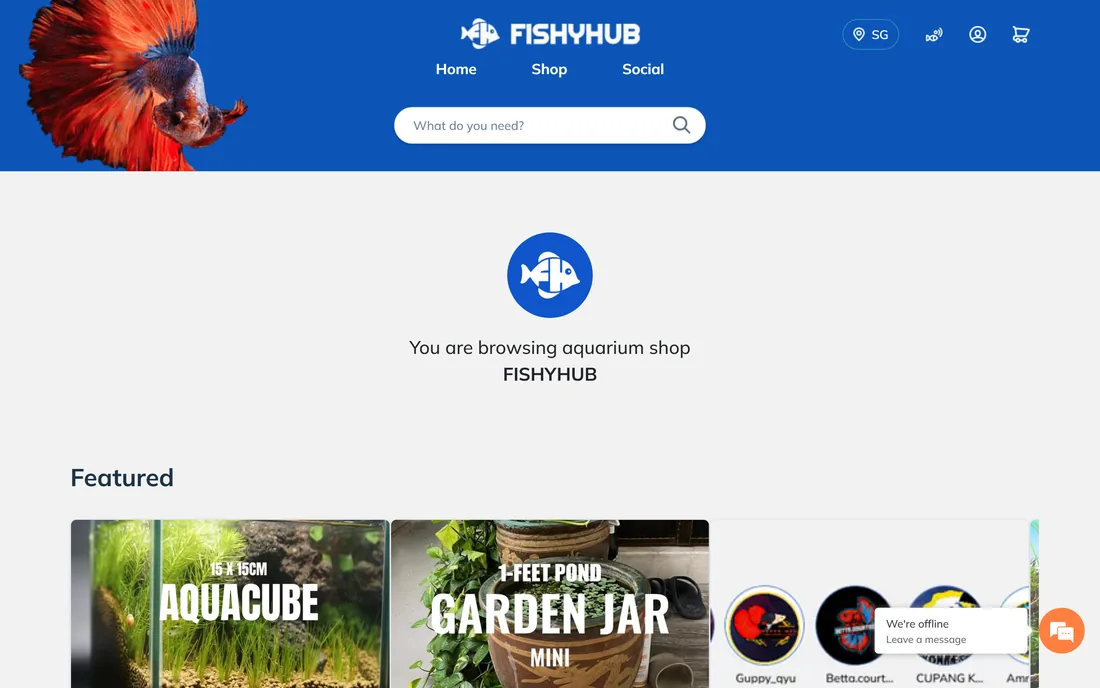
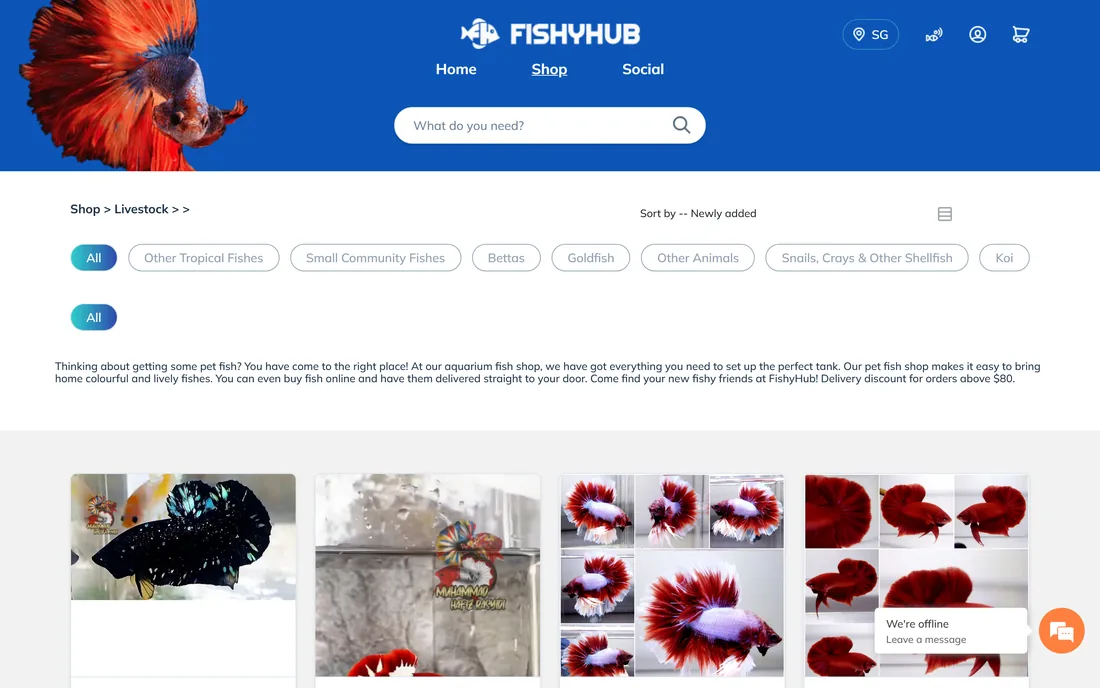
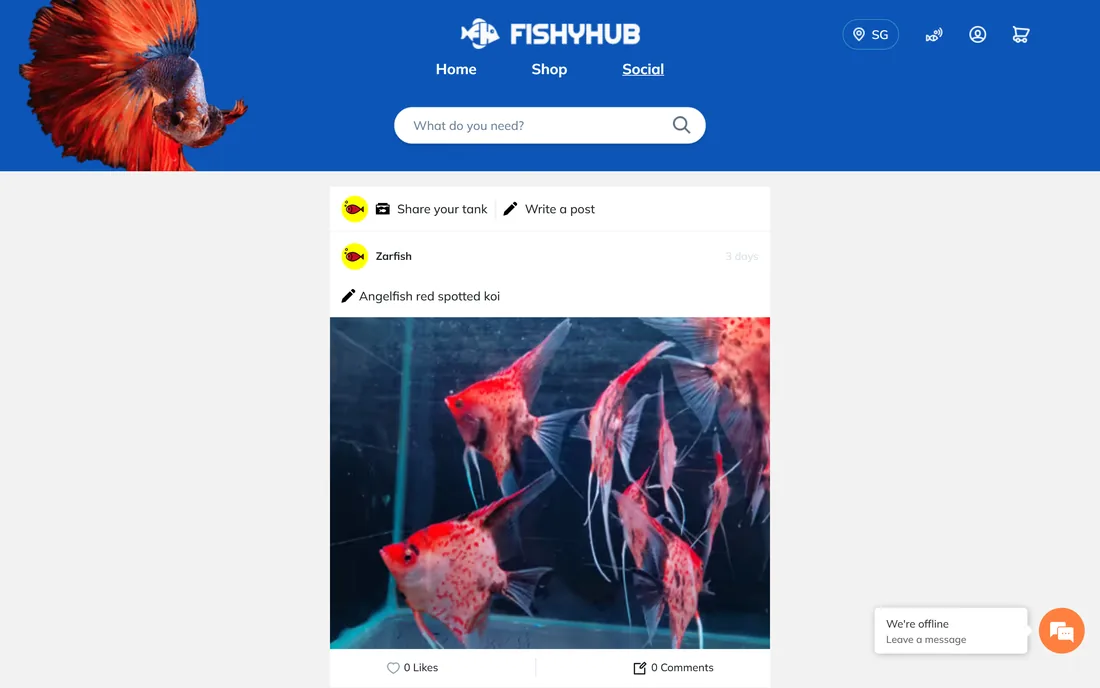
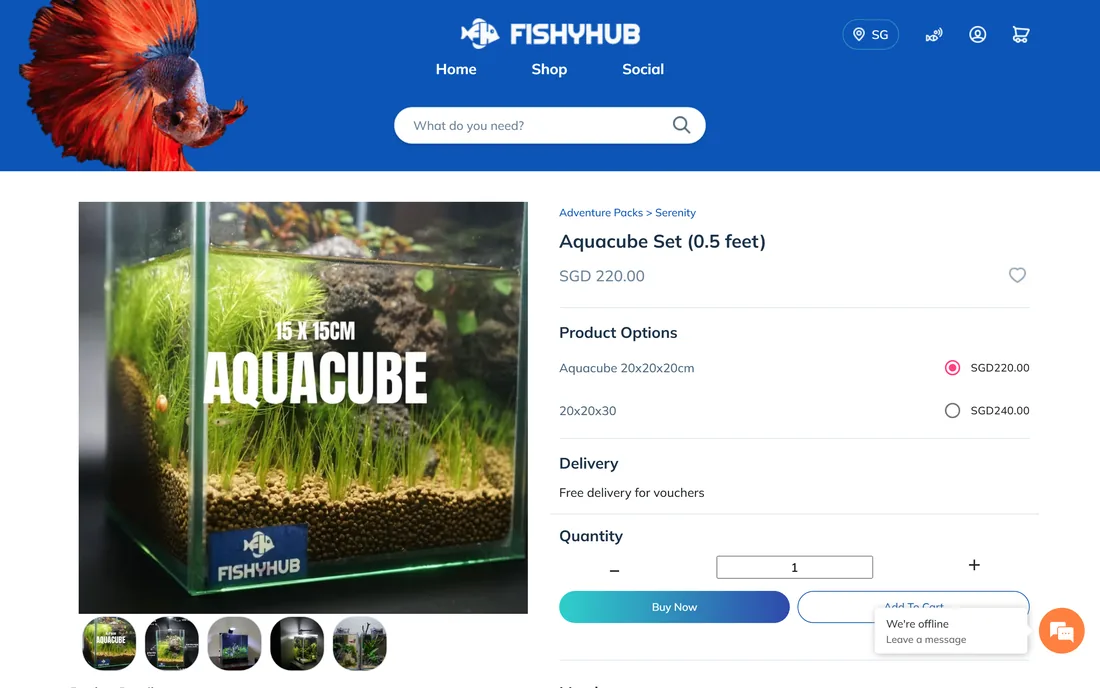
Every screen here is drawn from the live platform - the discovery home, the shop, a category, a product, a merchant storefront and the community feed that keeps the hobby social.
Livestock
9 fish familiesThe heart of the catalog - live fish organised into families so a keeper filters straight to the species and size that suits their tank.
- Bettas
- Guppies
- Goldfish
- Discus
- Angelfish
- Shellfish & shrimp
Aquascaping & plants
4 plant zonesAquatic plants sorted by where they sit in the tank, so an aquascape comes together layer by layer.
- Background
- Midground
- Foreground
- Floating
Tanks, equipment & care
The hardwareEverything that keeps a tank running, from the glass to the water chemistry.
- Tanks & stands
- Filters & pumps
- Lighting
- Substrate & treatment
Adventure Packs
Ready-made setsCurated tank sets that bundle a complete setup - so a beginner can start a whole aquarium in one purchase instead of sourcing every part.
- Serenity
- Zen
- Jungle
- Marine
- Wonderland
Community & content
The hobby layerThe reasons a shopper returns between purchases.
- Social feed
- Fishkeeping blog
- Google reviews
- Fishkeeper quiz
Merchants & services
500+ sellersThe supply side - hundreds of storefronts plus aquarium services listed alongside stock.
- Merchant storefronts
- Featured listings
- Aquarium services
Who is FishyHub built for?
A marketplace only works if every side has a surface fitted to what it actually does. FishyHub carries three - the shopper who is stocking a tank, the merchant running a storefront, and the community that keeps the hobby alive - on top of one shared catalog.
- Browse 15 categories and 9 fish families
- Match to livestock with the fishkeeping quiz
- Buy live fish, plants, tanks and gear in one cart
- Start fast with a ready-made Adventure Pack
- Follow the community feed, blog and reviews
What does a live-goods marketplace have to get right?
These came out of building FishyHub and hold well beyond aquariums - they separate a marketplace people will stock a whole hobby on from a catalog they only skim.
- Make many sellers feel like one shop. Hundreds of merchant storefronts have to browse as a single, coherent marketplace, or the shopper gives up and goes elsewhere.
- Model the goods honestly. Live fish and plants are not boxed products - handling, delivery and services all have to be part of the platform, not an afterthought.
- Guide the undecided. A quiz, deep categories and content do the choosing help that a raw product grid never can, especially for a hobby with a learning curve.
- Bundle the beginner path. Ready-made sets let a newcomer start in one purchase instead of assembling a tank part by part and getting it wrong.
- Give sellers a real storefront. Merchants stay when they have a branded presence and featured placement, not just a row in someone else's list.
- Wrap commerce in community. A feed, a blog and reviews turn a one-off checkout into a reason to keep coming back.
Building an online marketplace like FishyHub
What founders ask us about a multi-vendor commerce and community platform.
Ask us yoursHow do you build a multi-vendor marketplace?
The core shift from a single-store shop is that stock comes from many sellers, so the platform is designed around merchant storefronts, a shared catalog and per-seller ordering from day one. We model the seller, the shopper and the admin as separate surfaces over one product catalog, then layer discovery - search, categories and, in FishyHub's case, a matching quiz - on top. Getting hundreds of storefronts to browse as one coherent marketplace is the real design work.
How much does an ecommerce marketplace cost to build?
It depends on scope, and no honest number comes from a feature list alone. The heaviest drivers are the number of seller tools, whether payments and payouts are in scope, and how much discovery and community you build around the catalog. Shanti Infosoft scopes it on a short call and returns a fixed quote so you can compare a real figure.
Can a marketplace sell live or perishable goods?
Yes, and FishyHub is a good example - it sells live fish, shrimp and plants. The difference from boxed goods is in the handling: delivery, aquarium services and seller responsibilities have to be modelled explicitly rather than assumed. We scope that logistics layer carefully, because it is where a live-goods marketplace succeeds or fails.
How do you keep shoppers coming back to a store?
Commerce alone rarely builds a habit, so FishyHub wraps the shop in a community feed, a blog and reviews, plus a quiz that helps newcomers choose. Content and community give people a reason to return between purchases, which for a hobby-driven category is often what separates a marketplace that grows from one that stalls.
Is an aquarium marketplace different from any other online marketplace?
The commercial shape - many sellers, one catalog, shopper and admin surfaces, discovery and community - transfers well to other verticals. What changes per industry is the product model, the logistics, and how much guidance a buyer needs before choosing. Those are exactly the parts we tailor during scoping.
More commerce and marketplace work
Building a marketplace of your own?
Tell us how your business actually works and we will tell you honestly what it takes to build. See more of our work or what we do.
Book a 15-minute call