


One feed, every deal
A mobile marketplace that folds classifieds and live auctions into a single feed: sellers list items, cars, services and buyer requests, bidders push a price in real time, and the whole handshake - chat, wallet, rating - happens without leaving the app.
Category
- Marketplace app
- Classifieds + bidding
Listing types
- Item
- Car
- Service
- Request
Roles
- Seller
- Buyer / bidder
- Professional
Design scope
- Product design
- UX + UI
- 67 app screens
What is BidTo built to do?
Most classifieds apps let you post an ad and wait for a phone call. BidTo treats every listing as something a buyer can act on immediately - buy it outright, or open a bid and let the price find its level - and keeps the negotiation, the payment and the reputation all in one place.
A storefront and an auction house in the same feed
The home feed mixes promoted listings, live bids with a countdown, and active deals across four categories. A seller posts once; a buyer can browse it, favourite it, message the owner, place a bid or buy direct, and settle from an in-app balance - none of which needs a second app or an off-platform payment.
Why do classifieds and bidding rarely live in one app?
Selling a used car, renting out a service and auctioning a rare coin are genuinely different transactions, and most apps pick one and ignore the rest. Holding all of them in a single feed - without the interface becoming a maze - was the core design problem.
| What a user needs to do | Ordinary classifieds app | In BidTo |
|---|---|---|
| Get the best price | Fixed 'asking price', haggle by phone | Open a live bid with rank and countdown |
| Post different things | One rigid ad template | Item, car, service or request, one flow |
| Pay for a win | Off-platform bank transfer | In-app wallet, balance and saved cards |
| Trust the other party | No signal beyond a phone number | Two-way ratings, verification and block |
| Track what is live | A single flat 'my ads' list | Deals split by items, cars, requests, services |
| Talk to the seller | Leaves the app for WhatsApp | In-app chat tied to the listing |
How does a listing become a closed deal?
This is the path the whole app is built around - the reason bidding, chat, wallet and ratings all had to live together rather than in four separate tools.
- 01
Seller lists
An item, car, service or request is posted through one create flow, with the fields that category needs.
Seller - 02
Boost it
An optional promotion step lifts the listing into the promoted slot at the top of the feed.
Seller - 03
Bids arrive
Buyers place bids against a live countdown; each sees their rank and whether they are still winning.
Buyer - 04
Seller approves
The seller works a pending-versus-approved bid list and accepts the offer they want.
Seller - 05
Pay in-app
The winning buyer settles from their wallet balance or a saved card - direct buy or won bid.
Buyer - 06
Rate each other
Both sides rate the deal, and the transaction moves into purchase history and reputation.
Both
Scroll the path sideways
What does BidTo feel like in the hand?
BidTo is a phone-first product, so the case for it is the screens themselves - the feed, a live product page, the create flow, the wallet and the reputation loop, exactly as they are drawn.
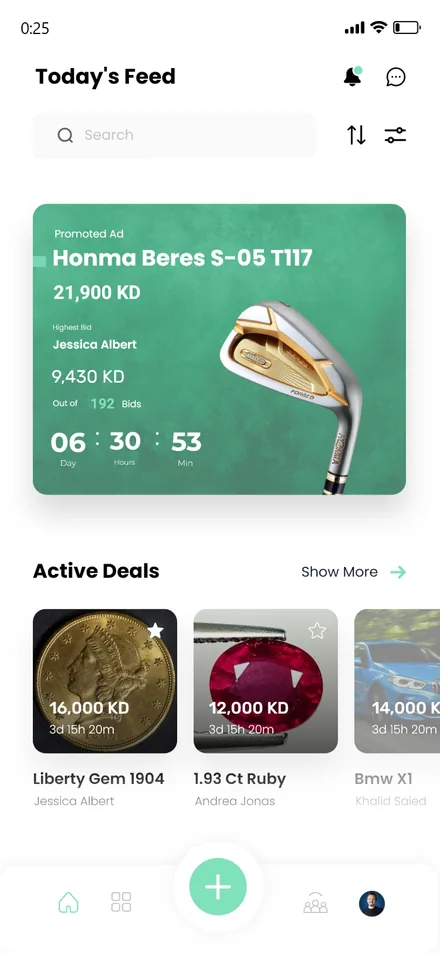
Today's feed
A promoted listing with a live countdown sits above active deals across every category.
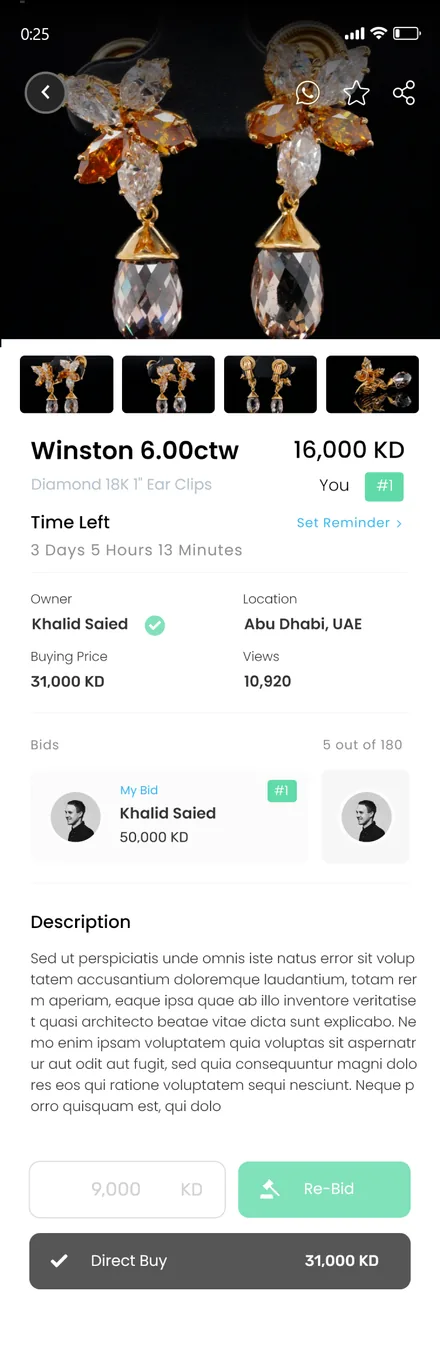
Live product page
Owner, location, bid list, rank badge and a re-bid or direct-buy choice on one screen.
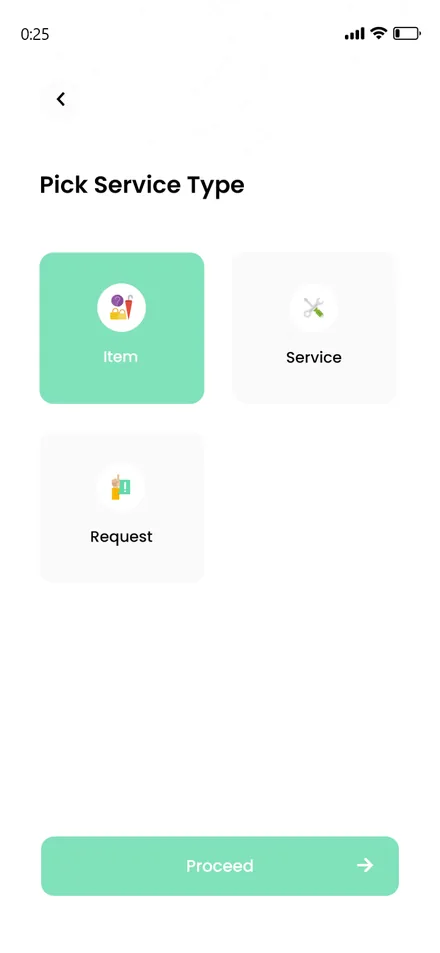
Create a listing
A single posting flow adapts its fields to items, cars, services or buyer requests.
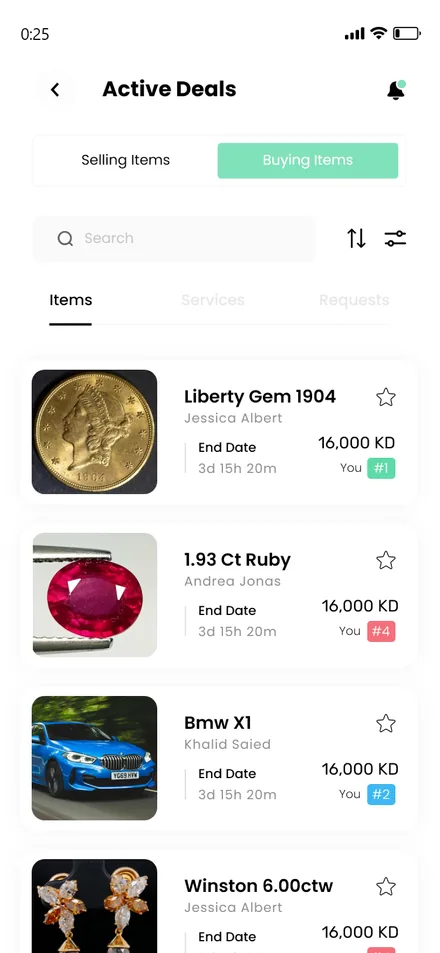
Active deals
In-flight business split by items, cars, requests and services, each with its own state.
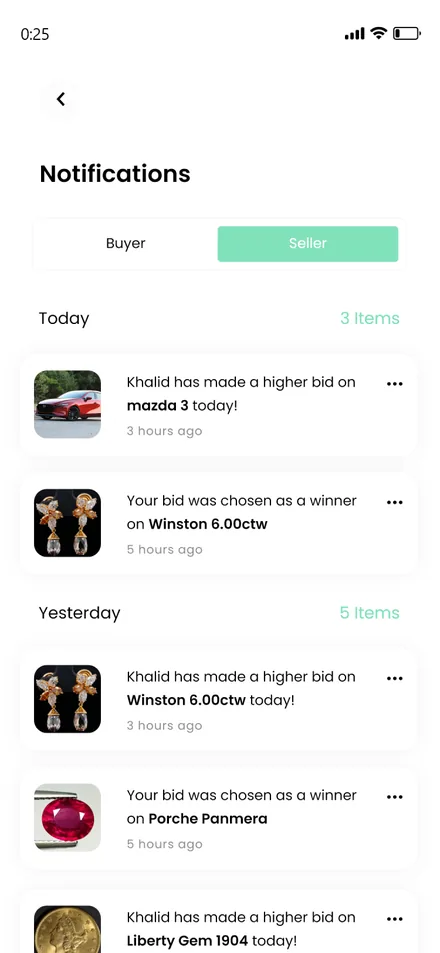
Notifications
Outbid, won, message and deal-status alerts keep a fast-moving auction legible.
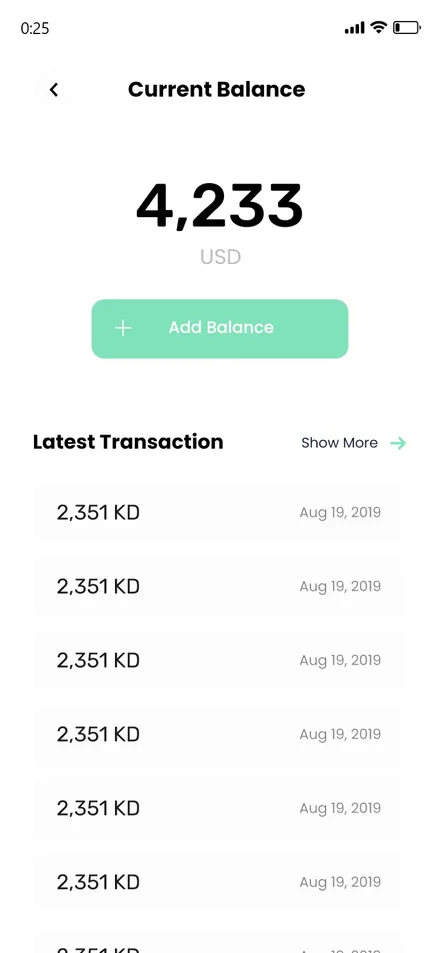
In-app wallet
A running balance, top-ups and saved cards settle a won bid without leaving the app.
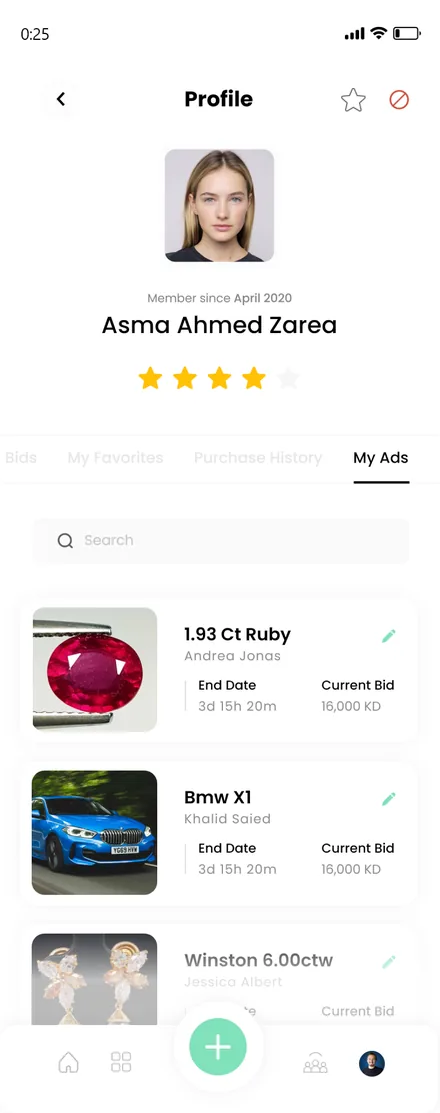
Profile
My Ads, My Bids, My Favorites and purchase history, all under one account.
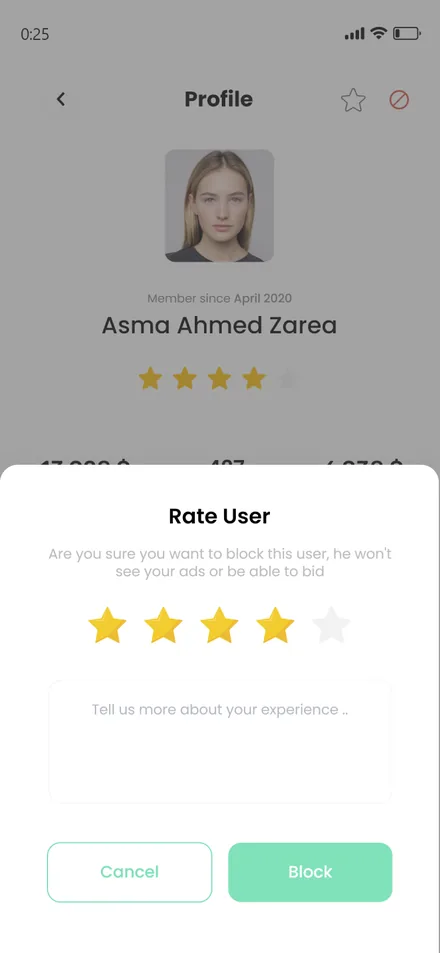
Rate the deal
A two-way rating after every transaction turns behaviour into a reputation.
What does a marketplace app actually have to get right?
These held true well beyond BidTo - they are what separates a marketplace people transact in from a listings wall they abandon after one post.
- Make the money move in-app. A deal that ends in an off-platform bank transfer is a deal the marketplace can never see, rate or protect.
- Bidding has to read at a glance. Rank, countdown and pending-versus-approved state must be obvious on a phone, or an auction becomes anxiety.
- One create flow, many listing types. Items, cars, services and requests differ in fields but should feel like one consistent act of posting.
- Split the user's live business by type. Collapsing every deal into one list is how people lose track and stop trusting the app.
- Build reputation into the transaction. Two-way ratings and a block path make trust a property of the system, not something users improvise off-platform.
- Keep the conversation on the listing. Chat tied to the item beats scattering negotiations across external messengers.
Building a marketplace and bidding app
The questions founders ask us first when they want a classifieds or auction product.
Ask us yoursHow long does it take to build a marketplace app like BidTo?
A first release at roughly this shape - a browsable feed, listing creation across a few categories, live bidding, chat, an in-app wallet and ratings - is a multi-month programme rather than a few weeks. The biggest schedule drivers are payments and the wallet, because holding money in-app brings compliance and reconciliation that a simple listings board never touches. We usually ship browsing, listing and chat first, then layer bidding and the wallet.
How much does it cost to build a classifieds or bidding platform?
It depends on scope, and no honest number comes from a feature list alone. The heaviest cost drivers are in-app payments, the number of distinct listing types, and how real-time the bidding needs to be. Shanti Infosoft scopes it on a short call and returns a fixed quote, so you are comparing a real number rather than a guess.
Do you build for both iOS and Android?
Yes. BidTo is designed as a single phone-first product across iOS and Android, so the feed, the create flow, bidding and the wallet behave the same on both. We design once against a shared component system and build to both platforms rather than treating one as an afterthought.
Can it handle in-app payments and a wallet?
That is part of the design here - a balance, top-ups and saved cards so a won bid or a direct buy settles inside the app. In a production build this is where most of the care goes: payment-gateway integration, holding and releasing funds, refunds and a reconcilable ledger, all of which we scope explicitly rather than bolt on.
How do you keep a marketplace trustworthy?
Trust is designed in, not moderated after the fact. BidTo pairs two-way ratings with account verification and a block flow, so a buyer or seller carries a reputation and bad actors can be shut out. For a live marketplace we extend that with reporting, dispute handling and admin tooling scoped to the platform's risk.
More marketplace and commerce work
Have a marketplace idea that mixes buying and bidding?
Tell us how your business actually works and we will tell you honestly what it takes to build. See more of our work or what we do.
Book a 15-minute call