


Play it before you pay for it
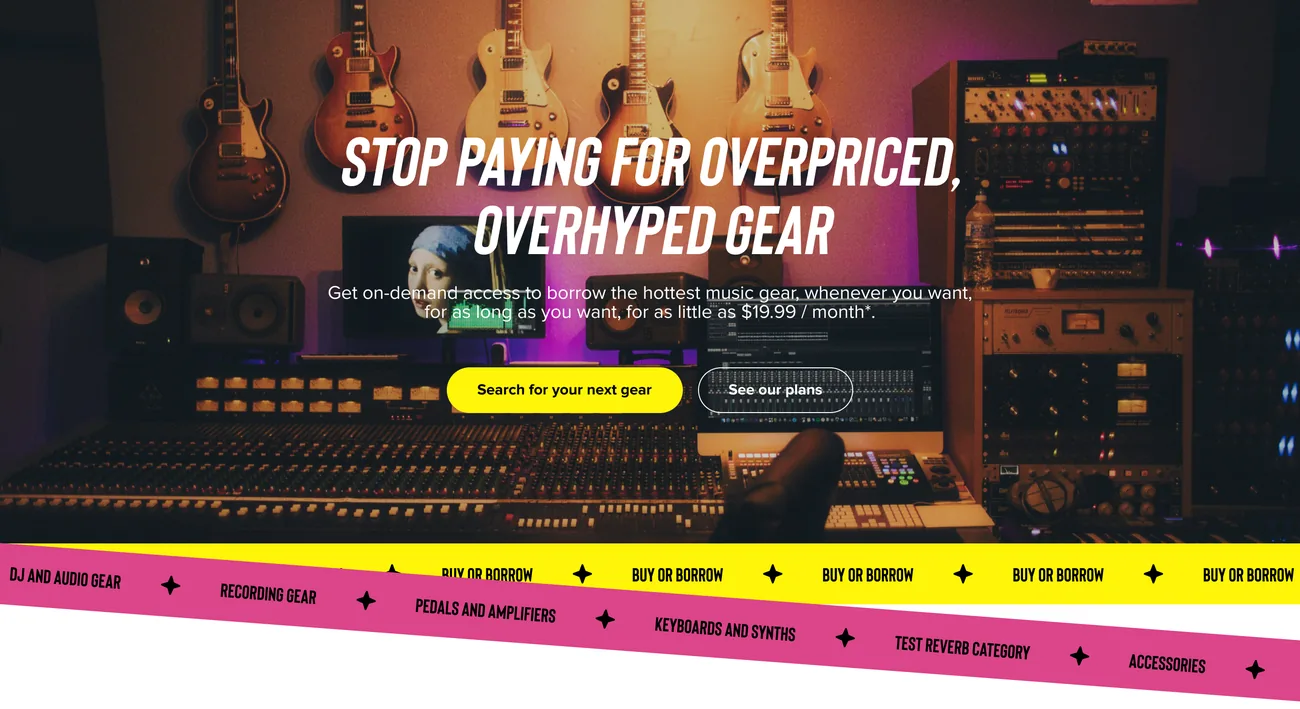
A subscription storefront for musicians who would rather try gear than gamble on it: build a borrow list, have the pieces shipped to you, keep them as long as you like, then buy what you love and swap what you don't - with the discount growing the longer you borrow.
Model
- Subscription commerce
- Borrow → test → buy or swap
Catalog
- Six gear categories
- Pedals to keyboards
Membership
- Opener
- Pro
- Headliner
Built with
- WordPress
- WooCommerce
What is Buy or Borrow Music?
Serious instruments and studio gear cost more than most players can risk on a hunch, and reviews only tell you so much. Buy or Borrow turns the whole thing around: a monthly membership lets a musician borrow the gear they are curious about, live with it, and only buy the pieces that earn their place.
A store built around trying, not just buying
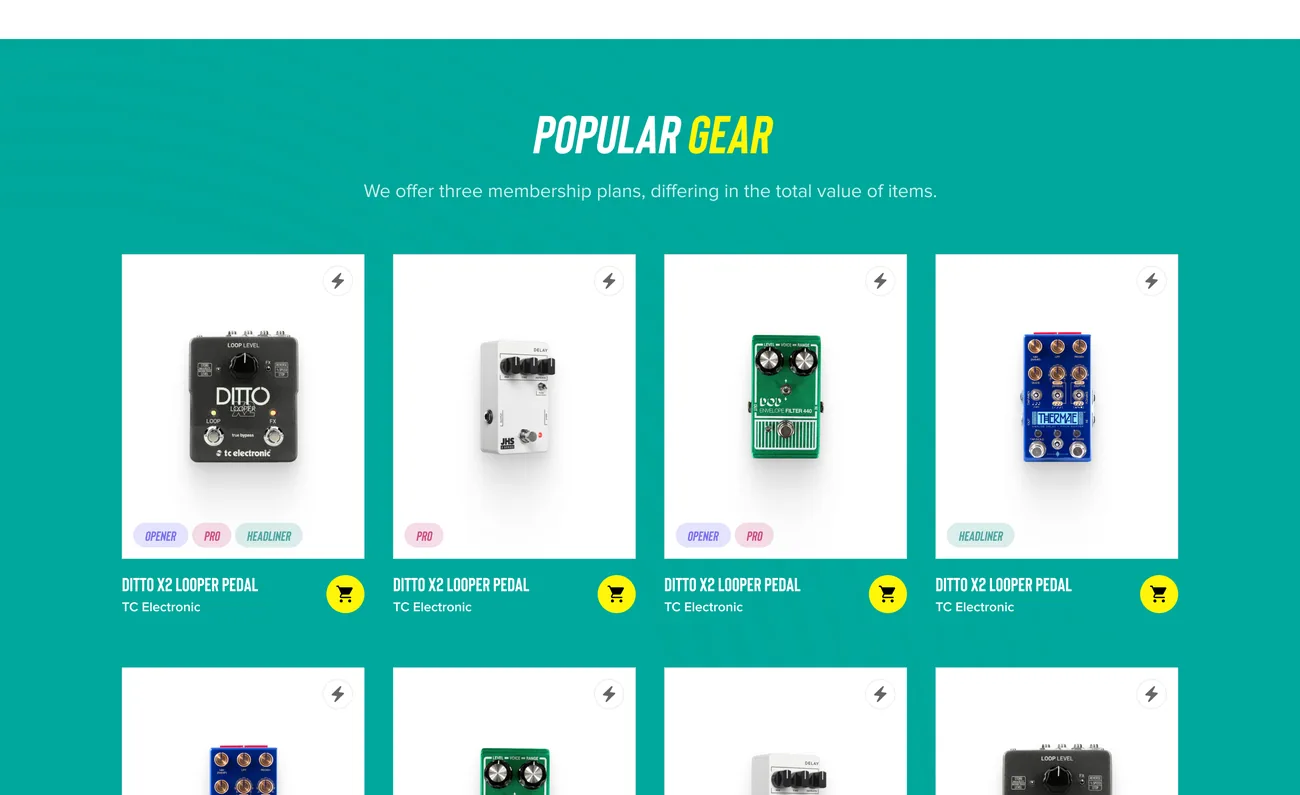
Instead of a checkout that ends in an expensive guess, the site is organised around a borrow list. A member picks the gear they want to try, the team sources and ships it, and the musician plays it for as long as they like before deciding to buy it, swap it, or send it back - with a discount that grows the longer they borrow.
Why does buying music gear need a different kind of store?
A pedal or a synth is a considered, expensive, personal purchase, and a normal e-commerce funnel - browse, add to cart, pay - fights that reality rather than serving it. The design problem was to make a store where trying is the main event and buying is the happy ending.
| Getting new gear | Buying it outright | The Buy or Borrow way |
|---|---|---|
| Trying before committing | Pay full price and hope it fits | Borrow it, play it, then decide |
| Gear you stop using | A sunk cost and a resale hassle | Swap it for something else to try |
| The cost of exploring | Full retail on every experiment | One monthly plan across many items |
| Finding the right thing | Guessing from reviews | Recommendations tuned to your play style |
| Deciding to buy | All of it, up front | A discount that grows the longer you borrow |
| Offloading old gear | A separate marketplace | Sell Your Gear, built into the same store |
How does the store actually work?
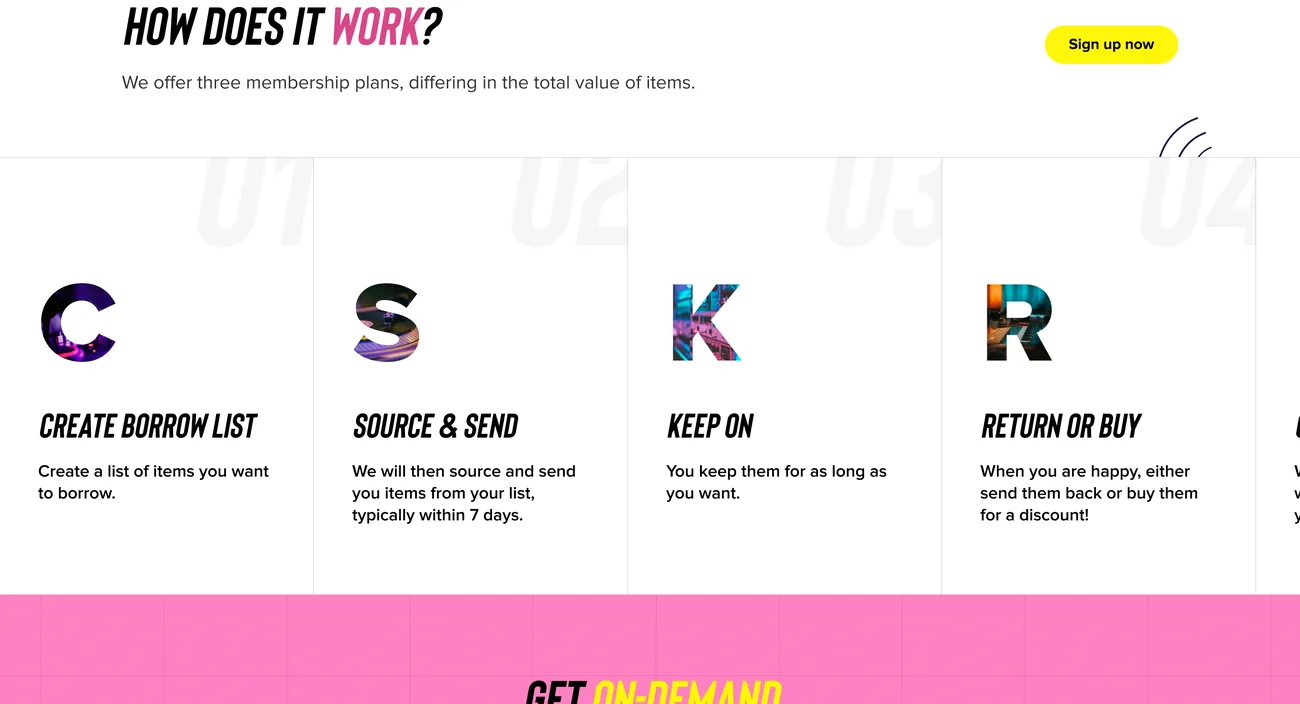
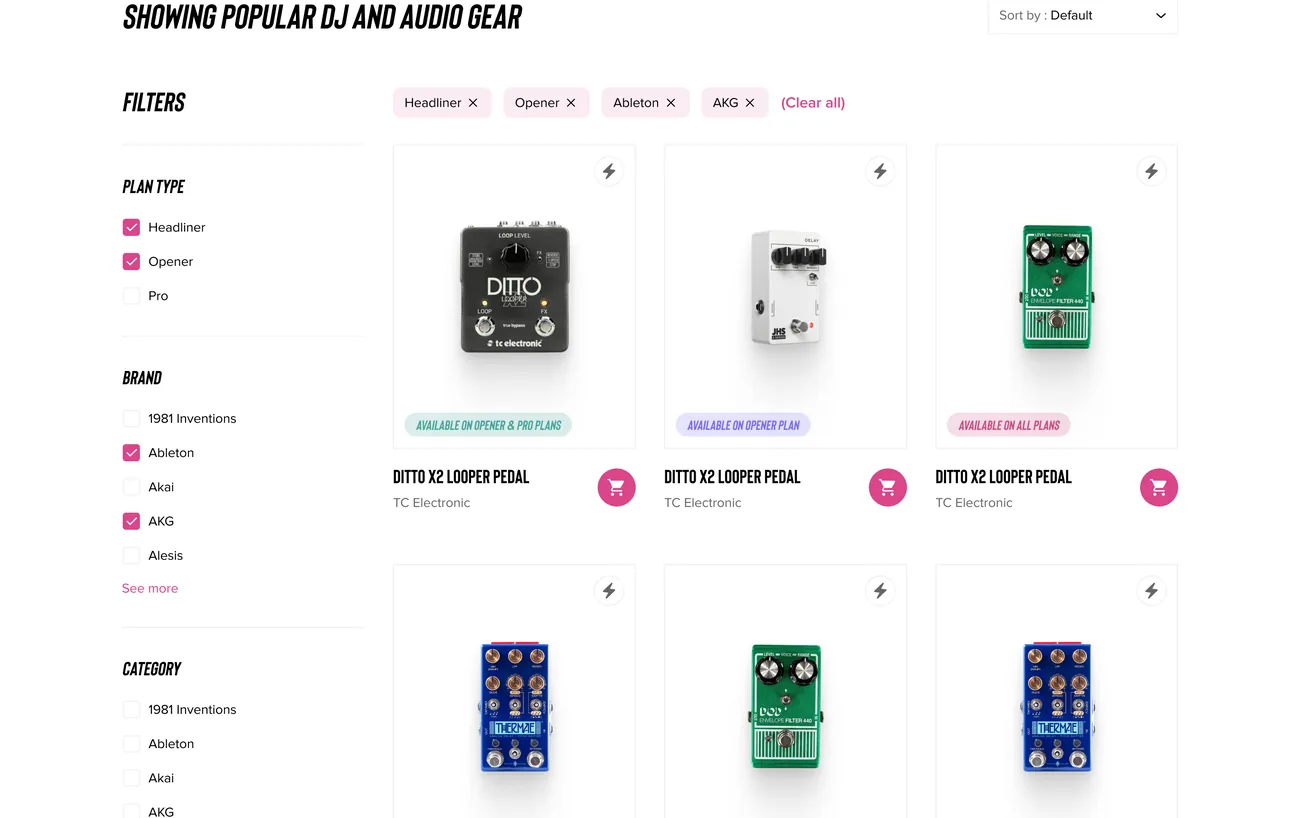
Every surface below is drawn from the real storefront - the pitch, the borrow model, the catalog, the tailored browse and the confirmation a musician sees when gear is on its way.

How does a borrow become a purchase?
The entire store is shaped around this loop. It is the reason the interface leads with a borrow list instead of a cart, and why every product card wears its plan.
What does the store look like, and why?
The identity is loud on purpose - a musician's store should feel like a gig, not a spreadsheet. A condensed display face shouts the headlines, magenta and electric violet carry energy and action, and a warm cream keeps the long catalog pages from feeling clinical.
Aa
Primary typeface
Bison
A B C D E F G H I J K L M N O P Q R S T U V W X Y Z
a b c d e f g h i j k l m n o p q r s t u v w x y z
0 1 2 3 4 5 6 7 8 9 & ? ! £ $ €
56pxStop paying for overhyped gearDisplay36pxHow does it work?H220pxCreate borrow listH316pxLead copy and section introsLead14pxBody text and product detailsBody12pxOPENER · PRO · HEADLINERTagThese families are read from the store's own design file rather than sampled off a screenshot. The condensed Bison display face does the heavy lifting on headlines, Proxima Nova keeps the catalog and forms readable, and Prociono adds a serif accent for editorial moments. Bison, Proxima Nova and Prociono are the store's licensed faces; the specimen above falls back to the nearest available face if they are not installed on your device.
What is it built with?
The storefront runs on WordPress and WooCommerce, so the catalog, memberships and the borrow-list flow all sit on a commerce platform the client's own team can operate.
Building a subscription commerce store
What musicians and founders ask us about a borrow-to-buy or rental storefront.
Ask us yoursHow do you build a borrow-to-buy or rental store on WooCommerce?
The trick is that the core object is a borrow list, not a cart, so the catalog, the membership tiers and the fulfilment flow all have to be modelled around trying gear first and buying later. On WordPress and WooCommerce that means membership products, a wishlist-style borrow list, plan-aware pricing on every item, and a discount that scales with borrow time - built as an extension of the commerce platform rather than a bolt-on.
How much does a subscription commerce website cost?
It depends on how much of the model is bespoke. A straightforward WooCommerce catalog is modest; a borrow-to-buy store with membership tiers, tailored recommendations, a borrow list and duration-based discounts is more involved because the pricing and fulfilment logic are custom. Shanti Infosoft scopes it on a short call and returns a fixed quote so you can compare a real number.
Can WordPress and WooCommerce handle memberships and subscriptions?
Yes, and that is exactly what this store does. WooCommerce handles the catalog and checkout, membership tiers gate what a member can borrow, and the borrow-list and discount logic are built on top. Running it on WordPress means the client's own team can manage products, content and orders without a developer for day-to-day work.
How does the tailored recommendation feature work?
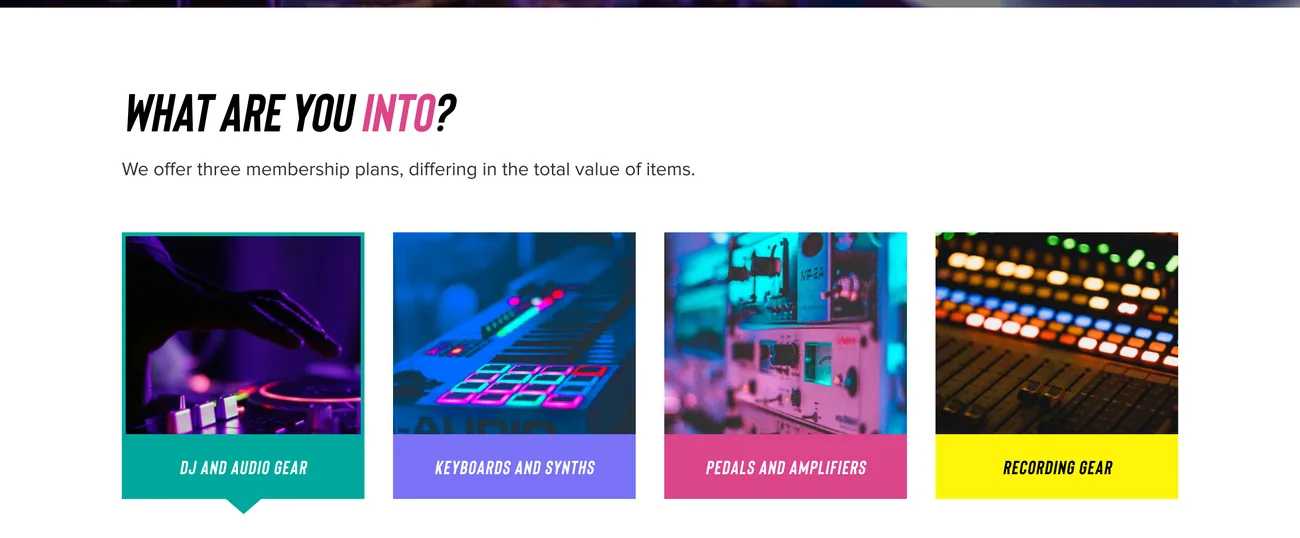
The store leads with categories and filters tuned to the kind of musician browsing - DJ and audio, keyboards, pedals, recording - rather than one flat grid. A member filters by play type, brand, category and price, and the store surfaces gear that fits, which matters when the catalog spans everything from a looper pedal to a full synth.
Do you build the ability for customers to sell their own gear?
Yes. This store includes a Sell Your Gear path so members can list equipment they have outgrown back into the catalog. For a marketplace-style store we scope the submission, moderation and payout flows explicitly, since letting customers become sellers changes the trust and operations model.
More commerce and marketplace work
Have a commerce idea that doesn't fit a normal cart?
Tell us how your business actually works and we will tell you honestly what it takes to build. See more of our work or what we do.
Book a 15-minute call