


The diamond store, online
A jewellery brand storefront where the whole collection lives online, priced and shoppable: browse rings and necklaces in a list or a grid, open a product page for the detail, and go from a favourite to a completed checkout without an enquiry form in the way.
Category
- Luxury jewellery
- Brand e-commerce
Storefront
- Priced online store
- List and grid views
Journey
- Browse → detail
- Cart → checkout
Design scope
- UX + UI design
- 16 store screens
What is the Charles Rose storefront?
Fine jewellery is often sold behind an enquiry form - a photograph, a phone number, and a price you only learn by asking. Charles Rose is designed the other way round: the collection is a real, priced online store, so a shopper can browse, compare and buy the way they would anywhere else, without the friction that usually surrounds a diamond.
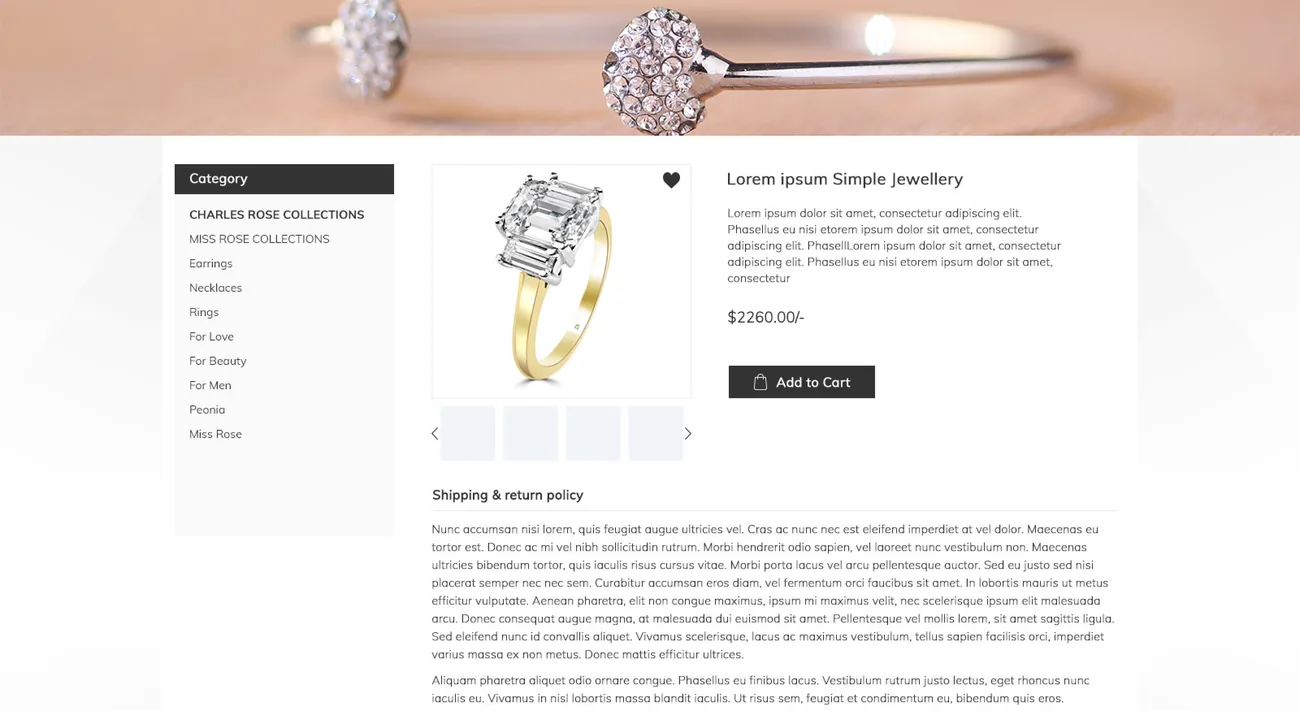
A brand catalog that behaves like a shop
The site pairs the editorial feel of a jewellery brand with the mechanics of a working store. Collections are organised the way a jeweller thinks about them, every piece carries a price, the listing switches between a considered list and a scannable grid, and the path from a product page to a completed order is direct.
Why is selling fine jewellery online its own problem?
A diamond is a considered, high-value, emotional purchase, and most jewellery sites hedge by hiding prices and pushing an enquiry. The design problem was to make an online store confident enough to price and sell the pieces outright while still feeling like a luxury brand.
| Buying fine jewellery online | A typical jewellery site | Charles Rose storefront |
|---|---|---|
| Seeing the price | 'Price on application', email back and forth | Every piece priced in the online store |
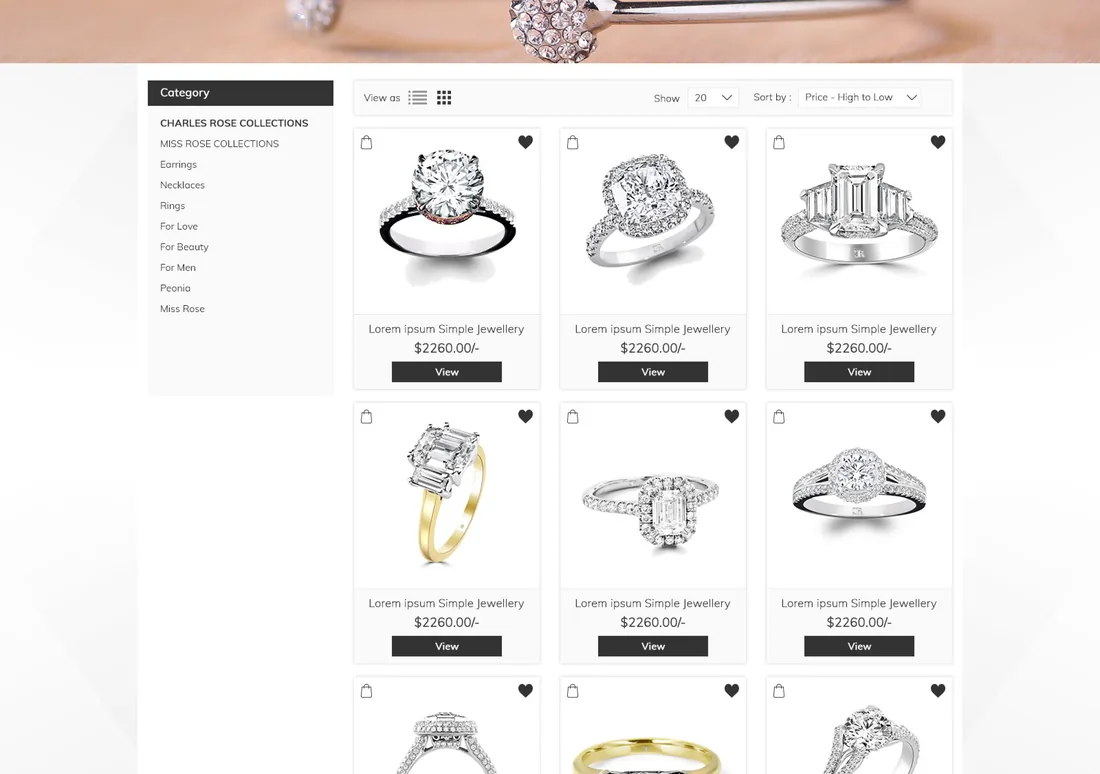
| Browsing a large range | One fixed grid | Switch between list and grid, with sort |
| Judging a piece | A single thumbnail | A dedicated product page with the detail |
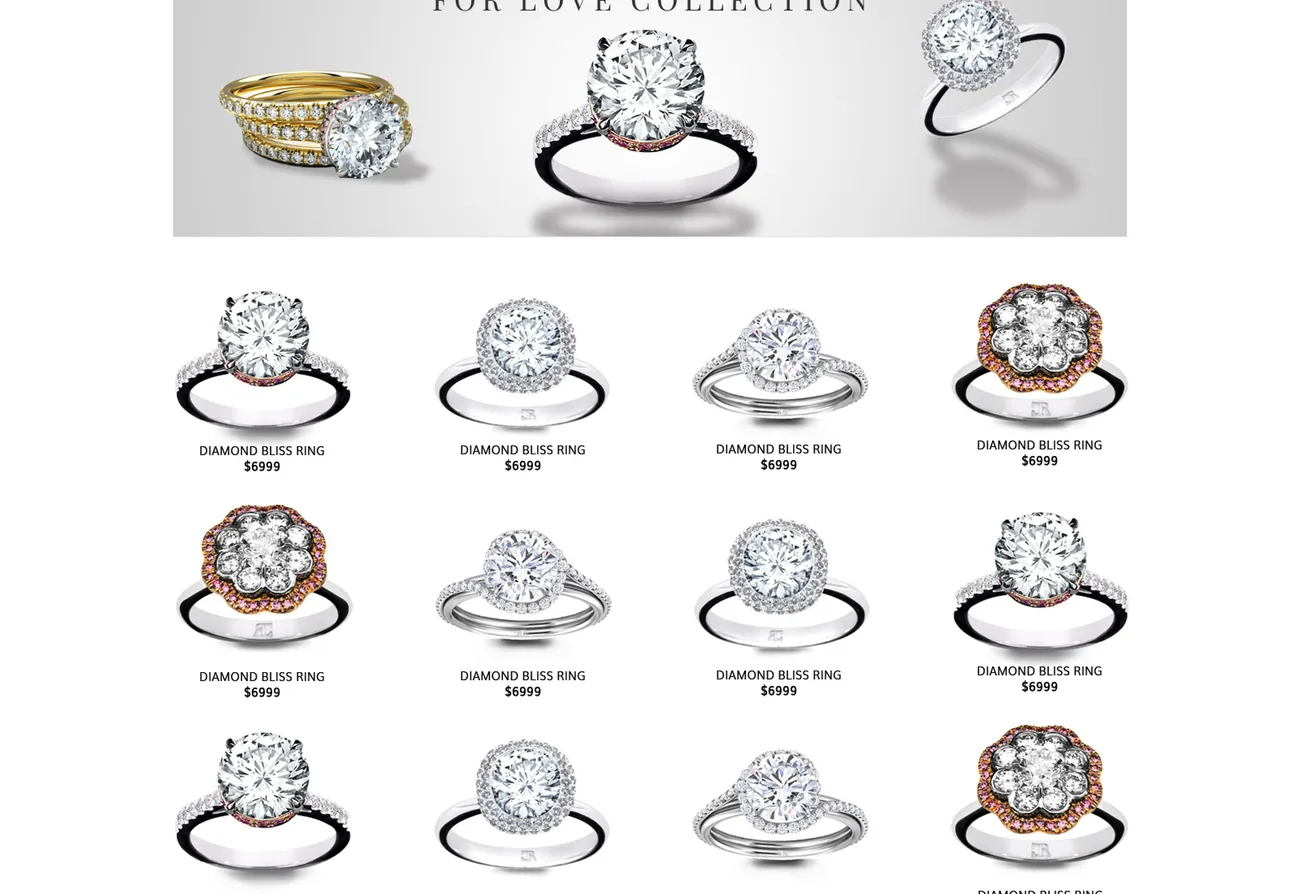
| Organising the collection | A flat catalog | Named collections - For Love, For Beauty, For Men |
| Completing a purchase | 'Contact us to buy' | Cart and checkout, with a login path |
| Trusting the brand | No story | An About and a diamond-provenance section |
What does the storefront look like?
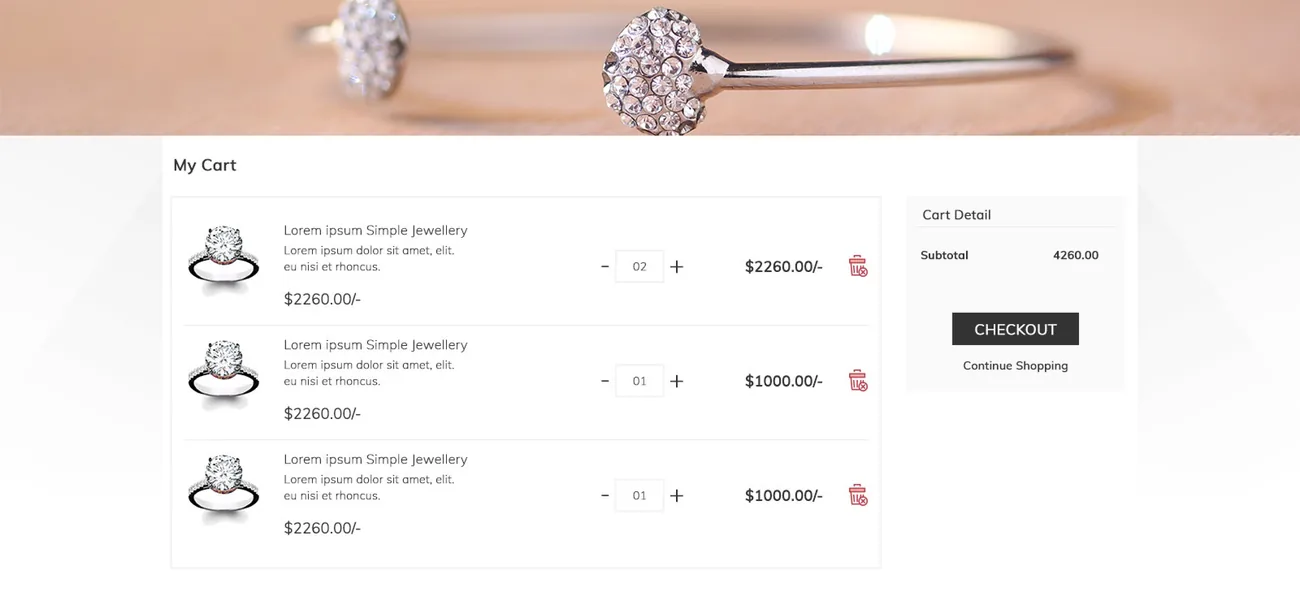
Every screen below is drawn from the real store - the collection home, the priced range, a single piece in detail, and the cart that closes the sale.
List or grid - one catalog, two moods
The product listing switches between a list view for reading the detail and a grid view for scanning the range. Drag the handle to move between the two states of the very same screen.
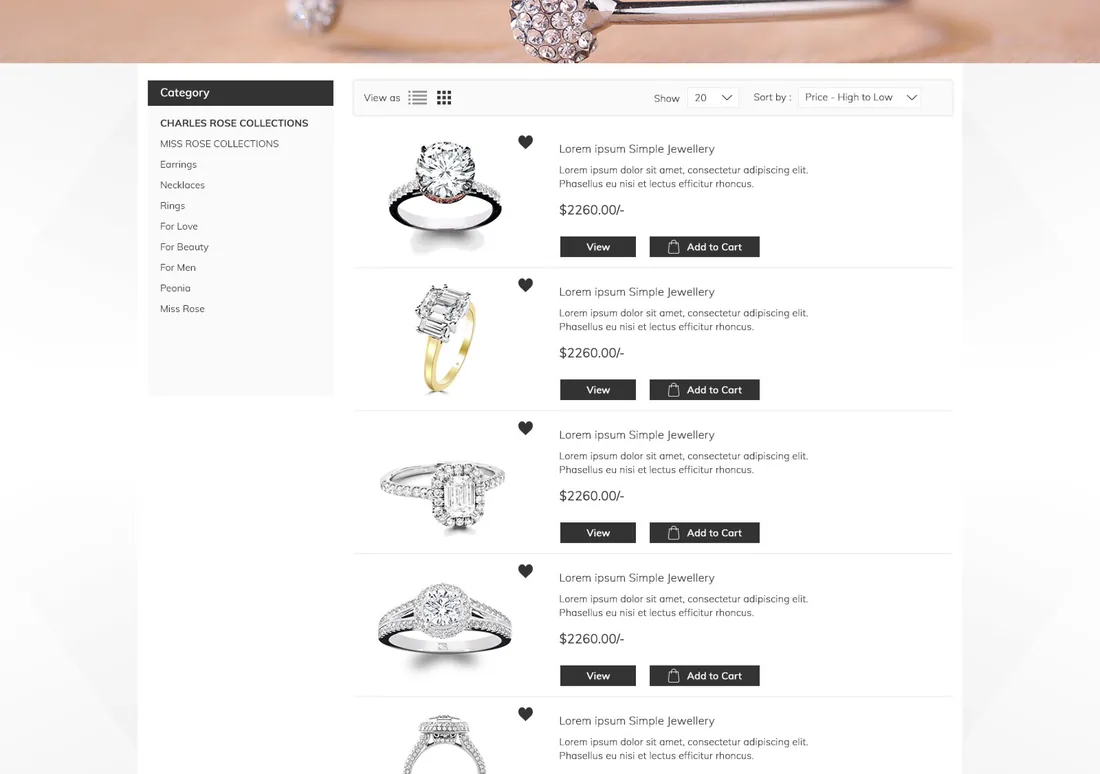
Same collection, same filters and sort - only the density changes. The list reads like a considered showcase; the grid scans a large range fast.
Building a luxury jewellery e-commerce store
What jewellery and luxury brands ask us about selling online.
Ask us yoursHow do you build a luxury jewellery e-commerce store?
The hard part is holding two things at once: the editorial, brand-led feel a jewellery house needs, and the plain mechanics of a working store - priced products, a browsable catalog, product pages, a cart and a checkout. We design the brand surfaces and the commerce surfaces together, so the store never feels like a template with the logo swapped, and pricing and checkout are treated as first-class rather than hidden behind an enquiry.
Should a jewellery site show prices or use 'price on application'?
It depends on the brand, but a priced online store - the approach here - removes friction and lets a shopper decide without starting a conversation. For very high-value bespoke pieces some brands keep an enquiry path, and we often build both: a priced store for the core range and a made-to-order flow for one-off commissions.
How much does a jewellery e-commerce website cost?
It depends on the size of the range, whether you need custom collections and filtering, and how bespoke the checkout is. A priced catalog with list and grid browsing, product pages and a standard checkout is a defined build; adding made-to-order configuration or appointment booking adds scope. Shanti Infosoft scopes it on a short call and returns a fixed quote.
Can shoppers browse the collection in different ways?
Yes - this store supports both a list view and a grid view of the same catalog, plus sort and category filtering and named collections. That matters for jewellery, where one shopper wants to read every detail of a single ring and another wants to scan a large range quickly, and a single fixed layout serves neither well.
Does it include a full cart and checkout?
It does, including a checkout-with-login path alongside guest checkout, so a shopper can go from a product page to a completed order directly. For a jewellery brand we also scope the details that build confidence at that moment - shipping and returns information, secure payment and clear order confirmation.
More commerce and marketplace work
Have a brand that deserves a proper online store?
Tell us how your business actually works and we will tell you honestly what it takes to build. See more of our work or what we do.
Book a 15-minute call