


Post it, bid on it, buy it
A location-based marketplace that runs classifieds and live auctions side by side: users post an ad in any of nine categories, buyers nearby place bids against a countdown or buy outright, and the whole deal - bidding, chat, payment and rating - closes inside one platform.
Category
- Auction marketplace
- Classifieds + bidding
Roles
- Buyer / bidder
- Seller
Ad categories
- 9 categories
- Distance-based search
Design scope
- Product design
- UX + UI
- Full auction flow
What is Sultan built to do?
Most classifieds sites end at a phone number - you find an ad and the platform steps out of the deal. Sultan keeps the whole transaction inside: a posted ad is something a buyer nearby can bid on or buy now, chat about, pay for and rate, without ever leaving the site.
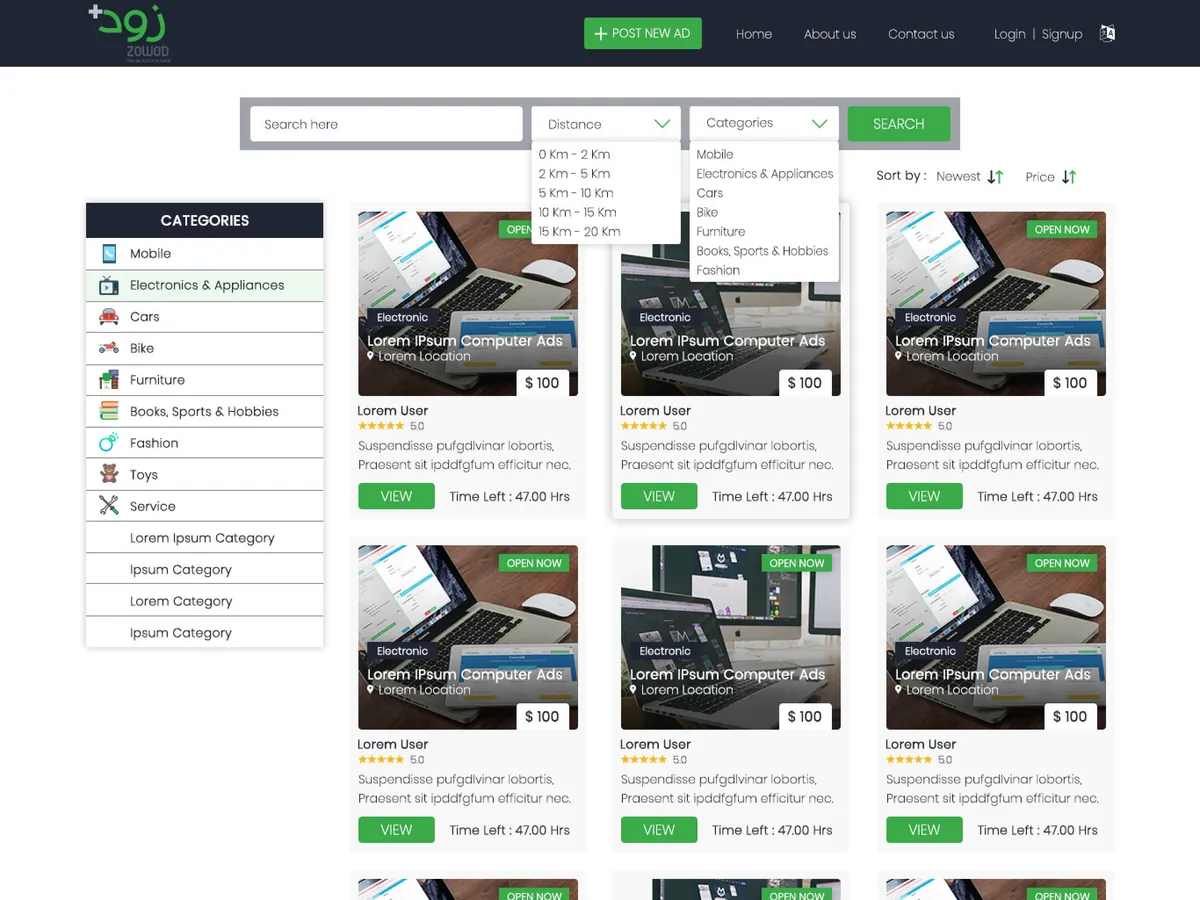
A classifieds board and an auction house in one feed
The home feed lists live ads across nine categories, each with a category tag, a countdown and a starting price, filtered by how far away the seller is. Open an ad and it becomes a full auction - a highest-bid figure, a place-bid field, a buy-now price and the complete bidder history - alongside the seller's rating and a public comment thread.
Why do classifieds and auctions rarely live together?
A fixed-price classified and a live auction are different transactions with different anxieties - one is browse-and-call, the other is watch-and-bid. Holding both on a single ad, for buyers filtered by distance, without the interface becoming a maze, was the core design problem.
| What a user needs | Ordinary classifieds | In Sultan |
|---|---|---|
| Get the best price | Fixed price, haggle by phone | Place a live bid against a countdown |
| Close it now | Call and hope | Buy-now price on the same ad |
| Find things nearby | Scroll a flat list | Filter by distance band |
| Pay for a win | Off-platform cash | Payment handled in the platform |
| Trust the seller | A phone number | Rating, bidder history and comments |
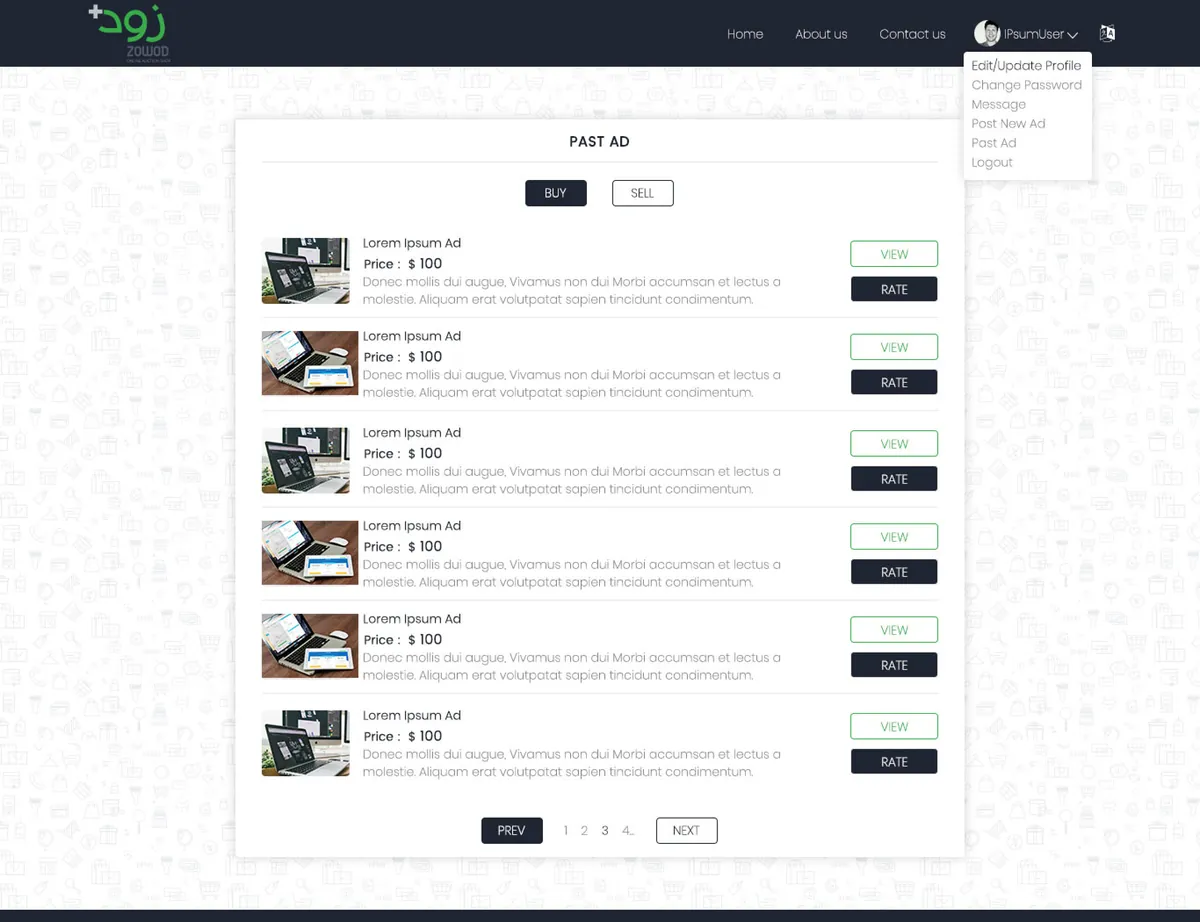
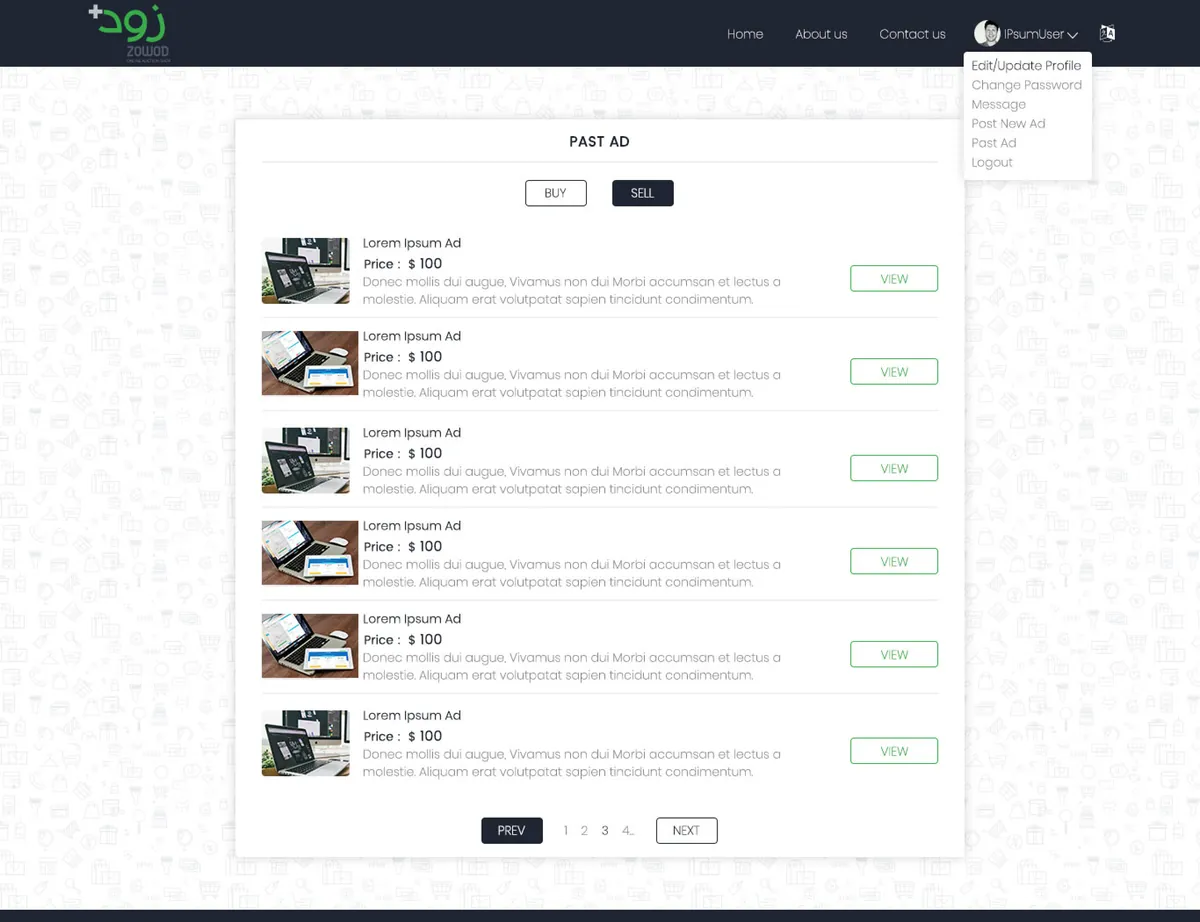
| Track your deals | Nothing after the call | Past ads split into buy and sell |
What does trading on Sultan look like?
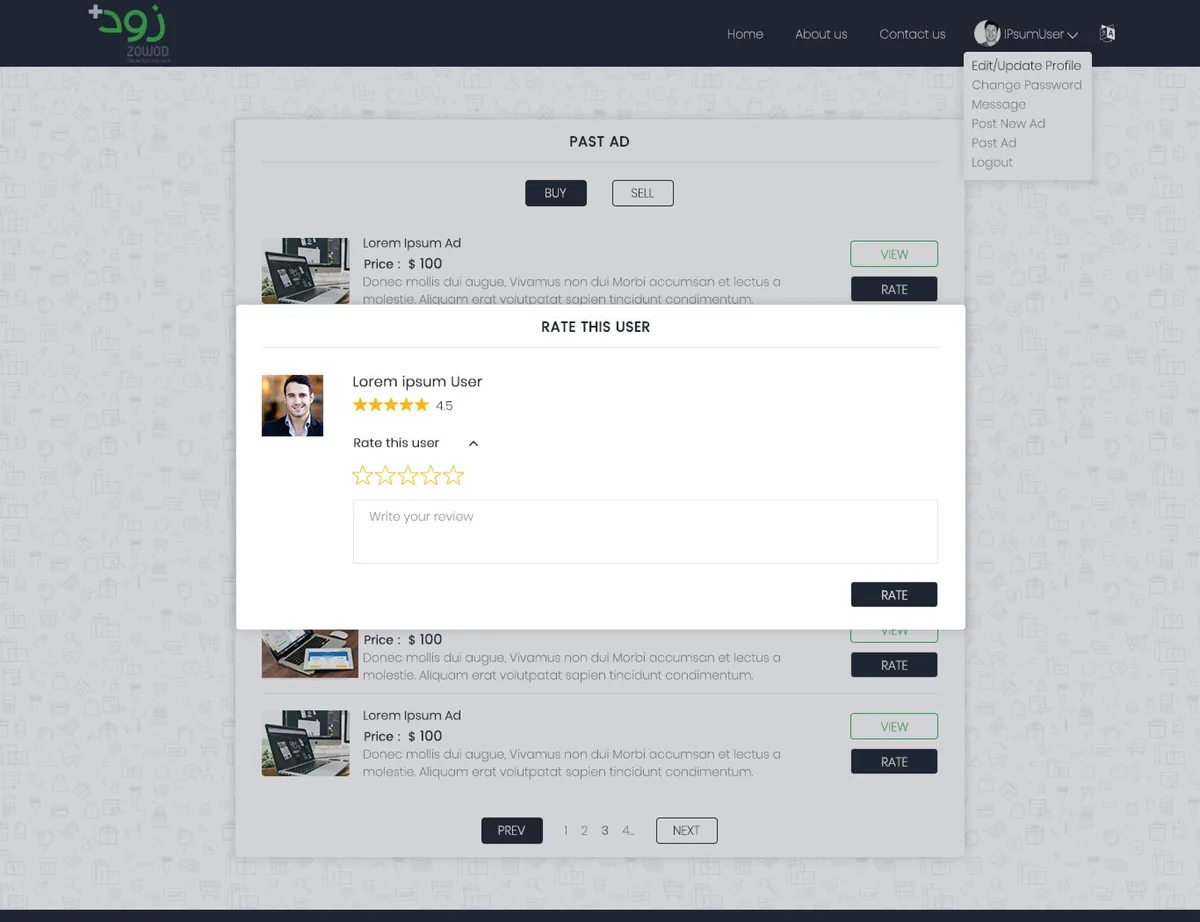
The path from posting an ad to closing and rating a deal.
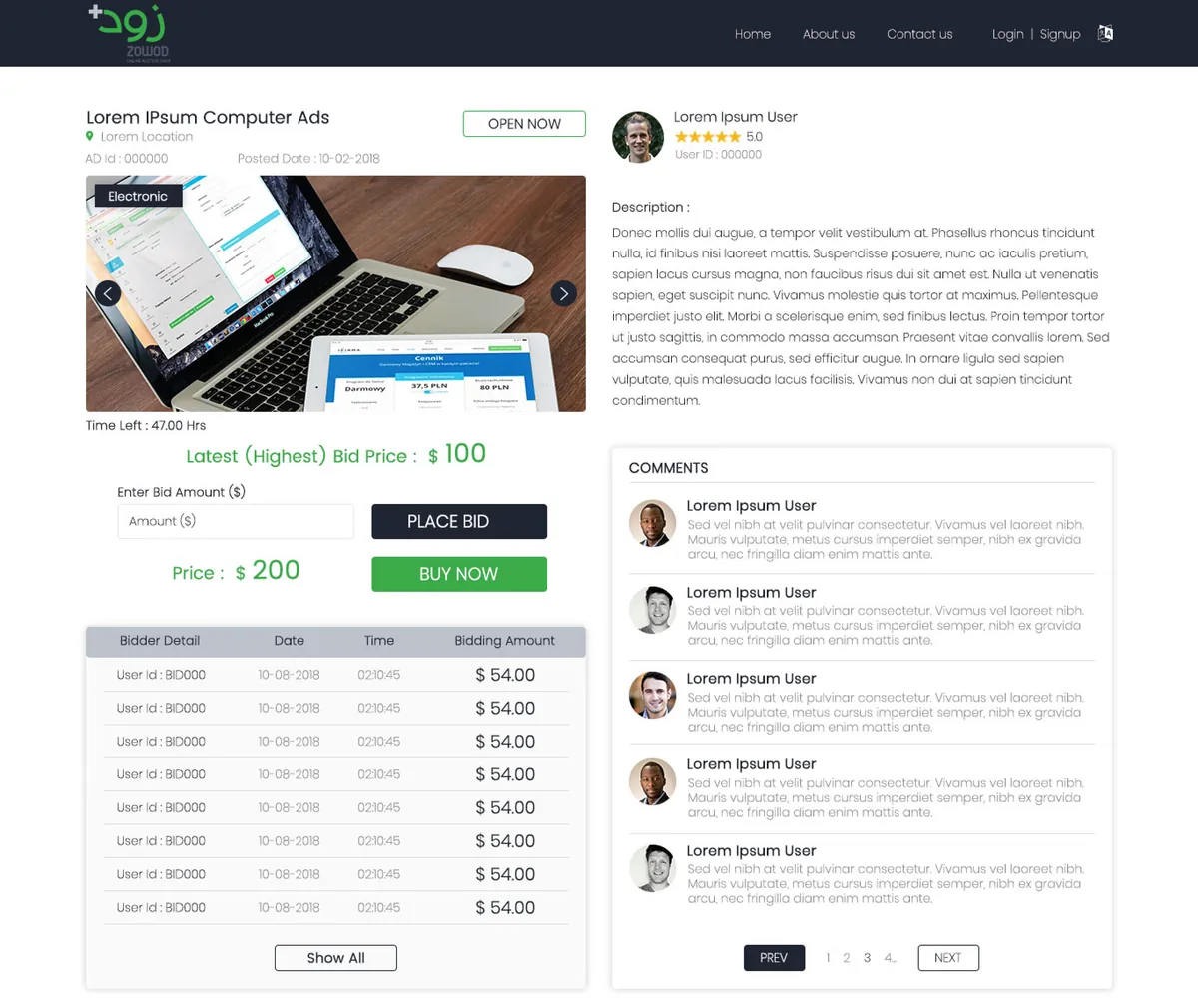
What is packed into a single auction ad?
The ad page is where the whole product comes together. Everything a buyer needs to compete for an item and trust the seller sits on one screen - here is what each part does.
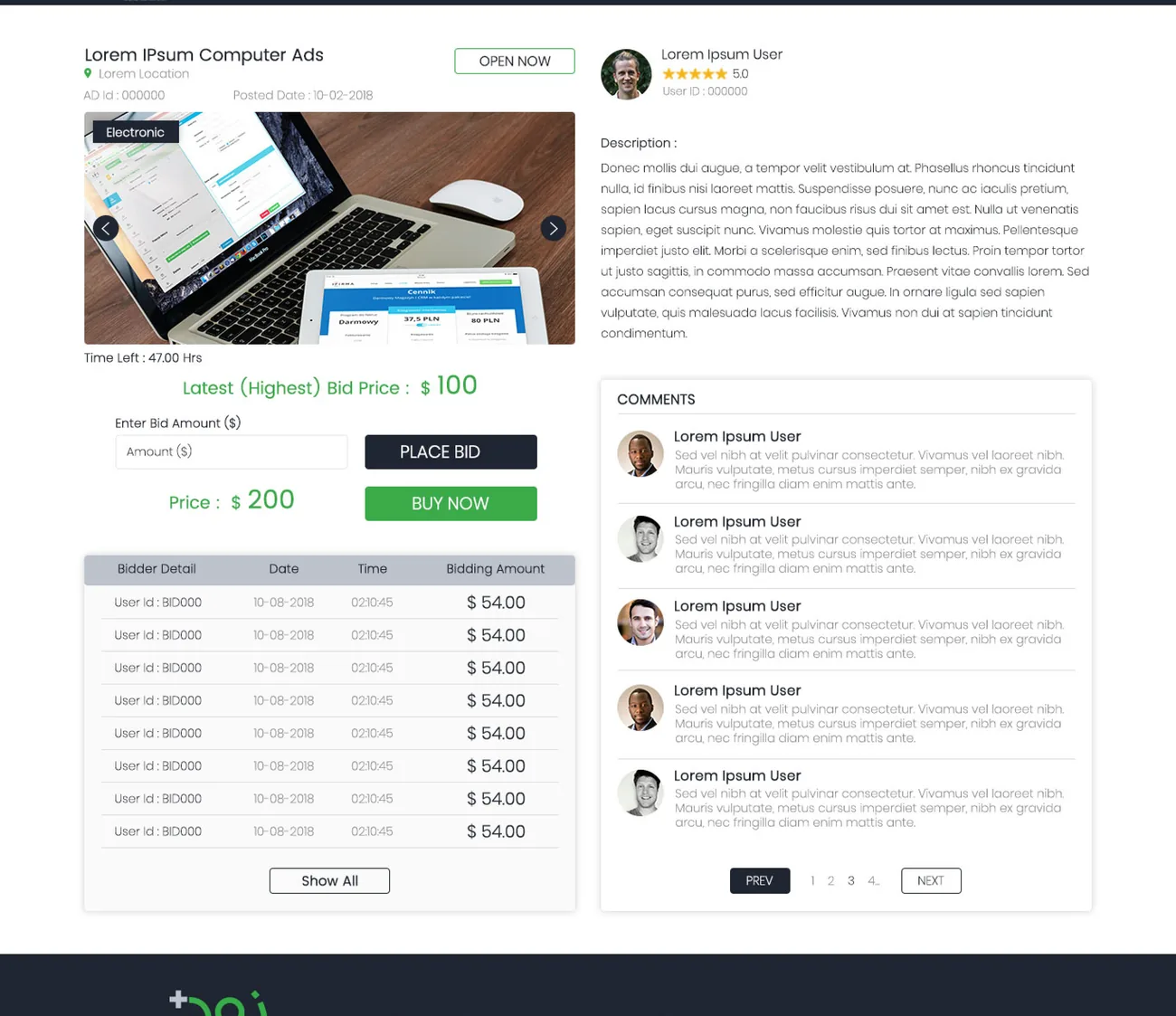
A state badge marks the ad as open for bidding, closed or sold, so its status is unmistakable the moment the page loads.
The seller's identity and star rating sit at the top, so a buyer is judging who they are dealing with before they bid.
The current highest bid is the headline figure, updating as the auction runs so a buyer always knows the price to beat.
A bid-amount field and place-bid action let a buyer compete on price directly against the countdown.
A fixed buy-now price sits beside the bidding, so a buyer who does not want to wait can close the deal outright.
A bidder-history table lists each bid with its user, date, time and amount, making the auction transparent rather than a black box.
A comment thread lets buyers ask about the item in the open, so questions and answers are visible to everyone considering it.
What does an auction marketplace have to get right?
These held well beyond Sultan - they separate a marketplace people actually bid and pay in from a listings wall they abandon after one post.
- Let one ad be bid on or bought. Forcing a seller to choose auction or fixed price up front loses the buyer who wanted the other one.
- Make the bid state unmistakable. Highest bid, countdown, buy-now and open-or-sold status must read at a glance, or bidding turns into anxiety.
- Treat distance as a first-class filter. For local trade, how far away the seller is often decides the deal, so proximity belongs in the search.
- Keep the money on-platform. A deal that ends in an off-platform transfer is one the marketplace can never see, rate or protect.
- Show the bid history in the open. A visible bidder log makes an auction transparent, so buyers trust the price rather than suspect it.
- Build reputation into every deal. Two-way ratings and comments make trust a property of the system, not something users improvise off-site.
Building an auction and classifieds marketplace
The questions founders ask us first when they want a bidding or classifieds platform.
Ask us yoursHow long does it take to build an auction marketplace like Sultan?
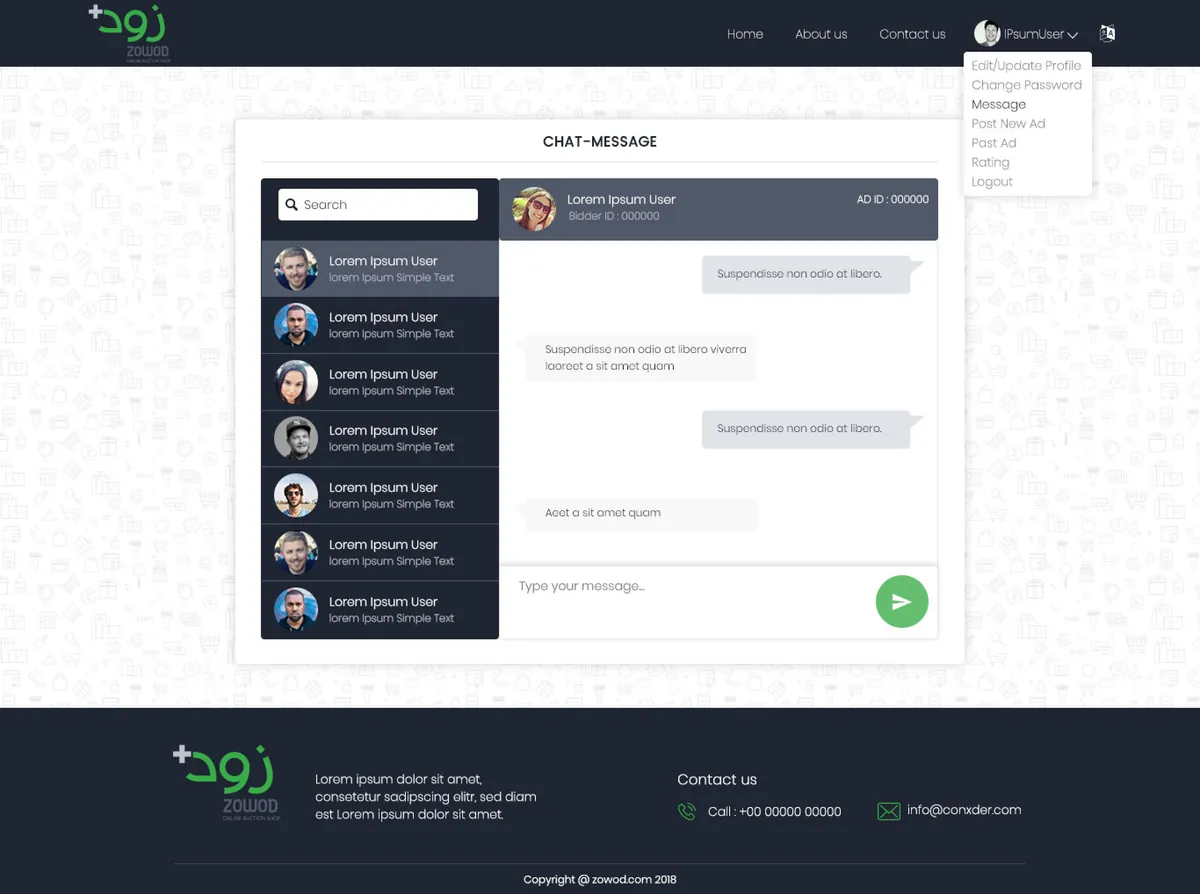
A first release at roughly this shape - a browsable feed with distance search, ad posting across categories, live bidding with a buy-now option, chat, payment and ratings - is a multi-month programme rather than a few weeks. The heaviest work is the bidding engine and payments, because live auctions bring real-time state and holding money brings reconciliation and disputes. We usually ship posting, browsing and chat first, then layer bidding and payment.
How much does it cost to build a bidding or classifieds platform?
It depends on scope, and no honest figure comes from a feature list alone. The biggest cost drivers are how real-time the bidding must be, whether payments are handled in-platform, and how much moderation and dispute tooling the marketplace needs. Shanti Infosoft scopes it on a short call and returns a fixed quote, so you compare a real number rather than a guess.
Can one listing be both an auction and a fixed-price sale?
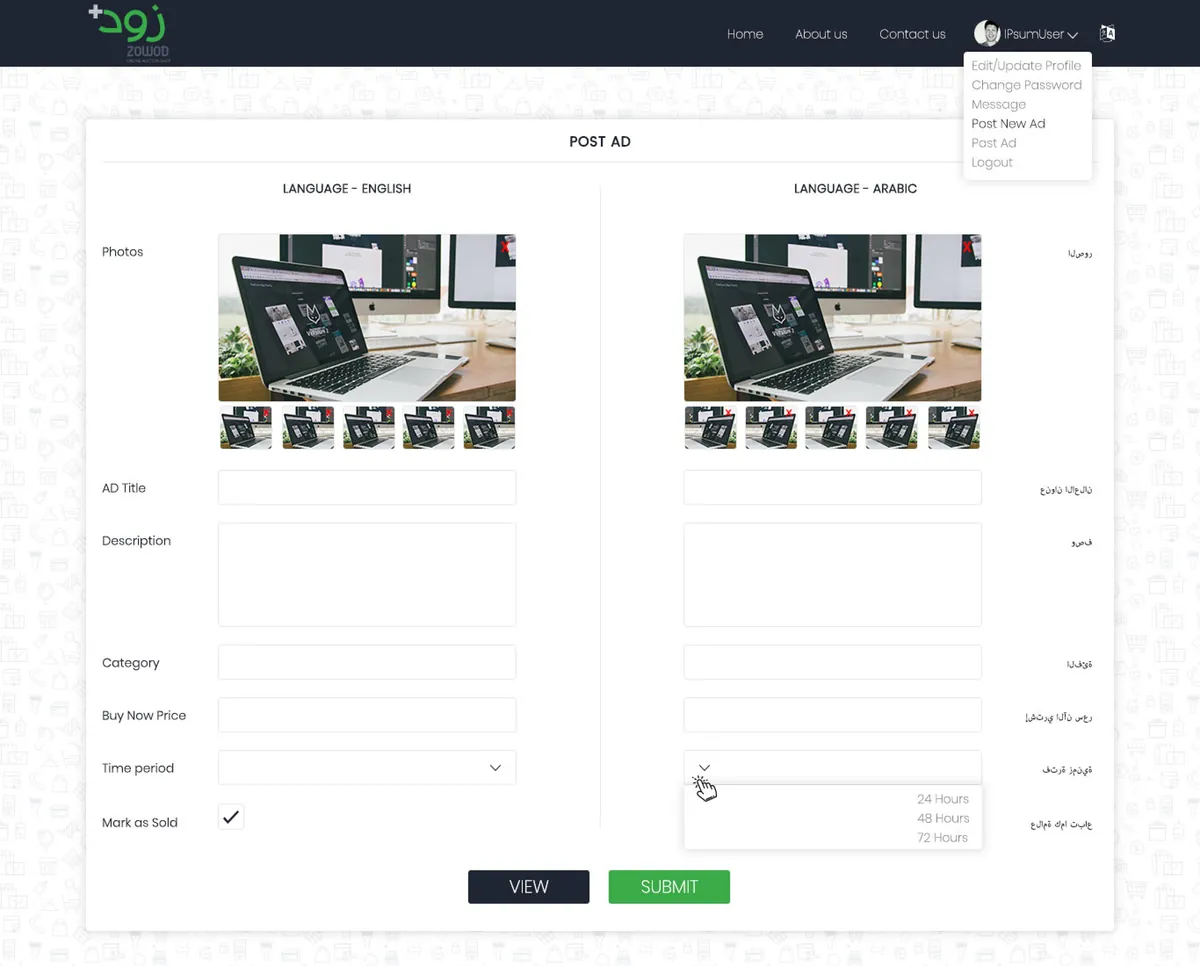
Yes - that is central to Sultan's design. Every ad carries a live highest bid with a place-bid field and, alongside it, a fixed buy-now price. A buyer can compete on price against the countdown or close the deal immediately, and the seller opens both options from a single posting flow rather than choosing one up front.
How does the distance-based search work?
The feed filters ads by how far away the seller is, in fixed proximity bands, so a marketplace built around local collection and trade surfaces nearby items first. In a production build this pairs a location on each ad with the buyer's own location to rank and filter results, which is scoped explicitly alongside the category and price sorting.
How do you keep an auction marketplace trustworthy?
Trust is designed into the listing. Every ad shows the seller's rating, a full bidder history and a public comment thread, and every completed deal ends in a two-way rating. For a live marketplace we extend that with reporting, dispute handling and moderation tooling scoped to the platform's risk, so buyers act on visible signal rather than a leap of faith.
More marketplace and commerce work
Have a marketplace idea that mixes buying and bidding?
Tell us how your business actually works and we will tell you honestly what it takes to build. See more of our work or what we do.
Book a 15-minute call