


Find it near you, book it
A two-sided marketplace for beauty and spa services. Customers discover verified providers on a map, filter by rating, price and time, and book; providers run bookings, services, time slots, a portfolio and reviews from their own dashboard.
Sector
- Beauty & spa
- Local services
Sides
- Customers
- Service providers
Discovery
- Map, filters, radius
Trust
- Verified
- Ratings & reviews
What is Spajama?
Spajama connects people who want a beauty or spa treatment with the providers who offer it nearby. Customers search on a map and book; providers manage their bookings, catalogue, availability and reputation from a dashboard built for their side of the transaction.
One marketplace, two dashboards
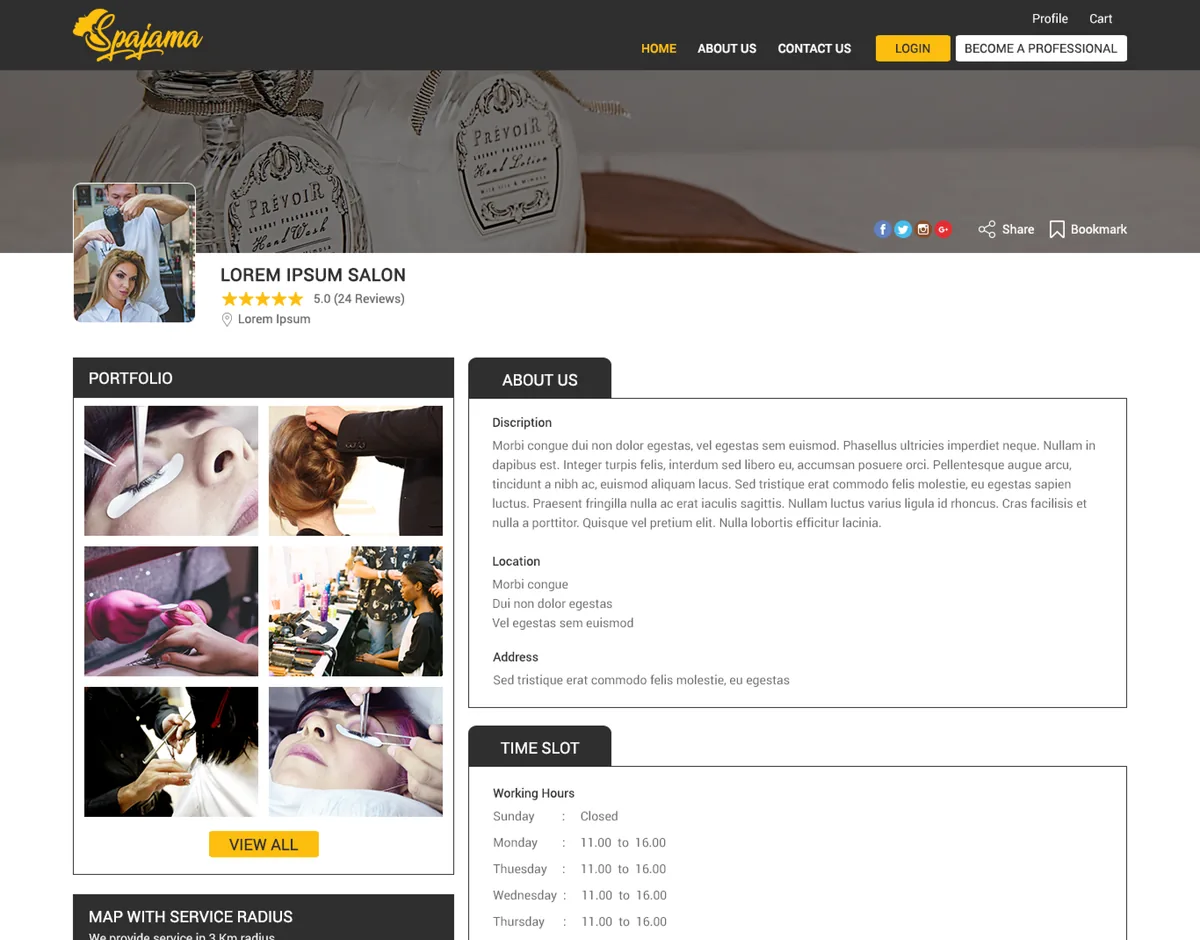
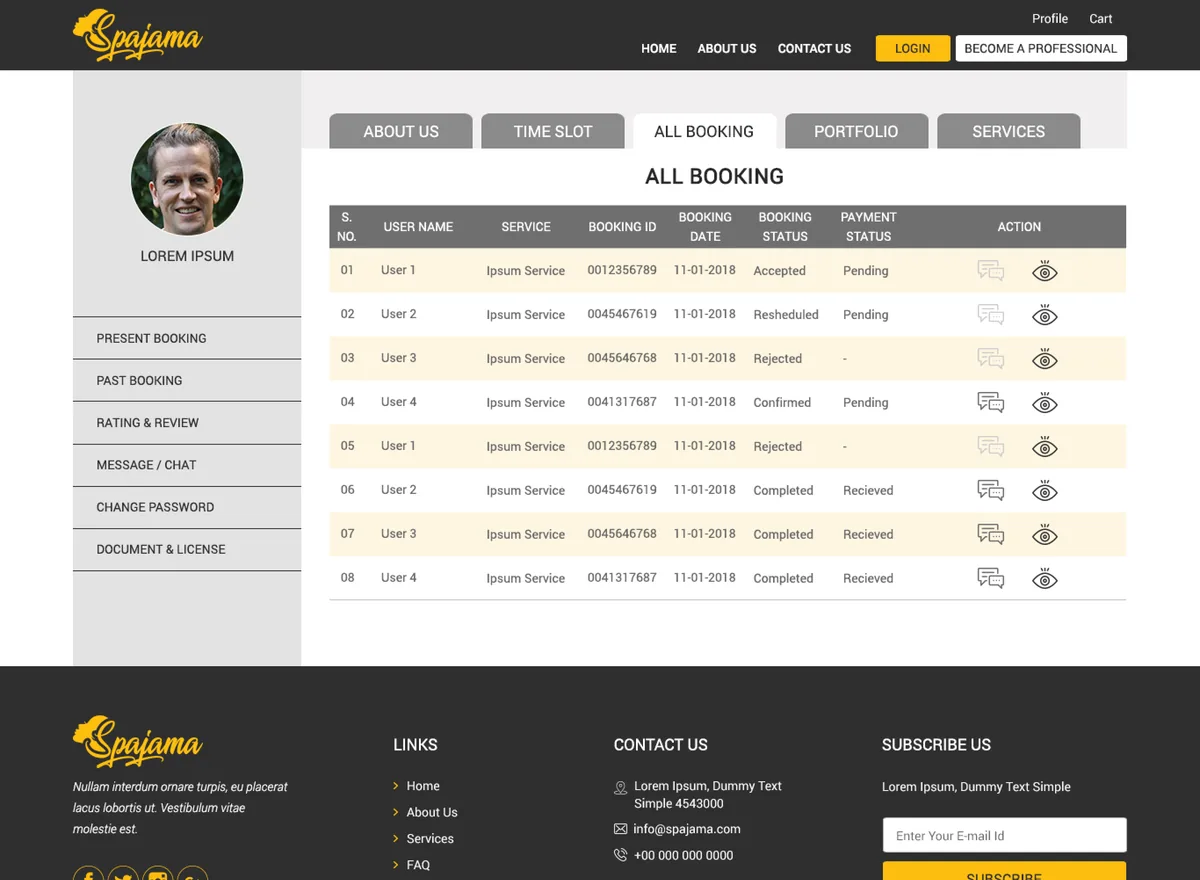
The customer side is a discovery-and-booking product: search, map, filters, a provider's portfolio and reviews, then a booking. The provider side is an operations product: incoming bookings to accept or reschedule, a service catalogue, time slots, a portfolio to showcase and documents to verify. Both read the same booking.
Why is a local services marketplace hard to get right?
A marketplace only works if both sides do. Customers need to trust and find a provider fast; providers need to run their whole booking operation in the same place. Miss either and one side leaves — and a two-sided product with one empty side is dead.
| Marketplace need | A basic booking form | In Spajama |
|---|---|---|
| Find a provider | A dropdown of names | Map discovery with location search and a service radius |
| Compare providers | Guesswork | Filters for rating, price and time, side by side |
| Decide to book | A phone number | Verified badge, portfolio, ratings and written reviews |
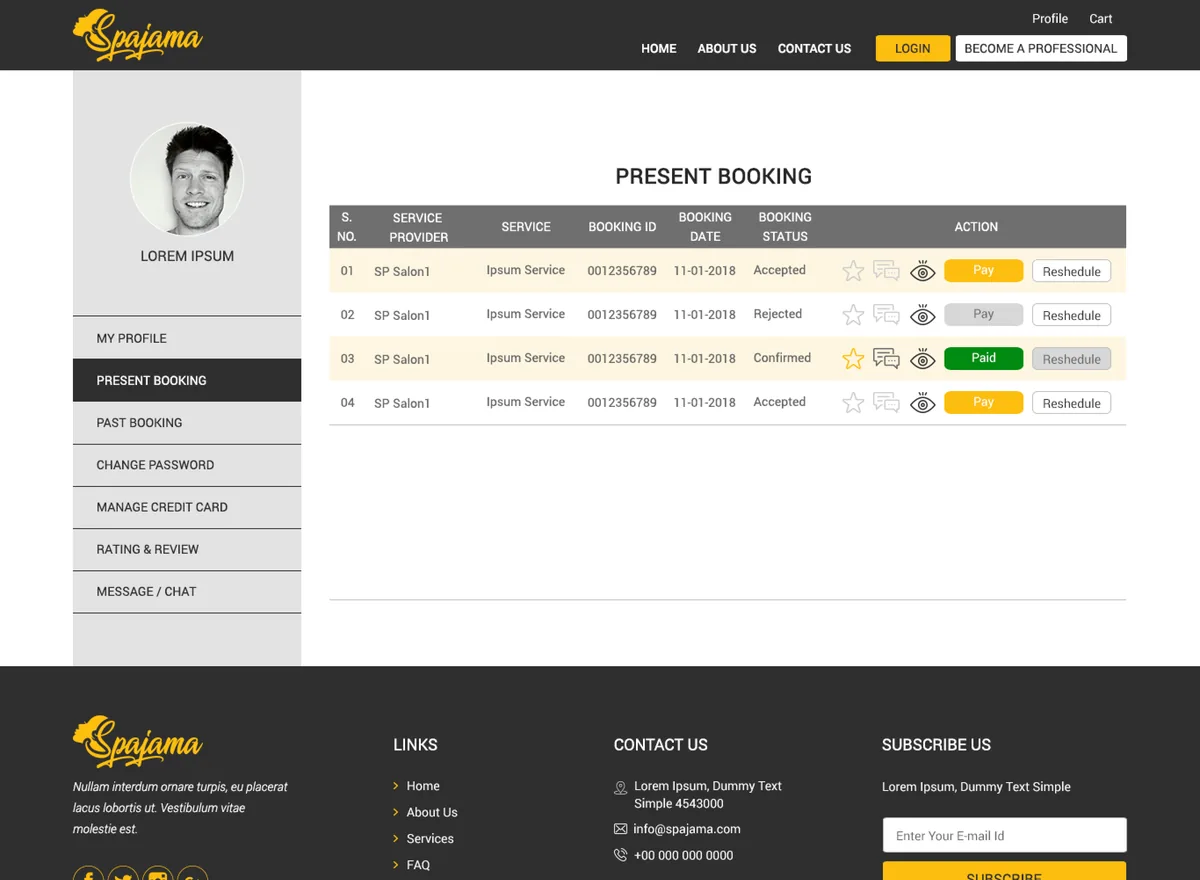
| Manage a booking | An email thread | Accept, reschedule or reject; pay and track status |
| Run the provider side | A separate diary | Bookings, services, time slots, portfolio and documents in one dashboard |
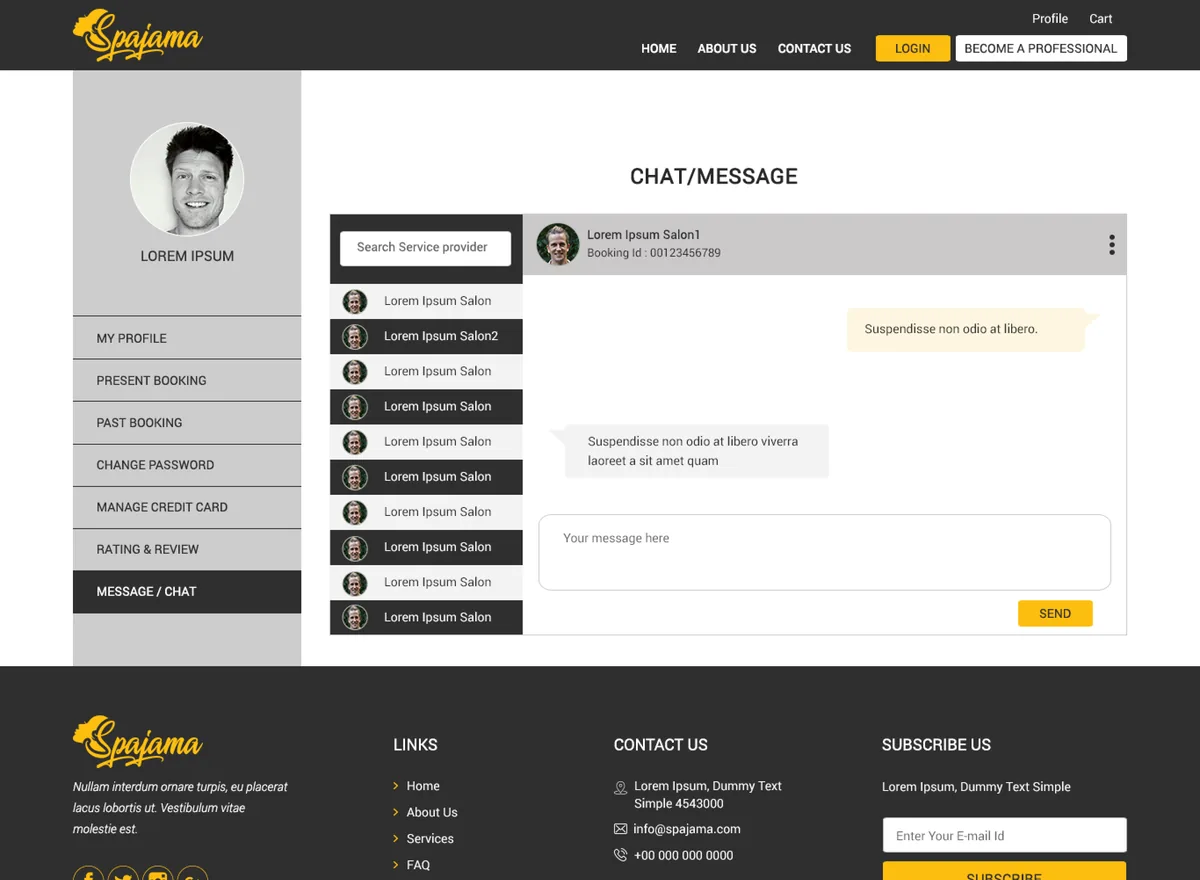
| Stay in touch | Texts and calls | In-app chat between customer and provider |
What do the customer and provider sides look like?
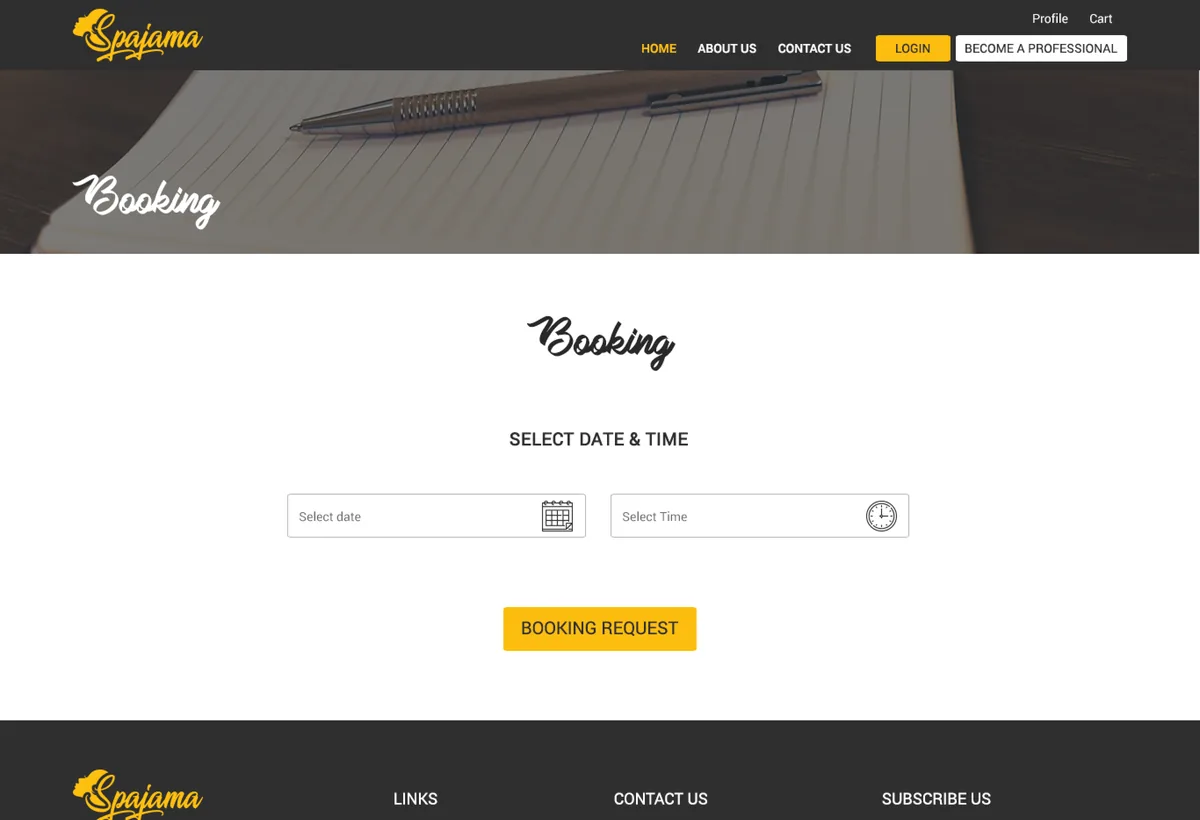
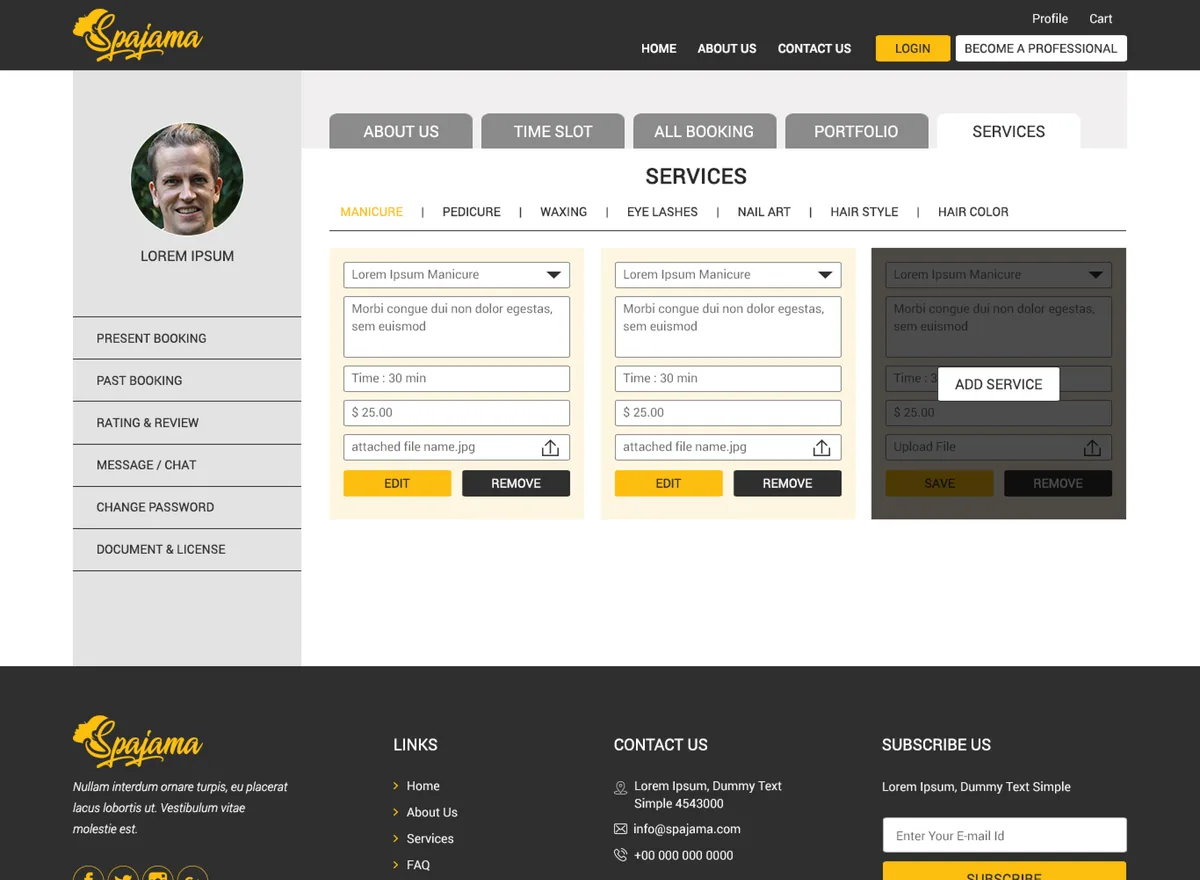
The discovery and booking screens a customer sees, and the operations dashboard a provider works from. Every screen below is a real surface in the platform.
How did we design and build it?
A marketplace fails on whichever side is neglected, so Spajama was designed as two products around one booking — the discovery-and-trust product for customers and the operations product for providers — rather than a customer app with a thin admin view.
How does a customer find and book a provider?
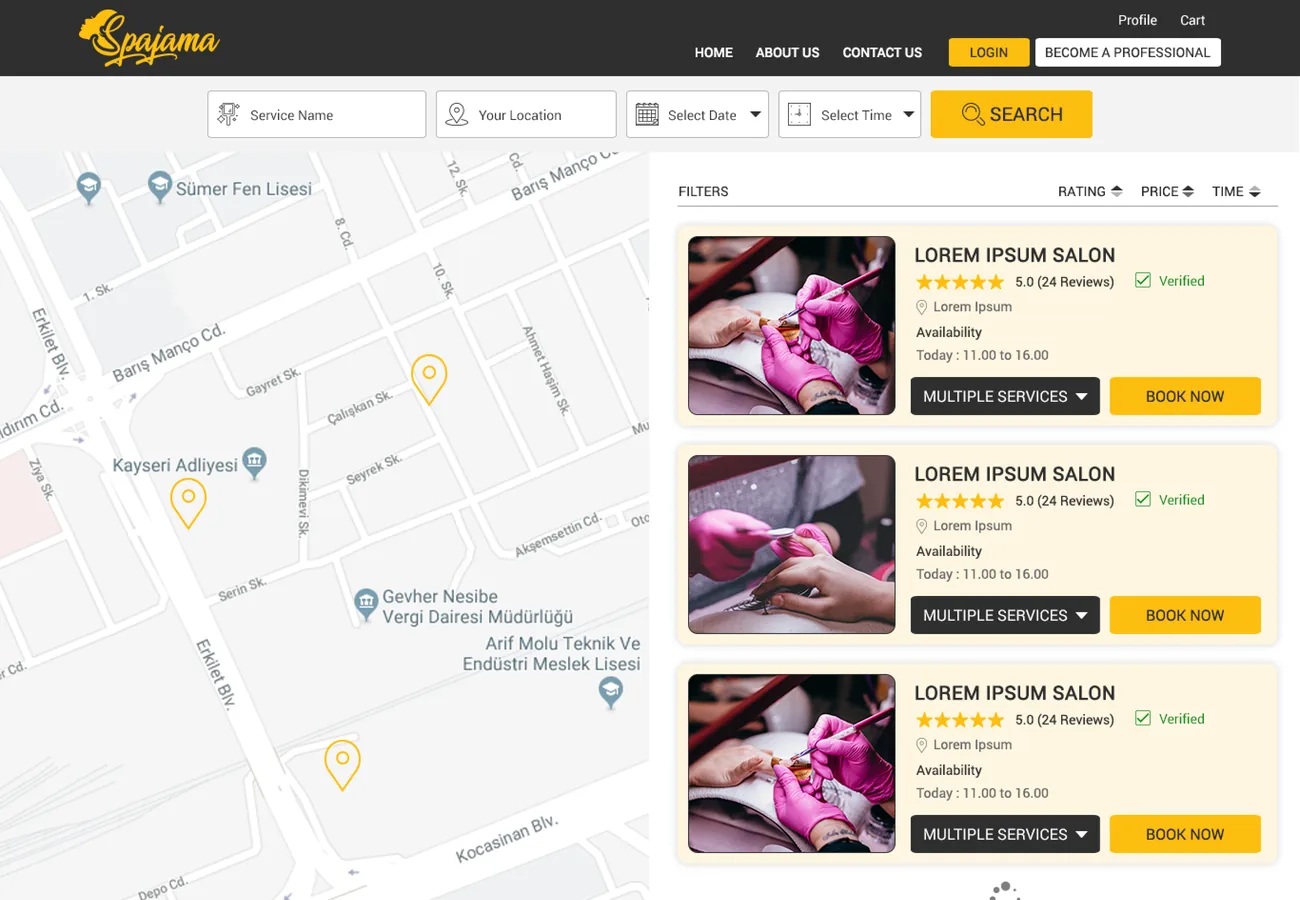
The discovery screen carries the whole customer side at once: search, a live map, comparison filters and provider cards that go straight to a booking. Every element on it is doing a specific job.
A customer searches by service name, their location, a date and a time — the four things that decide who can actually take the booking.
Results are plotted geographically, so a customer sees who is genuinely nearby rather than scrolling a flat national list.
Rating, price and time filters let a customer sort the same set of providers by the axis they care about most.
A verification badge marks providers who have cleared document checks, so trust is visible before a customer commits.
Each card shows today's hours, so a customer knows a provider is open before opening the profile.
Book now, or open the provider's multiple services and choose — the card is the start of the booking, not just an advert.
What does a local services marketplace actually need?
Six things decide whether a two-sided services marketplace holds together or loses one of its sides. They came out of building this one for beauty and spa and apply to any local, appointment-based marketplace.
- Spatial discovery. A map, location search and a per-provider service radius, because a local service you cannot reach is not a result.
- Comparison, not just a list. Filters for rating, price and time so a customer can weigh the same providers on the axis they care about.
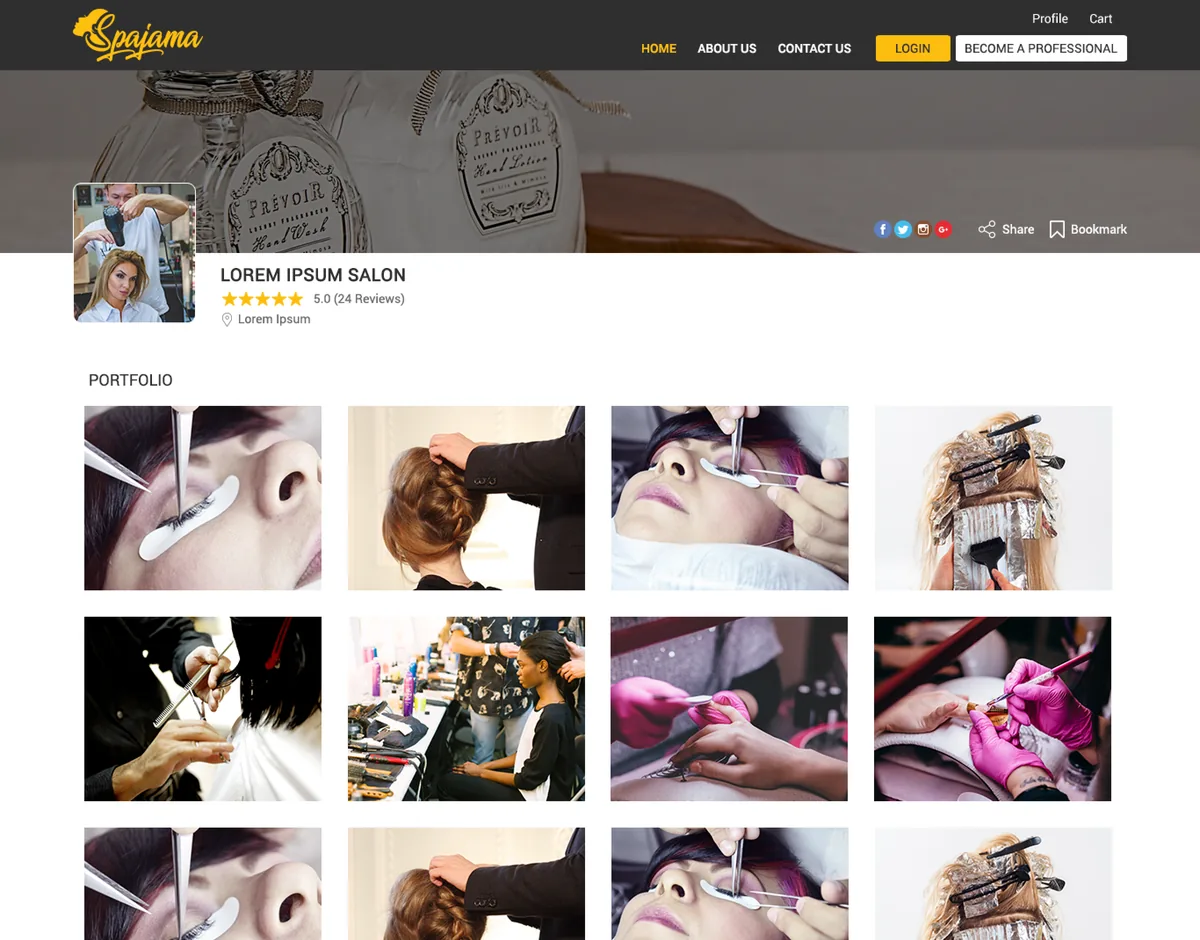
- Trust made visible. Verification, a portfolio, star ratings and written reviews — the things that turn a stranger's listing into a booking.
- A real provider console. Bookings, a service menu, time slots, a portfolio and document verification in one place, or providers leave.
- Status both sides can see. Accept, reschedule, reject, pay and complete, reflected on the customer's booking and the provider's desk together.
- Communication in the loop. In-app chat, so the conversation about a booking stays attached to that booking.
Building a services marketplace
The questions founders ask us first about building a two-sided marketplace.
Ask us yoursHow long does it take to build a services marketplace?
A two-sided marketplace at this scope — map discovery, provider profiles with trust signals, a booking flow and a full provider operations dashboard — is a multi-month programme, not a few weeks. The hard part is rarely one screen; it is keeping both sides in sync around a single booking and its status. We usually ship the customer discovery-and-booking side first, then the provider console, so there is something for early providers to run.
How do customers find providers near them?
Discovery is spatial. A customer searches by service, location, date and time, and providers appear on a live map, filterable by rating, price and time. Each provider carries a service radius, so only providers who can actually reach the customer show up. This is the difference between a local marketplace and a directory.
How does the platform build trust between strangers?
Through visible evidence rather than promises. Providers carry a verification badge earned through document checks, a portfolio of past work, star ratings and written reviews. A customer decides to book on what they can see, which is what makes a first booking with an unknown provider possible.
What does the provider get to manage their business?
A full operations dashboard: incoming bookings to accept, reschedule or reject; present and past bookings with payment status; a service catalogue; time slots for availability; a portfolio to showcase work; in-app chat; and document and licence management. The provider runs their whole marketplace presence from one place rather than juggling separate tools.
Can a marketplace like this be built for my sector?
Yes. Spajama is built for beauty and spa, but the pattern — map-based discovery, trust signals, a booking flow and a provider operations console around one shared booking — transfers to any local, appointment-based services marketplace. Shanti Infosoft designs and builds two-sided marketplaces end to end and scopes them on a short call.
Related work
Building a marketplace for your sector?
Tell us how your business actually works and we will tell you honestly what it takes to build. See more of our work or what we do.
Book a 15-minute call