


Inspect from anywhere
A remote property inspection platform for renovation lending: a property carries its scope of work, escrow and parties, an owner requests an inspection element by element, an inspector runs a live video walkthrough, and a lender approves the release.
Sector
- Property inspection & lending
Product
- Web platform
Signature
- Live video walkthroughs
Parties
- Owner
- Agent
- Lender
- Inspector
What is the Property Inspection platform?
When a lender funds a renovation, someone has to confirm the work is really happening before more money is released. This platform lets that confirmation happen over live video instead of a plane ticket and a site visit.
One property record, four parties, a video trail
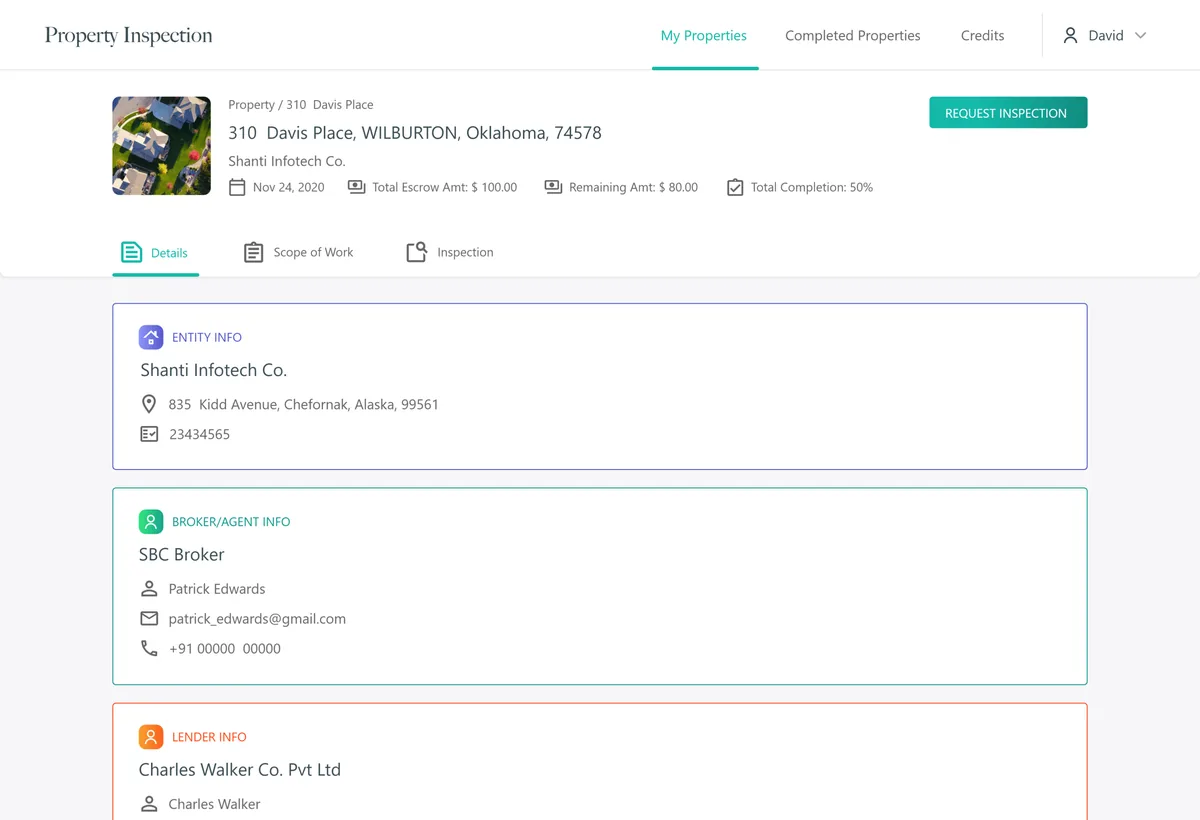
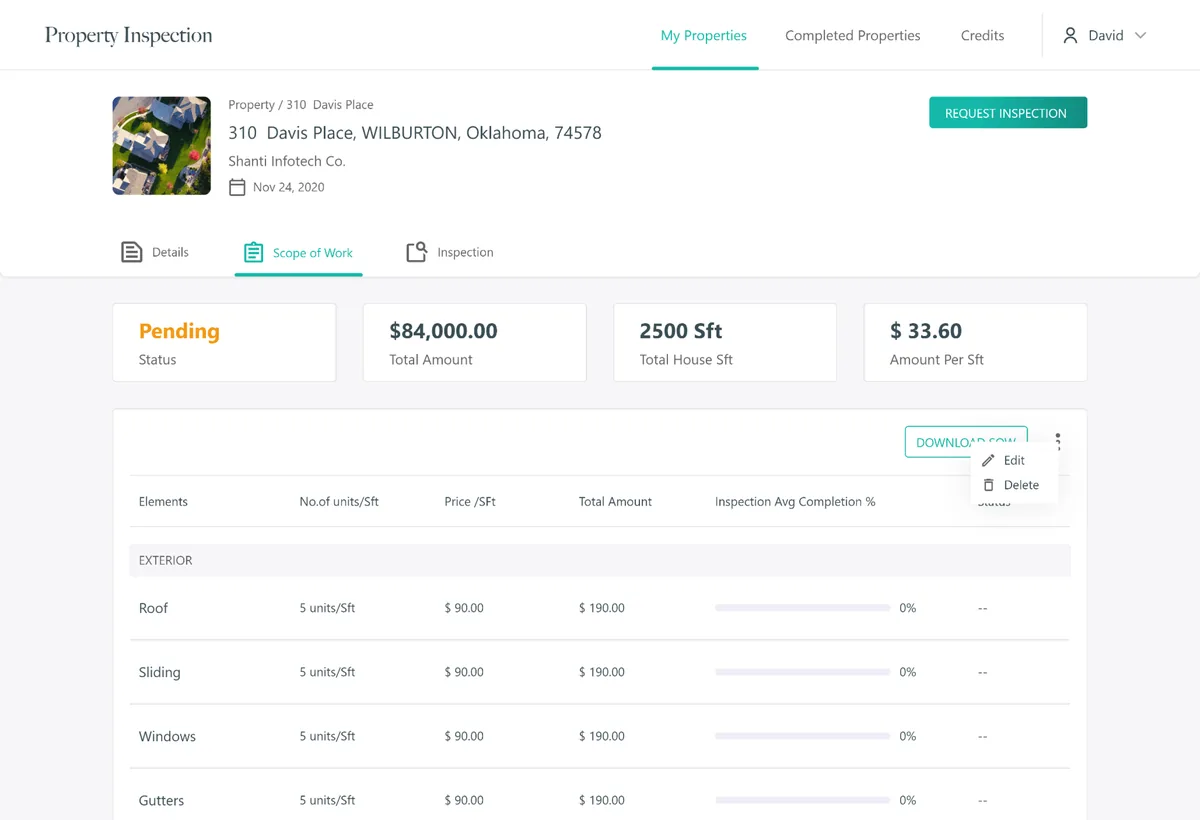
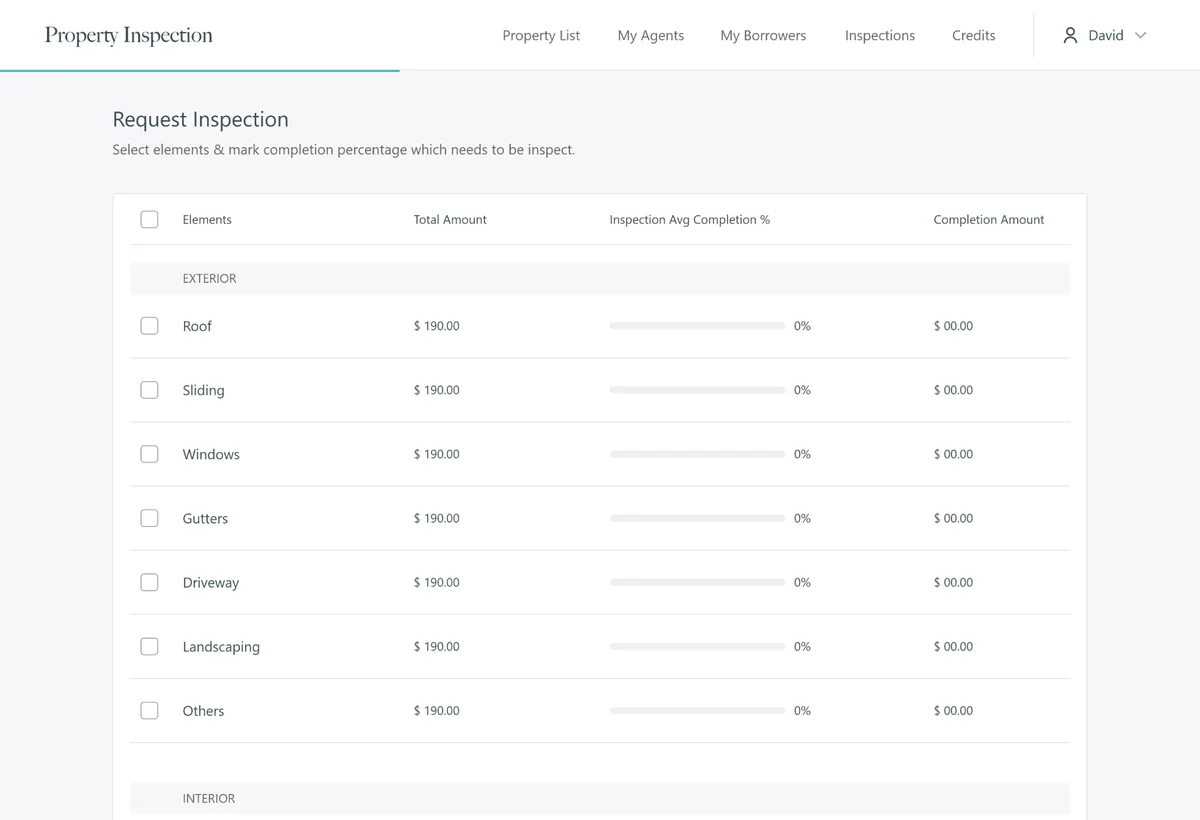
Every property carries its entity, agent and lender, a scope of work, an escrow balance and a completion percentage. An owner requests an inspection against specific elements, an inspector records a live walkthrough, and the lender approves the release against what they can see.
Why inspect a renovation remotely?
Draw-based renovation lending depends on proof that work has progressed. Sending an inspector to every property for every draw is slow and expensive - and the paperwork rarely ties back to what was actually seen.
| Verifying a draw | The site-visit way | On the platform |
|---|---|---|
| Getting eyes on site | Book and drive an inspector out | A scheduled live video walkthrough |
| Tying proof to scope | Photos loose in an email | Recorded element by element against the SOW |
| Paying for it | An invoice per visit | A click against a credit wallet |
| Tracking a request | A chased phone call | Open, scheduled, completed states |
| Releasing the draw | Approved on trust | Lender approves against the inspection |
The screens the work runs on
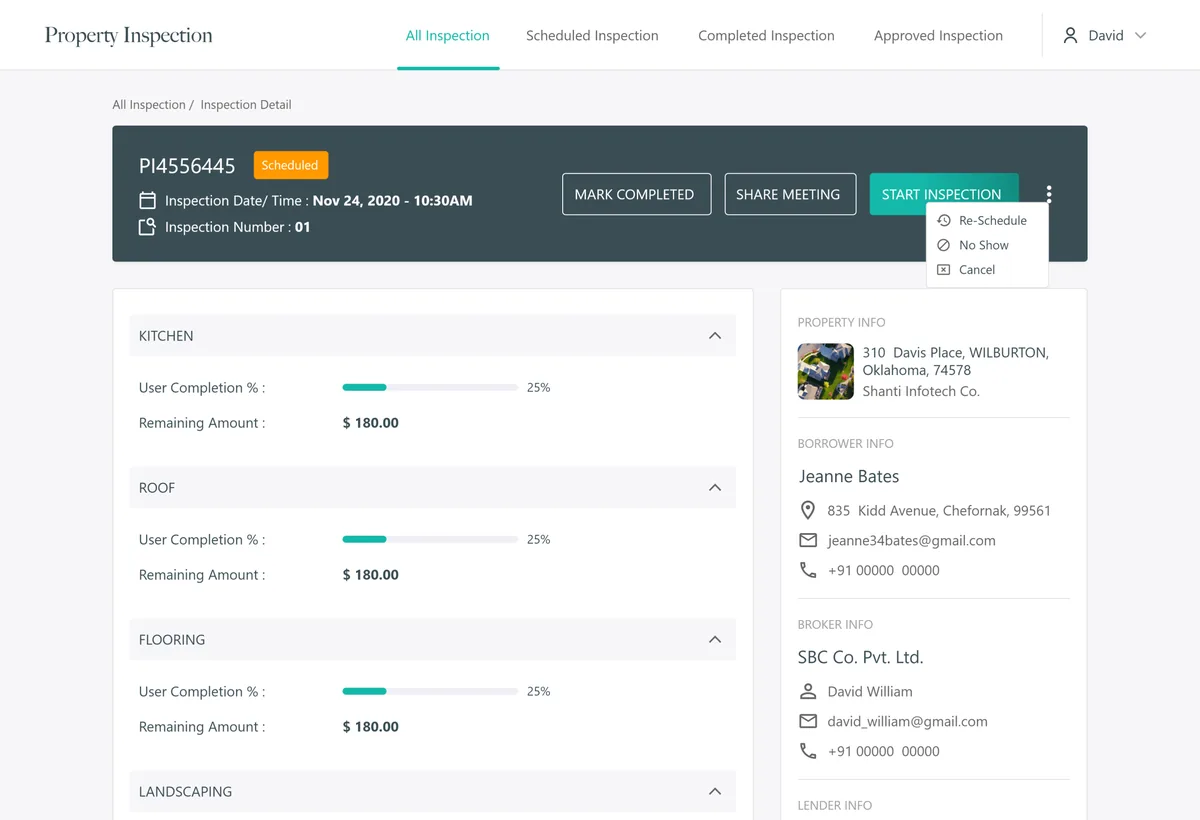
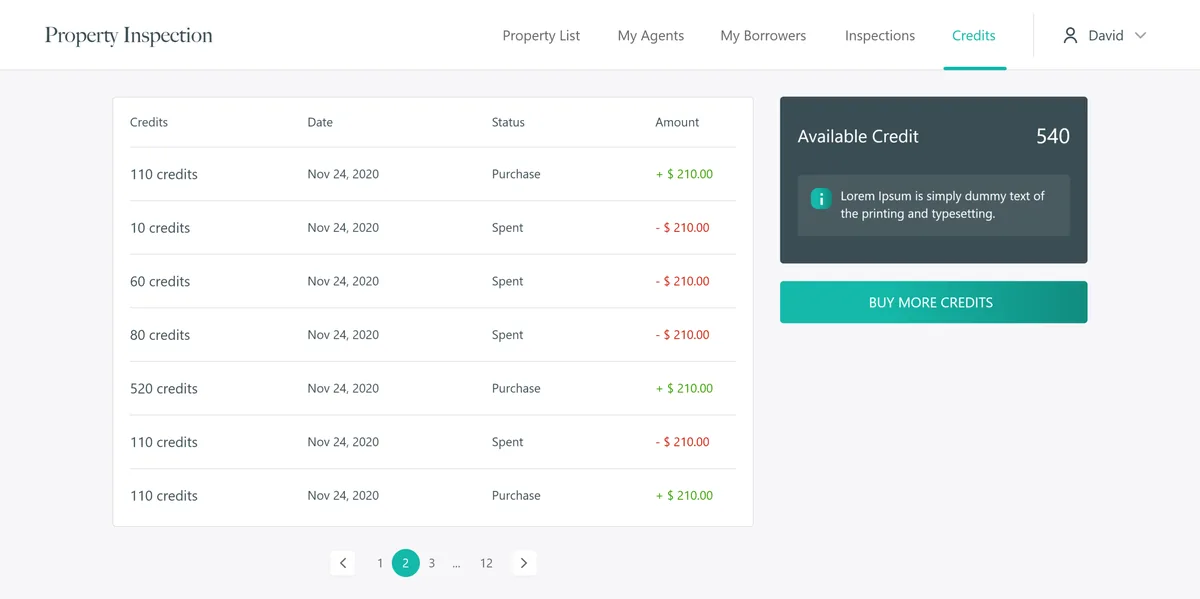
From a property's full record to a recorded walkthrough and the states a request moves through, every surface is built for a lender's team to read quickly and trust.
How does a draw get verified?
The order is the whole argument: a request becomes a scheduled walkthrough becomes a completed, reviewable inspection the lender can approve. Each party acts at exactly one point in the chain.
- 01
Request the inspection
The owner picks which elements of the property to inspect on this draw.
Owner - 02
Schedule a slot
A date and time are set for the live walkthrough.
Owner - 03
Pay from credits
The request is funded from the account's credit wallet, topped up as needed.
Owner - 04
Live video walkthrough
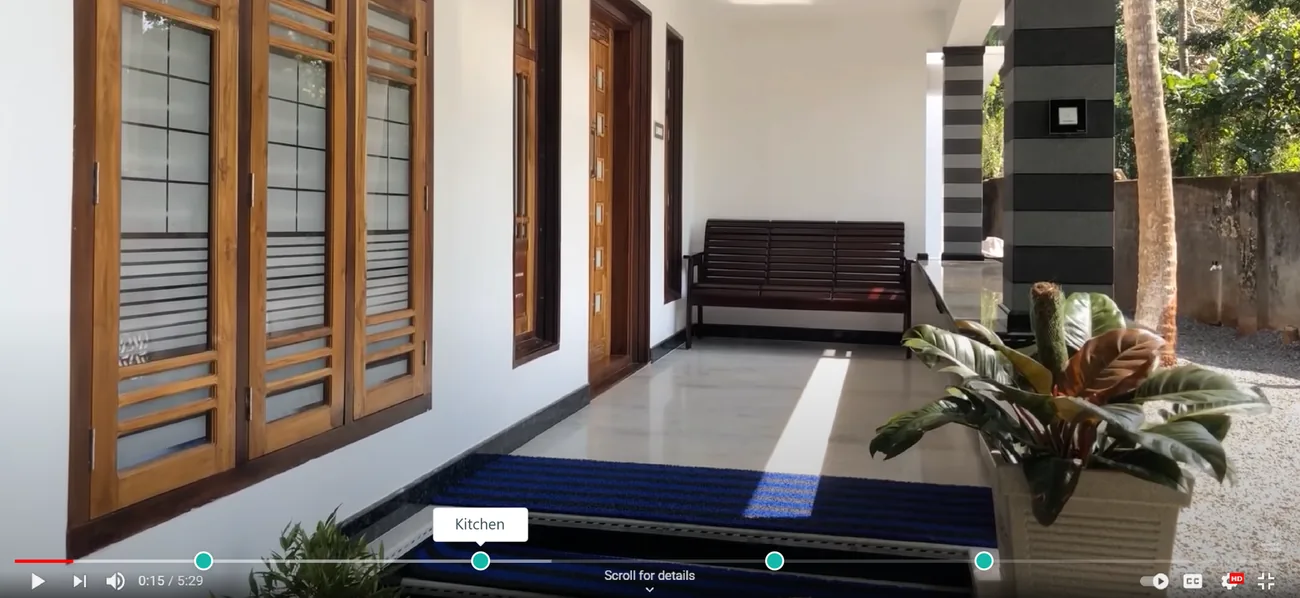
The inspector joins, verifies location, and records the property element by element.
Inspector - 05
Inspection completed
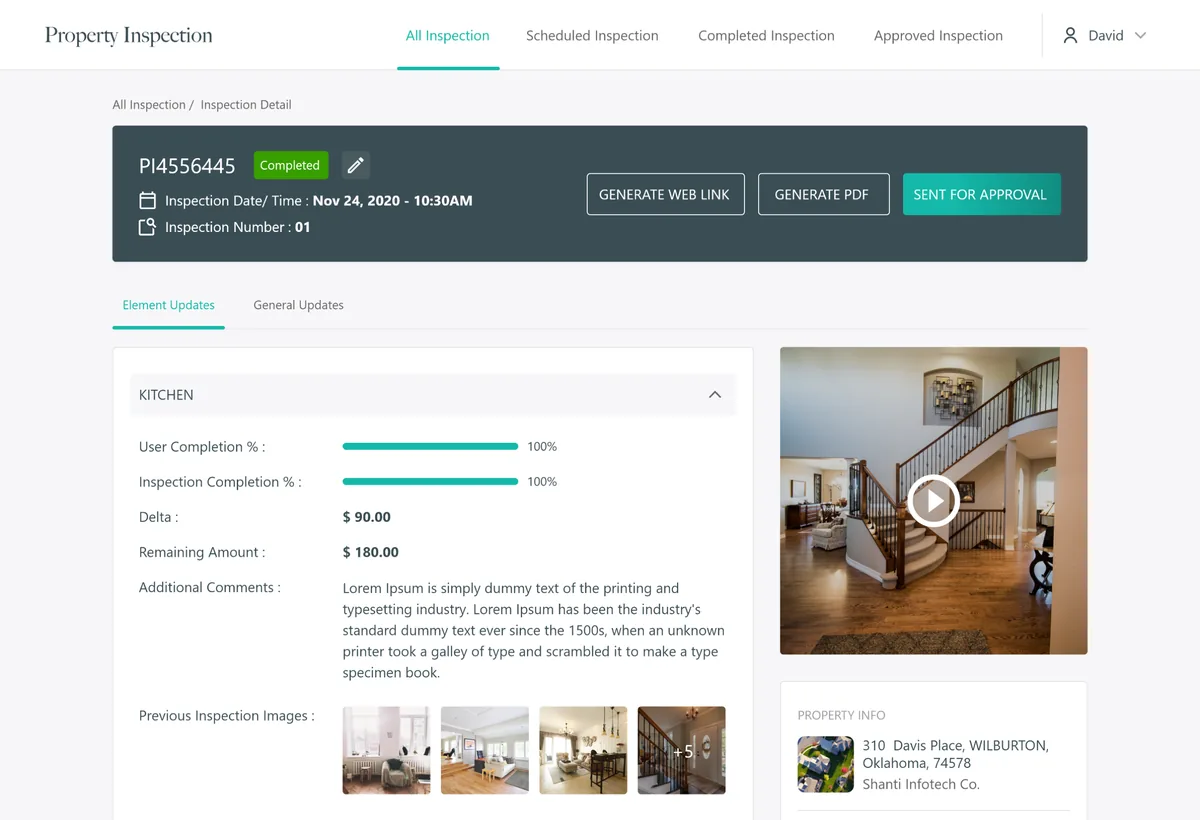
The request moves open, scheduled, completed, with the recording attached.
Inspector - 06
Lender approves
The lender reviews the completed inspection against the scope of work and approves the release.
Lender
Scroll the path sideways
What does any remote-verification platform need?
These came out of building a remote inspection tool for lending, and they hold for any product where money moves on the strength of proof captured at a distance.
- Proof tied to the thing it proves. A recording is only evidence if it is attached, element by element, to the scope it satisfies - loose photos prove nothing.
- A clear state on every request. Open, scheduled, completed - a party should always be able to say exactly where a request is without asking.
- The approver sees what the inspector saw. The lender approves against the actual walkthrough, not a summary someone typed up afterwards.
- Pay per action, not per invoice. A credit wallet turns each request into a click against a balance, which is what makes frequent inspections practical.
- Every party fenced to their step. Owner, inspector and lender each act at one point in the chain and see only what that step needs.
- Location verified, not assumed. A remote walkthrough is only trustworthy if the platform confirms the inspector is actually at the property.
What does the platform look like, and why?
A confident inspection teal carries every action and active state, over a deep pine ink and a soft neutral canvas. The parties on a property are colour-coded - entity, agent and lender each get their own tint - so a dense record stays scannable at a glance.
Aa
Primary typeface
Poppins
A B C D E F G H I J K L M N O P Q R S T U V W X Y Z
a b c d e f g h i j k l m n o p q r s t u v w x y z
0 1 2 3 4 5 6 7 8 9 & ? ! £ $ €
26pxProperty titleTitle18pxCard headingH314pxRecord field & bodyBody12pxSECTION & TAB LABELSLabelA single Poppins family runs the platform, kept tight for dense property records and tab bars. Poppins is an open-licence typeface; the specimen falls back to the nearest available face if it is not installed on your device.
Building a remote inspection platform
What lenders and PropTech founders ask us first about a platform like this.
Ask us yoursHow long does it take to build a remote inspection platform?
A platform with property records, a scope of work, a request-and-schedule flow, live video and multi-party approval typically takes four to six months. The video walkthrough and the approval model drive the date more than the record screens do. We usually build the property record and request flow first, then the live video and lender approval around them.
How much does a platform like this cost?
It depends on scope, and no honest figure comes off a feature list alone. The biggest drivers are the live-video build, how many parties and states are in the workflow, and whether it integrates with an escrow or loan-servicing system. Shanti Infosoft scopes it on a short call and returns a fixed quote.
How does the live video inspection work?
The inspector joins a scheduled video meeting, the platform verifies they are at the property, and the walkthrough is recorded element by element against the scope of work - so the lender later reviews exactly what was seen, tied to the line it satisfies.
Can different parties see different things?
Yes. A property carries its entity, agent, lender and inspector, and each acts at one point in the lifecycle - the owner requests, the inspector records, the lender approves - seeing only what their step needs.
How are inspections paid for?
Through a credit wallet. The account tops up a balance and spends against it per request, which is what makes frequent, draw-by-draw inspections practical rather than an invoice each time.
Related work
Building a remote inspection or verification platform?
Tell us how your business actually works and we will tell you honestly what it takes to build. See more of our work or what we do.
Book a 15-minute call