


Follow the players
A sports content and player-following web portal. It pulls the news, the events calendar, the results and - the heart of it - a rich profile for every player into one place, so a fan can follow the sport and the people in it without stitching together a dozen feeds.
Sector
- Sports media
- Fan content portal
Product surface
- Content web portal
- News, events, players & results
What we did
- UX and UI design
- Web development
Built around
- Players fans follow
- The events they play
What is Liv Insider?
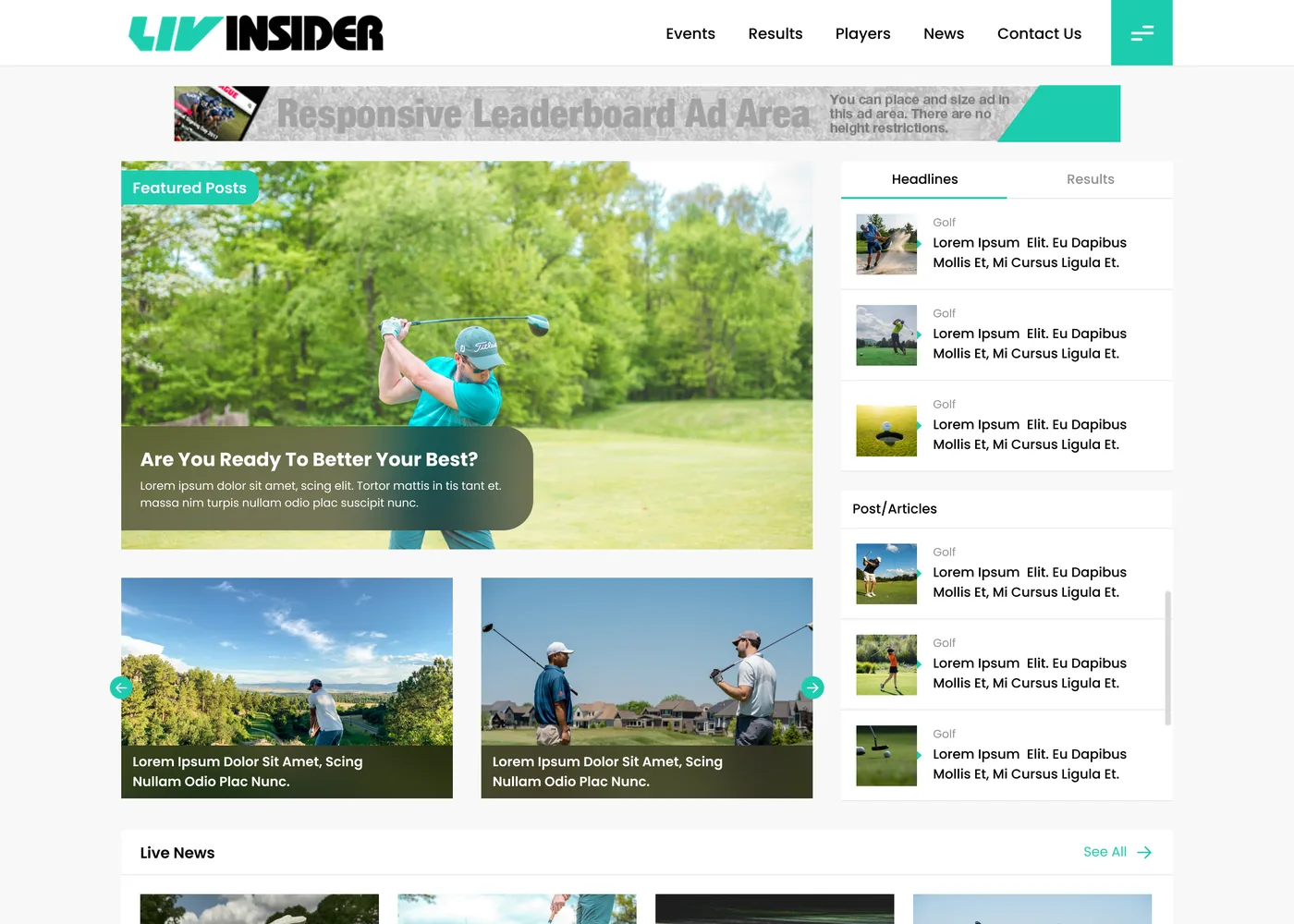
A content portal for a sport and the players in it. Instead of a news site that treats athletes as a byline, Liv Insider is organised around the players themselves - each with a full profile - alongside the news, the events calendar and the results that put their performances in context.
A portal organised around the players, not just the news
Fans do not follow a sport in the abstract; they follow people. So the portal's centre of gravity is the player profile - posts, news, events and scores in one place - with the news feed, events calendar and results wrapped around it, and ad placements designed in for sponsors.
Why is following a sport online such a scattered experience?
Because the news, the schedule, the results and the players all live in different places, and none of them are organised around the person a fan actually follows. The design work here was to pull those four things into one portal with the player profile at its heart.
| Following a sport | Scattered across the web | In one Liv Insider portal |
|---|---|---|
| Keeping up with news | A dozen feeds and sites | A single, curated news section |
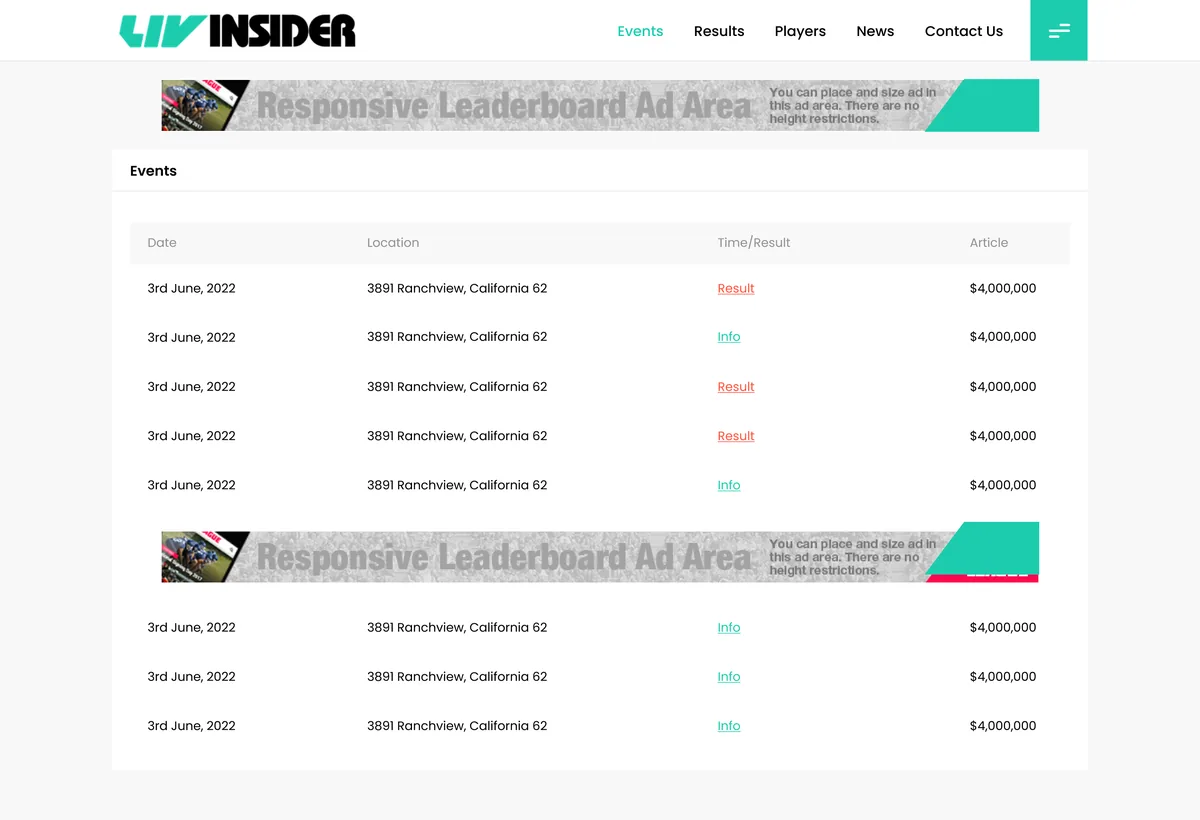
| The event calendar | PDFs and social posts | An events listing with detail pages |
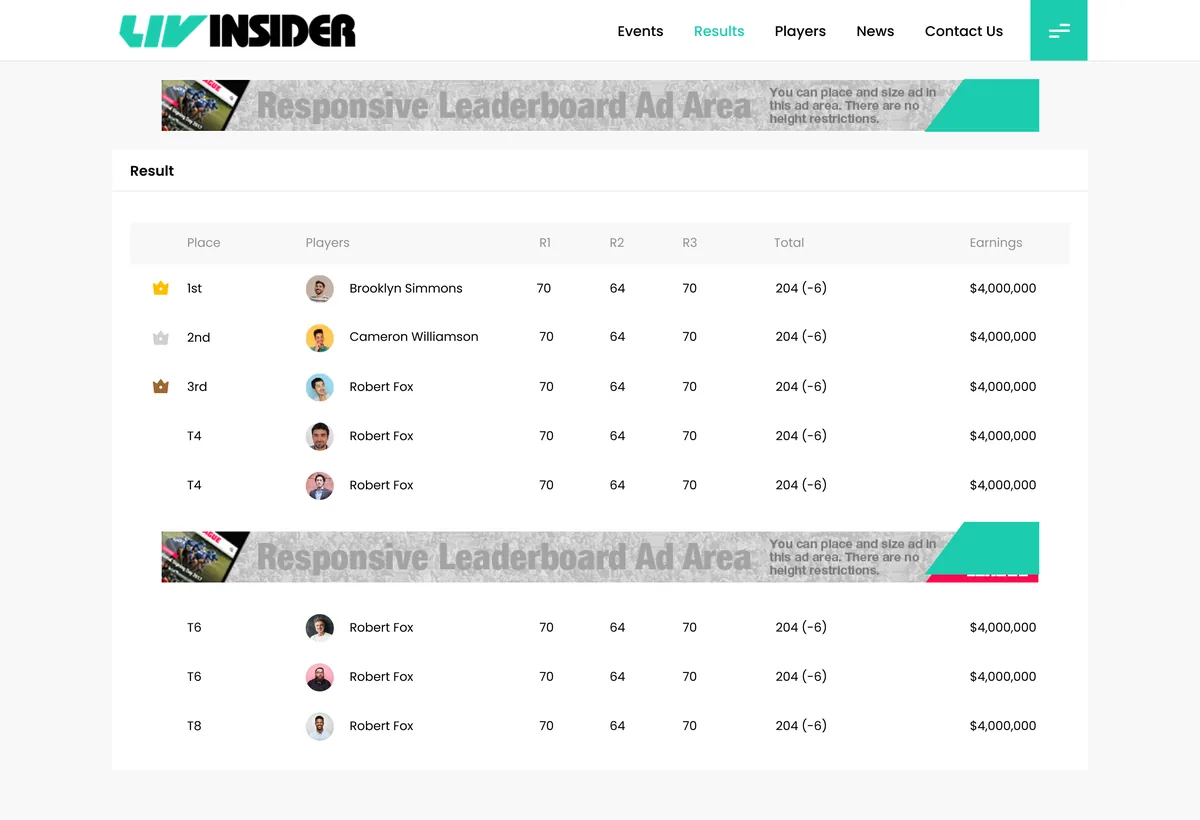
| Checking results | Buried on a federation site | A dedicated results page |
| Following a player | Piecing together their socials | A profile with posts, news, events and scores |
| A player at a glance | Nowhere consistent | A stat header - ranking, earnings and highlights |
| Selling to sponsors | No room for advertising | Responsive ad placements built into the layout |
What is on the site?
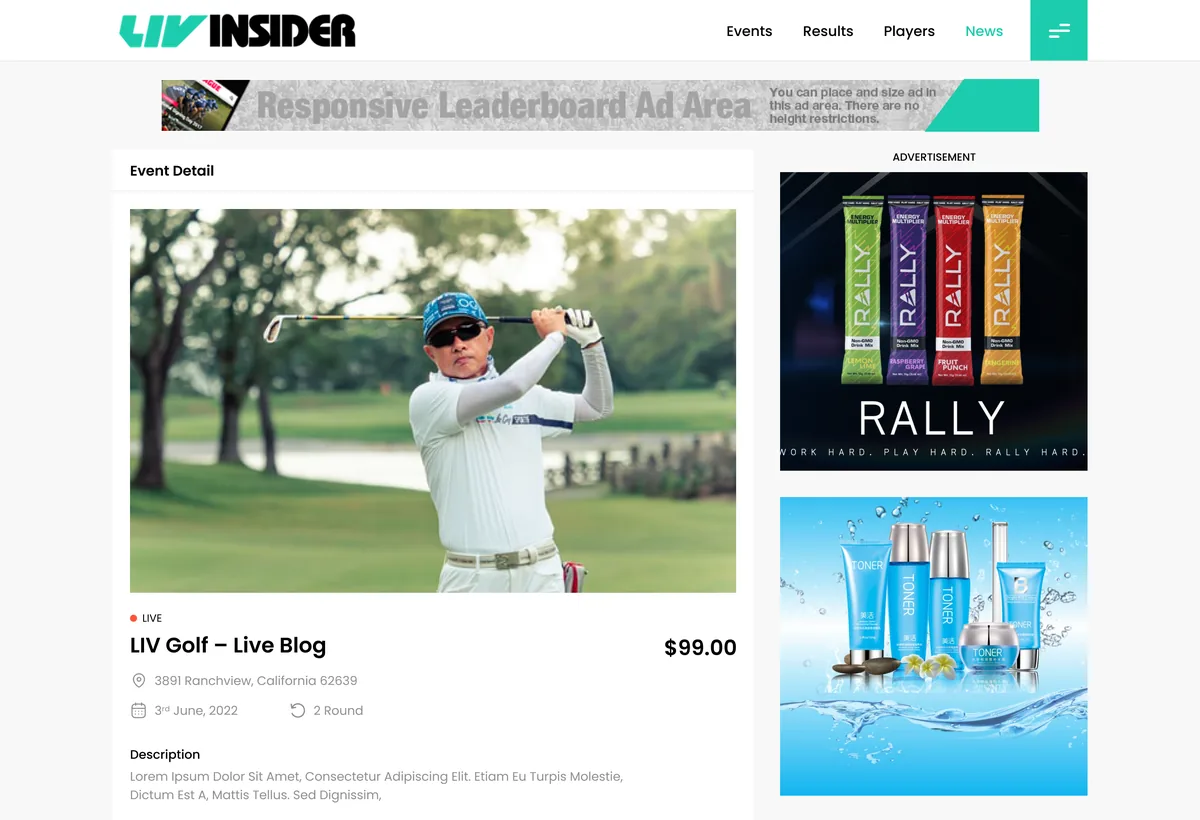
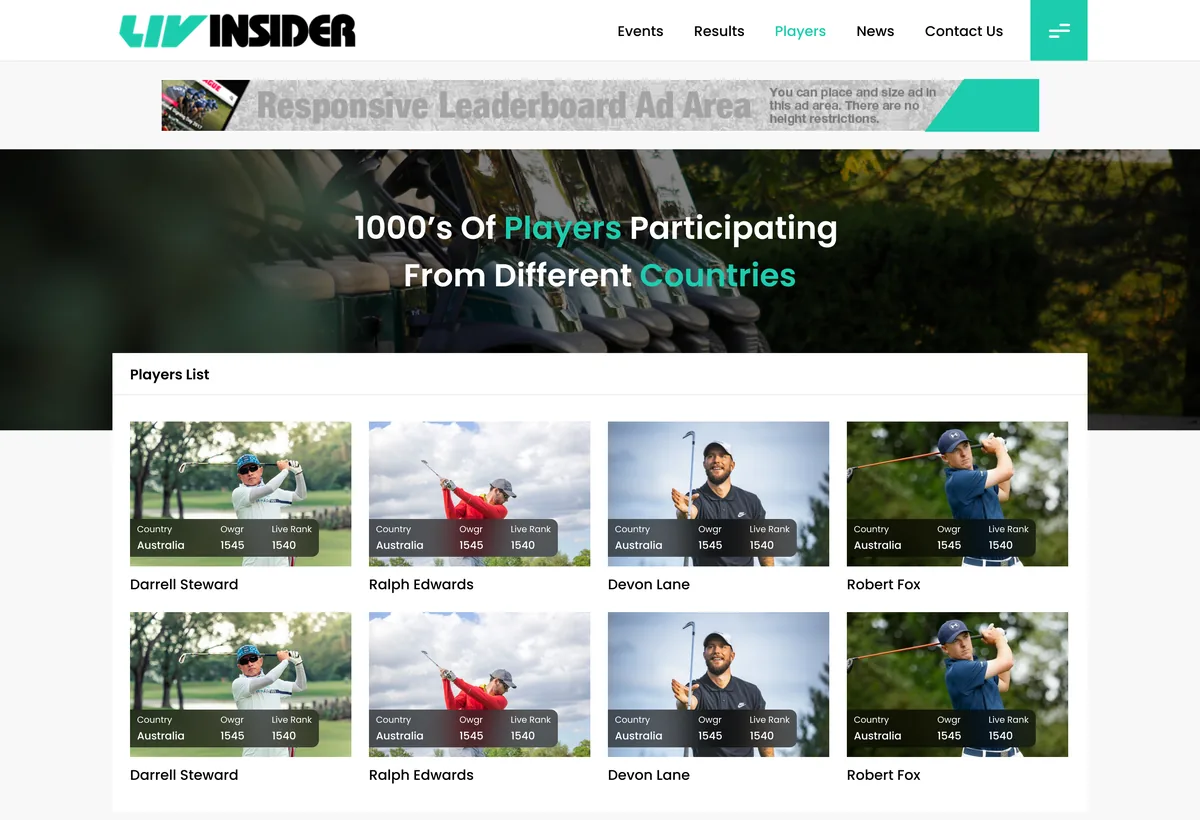
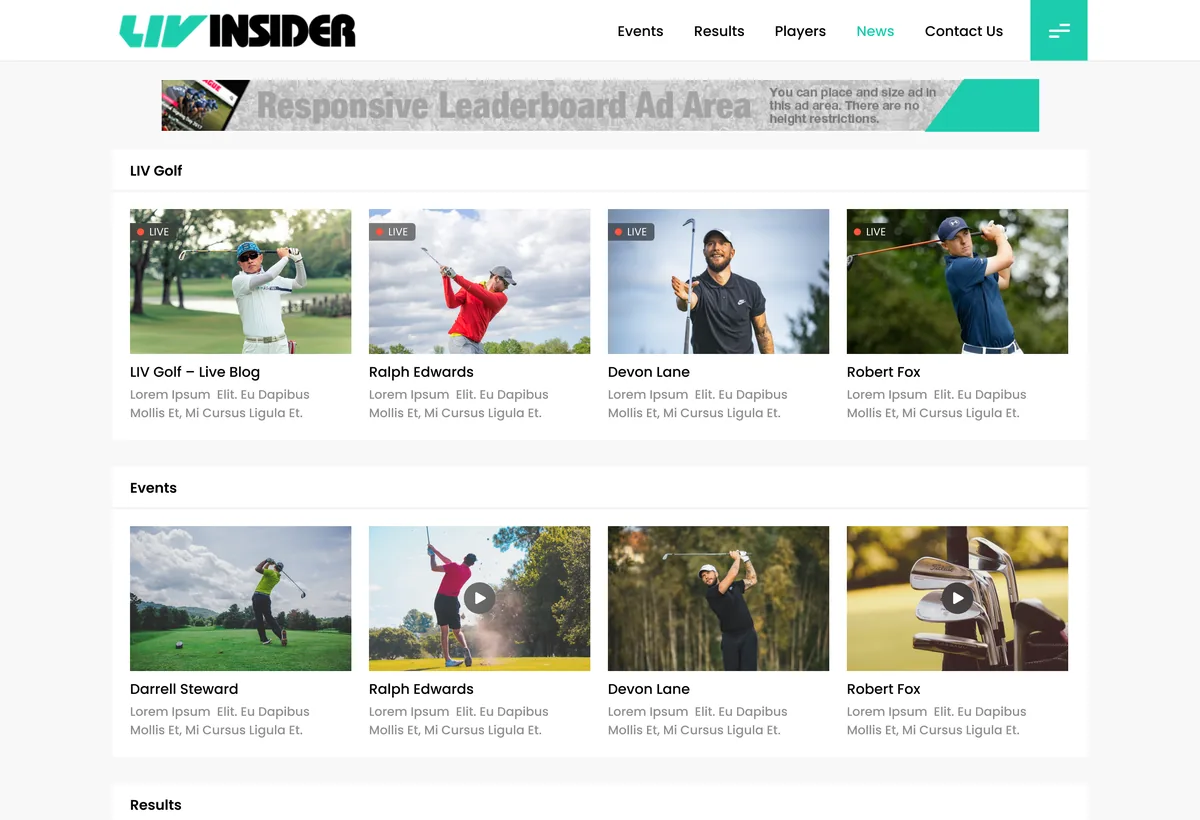
The news, the events calendar and its detail pages, the players directory and their profiles, and the results - the full surface of a portal built for fans to live in.
What is on a player profile?
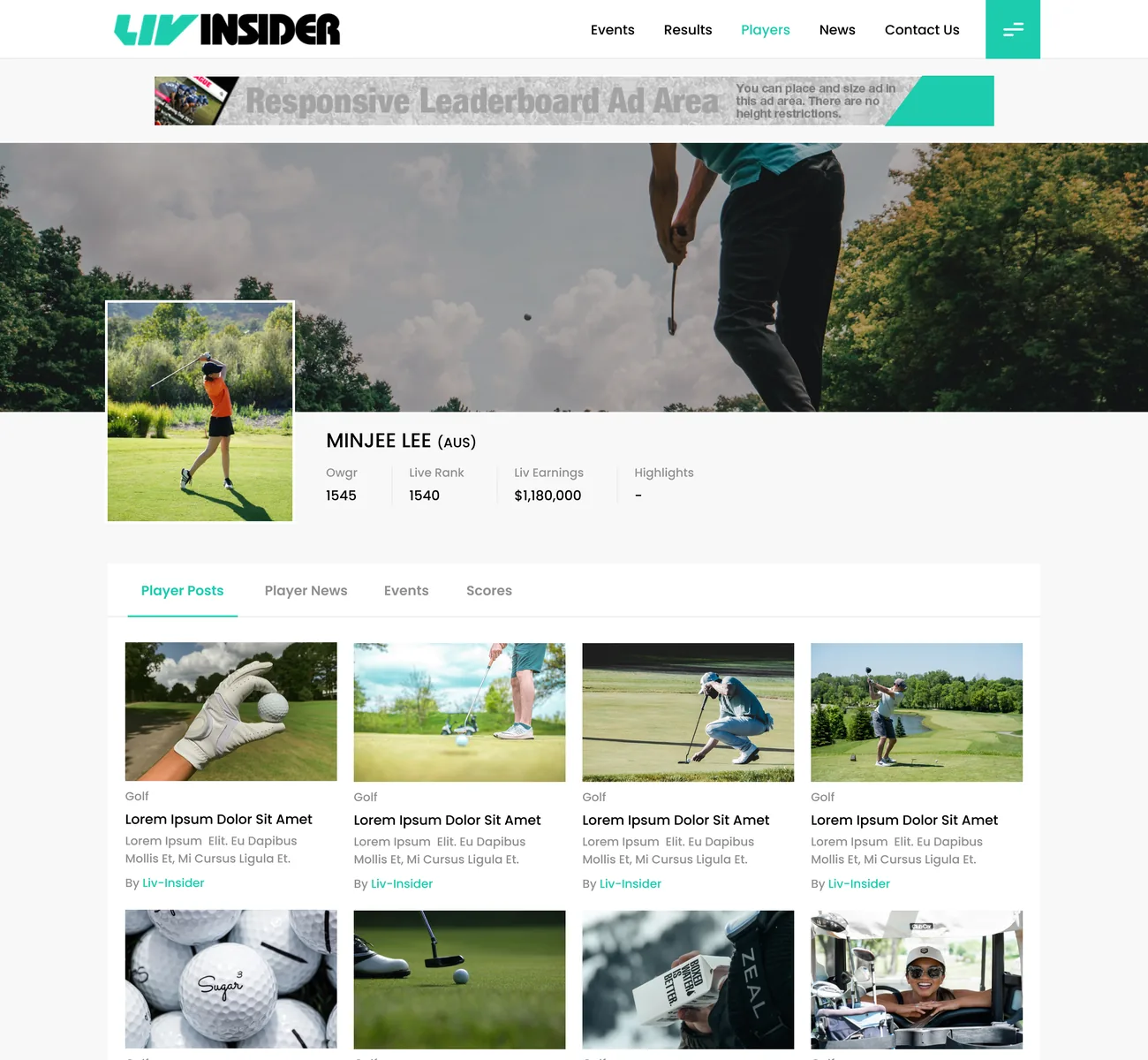
The player profile is the heart of the portal, and everything a fan wants about one player is arranged on a single page. Where each element sits - and in what order - is the design work.
The players directory is a top-level section, signalling that following individuals is central to the portal, not a sub-page.
A responsive leaderboard ad area sits above the content, so the audience the portal builds has somewhere to be monetised.
A cover image and headshot give each player a strong, recognisable identity at the top of their profile.
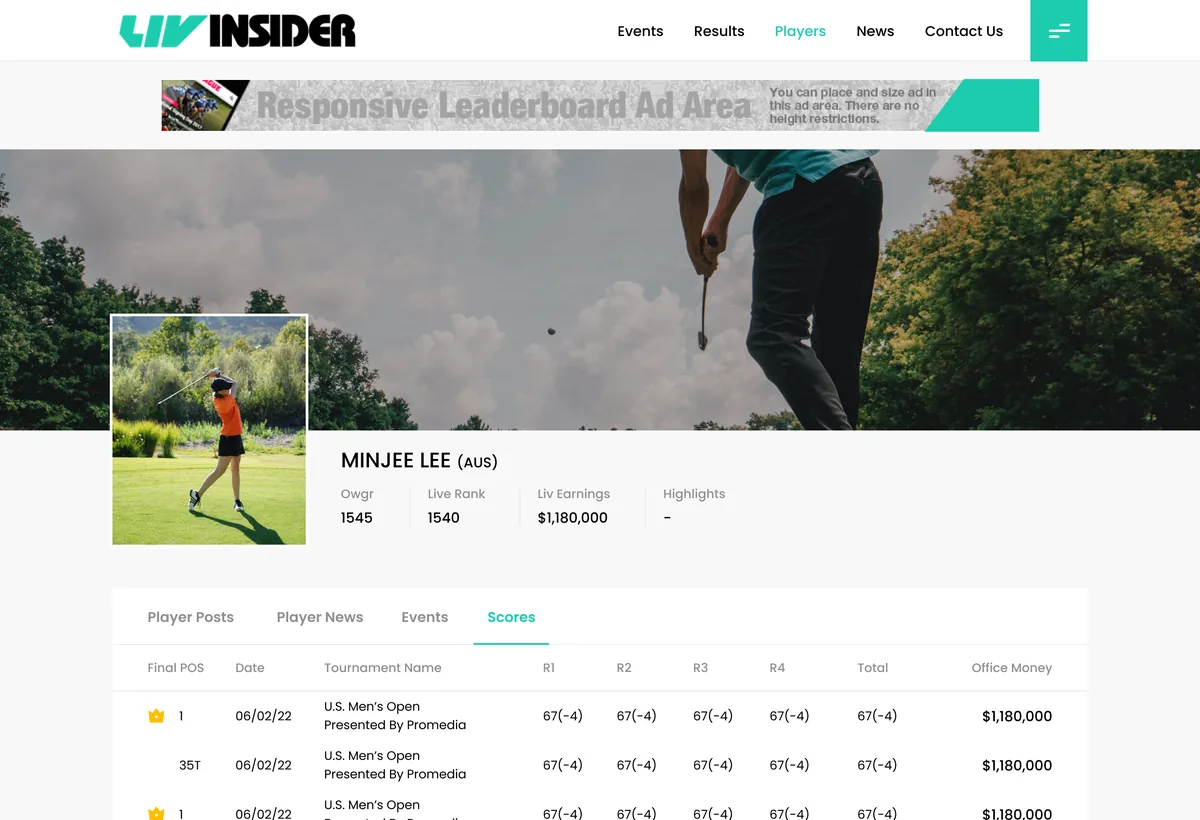
A stat header carries the numbers a fan checks first - world ranking, live rank, earnings and highlights - before any deeper content.
Player Posts, Player News, Events and Scores split the profile into the four things worth following about one player.
A grid of posts tagged by category, the ongoing content that gives a fan a reason to keep returning to a profile.
What does a sports content portal need to get right?
Six things separate a portal fans live in from a news site they bounce off. They came out of designing this one and hold for any audience-and-content product built around people.
- Organise around who people follow. Fans follow players, not abstractions. Making the player profile the centre of gravity is what turns a news site into a portal.
- Give the profile real depth. A stat header plus tabbed content - posts, news, events, scores - is the hook. A thin profile is just a photo and a name.
- Lead with the numbers, then the detail. A fan checks ranking and results first. Putting the at-a-glance stats above the content respects how people actually read a profile.
- Make the calendar browsable. An events listing with real detail pages beats a PDF every time, and each fixture page is another thing search can find.
- Design for monetization from the start. Responsive ad placements built into the layout mean the audience a portal earns can be sold, rather than retrofitting ads later.
- Build for search. Content portals live and die by discovery, so structured pages for news, events, players and results are what feed the whole thing from Google.
How is it built?
A content-managed web portal with structured content types, tabbed profiles, an events calendar and ad placements - the shape any people-centred sports or media product needs.
Building a sports or content portal
What media and sports businesses ask us before building a content portal.
Ask us yoursHow long does it take to build a content portal like this?
A first production version usually takes ten to eighteen weeks. The templates are quick; the time goes into the content model - how players, events, news and results relate - plus the tabbed profiles and the content management behind them, which are what make a portal maintainable rather than a one-off build.
How much does a sports content portal cost?
It depends on scope, and it cannot be quoted from a page count alone. The biggest cost drivers are how many content types there are and how they interconnect, whether there is a content management system to build, and the ad and membership features layered on top. Shanti Infosoft scopes it on a short call and returns a fixed quote.
Can fans and players manage their own content?
That is a scope decision. The portal can run purely as an editorial product, or it can open up so players and contributors publish their own posts and updates through managed roles. We design the content model first, so adding self-service publishing later is a configuration rather than a rebuild.
How do you make a content portal earn money?
By designing for it from the start. On this portal, responsive ad placements are built into the layout rather than bolted on, so sponsorship has a home. Beyond advertising, the same audience can support memberships or premium content, all of which are easier to add when the content structure is clean underneath.
Will it rank in search?
That is a core reason to build a portal rather than post to social. Structured pages for players, events, news and results give search engines something to index, and a steady stream of content keeps the site fresh. We build the templates and markup so the portal is discoverable from day one.
Related work and services
Building a content portal or media product?
Tell us how your business actually works and we will tell you honestly what it takes to build. See more of our work or what we do.
Book a 15-minute call