


Three apps, one order
Linkin Food is a food delivery ecosystem built as three coordinated apps, one for the customer, one for the restaurant, and one for the delivery rider. A single order moves cleanly between all three, from placement through preparation to a tracked handover, with each side carrying its own wallet.
Sector
- Food & beverage
- Delivery logistics
Apps
- Customer
- Restaurant
- Rider
What we did
- UX + UI design
- Mobile app build
Commerce
- Per-app wallets
- COD & card
What is Linkin Food?
A delivery order touches three very different people: someone hungry, a kitchen, and a rider on the road. Linkin Food gives each their own app, and keeps one shared order moving between them.
One order, three points of view
The customer orders and tracks. The restaurant accepts, prepares and marks ready. The rider takes the job, picks up and delivers. Each app is designed for the hand that holds it, and the same order, status and money model runs underneath all three, so nothing falls between the apps.
Why build three apps instead of one delivery app?
A customer, a kitchen and a rider want opposite things from the same order. Forcing them into one interface serves none of them well. The hard part is not the three apps; it is keeping one order coherent across all of them.
| Who is acting | One app for everyone | Linkin Food |
|---|---|---|
| Customer | Buried order status | A dedicated app to order and track on a live map |
| Restaurant | A generic order list | A queue in states with timers and mark-ready |
| Rider | No place to belong | A rider app with jobs, schedule and earnings |
| The money | One opaque total | A wallet per side with per-order payment history |
| The order | Copied between tools | One shared order moving across all three apps |
How does one order move across three apps?
This is the whole system in a line: a single order handed cleanly from the customer, to the kitchen, to the rider, and back to the customer as a delivery. Each handover is a state both sides can see.
- 01
Order placed
The customer orders from a restaurant and pays by cash on delivery or card.
Customer - 02
Restaurant accepts
The order lands in the restaurant's new-order queue and is accepted.
Restaurant - 03
Prepared & marked ready
The kitchen works the order against a timer and marks it ready.
Restaurant - 04
Rider accepts the job
A nearby rider is offered the delivery, sees the pay, and accepts.
Rider - 05
Picked up
The rider collects from the restaurant, and the customer's map updates.
Rider - 06
Delivered & handed over
The rider delivers, the handover is confirmed, and the order closes.
Rider
Scroll the path sideways
What do the restaurant and rider apps look like?
Eight screens from the two operational apps, in Linkin Food's orange language. The kitchen keeps its queue; the rider works the road; both watch the same order.
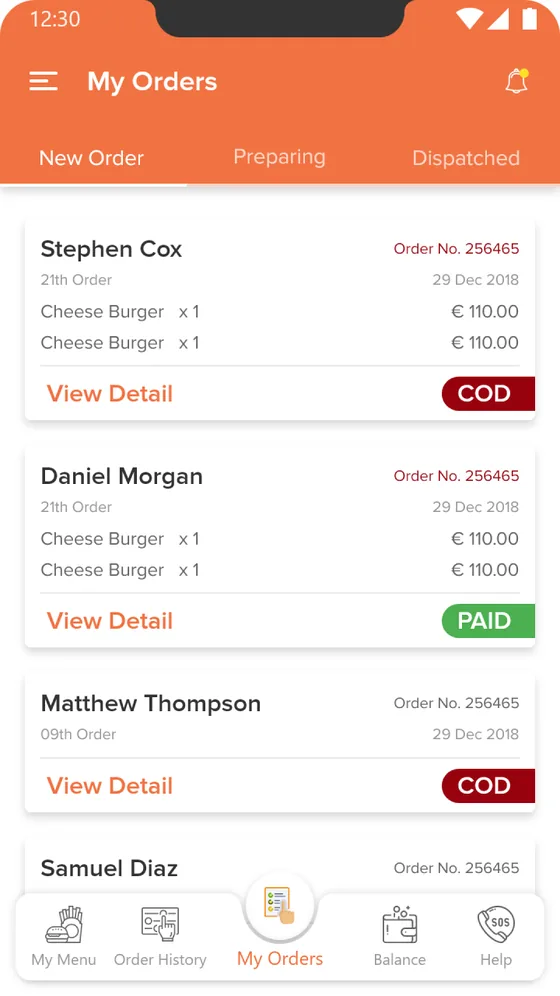
Restaurant · orders
New, preparing and dispatched orders in tabs.
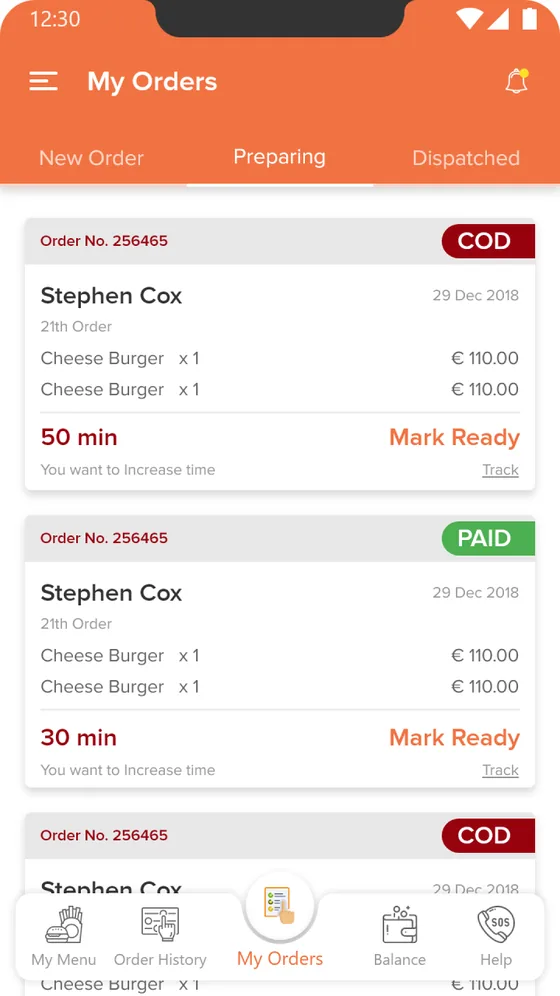
Restaurant · preparing
Per-order timers with a mark-ready action.
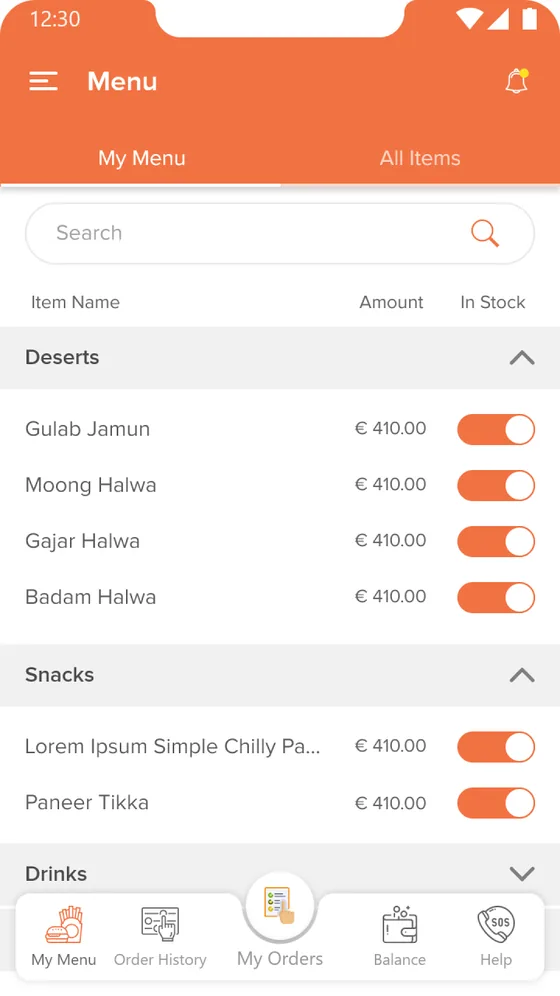
Restaurant · menu
Menu and stock, with in-stock toggles per item.
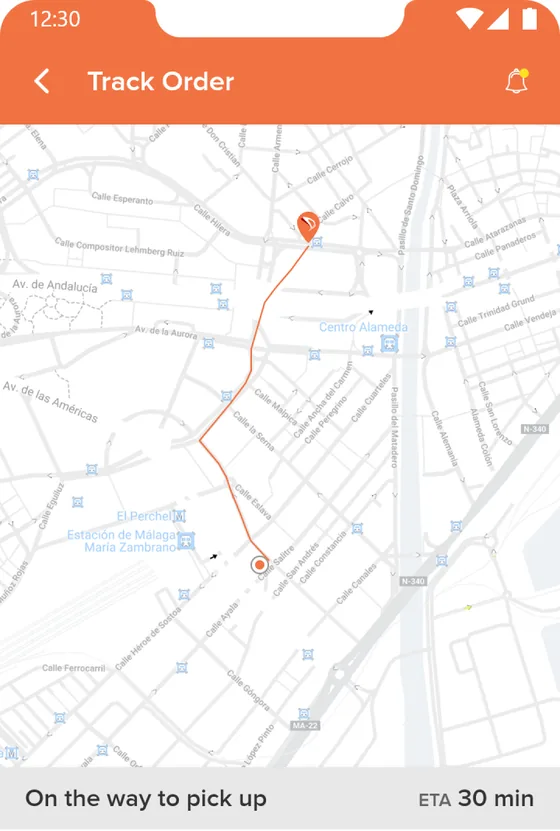
Restaurant · track
A live map of the rider on the way to pick up.
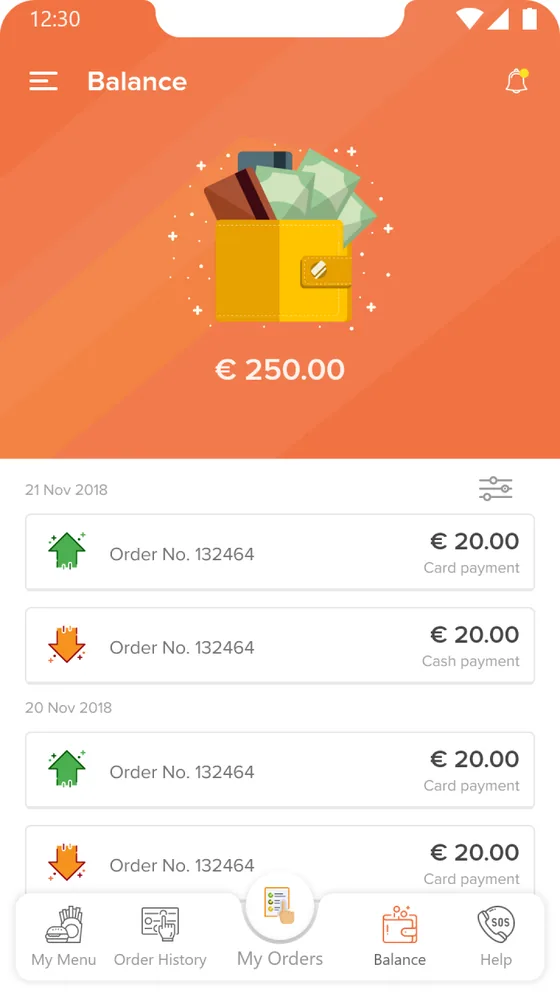
Restaurant · wallet
Balance with a per-order payment history.
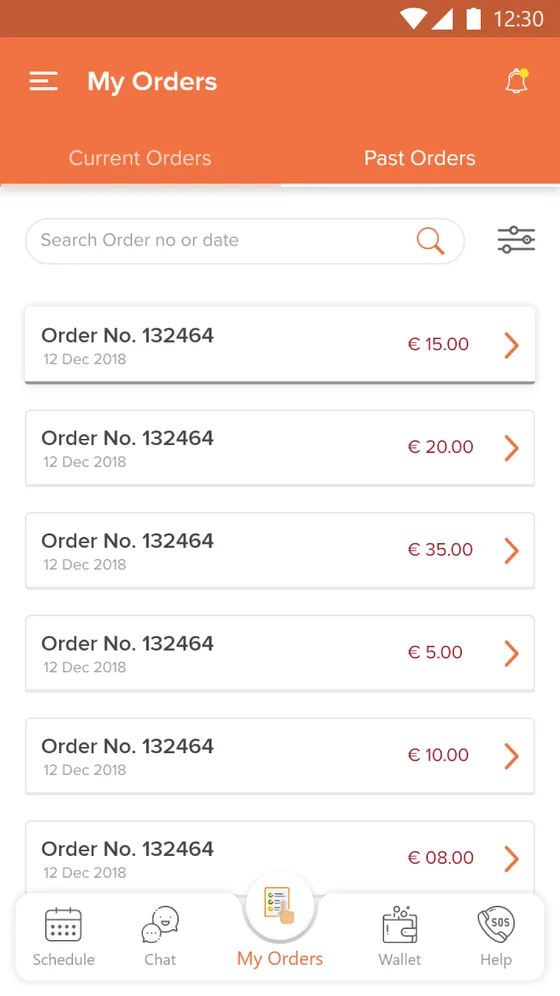
Rider · jobs
Current and past orders with the pay per job.
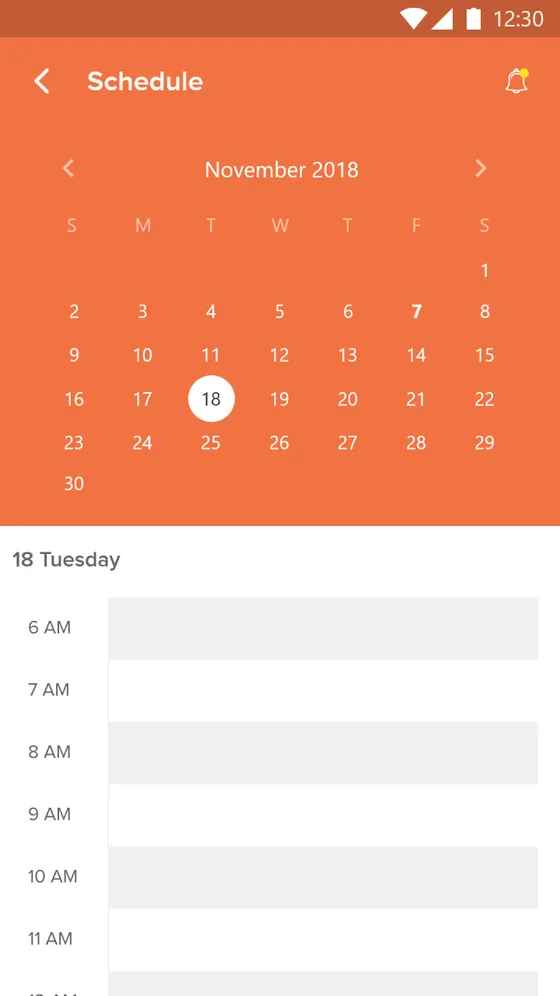
Rider · schedule
A calendar and time slots for availability.
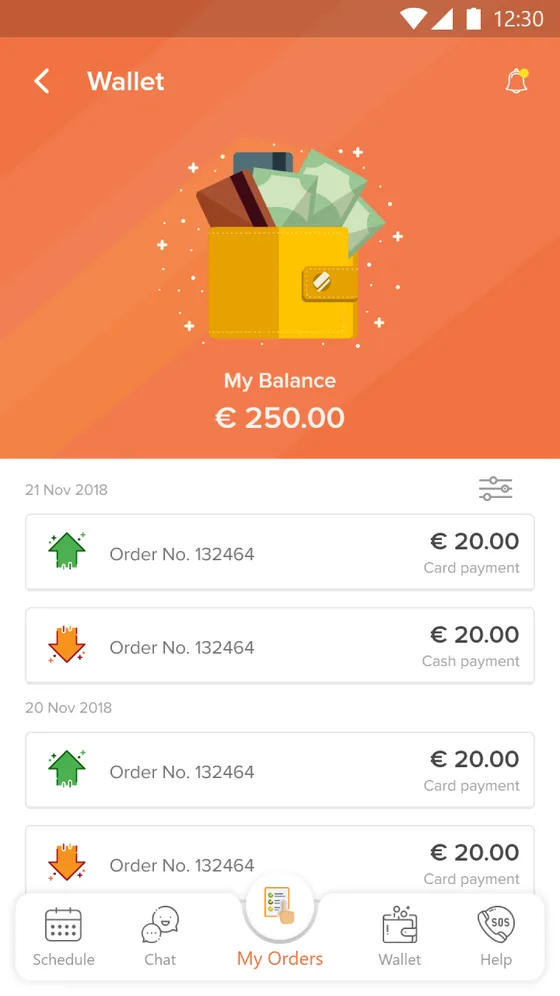
Rider · earnings
A rider wallet with earnings per delivery.
Building a food delivery platform
What delivery and marketplace brands ask us first, answered plainly.
Ask us yoursHow long does it take to build a three-app delivery platform?
A platform of this shape, three coordinated apps plus the backend that keeps one order consistent across them, is a multi-month programme rather than a few weeks. The biggest driver is not the number of apps but the shared order, status and settlement model behind them. Shanti Infosoft scopes it on a short call and returns a fixed quote, and usually phases the apps so one ships before the next.
Do you build all three apps, customer, restaurant and rider?
Yes. Linkin Food is designed and built as a set of three apps around one shared backend. That shared model is the whole point: the same order moves from the customer to the restaurant to the rider without being copied between separate tools.
Can it handle live order tracking and rider logistics?
Yes. The customer sees a live map and an ETA, the restaurant works its queue against timers, and the rider goes online, accepts jobs and works pickup then delivery. The order status is shared, so every side sees the same truth at the same time.
How are payments and earnings handled?
Orders can be paid by cash on delivery or card, and each side carries its own wallet, a restaurant balance and a rider earnings wallet, with a per-order payment history behind the number. Settlement is modelled per side rather than as one opaque total.
Does it work on iOS and Android?
Yes. We design once and build each app for both platforms, keeping every role's experience consistent across phones. The same shared order model sits behind all of them.
Related work and services
Planning a delivery or multi-sided marketplace?
Tell us how your business actually works and we will tell you honestly what it takes to build. See more of our work or what we do.
Book a 15-minute call