


Order to invoice,one system.
A cloud transport-management system for Scandinavian carriers of any size. From the first order to the finished invoice, Frakt24 keeps orders, drivers, routes, tracking and billing connected in real time — with a driver app for the road.
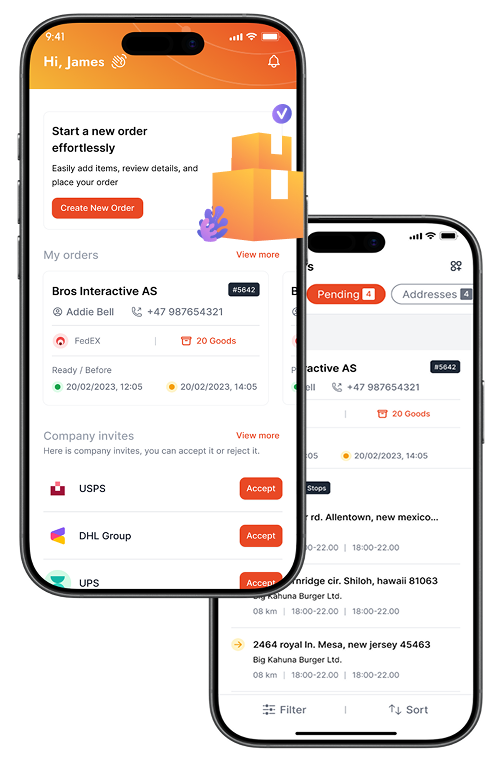
Orders, drivers, routes and invoices, connected
Frakt24 threads the whole operation together: an order comes in, a driver is dispatched, a route is planned, the job is tracked and reported from the app, and the invoice goes out — all in one system and all in real time, so nothing falls between tools.
From first order to finished invoice
The full lifecycle lives in one place, so an order never has to be re-keyed into a separate billing system to get paid.
Routes planned and optimised
High-volume, multi-stop routes are planned and optimised in seconds, keeping drivers moving and customers informed.
Tracked in real time
GPS tracking and driver reporting keep dispatch, the customer and the invoice looking at the same live picture of every job.
Why run transport on one platform instead of a stack of tools?
Most carriers grow into a patchwork: a spreadsheet for orders, a separate app for the drivers, another for invoicing, and email for everything else. Every seam between those tools is where a delivery gets lost or a job goes unbilled.
Orders scattered across tools. When orders live in a spreadsheet and dispatch lives in someone's head, jobs slip and nobody is sure what the day actually holds.
Routes planned by hand. Multi-stop routes built manually waste driver hours and fuel, and fall apart the moment a job changes.
Work that never gets billed. When the proof of a completed job lives on paper or a separate app, some of it never reaches the invoice.
Set side by side, the shift is concrete: taking an order moves from a spreadsheet row to a structured order ready to dispatch, planning a route moves from working it out by hand to multi-stop routes optimised in seconds, tracking a job moves from a phone call to live GPS and app reporting, and getting paid moves from re-keying into billing to an invoice generated straight from the order.
What Frakt24 had to get right
A transport-management system only earns its keep if a carrier lives inside it rather than working around it.
What it had to do
- One flow, end to end. Order to dispatch to tracked job to invoice, without re-entering anywhere.
- Routes planned in seconds. Multi-stop optimisation that keeps drivers moving.
- Real-time truth. Dispatch, the customer and the invoice reading the same live status.
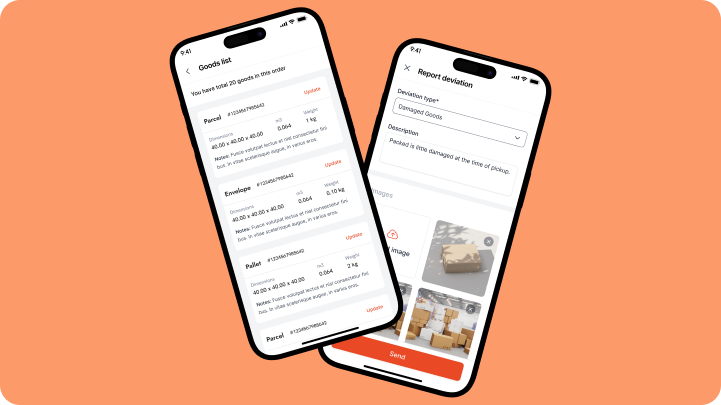
- A driver app for the road. Reporting and hours logged from the cab, not a notebook.
Why it was hard
- Orders scattered across tools — a spreadsheet here, dispatch in someone's head.
- Routes planned by hand, wasting hours and breaking when a job changes.
- Work that never gets billed when proof of the job lives on paper or a second app.
- Every transport specialism — cold chain, construction, waste — carries its own rules a generic TMS ignores.
Office and driver, one thread
Office and driver in one thread, so a change to a job does not depend on a phone call.
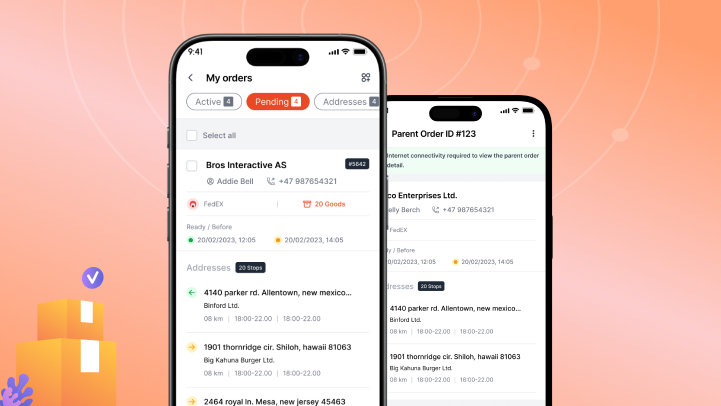
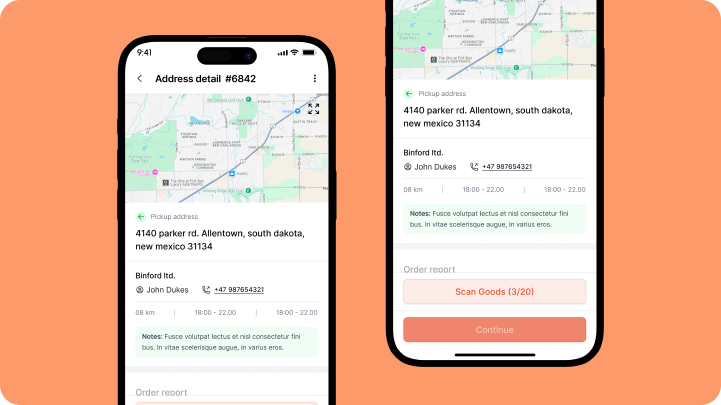
Follow one job from order to invoice
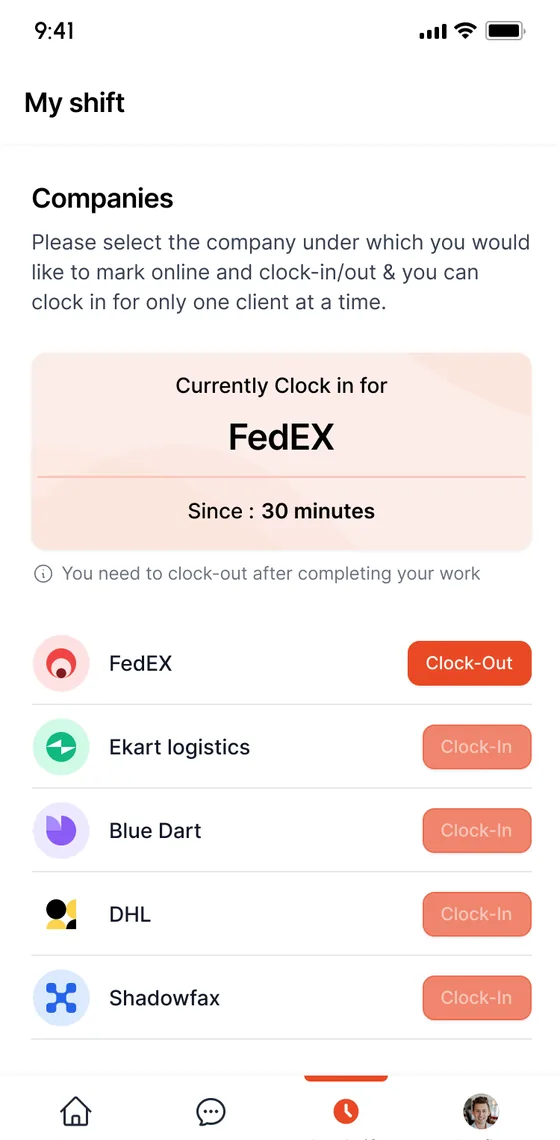
The Frakt24 driver app carries the office's dispatch, routing and billing into the cab — the same job, one screen at a time.
What does a transport-management system have to get right?
The things that decide whether a carrier lives in its TMS or works around it, drawn from building Frakt24.
One flow, end to end
An order should become a dispatch, a tracked job and an invoice without being re-entered anywhere, or the seams leak deliveries and revenue.
Routing that saves real hours
Multi-stop optimisation only counts if it holds up when a job changes mid-day, not just on the planning screen.
A driver app drivers will actually use
If reporting from the road is harder than a paper note, the data never arrives and billing suffers.
Live truth for everyone
Dispatch, the customer and the invoice must read the same real-time status, not three different guesses.
Bend to the specialism
Cold chain, construction and waste each carry rules a generic TMS ignores; the platform has to model them.
Compliance built in
Driving-hour and time tracking belong inside the workflow, not bolted on as a separate system to reconcile.
Building a transport-management platform
How long does it take to build a TMS with a driver app?
Why does a driver need a dedicated app rather than messages?
Can one platform handle freight, cold chain and waste at once?
How does automated invoicing work in a TMS?
Running transport across spreadsheets and separate apps?
Tell us how your business actually works and we will tell you honestly what it takes to build.