


Every asset, located
TagFinder is the cloud platform behind CargoBeacon's real-time asset tracking: EverTag hardware reports position over a Wirepas self-healing mesh, and a multi-tenant admin console turns that stream into a live asset register, indoor maps and automated alerts.
Sector
- Industrial IoT
- RTLS
Product
- TagFinder platform
- CB Admin console
What we did
- Platform UX + UI
- Web app development
Surfaces
- Multi-tenant admin
- Asset register
- Mesh planning
What is CargoBeacon tracking?
An industrial IoT ecosystem for real-time visibility of physical assets — tools, equipment, stock and shipments — across manufacturing, logistics, healthcare and cold-chain operations. TagFinder is the software that makes the hardware legible.
Hardware, mesh and platform as one ecosystem
EverTag tags attach to assets and report location and status; a Wirepas self-healing mesh carries that data with no single point of failure; and the TagFinder platform turns it into a register, indoor maps and rules — built as a multi-tenant console so each company sees only its own estate.
What does the platform actually show?
The real admin console — asset register, indoor mesh planning, automation rules and alerts.
Asset register
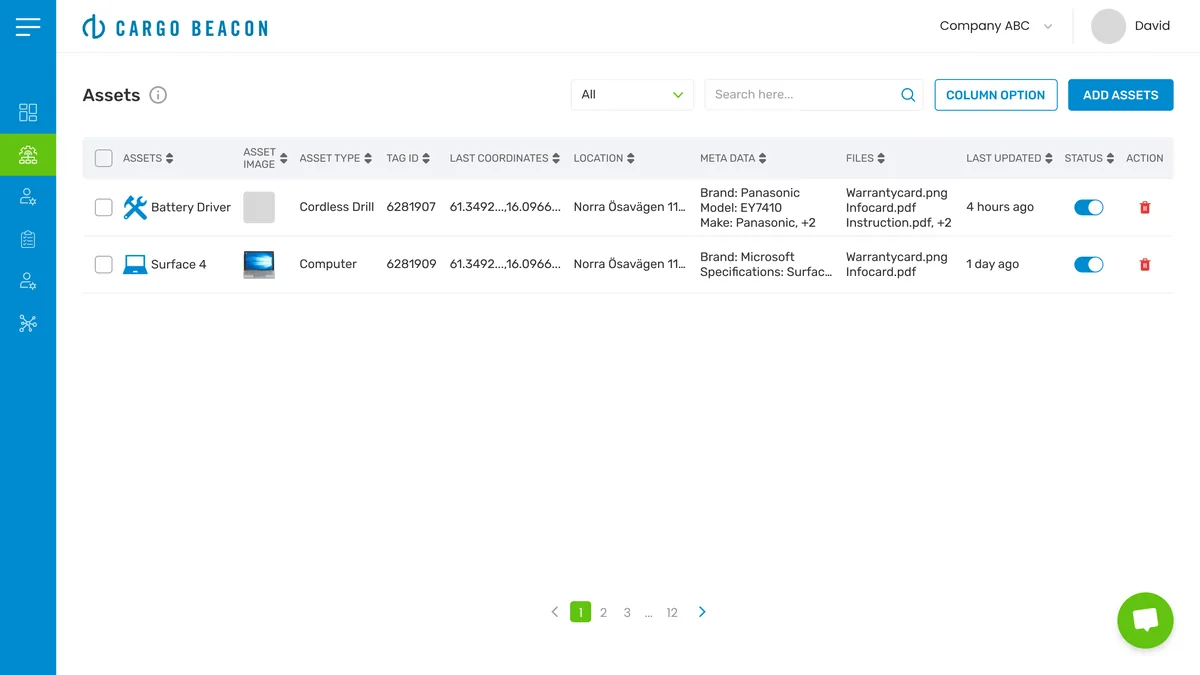
LiveEvery tracked asset with its EverTag ID, live coordinates, location, custom metadata and attached documents, filterable and searchable, with per-asset status.
- EverTag ID
- Live coordinates
- Attached docs
Node planning & maps
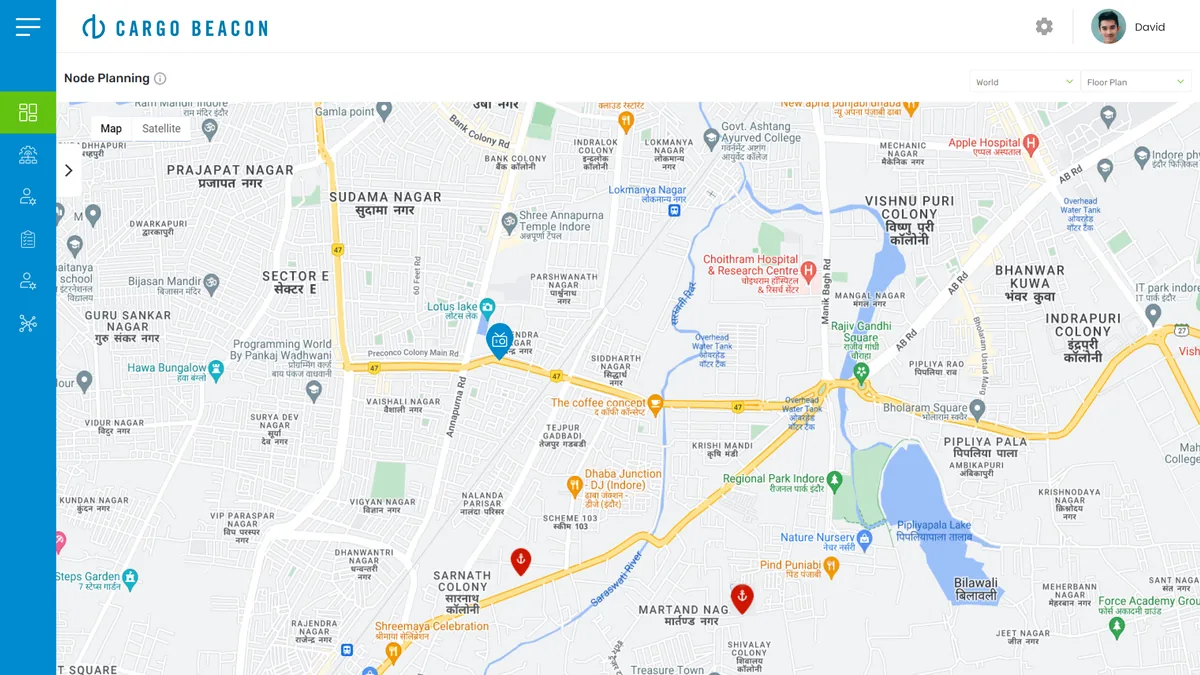
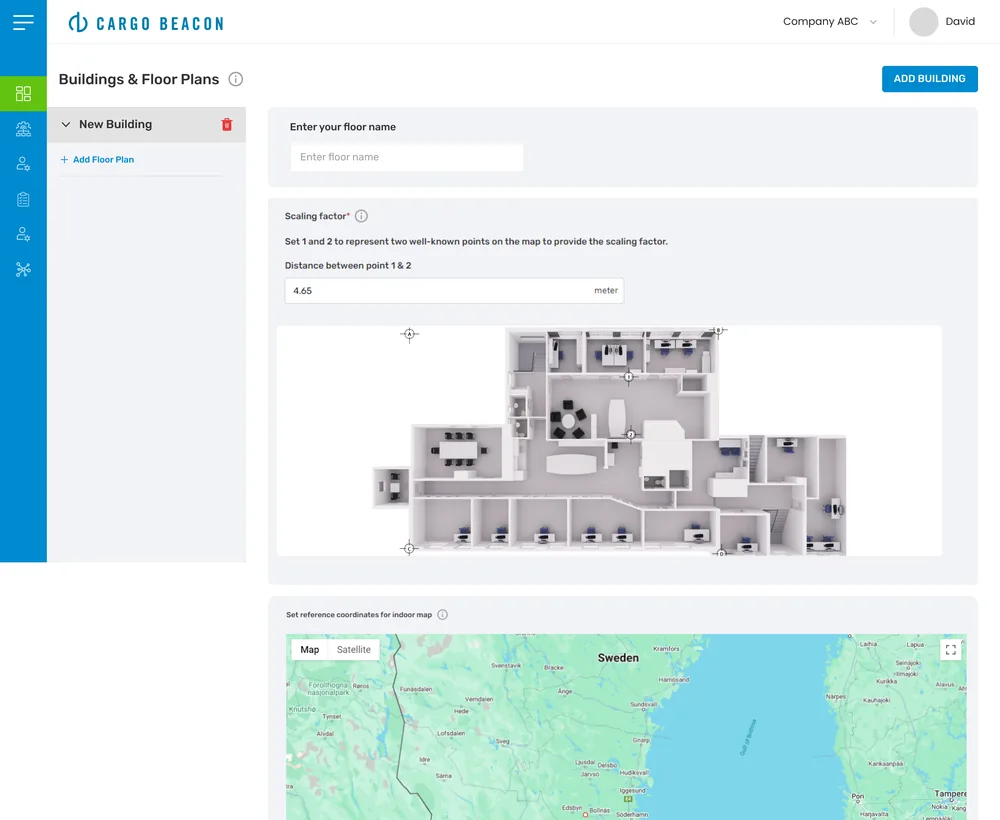
RTLSPosition the mesh on a real map and indoor floor plans so tags resolve to a physical place.
- Map view
- Floor plans
Automation rules
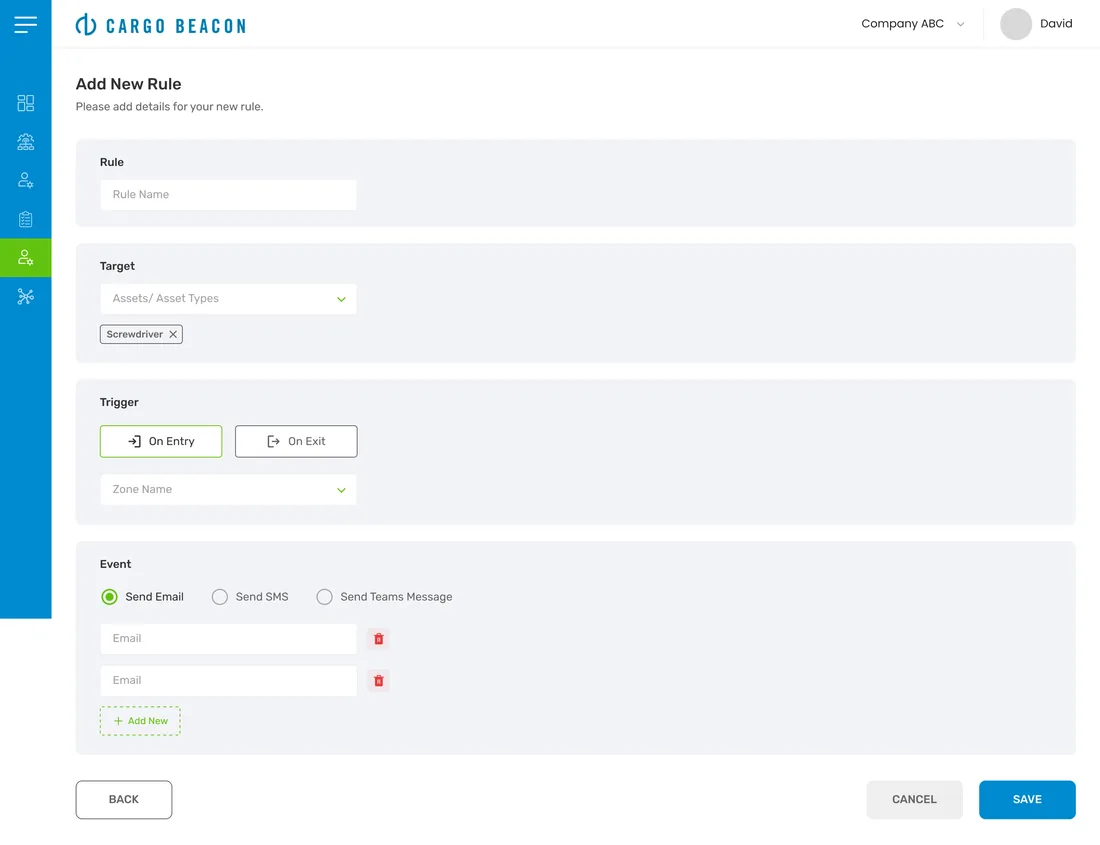
Sensor-drivenConditions on sensor type and value fire SMS and in-app alerts when an asset breaches a threshold.
- Conditions
- SMS + in-app
Wirepas mesh
Self-healingA resilient mesh network where nodes route around failures automatically, holding coverage across a large industrial site with no single point of failure.
- Nodes
- No single point of failure
- Long-range EverTag
Multi-tenancy
Per companyEach operator is isolated to its own assets, floor plans and rules on shared infrastructure.
- Tenant isolation
- Scoped access
Open integration
APIsOpen APIs feed IoT data into analytics and customer portals — Power BI among them — rather than locking it in.
- Open APIs
- Analytics
How much does a single row of the register carry?
The asset table is dense on purpose: one row answers what a thing is, where it is, and what is known about it.
Each row is a physical asset bound to an EverTag, with a type and an image so it is recognisable at a glance.
The unique hardware ID that ties this row to a tag reporting over the mesh.
The last position the mesh resolved for the tag, so the register shows current location, not history.
Brand, model, make and any further fields, so an asset carries the context an operator actually needs.
Warranty cards, instruction and info PDFs live on the asset, not in a separate drive.
What does an industrial asset-tracking platform need to get right?
The things that decide whether an RTLS platform is trusted on a factory floor, drawn from building TagFinder.
- Location that is current, not last-seen. A register is only useful if a coordinate means where an asset is now, which puts the pressure on the mesh, not the UI.
- Indoor as well as outdoor. A street map is not enough on a warehouse floor; the platform has to position assets on the operator's own building plans.
- Rules that reach a person. A breached threshold has to become an SMS or an alert someone acts on, or the sensor data is just a log.
- Hard tenant isolation. One shared platform serving many operators must fence each company off from every other one's assets and maps.
- Context on the asset. Metadata and documents belong on the asset record, so the register answers questions without a second system.
- Open data out. IoT value comes from feeding analytics and portals through open APIs, not locking the stream inside one dashboard.
Building an industrial IoT tracking platform
What operations and product teams ask us about RTLS and asset-tracking software.
Ask us yoursHow long does it take to build an industrial asset-tracking platform?
The software platform — a multi-tenant register, mapping, indoor floor plans and a rules engine — is a several-month build, and it runs alongside the hardware and mesh work rather than after it. What drives the timeline is less the screens than the real-time data path: getting tag positions to resolve reliably indoors and stay consistent as the mesh heals around failures. We phase it so the register and maps are usable before the deeper automation.
What is a self-healing mesh, and why does RTLS need one?
In a mesh network every node relays data for its neighbours, and a self-healing mesh reroutes automatically when a node drops. For asset tracking across a large industrial site that matters because coverage cannot depend on a single gateway — if one link fails, tags still report. CargoBeacon uses a Wirepas mesh for exactly this resilience.
Why does a tracking platform need to be multi-tenant?
Because one platform serves many operators, and each must see only its own assets, floor plans and rules. Multi-tenancy done properly isolates every company's data on shared infrastructure, so the system scales to new customers without standing up a separate deployment for each — and without any risk of one tenant seeing another's estate.
Can the tracking data feed our existing analytics?
Yes. The platform exposes open APIs so IoT data flows into analytics tools and customer portals — Power BI among them — rather than being trapped in one dashboard. The point of open standards here is no lock-in: the operator owns the data path from tag to report.
Related work
Building an IoT or asset-tracking platform?
Tell us how your business actually works and we will tell you honestly what it takes to build. See more of our work or what we do.
Book a 15-minute call