


Live on every route
A GPS tracking product for timed endurance events, built as two apps that share one map. Organisers record circuits, break them into sectors and publish events; participants join, and everyone follows the field on a live map with real-time telemetry and sector-by-sector timing.
Sector
- Sports & endurance events
- Consumer mobile
Product surface
- Native mobile app
- 40+ screens & states
What we did
- Product modelling
- UX and UI design
- Front-end build
Two apps in one
- Organiser side
- Participant side
What is F-Track?
A GPS tracking app for organised, timed endurance events. It gives an organiser the tools to build a route, break it into timed sectors and run a live event, and it gives every participant a live map of the whole field - who is ahead, who is chasing, and how each sector is going - rather than a stopwatch and a result posted afterwards.
Two apps, one live map
The organiser and the participant have genuinely different jobs, so F-Track is designed as two sides of one product. The organiser records and publishes; the participant joins and races. Both meet on the same live map, which is where the event actually happens.
Why is tracking a timed endurance event so hard to get right?
Because it is really two products bolted together - an authoring tool for the person running the event, and a live spectator-and-competitor view for everyone in it - and the map has to stay honest under both. F-Track was modelled around that split from the start.
| The moment | A stopwatch & spreadsheet | How F-Track handles it |
|---|---|---|
| Setting a course | A described route, marshalled by hand | A recorded circuit split into editable sectors |
| Starting an event | A shouted go and a manual clock | A published event participants join and check into |
| Following the race | Standing at the finish line | A live map of the whole field with gaps and positions |
| Reading performance | A single finish time | Live pace, heart rate, distance and sector splits |
| Trusting the result | Someone's word on the timing | Sector-based timing with anti-cheat checks |
| Getting paid | Cash and a separate ledger | Paid events with a payout screen in the app |
Events
OrganiserCreate, publish, manage and cancel events across their full lifecycle, with a participants list and per-event settings for each state.
- Create & publish
- Event settings
- Participants
Circuits & routes
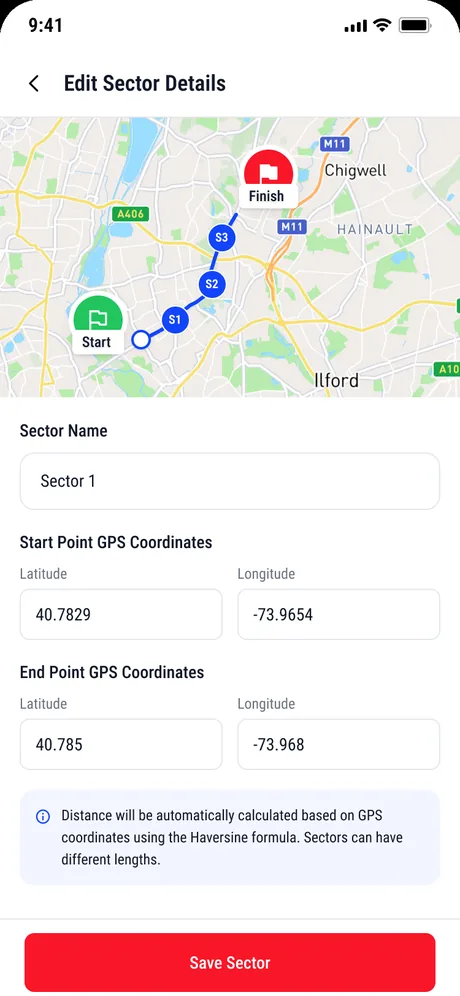
AuthoringRecord a circuit, split it into sectors, edit start and finish points, refine it in the manual route editor and preview it before saving.
- Sectors
- Route editor
Live tracking
The eventA live map of the field, gap-to-leader and chaser summaries, streaming telemetry and anti-cheat checks on the timing.
- Live map
- Anti-cheat
Participation
ParticipantBrowse and join events, free or paid, check in on the day, and keep a history of events taken part in.
- Browse & join
- Check-in
Payments
MoneyPaid events, a subscription for the wider product, and a payout screen so organisers are settled inside the app.
- Paid events
- Payouts
Account
Both sidesOnboarding into the right side of the product, plus settings shared across the organiser and participant experiences.
- Onboarding
- Settings
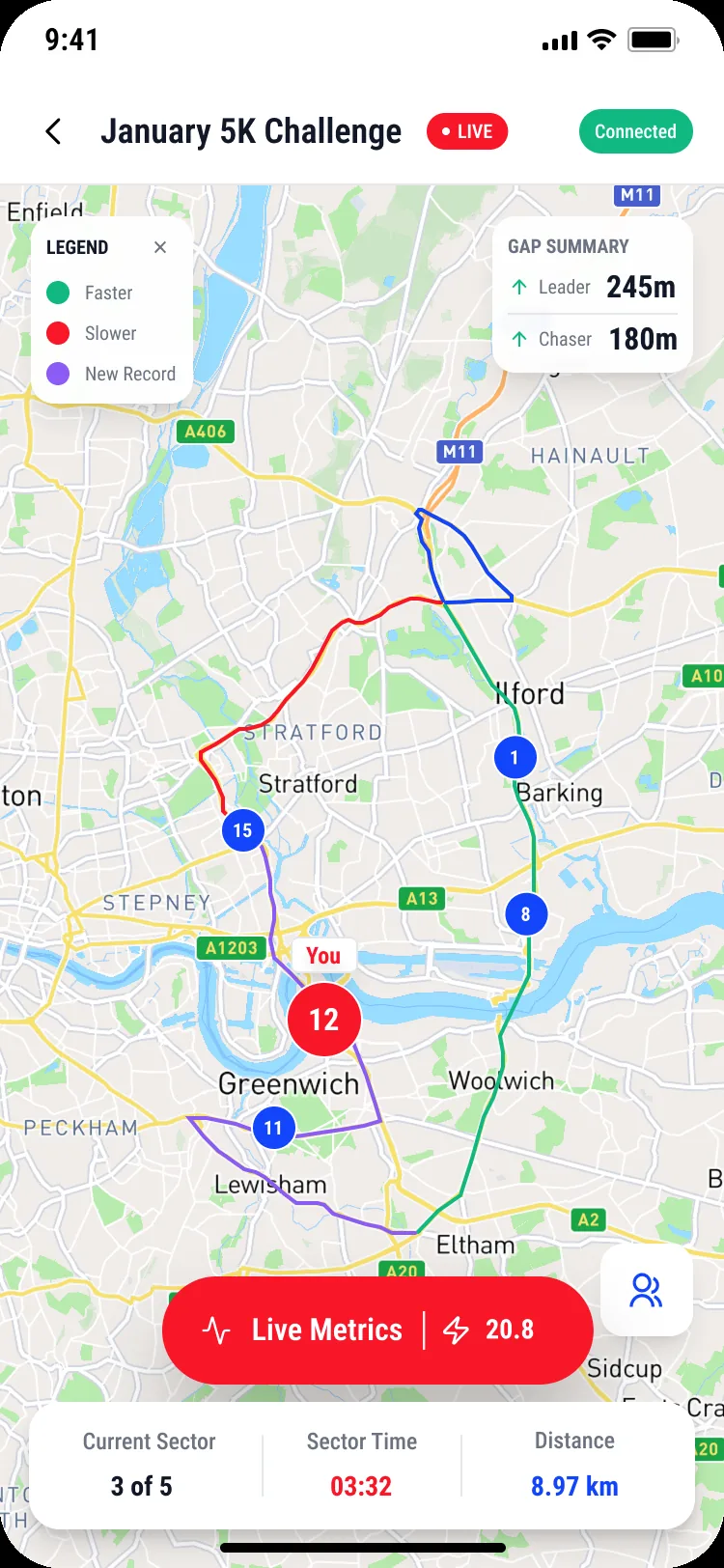
What is on the live tracking map?
The live map is where the whole product comes together. Everything an organiser built and everything a participant needs to follow the race sits on one screen - and where each thing sits is the design work.
The event is flagged as live and the map is updating in real time, not replaying a finished result.
A clear indicator that the participant's GPS and sensors are linked and streaming to the map.
Segments of the route are colour-coded as faster, slower or a new record, so pace reads at a glance.
The live distance to the leader ahead and the nearest chaser behind, the two numbers a competitor watches.
Every participant is a marker moving along the course, with the viewer's own position clearly picked out.
One bar carries the current sector, the split time and distance covered, opening into full telemetry.
What is in the apps?
The organiser side - creating events, recording circuits, editing sectors and routes - and the participant side, from joining an event to following it live. Two apps designed as one system.
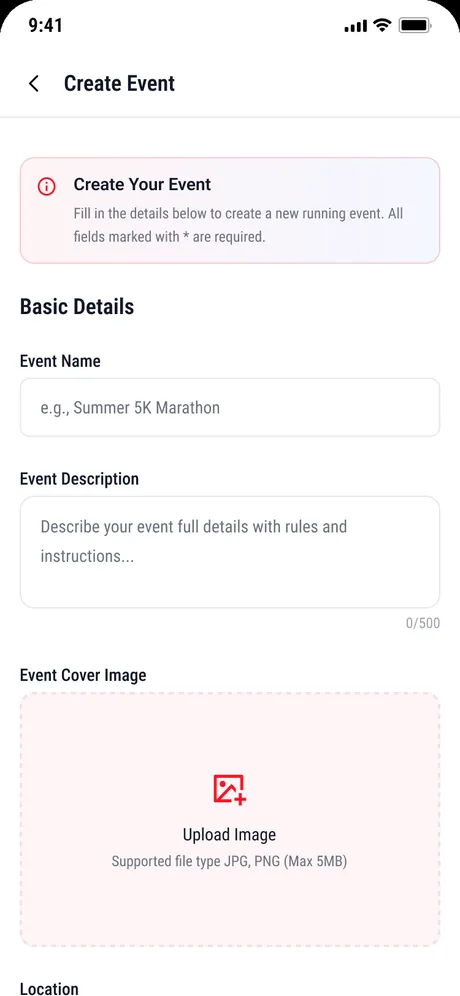
Create event
The organiser sets up an event - route, timing and details - ready to publish.
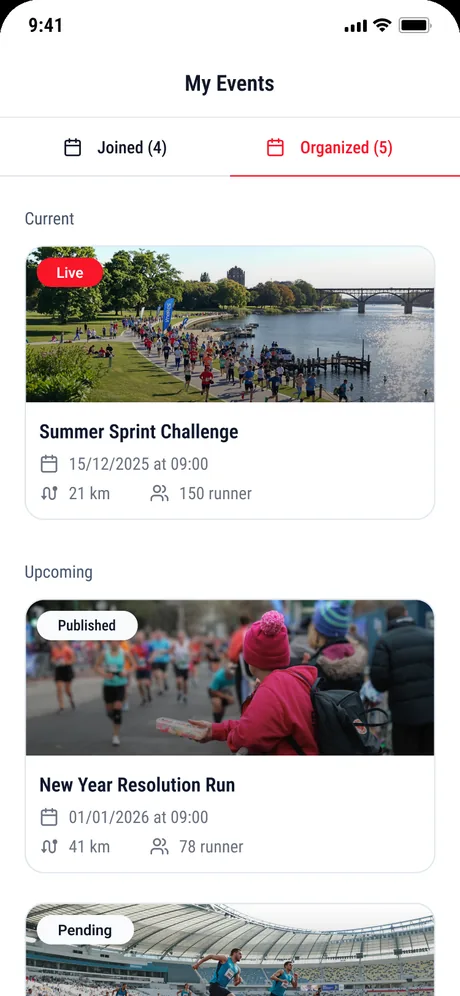
Manage events
Every event an organiser runs, across its pending, published, live and finished states.
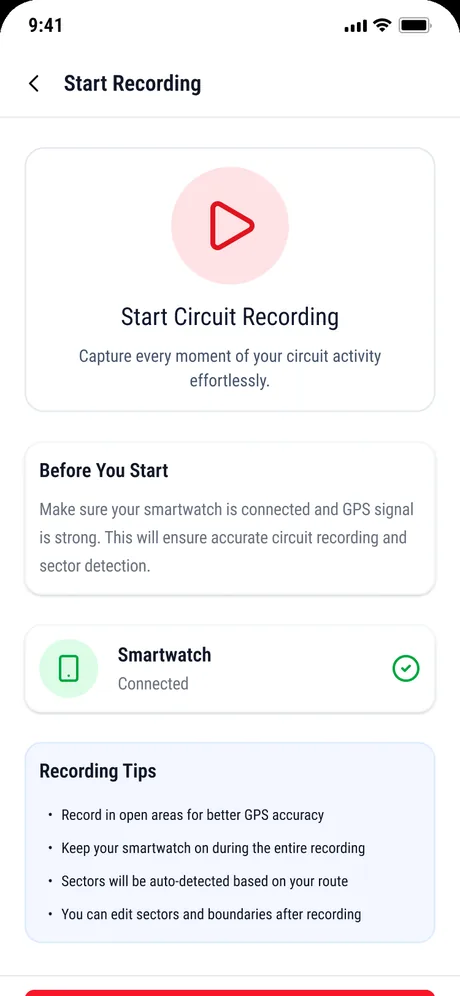
Record a circuit
Recording a course by moving through it, the raw material for a timed circuit.
Add & edit sectors
A circuit is split into sectors, each with its own timing and editable points.
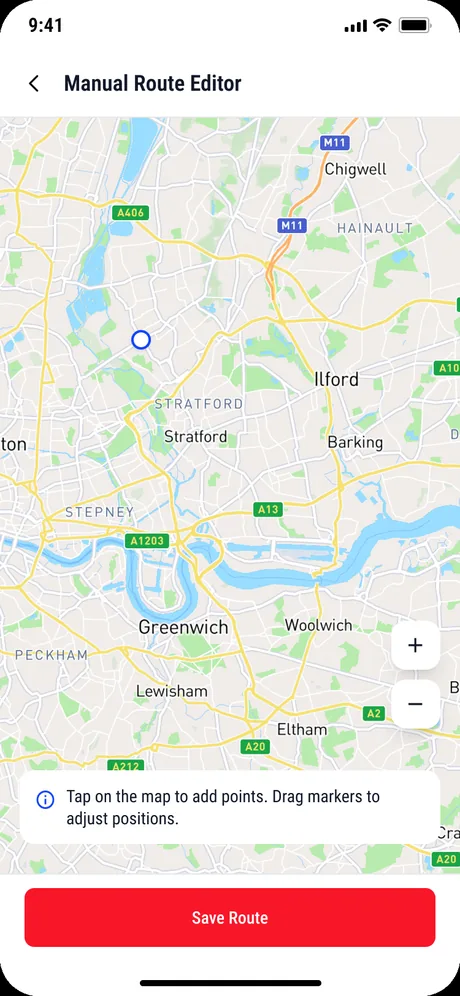
Route editor
A manual editor for building or refining a route point by point on the map.
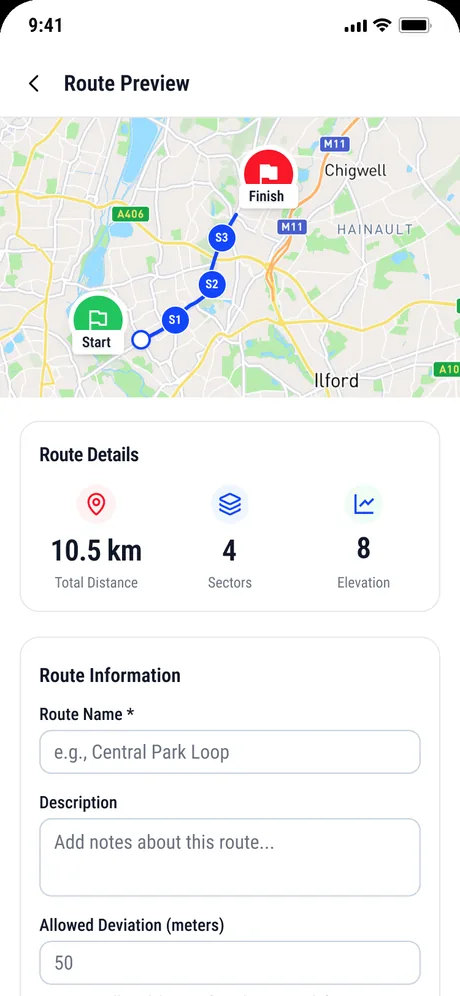
Route preview
The finished route previewed end to end before it goes live to participants.
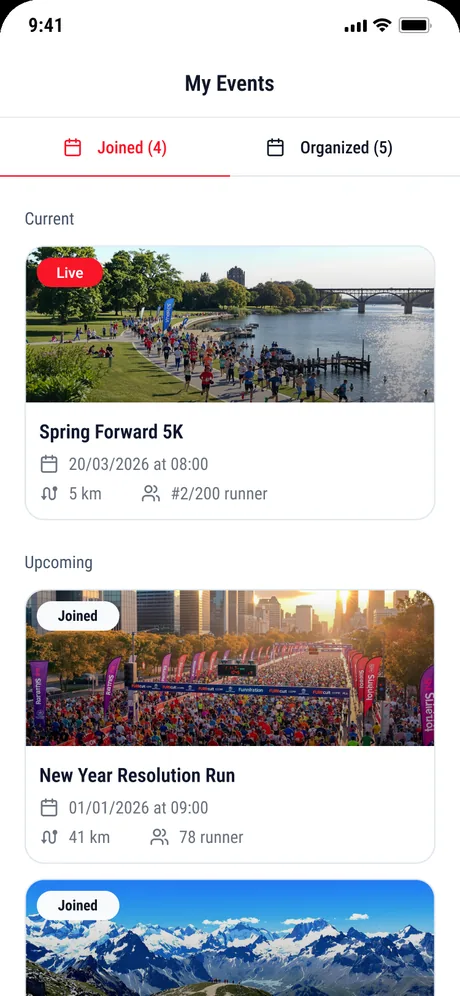
Join events
The participant side: browse and join events, free or paid, and check in.
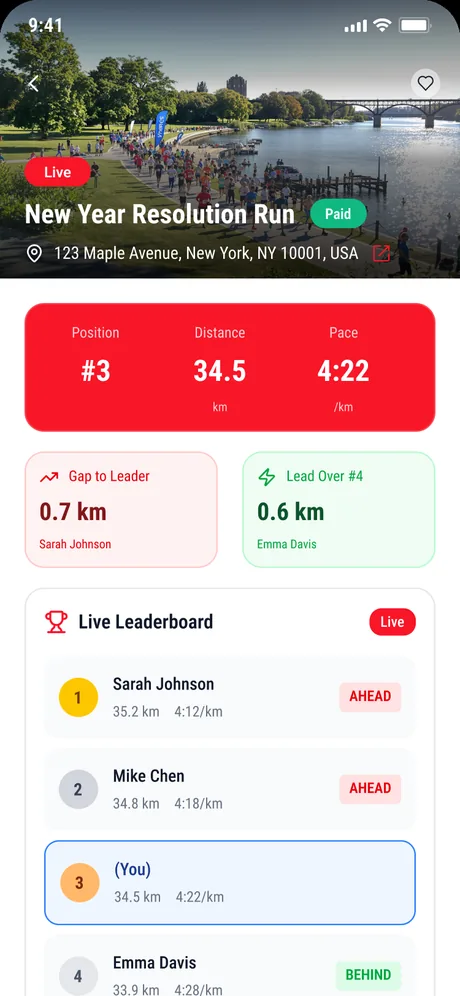
Live event detail
An event's live view for a participant, the way into the tracking map.
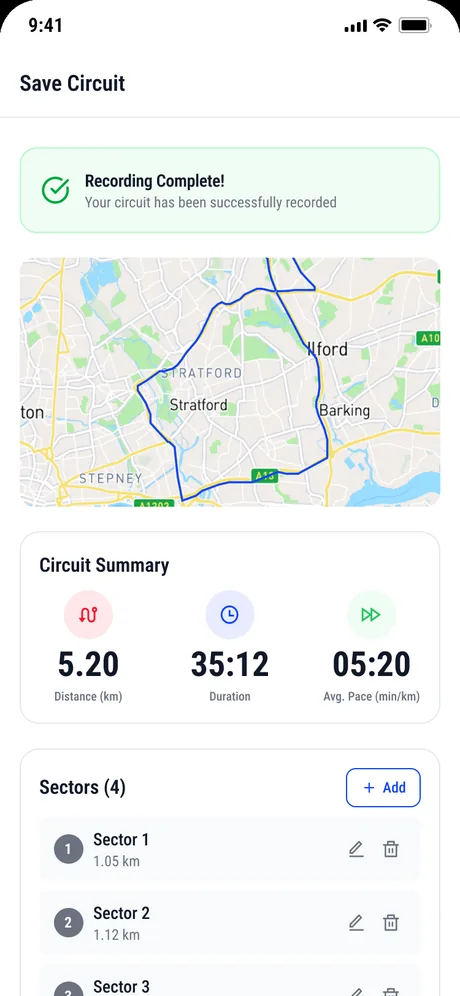
Save circuit
Naming and saving a circuit so it can be reused across future events.
What does a live sports-tracking app have to get right?
Six things separate a live tracking product people trust from a glorified stopwatch. They came out of designing this one and hold for any real-time, location-based competitive product.
- Treat authoring as a first-class app. The person building the course needs as much design care as the person racing it - recording, sectors, editing and preview are the real work.
- Make the live view the product. A result posted afterwards is a report. The map during the event, with positions and gaps, is the thing people actually open the app for.
- Design the map so location reads instantly. Legends, gap summaries and the viewer's own marker have to be placed so a glance answers "where am I and who is near me".
- Build trust into the timing. Any leaderboard invites gaming, so sector-based timing and anti-cheat checks are not extras - they are what makes the result worth having.
- Stream telemetry that means something. Speed, pace, heart rate and distance are only useful tied to where you are on the course, not as raw numbers in a list.
- Close the money loop in the app. Paid events and organiser payouts belong inside the product, so running an event does not need a separate spreadsheet and bank run.
How is it built?
A native mobile front end over a real-time location and timing backend - GPS tracks, sector timing, live position streaming and payments - the shape any live sports-tracking product needs.
Building a GPS or live sports-tracking app
What founders ask us first about building a real-time, location-based sports product.
Ask us yoursHow long does it take to build a GPS sports-tracking app?
A first production version usually takes sixteen to twenty-six weeks. The screens are the quick part; the time goes into reliable GPS tracking, the sector-timing engine and live position streaming, plus the organiser's authoring tools - the parts that make the live map trustworthy under real conditions.
How much does it cost to build a live tracking app like this?
It depends on scope, and it cannot be quoted from a feature list alone. The biggest cost drivers are the real-time infrastructure, how accurate the timing and anti-cheat need to be, and whether payments and payouts are in scope. Shanti Infosoft scopes it on a short call and returns a fixed quote.
How do you keep live GPS tracking accurate and trustworthy?
By tracking against a defined course rather than raw coordinates. F-Track splits a route into sectors with fixed start and finish points, times each sector, and layers anti-cheat checks on top - so a position and a split can be validated against the course, not just accepted from a device.
Can one product serve both organisers and participants?
Yes, and it usually should. Their jobs are different - one authors and runs the event, the other joins and races - so we design them as two sides of one product over a shared backend. They meet on the same live map, which keeps the organiser's course and the participant's experience perfectly in sync.
Do you handle the payments and payouts as well?
Yes. Paid events, a subscription for the wider product and organiser payouts are part of the same build, so the money side lives in the app rather than in a separate system. Keeping it in-product is what lets an organiser run a paid event end to end without a spreadsheet.
Related work and services
Building a real-time or location-based product?
Tell us how your business actually works and we will tell you honestly what it takes to build. See more of our work or what we do.
Book a 15-minute call