


Find theright therapist.
A German-language search portal for therapists and alternative medicine. Patients search by therapy and location, filter by rating, distance, insurance and language, and read reviews that cannot be bought; practitioners run their own verified public profile.
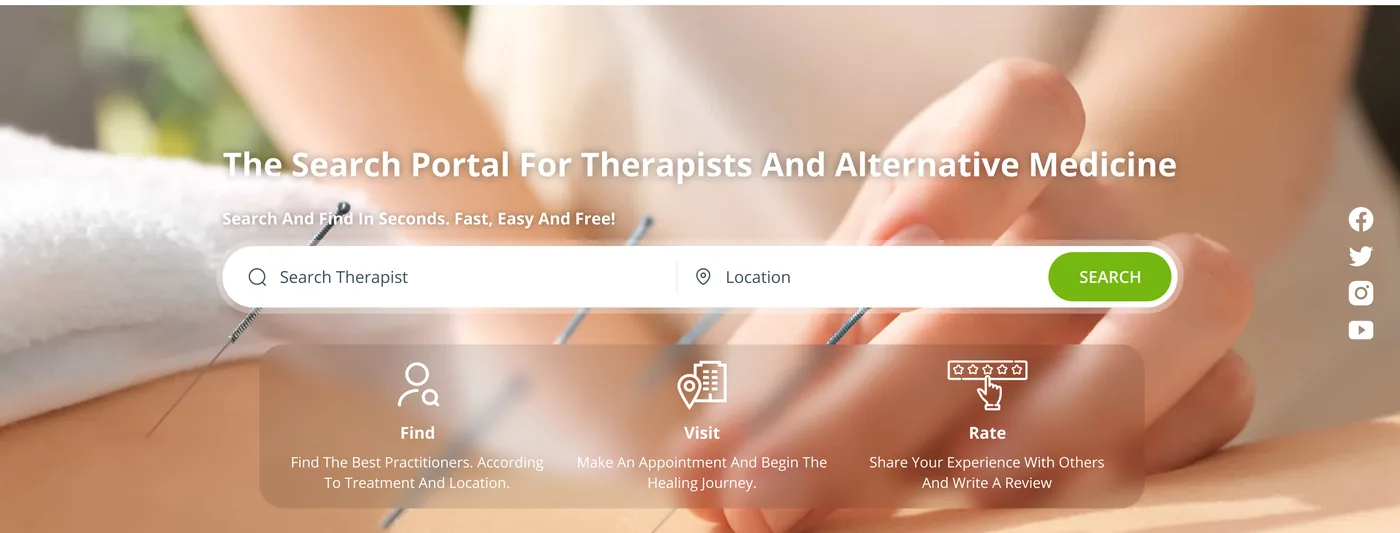
One directory, built for both sides of the search
The patient side is a filtered, reviewable search; the practitioner side is a self-service profile a therapist maintains themselves. The two meet on the listing — what the therapist publishes is exactly what the patient filters and reads.
Search that narrows fast
Filter by treatment, radius, rating, verification, insurance covered, speciality, gender and languages spoken — so a broad field becomes a short, relevant list.
Trust built into the listing
Verified and certified badges sit on the profile, and the platform's own pledge is that ratings are not for sale — the signals a patient leans on are protected, not monetised.
Profiles the therapist owns
Practitioners maintain their own treatment offering, profile texts, weblinks, opening hours and media, and publish when ready — the directory stays current because its subjects keep it current.
The usual routes leave a patient guessing on relevance, legitimacy and fit.
Word of mouth and a generic web search leave the things that matter most unanswered. A purpose-built directory is designed to answer each of them.
A web search returns clinics, ads and articles mixed together, with no way to filter on what actually decides a match — the therapy offered, the distance, the insurance, the language.
A random listing gives no way to tell a verified, certified practitioner from an unchecked one. Answer → verification built into the profile.
Reviews only help if they are honest. Answer → a pledge that ratings cannot be bought.
filter dimensions on one search — treatment, distance, rating, insurance and more.
What CureMe had to get right
A directory only works if both sides are served properly — the patient needs to find and judge, the therapist needs to be found and to present themselves.
Built for both sides of the search
- Filters that mirror real choices. Treatment, distance, rating, insurance, speciality, gender and language — eight ways to narrow a broad field.
- Protected trust signals. Verified and certified badges, and a pledge that ratings are never for sale.
- A profile the therapist owns. Treatment offering, texts, weblinks, hours and media, published on their own terms.
- Built German-first. The interface and its filters read as a German-language product from the ground up.
Why it was hard
- Generic search doesn't understand therapy — no way to filter on what actually decides a match.
- Legitimacy is normally taken on trust, with no way to tell a verified practitioner from an unchecked one.
- The reviews a patient can find elsewhere are often for sale.
- A directory maintained centrally goes stale the moment nobody is chasing updates.
Who is CureMe built for?
A directory only works if both sides are served properly — 2 sides, each shaped for a different job.
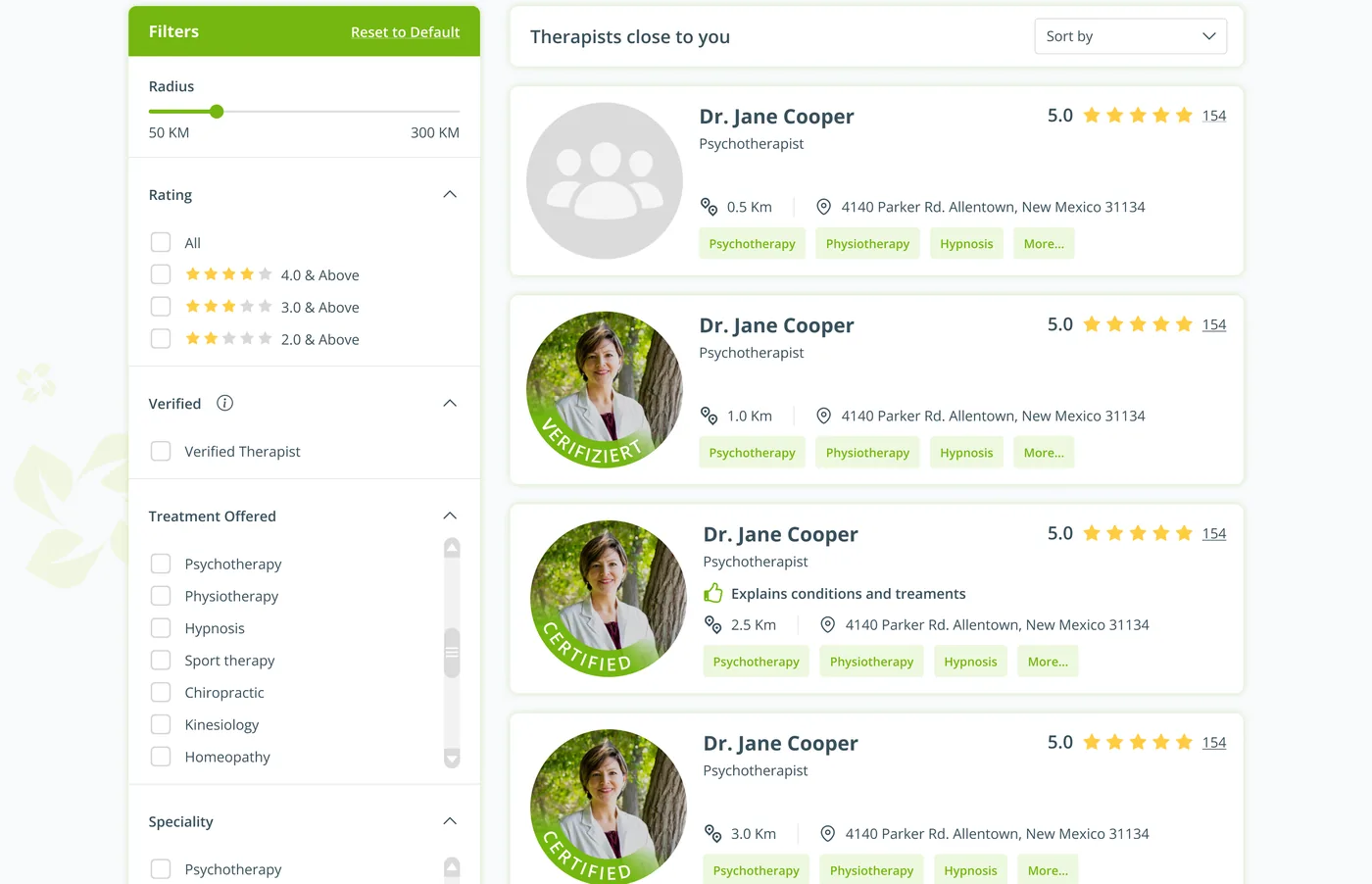
The patient
Searches by therapy and location, filters by rating, distance, insurance and language, and reads reviews that cannot be bought.
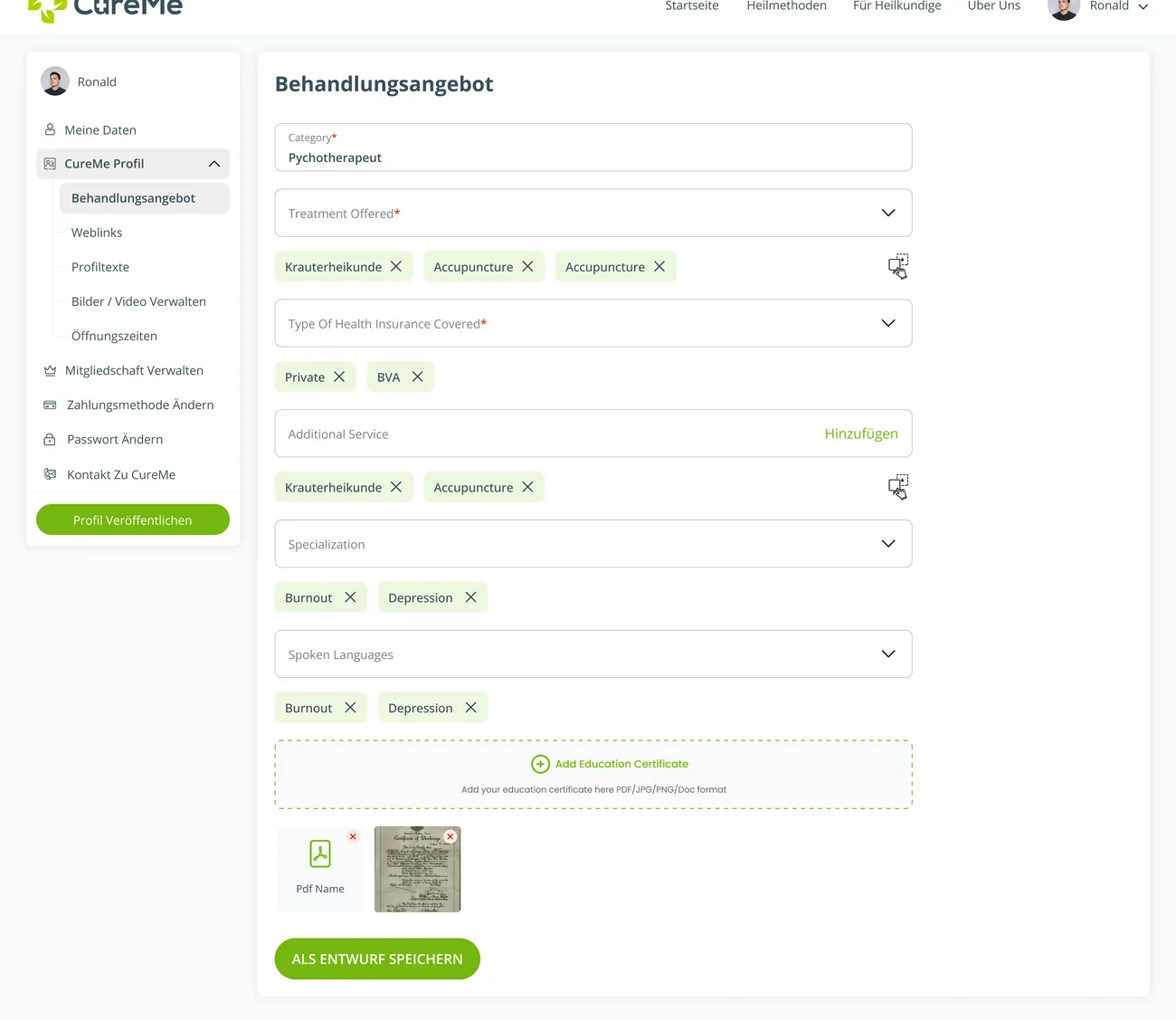
The therapist
Sets their treatment offering and specialities, writes profile texts, manages hours and media, and publishes the profile when ready.
What does searching for a therapist feel like?
CureMe's filters are really a conversation between what a patient needs and what the directory narrows down to — no keyword guesswork, no scrolling ads.
What does each side of CureMe look like?
The patient searches a filtered directory; the therapist runs their own listing. Switch between the two real views.
The scope, in one panel
Every number in this panel is delivered scope — what was designed, built and handed over on the healthcare build for CureMe. It leaves out traffic, conversion and revenue on purpose: those figures belong to the client, and we don’t publish numbers we cannot stand behind.
- Sector
- HealthcareAlternative medicine
- Platform
- WebGerman-language
- Two sides
- Patient / customerTherapist
- What we did
- Product designUX + UI · Web build
What does the interface look like, and why?
The design leans on a single leaf green for anything to do with action and health, a calm slate for text and structure, and a lot of white space — clean and clinical rather than commercial, appropriate for a health decision, not a shopping one. The palette and Open Sans type below are taken directly from CureMe's own style guide; if Open Sans is not installed on your device, the specimen falls back to the nearest available face.
What does any two-sided directory need to get right?
A directory lives or dies on trust and freshness. Five things decide whether patients believe it and practitioners keep it current, and they came out of building this one.
Filters that match how people actually choose
A patient does not search by keyword, they search by therapy, distance, insurance and language. The filters have to mirror the real decision or the results feel random.
Protect the trust signals
Verification and honest reviews are the whole reason a directory beats a web search. The moment ratings can be bought, the platform is worth no more than the ads it replaced.
Let the subjects maintain their own entries
A directory maintained centrally goes stale immediately. Giving therapists a real self-service profile is what keeps the data alive without an editorial team.
Publish on the practitioner's terms
A profile is public only when the therapist chooses. A draft state and an explicit publish step keep people in control of how they appear.
Design for the health context, not the retail one
Clean, calm and clinical earns more trust here than urgency and colour. The restraint is the point.
Building a directory platform
How long does it take to build a directory like this?
How do you keep the listings accurate over time?
How do you stop reviews and rankings from being bought?
Can a directory like this work in more than one language?
Building a directory or a two-sided marketplace?
Tell us how your business actually works and we'll tell you honestly what it takes to build — the filters, the trust signals, the lot. No deck, no pitch.