


Tools that give the edge
A brand and product site for a recruitment-intelligence company whose suite reveals hiring technology, surfaces talent and maps the market. The design leans hard into a cyberpunk identity so a data product feels like an arsenal, not a spreadsheet.

Sector
- Recruitment SaaS
- Hiring intelligence
Product
- The Raccoon Squad
- Three intelligence tools
Scope
- Brand & product site
- Front-end build
- Lead capture
Style
- Dark, cyberpunk
- Neon accent
- Distinct per-tool art
A squad, not a suite
Recruitment intelligence is a dry category on paper — ATS data, boolean search, job aggregation. The site reframes it as ‘The Raccoon Squad’: a set of characterful, purpose-built tools, each with its own mission, art and launch state.
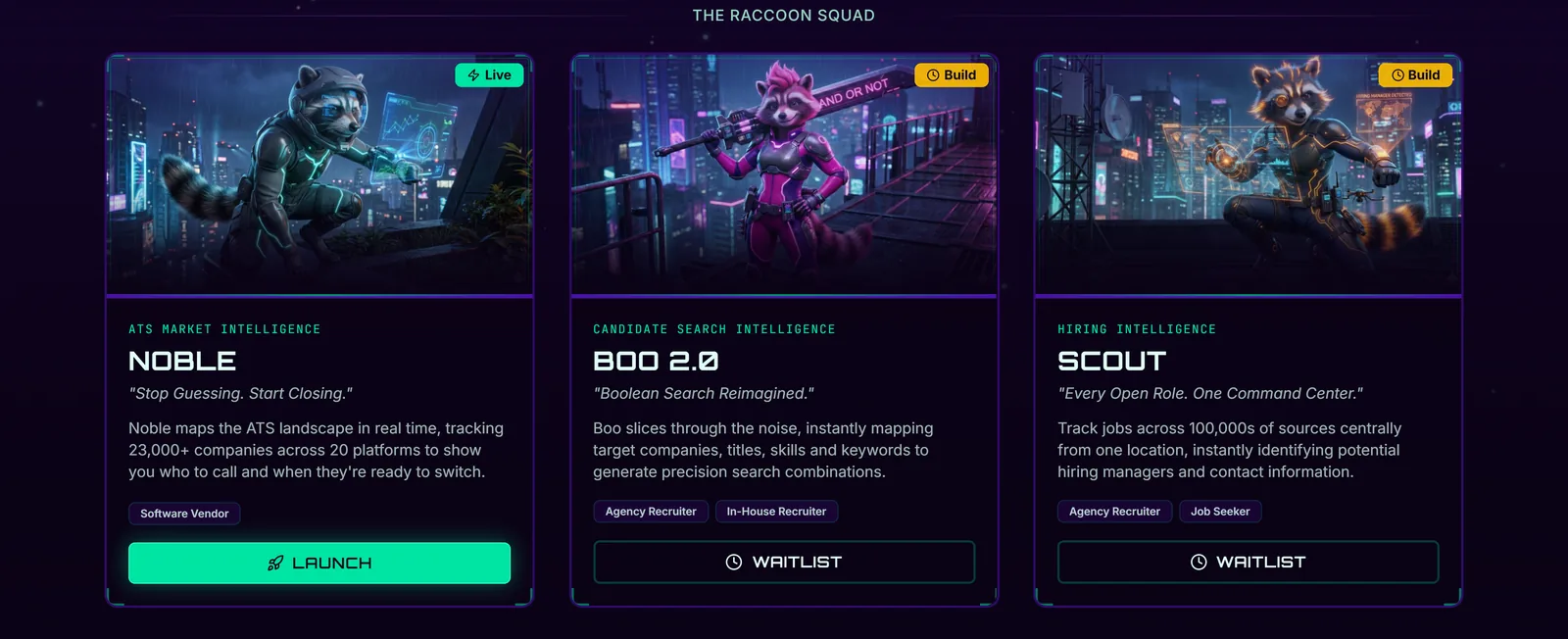
Three tools, one command centre
The home page carries the whole product line at a glance — each tool badged with its status, a one-line mission, its audience and a single clear action. A visitor grasps the range, the maturity and who each tool is for without leaving the first scroll.
What's in the arsenal?
Three intelligence tools, each with a distinct mission and its own character art. The dark, neon treatment is the product's real brand — it makes a data tool feel like kit you'd actually reach for.
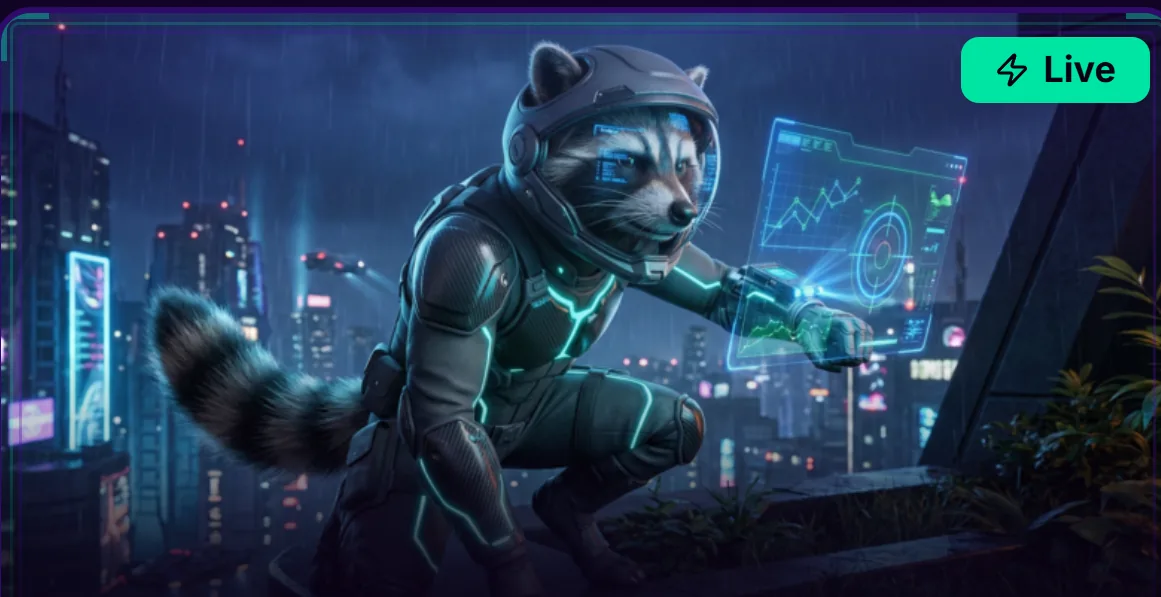
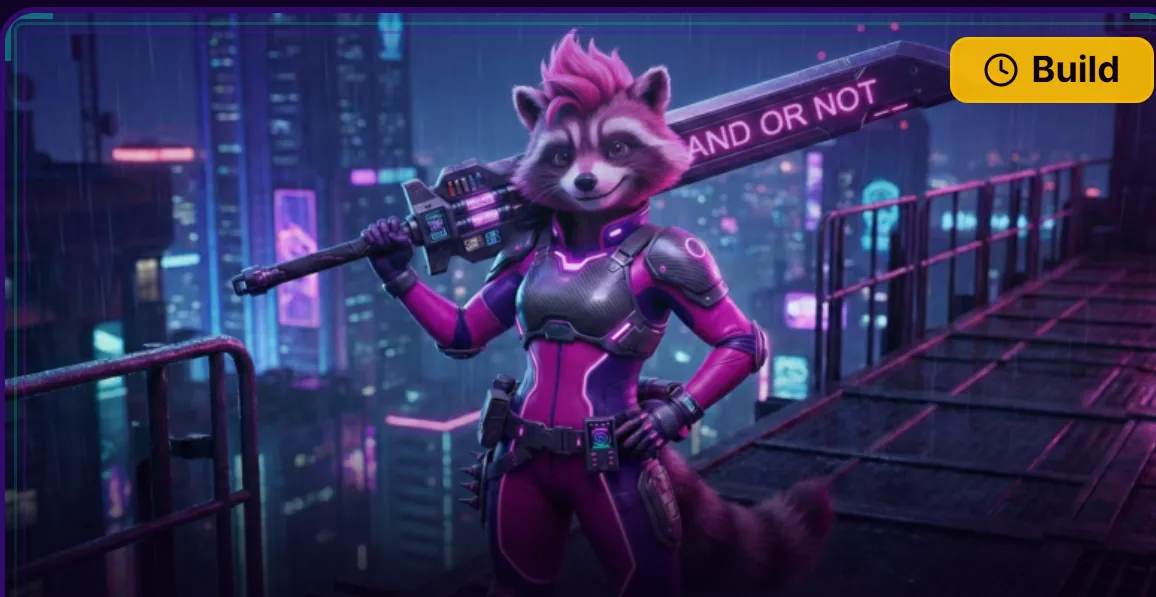
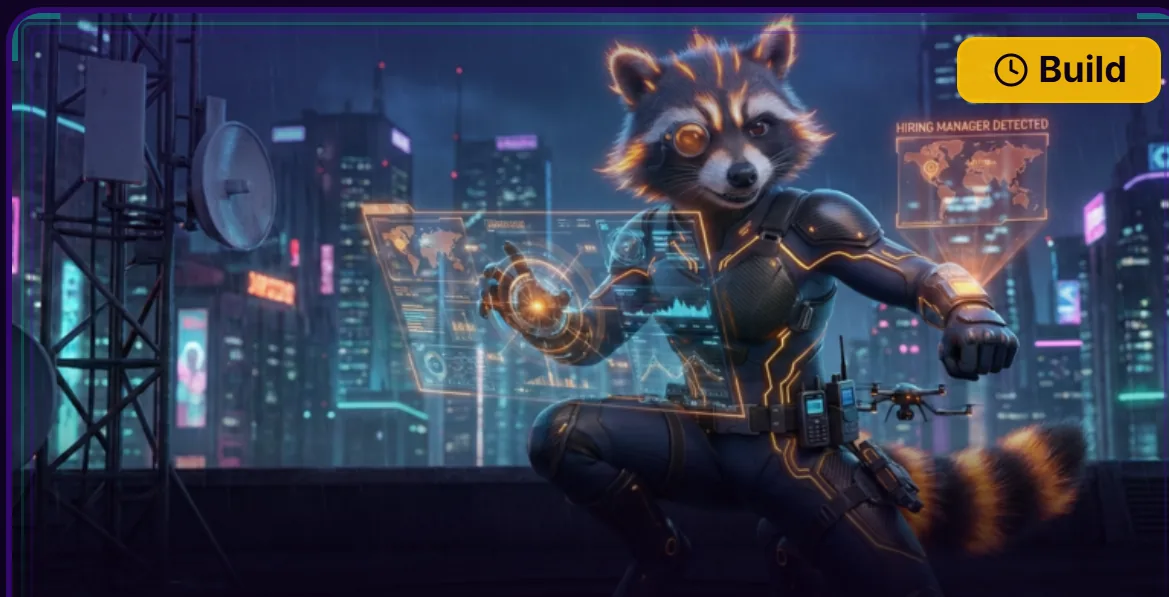
What does a multi-tool SaaS home page have to do?
When a company ships several products at different stages, the home page has to sell the range, set expectations honestly and route each buyer — all above the fold. Five things make that work.
- Show the whole line at once. A visitor should grasp every tool, its purpose and its status without hunting through a nav.
- Be honest about maturity. Live-versus-waitlist badges build trust and let people act on what's ready instead of hitting dead ends.
- Tag the audience. When tools serve different buyers, say who each is for so the right person self-selects instantly.
- Give every tool one clear action. Launch, or join the waitlist — one unambiguous next step per product, never a wall of buttons.
- Let the brand carry the category. A distinctive identity turns a dry data product into something memorable and reachable-for.
Building a website for a SaaS product
The questions founders ask us first when they're launching software.
Ask us yoursHow do you design a website for a SaaS product?
You lead with the product and the buyer, not a feature list. For a company shipping several tools at once, that means showing the whole line above the fold, badging each tool's maturity honestly, tagging who each is for, and giving every product one clear action. The Tooled Up Raccoons site presents a three-tool intelligence suite as a single ‘squad’, each tool with its own status, audience and call to action.
How do you handle products that aren't launched yet?
With honest status states. Live tools get a launch action; upcoming ones get a clear ‘build’ badge and a waitlist. That transparency builds trust and captures demand early, instead of hiding the roadmap or letting a visitor hit a dead end on a half-finished feature.
Can a strong brand really matter for a B2B data product?
Yes — arguably more, because the category is crowded and dry. A distinctive identity, like the dark cyberpunk treatment and per-tool character art here, makes an intelligence product memorable and gives sales something to reach for. Personality is a moat when the underlying data is comparable.
How long does it take to build a SaaS marketing site?
A focused product-and-brand site — a strong hero, a product line-up, per-tool detail, a custom-work path and lead capture — is a matter of weeks once the brand direction and copy are set. The biggest variable is how much of the product story and visual identity already exists.
Can you also build the custom tools, not just the site?
Yes. Beyond marketing sites we build the products themselves — data pipelines, integrations, internal tools and automation — so a SaaS company can take a single partner from brand and website through to the software behind it.
Related work
Launching software that deserves a real brand?
Tell us how your business actually works and we will tell you honestly what it takes to build. See more of our work or what we do.
Book a 15-minute call