


Test, thentrain on the numbers.
A performance-testing platform for endurance cyclists. An athlete picks a rider category, runs a structured field test, enters their power and heart-rate data, and the system returns a physiology-based training plan — with coaches and administrators working the same records.
What does ScyclePro actually do?
A field test only helps if the numbers turn into training. ScyclePro runs the whole loop: a structured test protocol, a place to record the results, and a plan built from the athlete's own physiology rather than a generic template.
A protocol, not a stopwatch
The athlete follows a defined field-test protocol for their chosen category, then enters Maximum Aerobic Power and anaerobic endurance results into a structured form.
A plan from the physiology
Body weight, goal distance, average power and five-minute heart rate feed an analysis that returns a comprehensive report and a training plan tuned to the individual.
Coaches carry commission
Coaches are assigned athletes and tracked on a commission report, so the coaching relationship and the payout it earns live in the same system as the training.
Why is a cycling test platform harder than a workout app? A generic app hands out plans. A testing platform has to be right about the measurement first.
The test has to be done properly. A field test is only useful if the protocol is followed exactly, so the athlete is walked through category selection, the protocol, and a structured data-entry form rather than a free-text box. Answer → a protocol walkthrough plus a structured MAP and anaerobic data form.
Physiology, not a template. Maximum Aerobic Power and anaerobic trials capture the metrics a plan actually needs, so the output is tailored to the rider instead of a one-size block of intervals. Answer → analysis that returns a report and a physiology-based plan.
Three audiences, one truth. Athletes, coaches and administrators each need their own view and their own permissions while never drifting out of sync on the same athlete's record. Answer → three fenced-off surfaces reading the same record.
distinct audiences — athlete, coach and admin — reading and acting on the exact same test record.
ScyclePro roles
What ScyclePro had to answer
A generic training app hands out plans. A testing platform has to be right about the measurement first, then keep three different audiences honest against it.
Protect the measurement, then the plan
- Protect the measurement first. A defined protocol and a structured data-entry form, not a free-text box.
- Turn physiology into a plan. MAP, anaerobic trials, body weight and heart rate feed a tailored report.
- Give each role its own front door. Athlete, coach and admin, each fenced off with their own permissions.
- Keep the commercial model in the platform. Memberships, coupons and coach commission, not a separate billing tool.
Why it was hard
- A field test is only useful if the protocol is followed exactly, every time it is run.
- Four rider categories — Racing, Climbing, General Conditioning, Time Trial — need different tests, not one generic plan.
- Athletes, coaches and administrators must never drift out of sync on the same underlying record.
- Commission, memberships and coupons all interlock with the training data itself, not a separate tool.
One platform, three fenced-off surfaces
Each role gets the screen and the permissions its job needs — three surfaces, one underlying record.
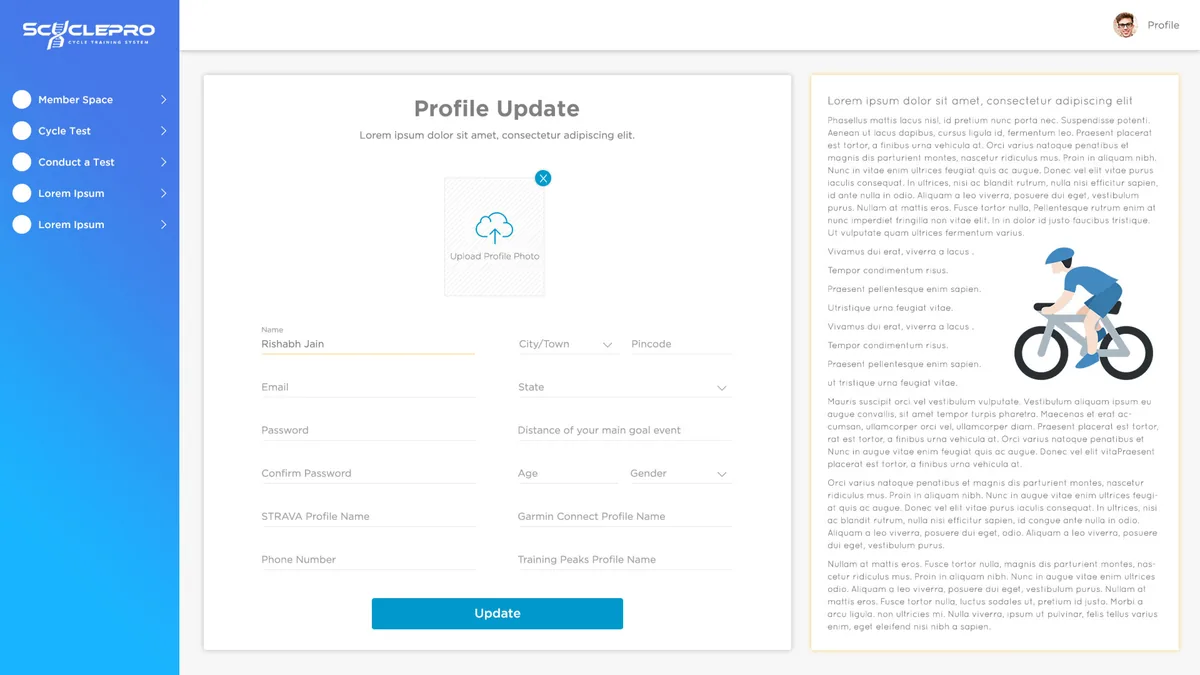
The athlete
Registers, builds a profile and gets assigned a coach, then picks a rider category, follows the field-test protocol, and reads the plan the system returns.
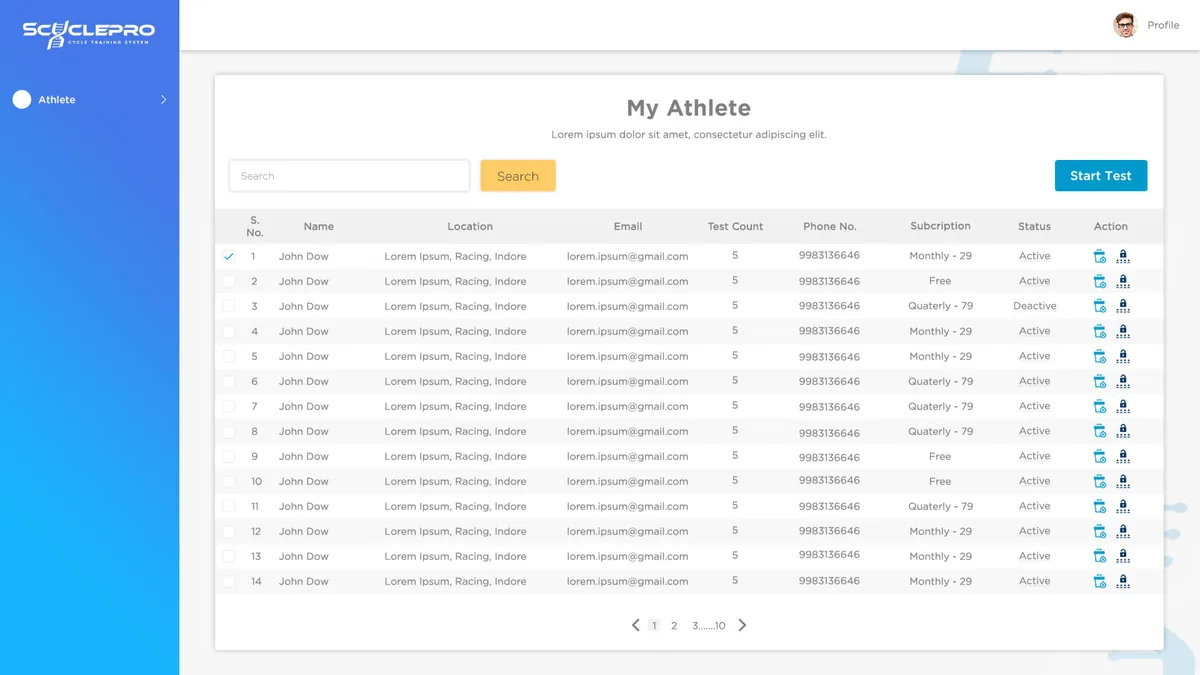
The coach
Sees every athlete assigned to them with test count and status, can start a test on an athlete's behalf, and tracks subscription status and commission across the roster.
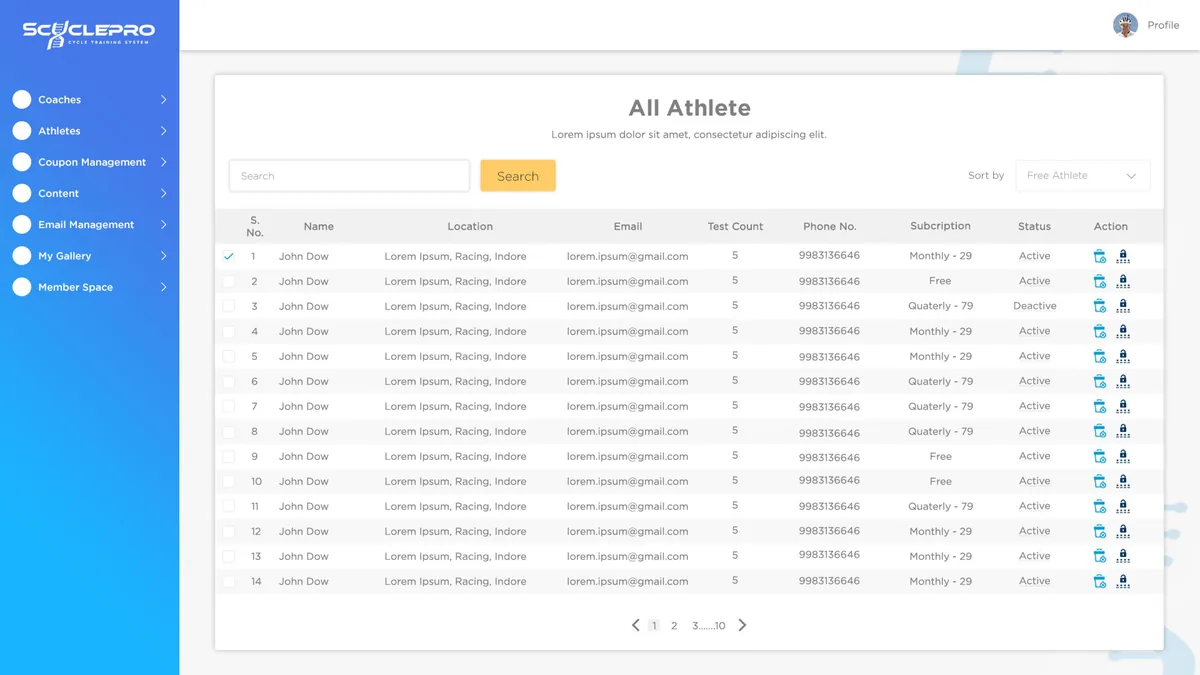
The admin
Manages every coach and athlete account, runs coupon management across monthly and quarterly plans, and handles member-space content and commission payouts.
A platform built around the measurement first
A generic training app hands out the same plan to everyone. What changes when the test, the physiology and the coaching relationship all live in one system.
The screens that run the loop
From choosing a training focus to entering test data and managing the commercial side, these are the surfaces the three roles work in.
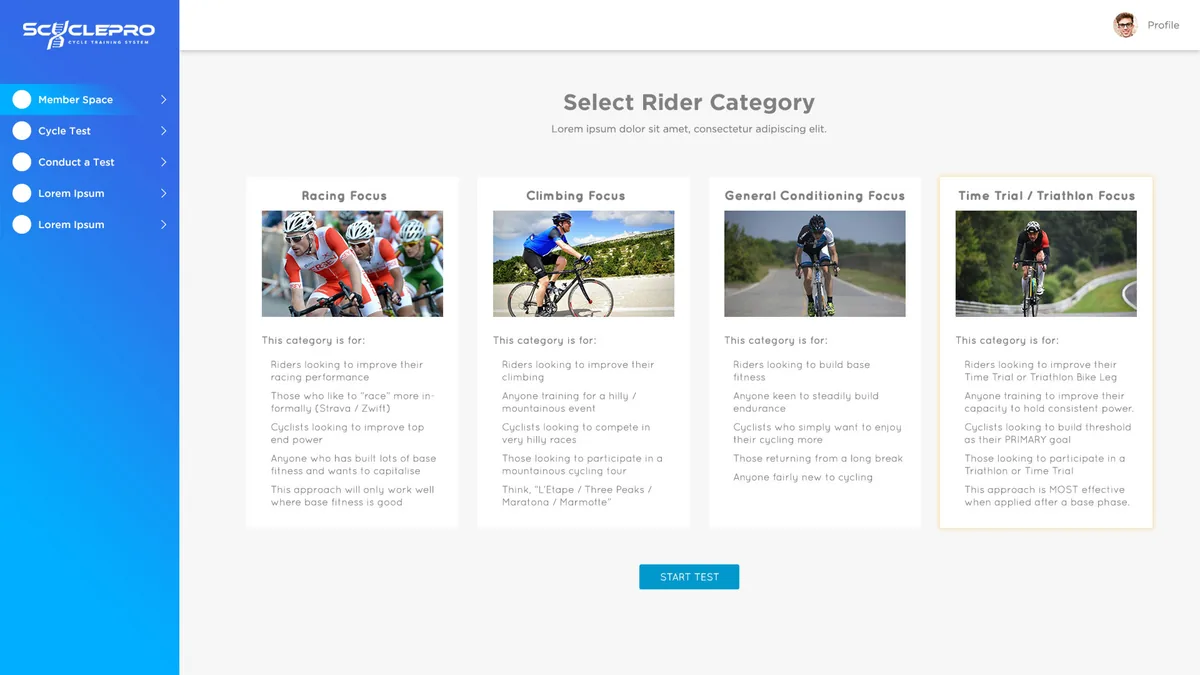
Four ways to focus the test
Athlete · Rider categoryRacing, Climbing, General Conditioning and Time Trial each describe who the category suits, so the athlete tests against the right goal.
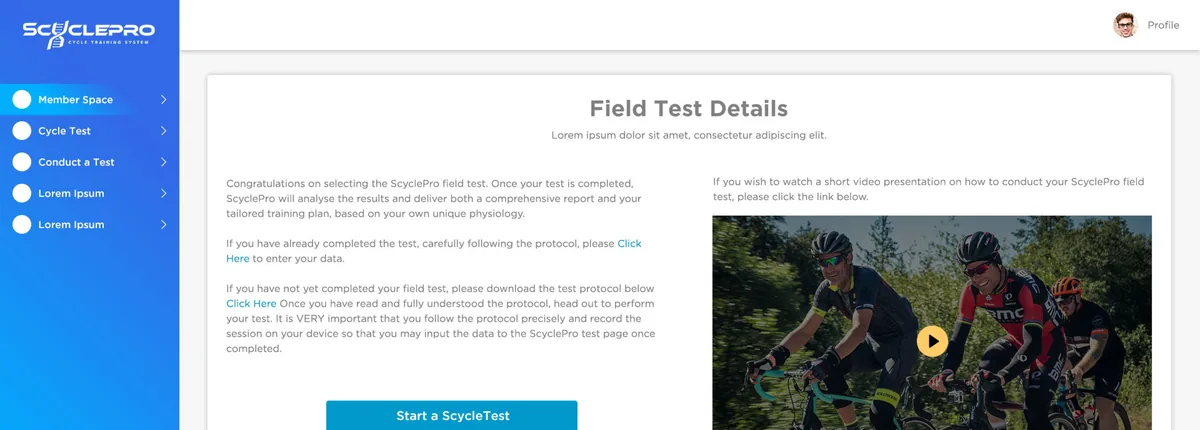
The protocol, then the data
Athlete · Field testThe field-test details walk the athlete through how to run the test before any results are entered.
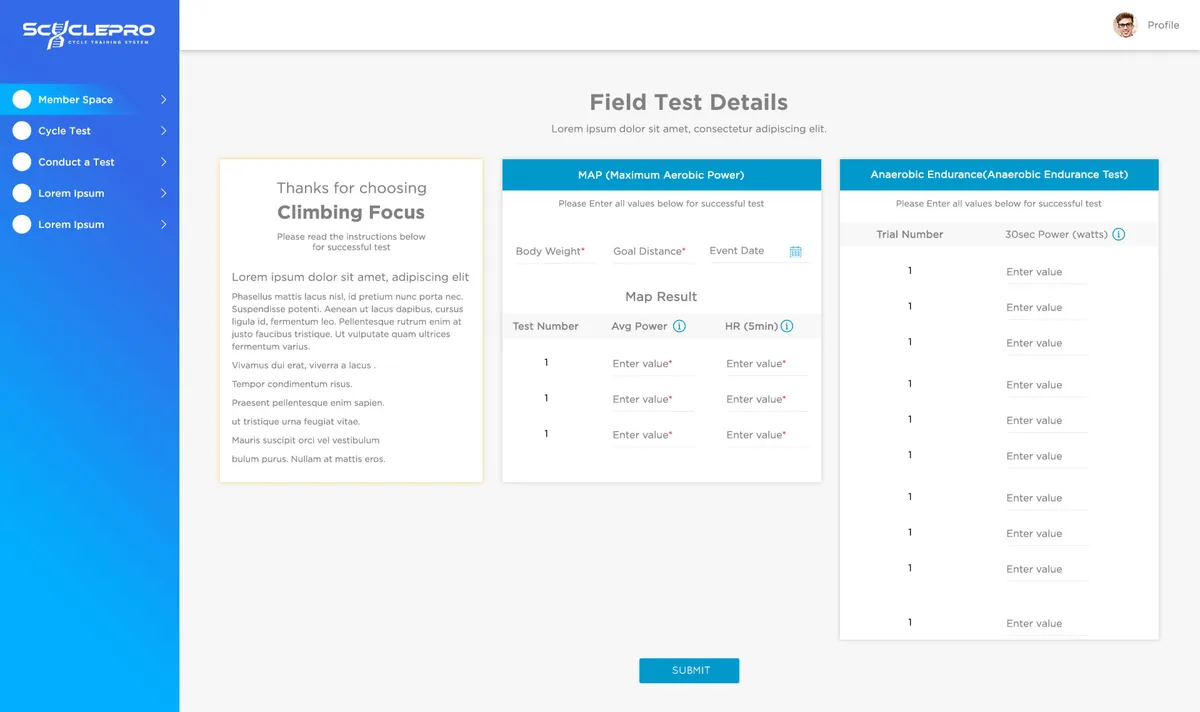
MAP and anaerobic endurance
Athlete · Test dataBody weight, goal distance, average power, five-minute heart rate and thirty-second power trials are captured in a structured form.
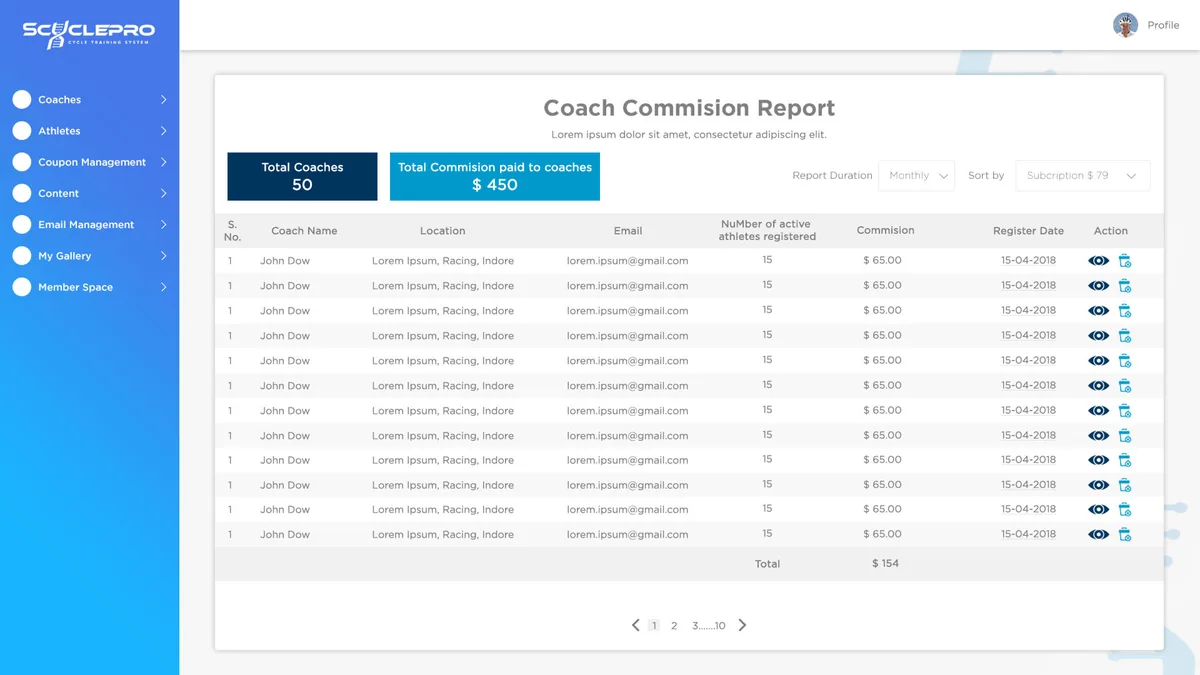
Commission tracked per coach
Admin · Coach reportCoaches are listed with location, active athletes and commission, filterable by report duration and subscription tier.
Discount codes with a lifecycle
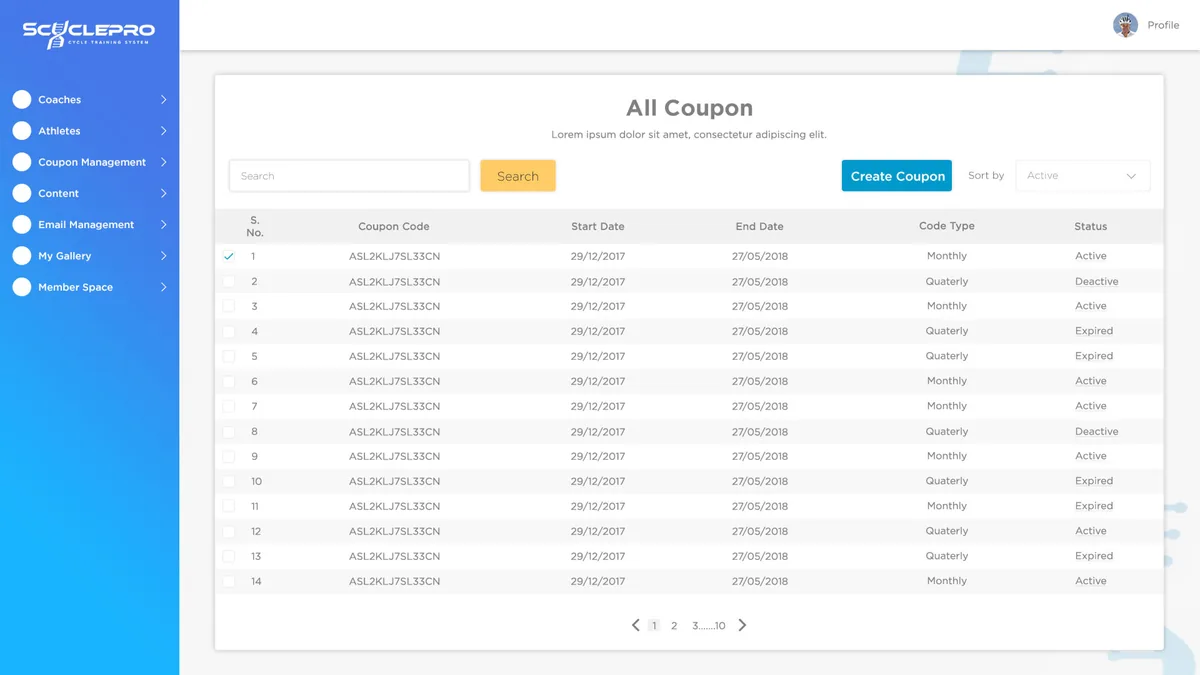
Admin · CouponsMonthly and quarterly coupon codes carry start and end dates and an active, deactivated or expired status.
Monthly or quarterly access
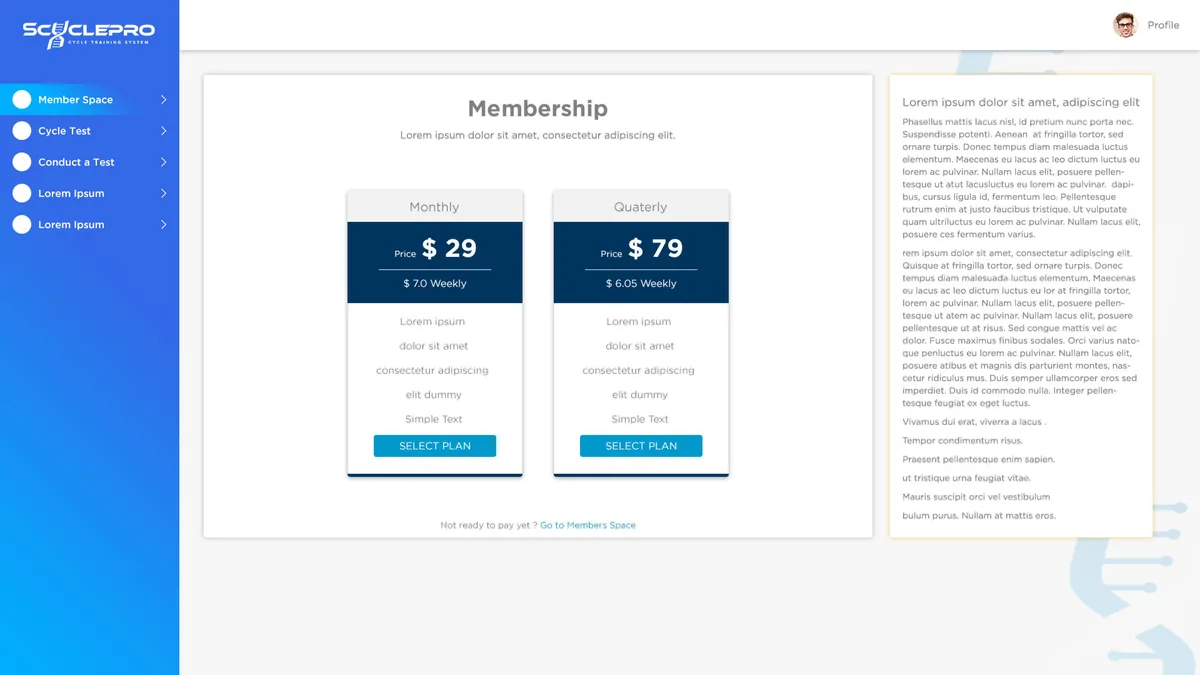
Athlete · MembershipThe athlete selects a membership tier, with a route back to the member space if they are not ready to pay.
How does a field test become a training plan?
This is the path the whole platform is built around: the athlete generates the data, the system turns it into a plan, and the coach stays in the loop the entire way.
- 01Athlete
Register and pair
The athlete signs up, builds a profile and is assigned a coach.
- 02Athlete
Pick a category
Racing, Climbing, General Conditioning or Time Trial sets the focus of the test.
- 03System
Read the protocol
The field-test protocol is presented so the test is done consistently.
- 04Athlete
Run the field test
The athlete performs the ride and records power and heart-rate data.
- 05Athlete
Enter the results
MAP and anaerobic endurance figures go into a structured data form.
- 06System
Get the plan
Analysis returns a comprehensive report and a physiology-based training plan.
The scope, in one panel
Every number in this panel is delivered scope — what was designed, built and handed over on the endurance cycling build for ScyclePro. It leaves out traffic, conversion and revenue on purpose: those figures belong to the client, and we don’t publish numbers we cannot stand behind.
- Sector
- Endurance cyclingPerformance testing
- Platform
- Web applicationAthlete · Coach · Admin
- Roles
- Athlete · Coach · AdminEach fenced off
- Surfaces
- Self-service · ConsoleAdmin back office
The look, and why
A clear, clinical system — a confident sky blue carries the measurement-first brand, a deep navy anchors the ink, and a soft mist keeps dense test data readable.
What does any sports-testing platform need to get right?
These principles came out of building ScyclePro and hold for any product that measures an athlete and then coaches them on the result.
Protect the measurement first
A plan built on a badly-run test is worse than no plan, so the protocol and the data-entry form matter more than the dashboard.
Capture physiology, not vibes
Power, heart rate and body weight are what a real plan is built from — a mood rating is not.
Give each role its own front door
An athlete, a coach and an administrator want completely different screens over the same record.
Match the focus to the rider
Racing, climbing, endurance and time-trial athletes need different tests and different plans.
Keep the commercial model in the platform
Memberships, coupons and coach commission belong next to the training, not in a separate billing tool.
Close the loop
A test that does not end in a plan the athlete can act on is just a number.
Building a sports performance platform
How long does it take to build a sports performance-testing platform?
How do you turn field-test data into a training plan?
Can one platform serve athletes, coaches and administrators?
Does it handle memberships and payments?
How much does a platform like this cost to build?
Building a sports or performance platform?
Tell us how your business actually works and we'll tell you honestly what it takes to build — the protocol, the plan, the roles. No deck, no pitch.