


Couch to marathon
A membership website for a running-coaching school. It turns a coaching programme into something a runner can join online - pick a structured plan matched to their level, sign up for membership, pay, and train with a resources area and a coaching blog behind the login.
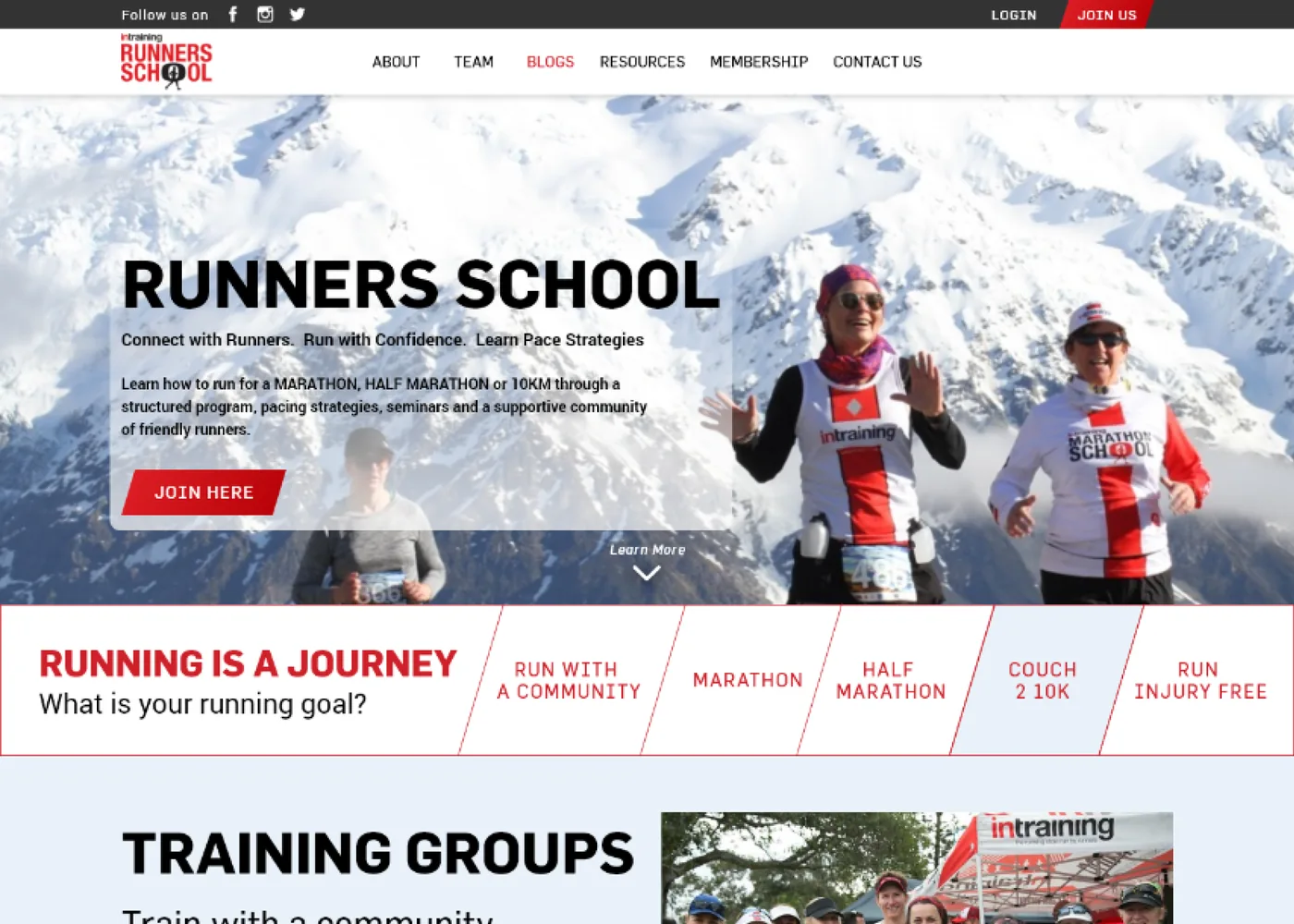
Sector
- Running & endurance coaching
- Membership business
Product surface
- Membership website
- 20+ pages & states
What we did
- UX and UI design
- Web development
Programmes
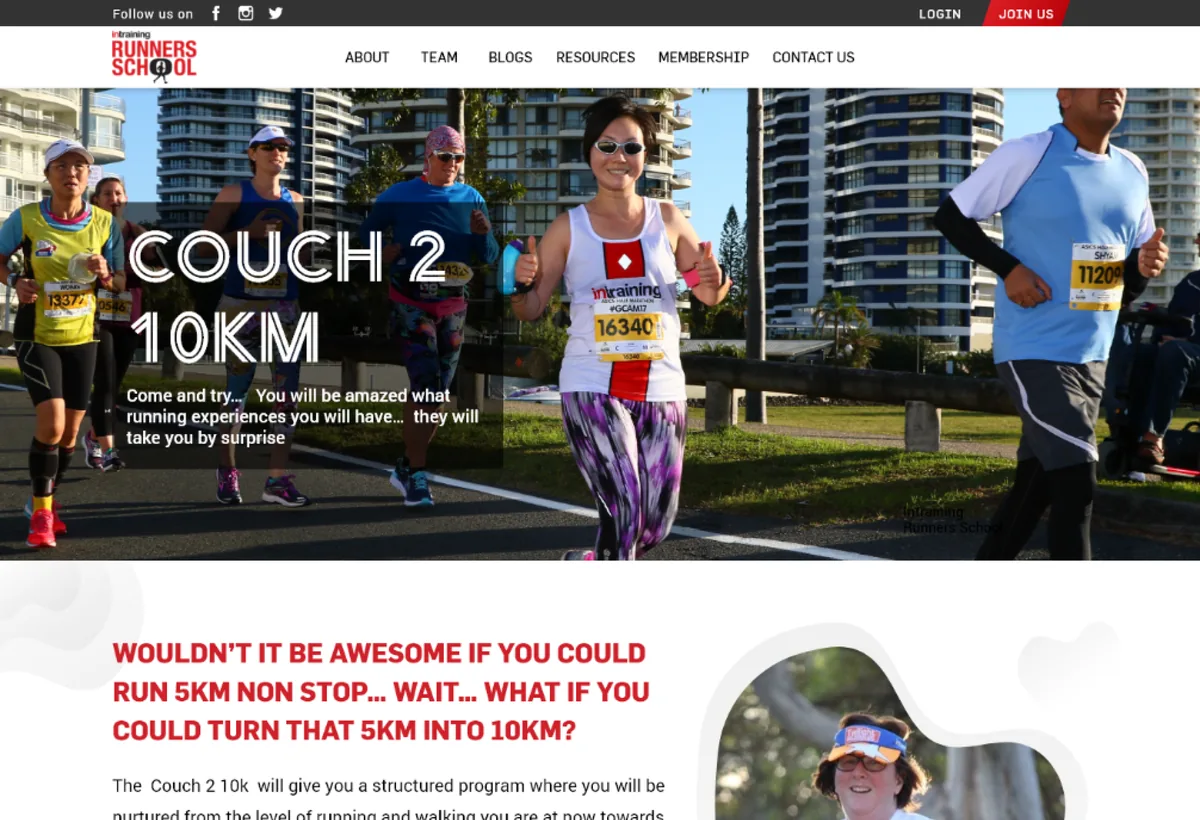
- Couch 2 10K
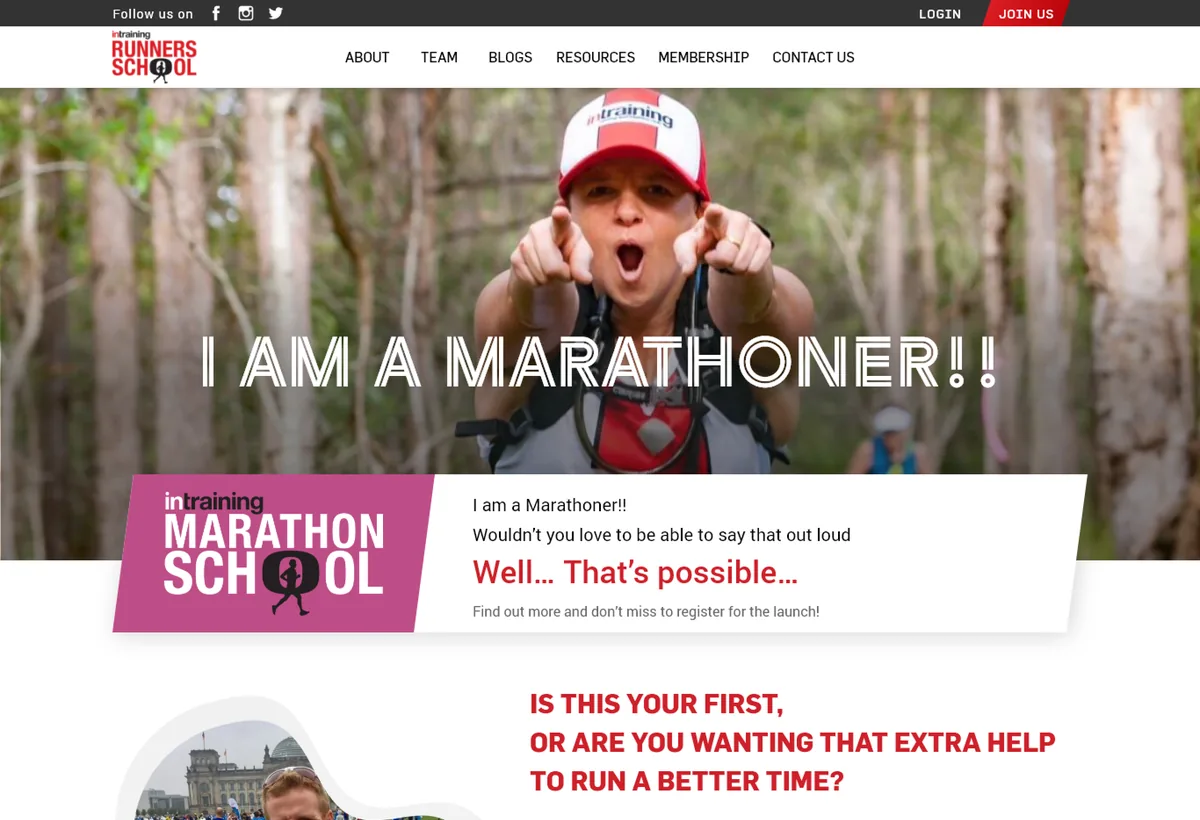
- Marathon School
What is In Training Runners?
A membership website that packages a running-coaching school into an online product. Rather than a brochure with a phone number, it lets a runner choose a structured programme for their level, join as a member, pay, and then train with coaching resources and a blog behind the login - a coaching relationship that starts on the web.
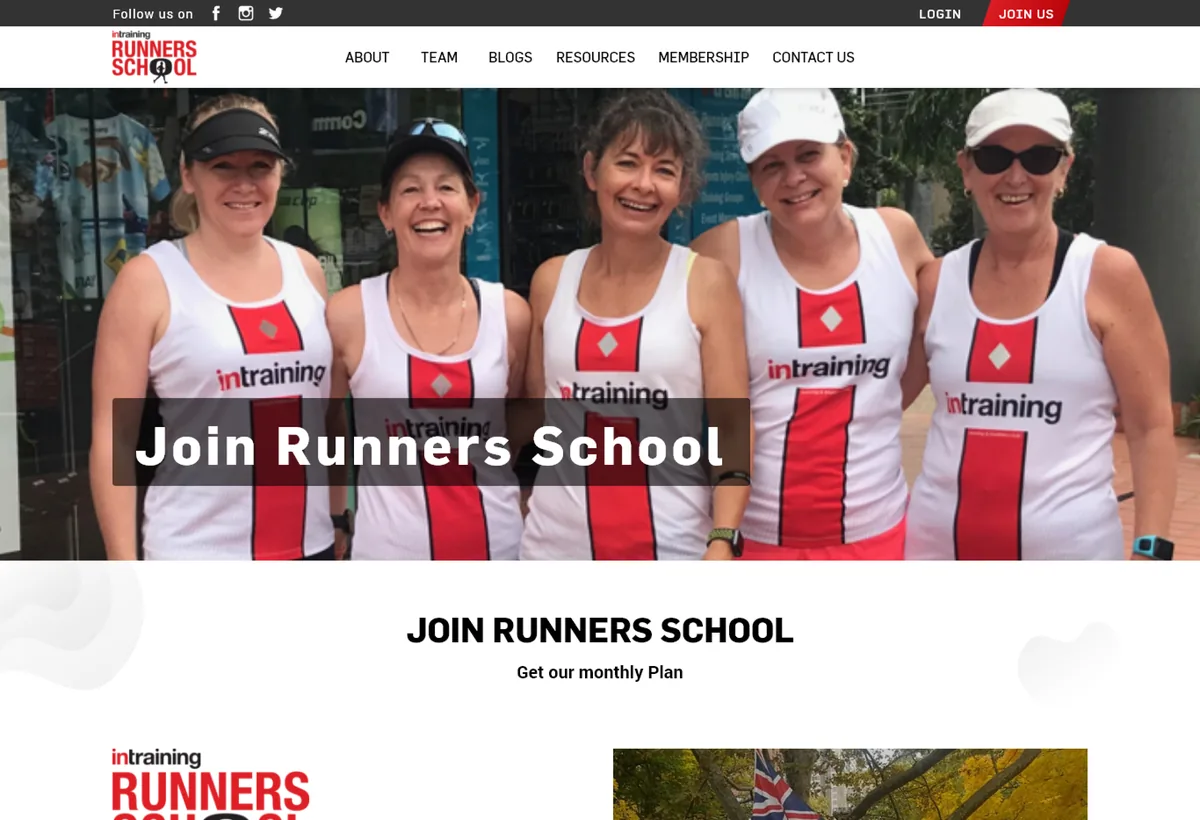
A coaching school, turned into a membership product
The business is structured coaching; the website's job is to make joining it as clear as the training itself. So the programmes are presented by ability level, membership and payment are built in, and the value a member pays for - resources and a training blog - lives behind the account.
Why is running coaching so hard to sell online?
Because the thing being sold is structure and accountability, and most coaching sites reduce it to a page of text and a contact form. The design work here was to make the programmes, the membership and the ongoing value legible enough that a runner can join with confidence in a single visit.
| The runner's problem | Going it alone | With In Training Runners |
|---|---|---|
| Knowing what to run | A generic plan off the internet | A structured programme matched to your level |
| Starting from scratch | Guesswork, and often injury | A Couch 2 10K path for new and returning runners |
| Going long | No idea how to build up safely | Marathon School for half and full marathoners |
| Staying accountable | Motivation fades on your own | Membership and a coaching structure to train within |
| Learning the how | Scattered blog posts and videos | A resources area and training blog in one place |
| Actually joining | A form, then silence | Membership and payment with a clear confirmation |
What is on the site?
From the programmes a visitor is choosing between, through membership and payment, to the resources and blog a member logs in for. Every page is designed to move a runner one step closer to joining, then to staying.
How does a visitor become a training member?
This is the funnel the whole site is built to move a runner through - from browsing a programme to training as a paying member. Every step is a real page, and the order is the argument for the design.
- 01
Find your programme
A visitor browses the school and lands on Couch 2 10K or Marathon School.
Visitor - 02
Pick your level
They self-select an ability level - new to running, or experienced and going long.
Visitor - 03
Join membership
They sign up for the monthly plan that matches the programme they chose.
Member - 04
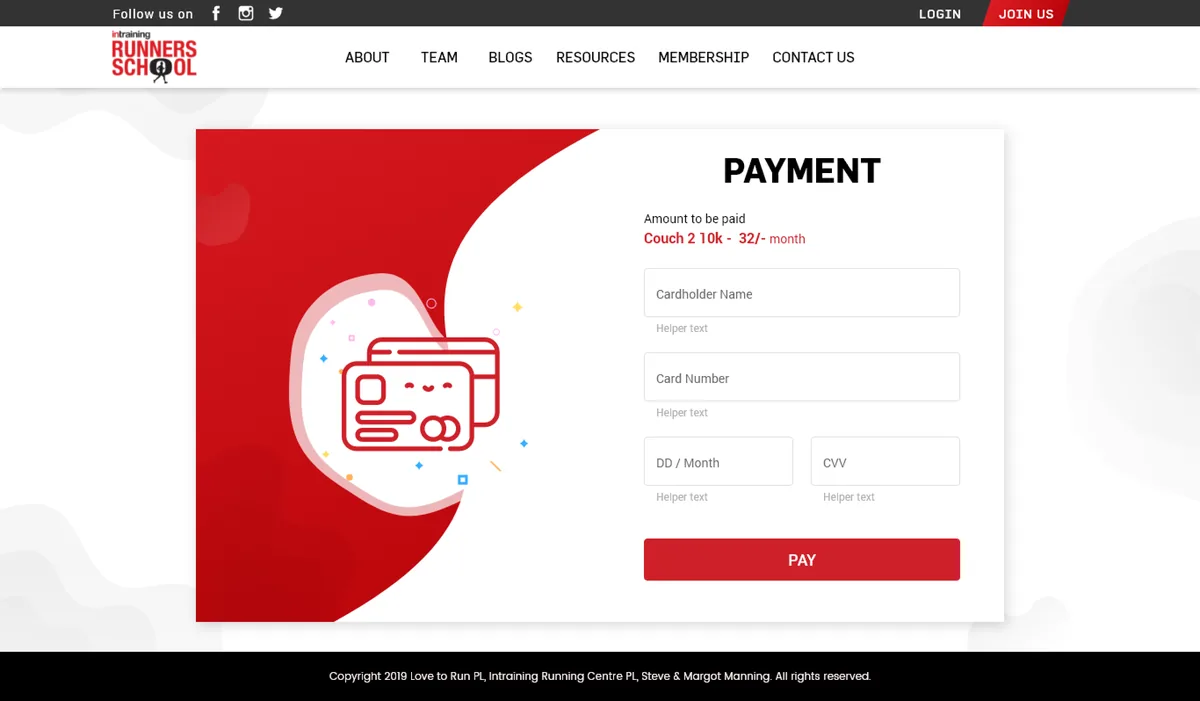
Pay and confirm
Payment activates the membership and ends on a clear thank-you confirmation.
Member - 05
Train with resources
The member unlocks the resources area and the coaching blog to train with.
Member - 06
Manage the account
Profile, password and membership all live in a My Account area they control.
Member
Scroll the path sideways
What does a coaching or membership website need to get right?
Six things separate a membership site people join and keep from a brochure with a pay button. They came out of designing this one and hold for any expertise-as-a-membership business.
- Let people self-select. If a beginner and an expert see the same offer, both bounce. Presenting programmes by ability level does the qualifying for you.
- Make joining a flow, not a form. Coaching sold by enquiry email leaks at every step; a real membership-and-payment path turns intent into a member in one visit.
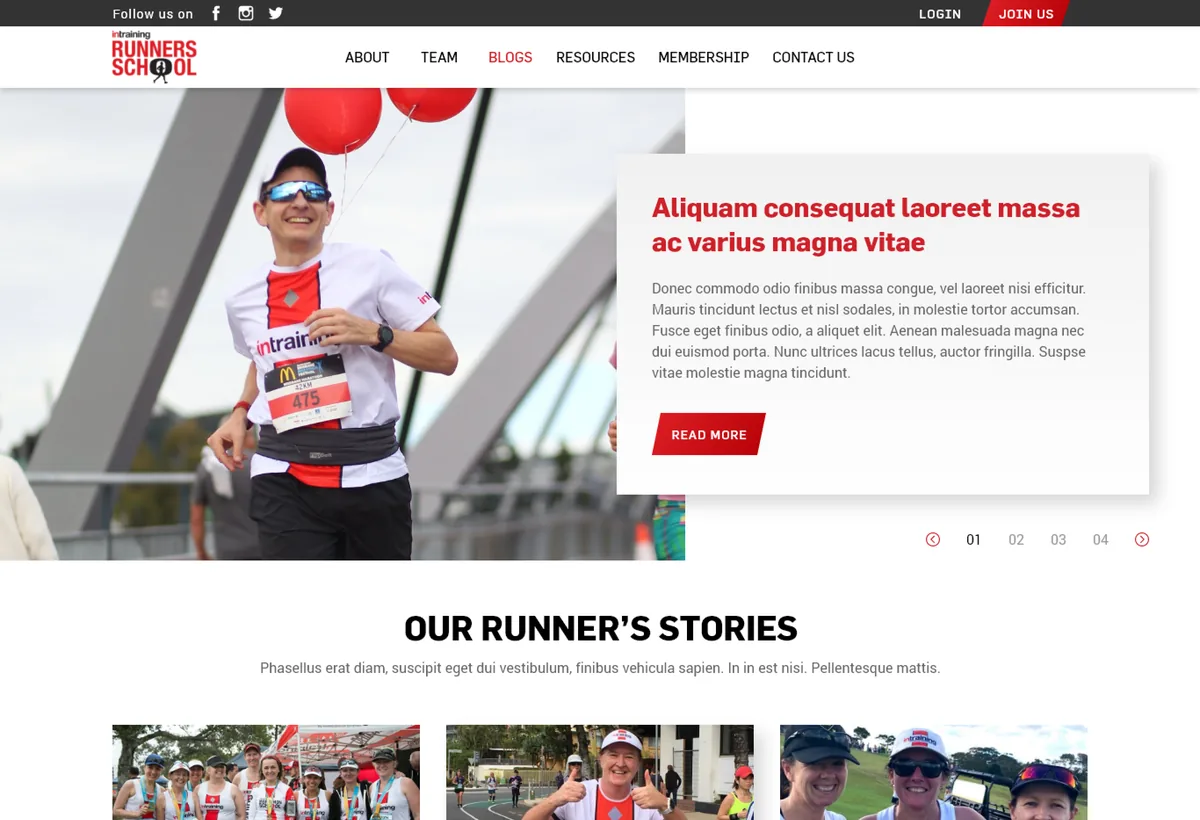
- Put the value behind the login. A membership needs a reason to stay. Resources and content members actually use are what stop a subscription from churning.
- End the payment on a clear confirmation. The moment after paying is where trust is won or lost; a proper thank-you and account state settles the runner in.
- Give members a home they control. Profile, password and membership management in one account area is basic respect, and it cuts the support load.
- Let the blog do the top of the funnel. A coaching blog earns search traffic and keeps the school present between training blocks, feeding the join journey for free.
How is it built?
A membership website with authentication, gated content, subscription payments and a blog - the shape any expertise-as-a-membership business needs to sell and retain online.
Building a coaching or membership website
What coaches and membership businesses ask us before building online.
Ask us yoursHow long does it take to build a membership website?
A first production version usually takes eight to sixteen weeks. The public pages are quick; the time goes into accounts, gated content and subscription payments - the parts that turn a brochure site into a membership product people log into and pay for month after month.
How much does a membership or coaching website cost?
It depends on scope, and it cannot be quoted from a page count alone. The biggest cost drivers are the payment and subscription model, how much content is gated, and whether there is a members' area to build and maintain. Shanti Infosoft scopes it on a short call and returns a fixed quote.
Can you build the membership and payments, not just the design?
Yes. Design and build are one job here - the programmes, the membership plans, the payment flow, the gated resources and the account area are all part of the same website, so what a visitor sees and what a member pays for stay perfectly in step.
How do you keep members from cancelling?
By making sure there is real, ongoing value behind the login. On this site the resources area and the coaching blog give a member a reason to keep logging in, and a clean account experience removes the friction that pushes people to cancel. Retention is a design problem as much as a coaching one.
Will the site help bring new runners in?
Yes. The coaching blog is built to earn search traffic and answer the questions runners ask before they commit, feeding the same join journey the rest of the site is designed around. Content at the top of the funnel is what makes a membership site grow without paid ads.
Related work and services
Turning expertise into a membership product?
Tell us how your business actually works and we will tell you honestly what it takes to build. See more of our work or what we do.
Book a 15-minute call