


One core, a thousand storefronts
A white-label SaaS for selling digital goods - game top-ups, gift cards and subscriptions. Every reseller gets a fully branded store on their own domain, while suppliers, wallets, pricing and orders stay in one central core. Built Arabic-first, right to left.
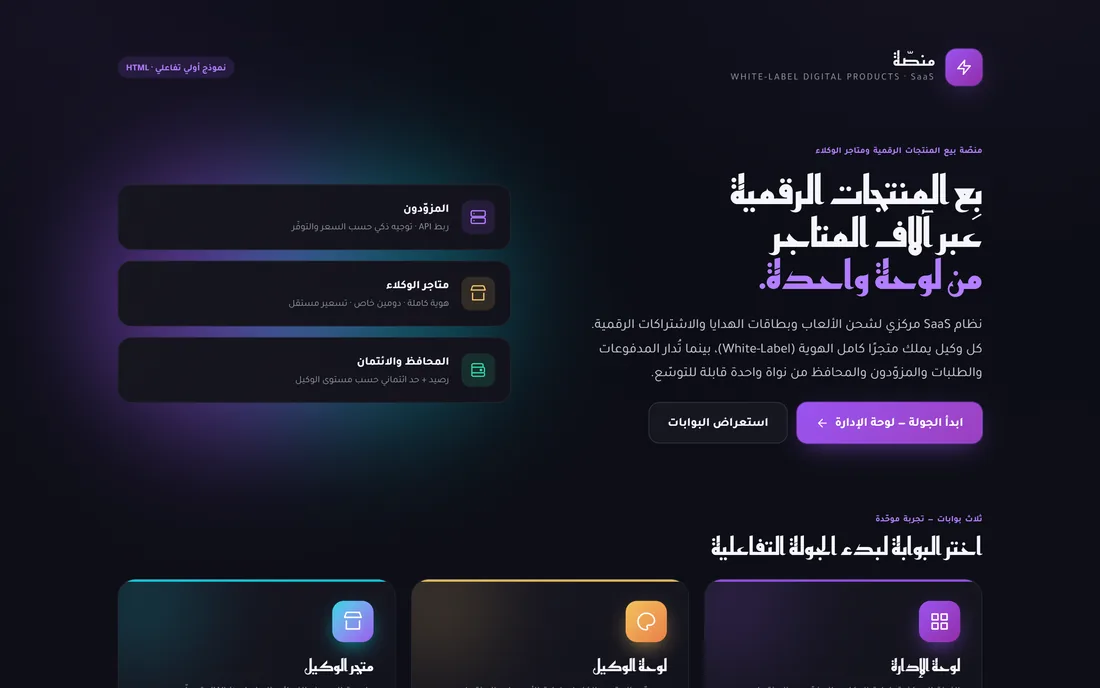
Sector
- Digital goods commerce
- White-label SaaS
Platform
- 3 portals
- 30 screens
Surfaces
- Platform admin
- Reseller console
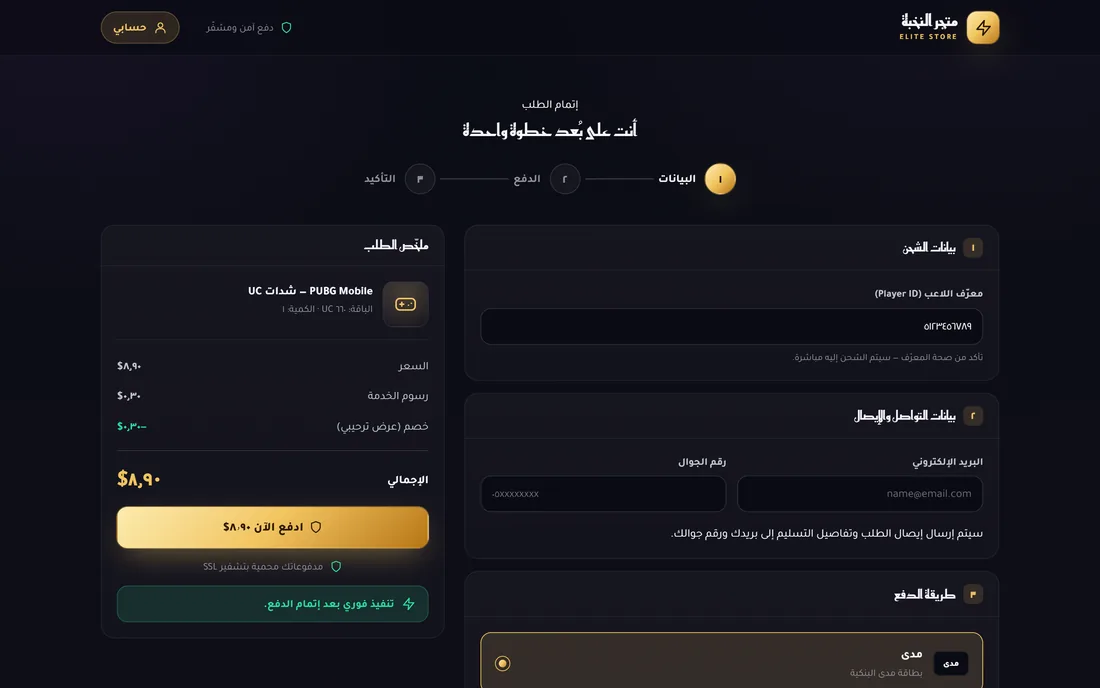
- Branded storefront
Built for
- Arabic, right to left
- Tajawal + Reem Kufi
What problem does it solve?
Digital-goods reselling is a business of margins measured in cents, run by hundreds of small operators who each want their own shopfront. The hard part is not the storefront - it is the core that prices, funds and fulfils every order behind all of them at once.
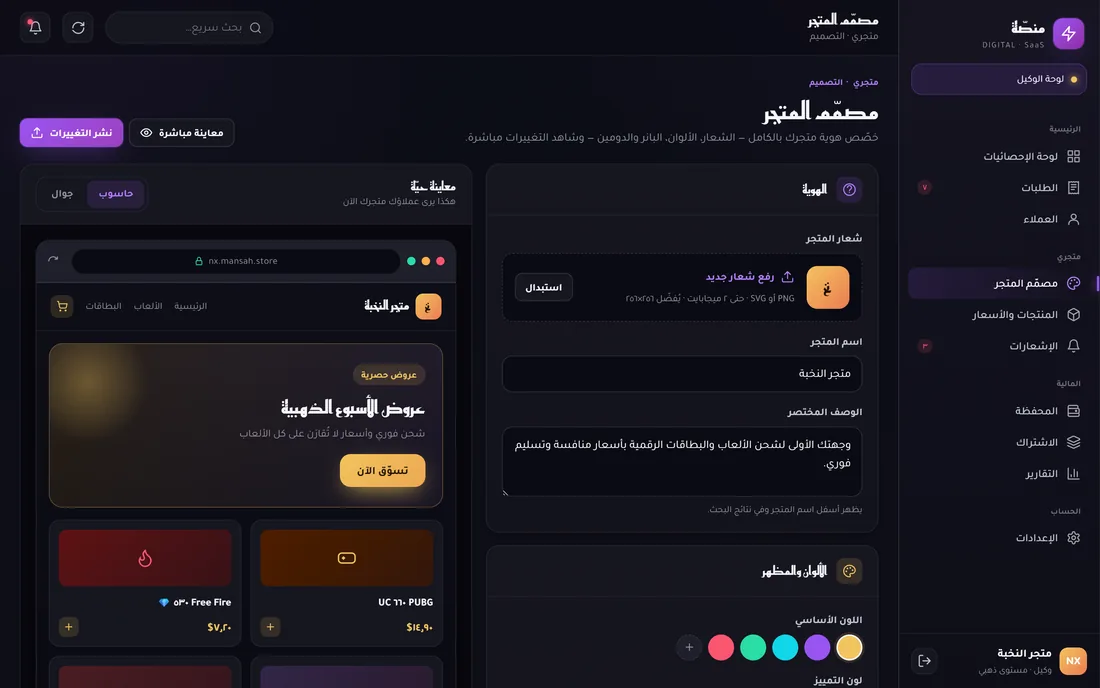
The storefront is the easy half
A reseller wants a store with their own name, their own domain and their own prices. The platform operator wants one catalogue, one set of supplier integrations, one wallet ledger and one place where margin is decided. This platform runs both halves as one system: what the reseller edits, and what the core keeps control of.
Why is a white-label reseller network hard to run?
Three problems appear the moment one shop becomes hundreds. Each of them is invisible at ten resellers and fatal at a thousand: prices that must differ per store, money that moves before the goods do, and fulfilment that depends on somebody else's API being up.
| Running the network | Spreadsheets and chat groups | On this platform |
|---|---|---|
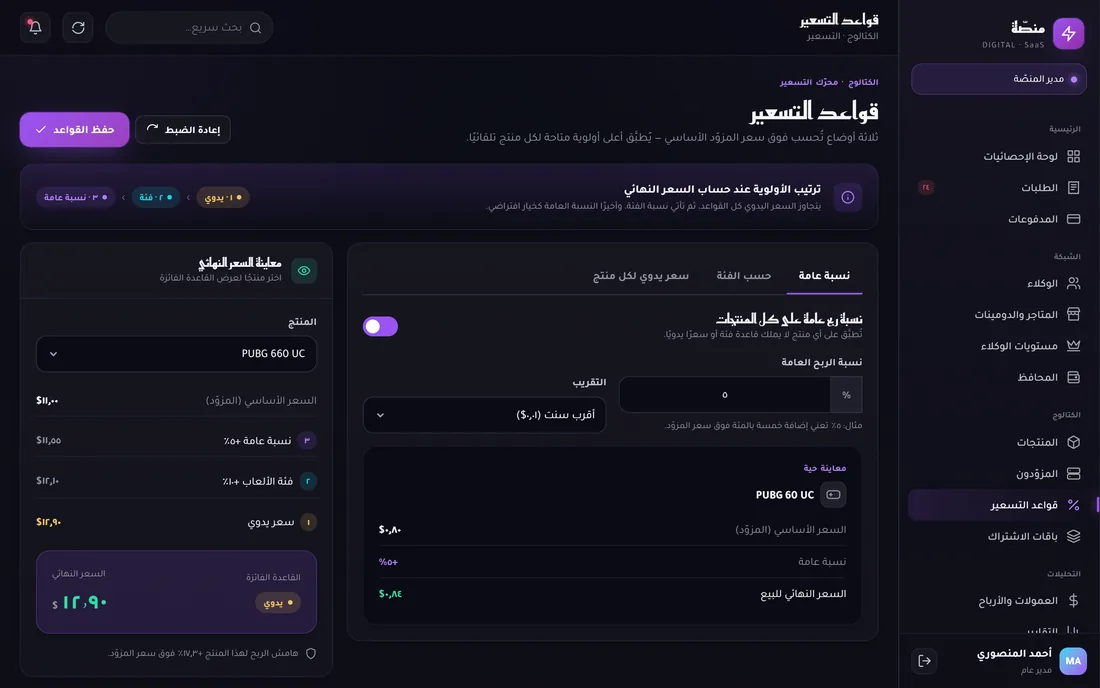
| Setting a reseller's price | A price list pasted into a group chat | Rule precedence per product, with a live winning-rule preview |
| Reseller onboarding | A store built by hand for each one | Self-service store builder with branding and its own domain |
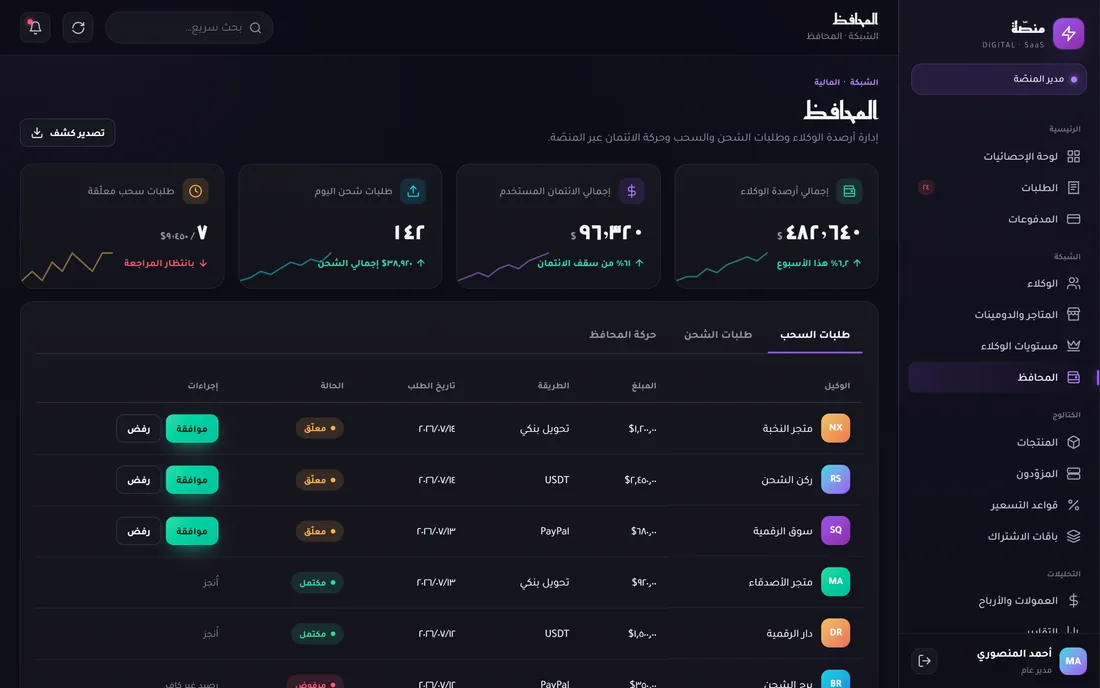
| Giving a reseller credit | An informal limit somebody remembers | Tier-based credit limit, applied automatically from sales volume |
| Choosing a supplier for an order | Whoever answers first | Supplier records with balance, response time and connection state |
| Knowing what the platform earns | Reconstructed at month end | Revenue split across subscriptions, commission and supplier margin |
| A failed top-up | The customer messages the reseller | Order shows the failure reason against the supplier and the wallet |
The network
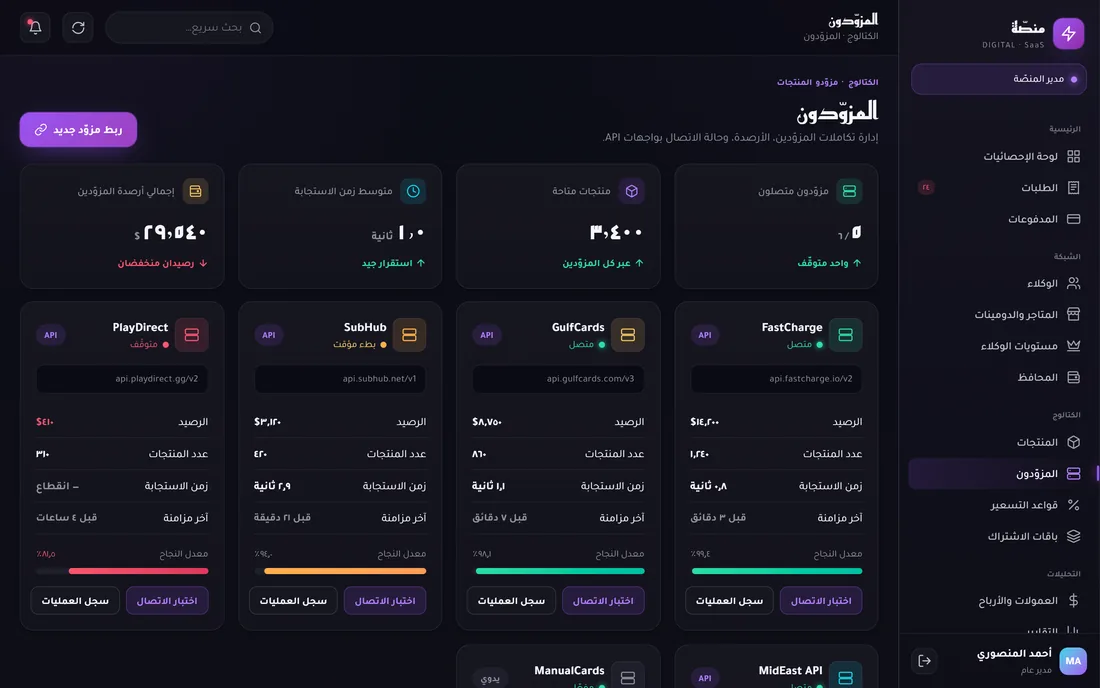
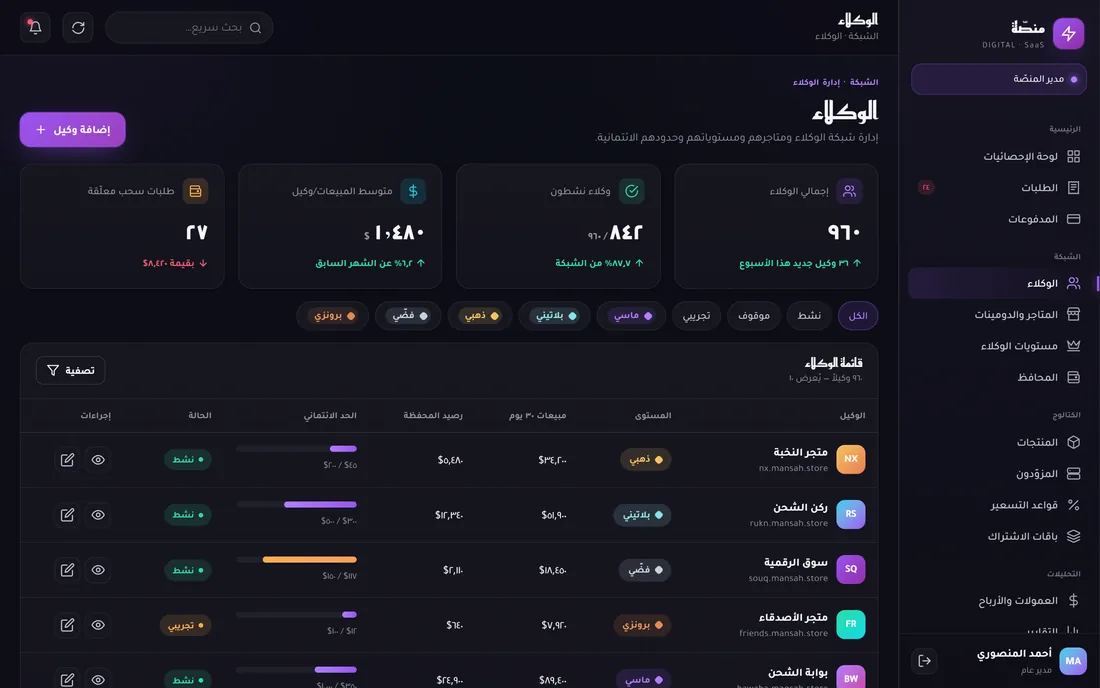
4 screensResellers, their stores and custom domains, the tier system that grades them, and the wallet ledger that funds them - the four screens that decide who can sell what, and with whose money.
- Resellers
- Stores & domains
- 6 tiers
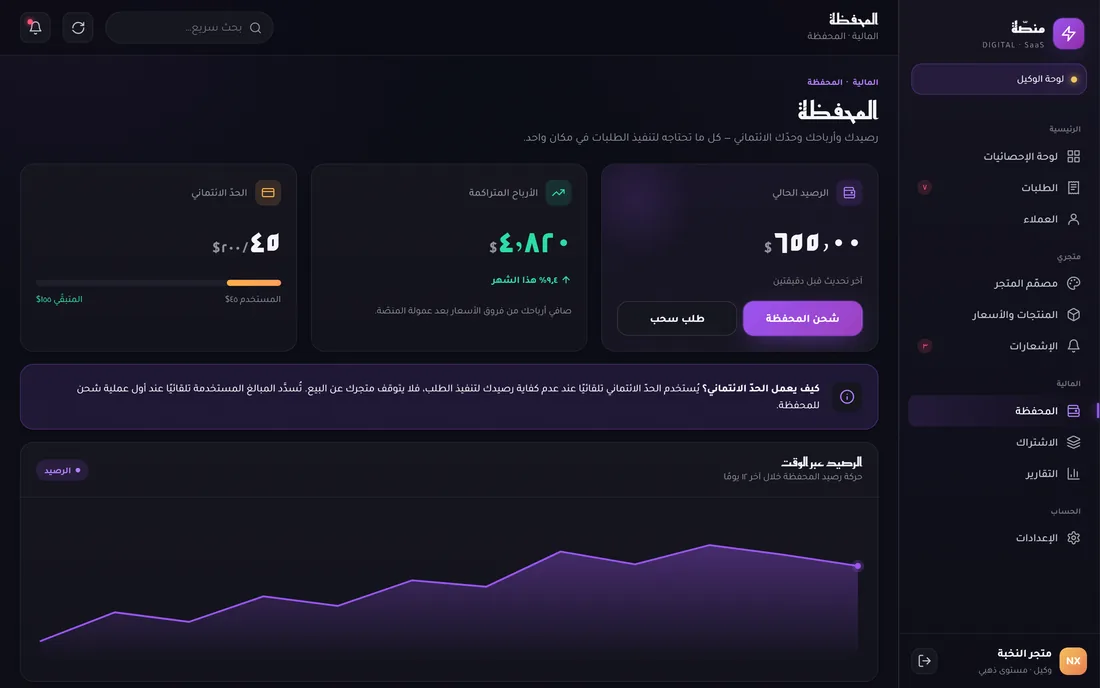
- Wallets & credit
The catalogue
4 screensProducts, supplier connections, pricing rules and subscription plans. One catalogue, many sell prices.
- Products
- Suppliers
- Pricing rules
- Plans
The money
4 screensOrders, payments, commissions and reports - the platform's own margin separated from the resellers' takings.
- Orders
- Payments
- Commissions
The reseller's store builder
Self-serviceBranding, colours, banners, domain and catalogue selection are edited by the reseller, so a new storefront does not need the platform team - which is the only way a white-label model scales past a handful of partners.
- Theme & banners
- Own domain
- Own prices
Control and audit
2 screensAn activity log and platform settings, so a network run by many hands still has one record of who changed what.
- Activity log
- Settings
Arabic-first, right to left
Whole buildEvery screen is authored RTL in Tajawal and Reem Kufi, including tables, charts and form layouts - not a mirrored afterthought bolted onto an English design.
- RTL layout
- RTL tables & charts
How did we build it?
Who logs in, and what do they get?
Three portals, plus a fourth party - the supplier - that is present as an integration rather than a login. Pick a persona to swap the screen. The chips underneath list what the platform administrator can do, the first persona in the list.
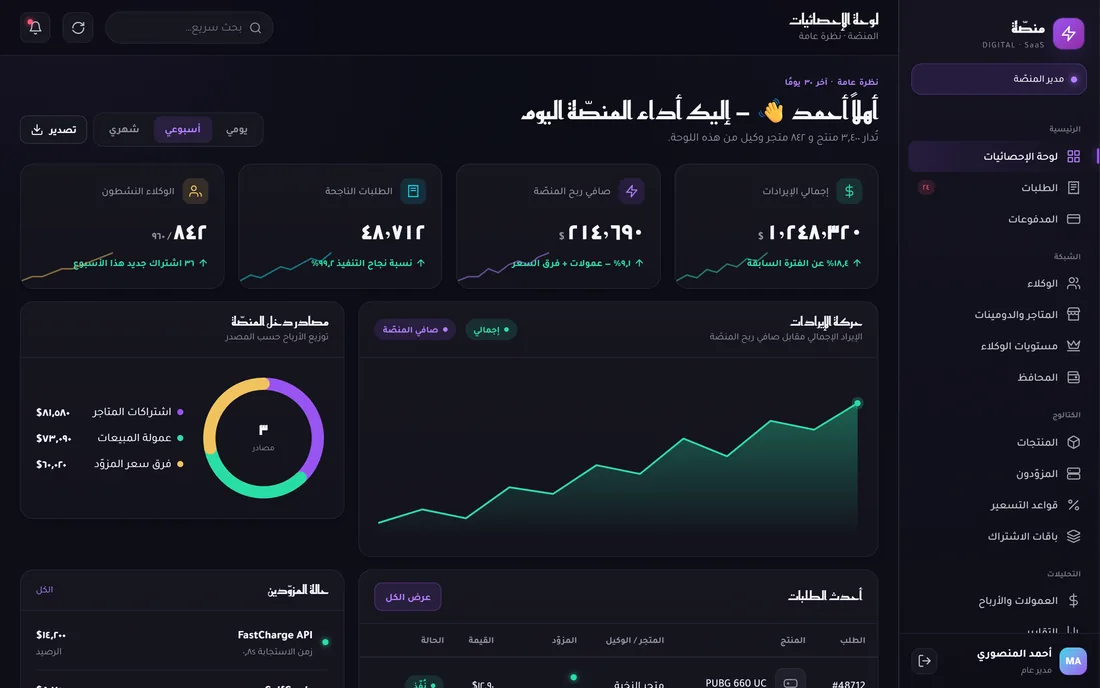
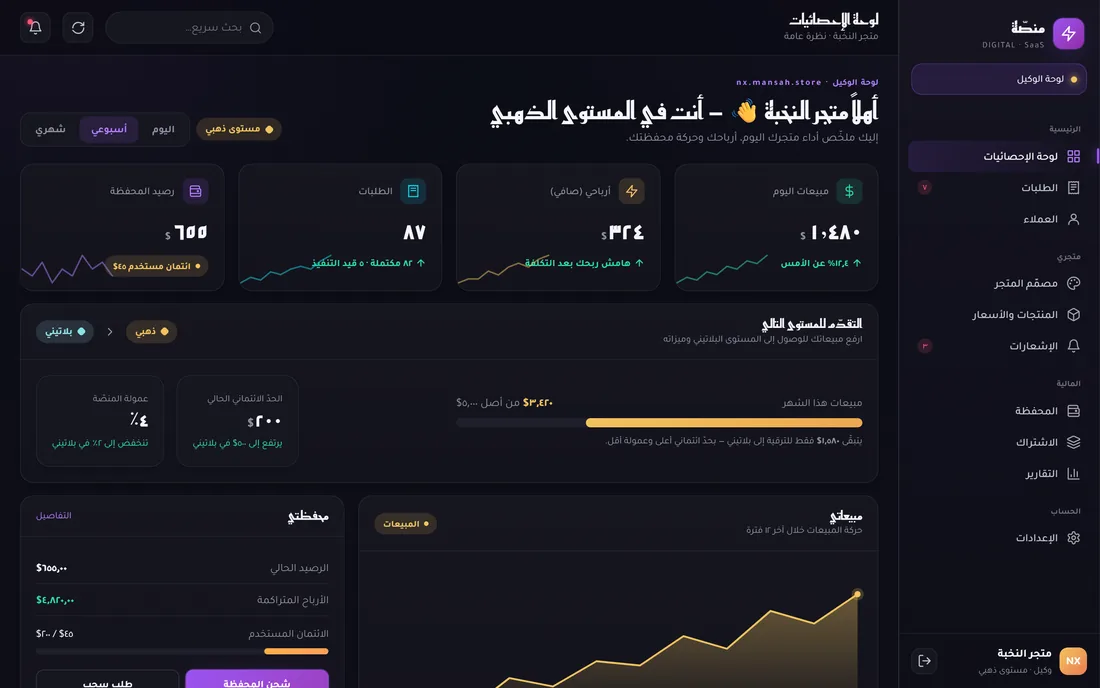

- Set pricing rules and rounding
- Define tiers and credit limits
- Connect and monitor suppliers
- Approve stores and domains
- Read the full order and money trail
What does the interface look like, and why?
A near-black violet ground with one electric violet reserved for action - the palette of the gaming and top-up audience these storefronts serve, rather than the blue of a generic dashboard. Gold, mint and cyan appear only as status: tier, success and information.
Aa
Primary typeface
Reem Kufi
A B C D E F G H I J K L M N O P Q R S T U V W X Y Z
a b c d e f g h i j k l m n o p q r s t u v w x y z
0 1 2 3 4 5 6 7 8 9 & ? ! £ $ €
30pxPage titleH122pxSection headingH218pxCard headingH315pxLead copyLead14pxBody text and table cellsBody11pxDIGITAL · SaaSEyebrowArabic needs more vertical room than Latin at the same size, so line height runs looser throughout and numerals are rendered in Arabic-Indic form inside the interface. Tajawal and Reem Kufi are open-licence typefaces; the specimen above falls back to the nearest available face if they are not installed on your device.
What is a white-label reseller platform?
It is one system running many branded shopfronts. The operator holds the catalogue, the supplier integrations and the money rails; each reseller gets a store carrying their own name, domain and prices. Customers never see the platform underneath - which is the point, and also the reason the pricing and wallet model has to be built properly from the start.
How long does it take to build a platform like this?
A build of this shape - three portals, supplier routing, wallets with credit, tiered pricing and a self-service store builder - is a multi-month programme. The largest single variable is how many supplier APIs must be integrated, because each one has its own contract, error behaviour and reconciliation quirks. We phase it so the admin core and one storefront ship before the network is opened up.
How do you stop resellers undercutting each other?
You do not stop it - you make it a controlled decision. The operator sets a floor through the pricing rules, and the reseller sets their own margin above the resolved base price. Because the rule chain is explicit, both sides can see exactly which rule produced a given sell price.
Does the platform need to support Arabic and RTL from day one?
If the market is Arabic-speaking, yes. Retrofitting right-to-left onto a left-to-right build touches layout, tables, charts, forms, icons and number formatting - it is far more expensive than authoring it that way from the first screen. This platform was built Arabic-first for exactly that reason.
What happens when a supplier API goes down?
Suppliers are modelled as separate connections with their own balance, response time and state rather than one hard-wired integration, so a degraded supplier is visible on the admin dashboard and orders can be routed elsewhere. Failed orders keep the reason against them - supplier error or insufficient wallet balance - so support does not have to guess.
Related work
Running a reseller network on spreadsheets?
Tell us how your business actually works and we will tell you honestly what it takes to build. See more of our work or what we do.
Book a 15-minute call