


Rent it. Supply it.
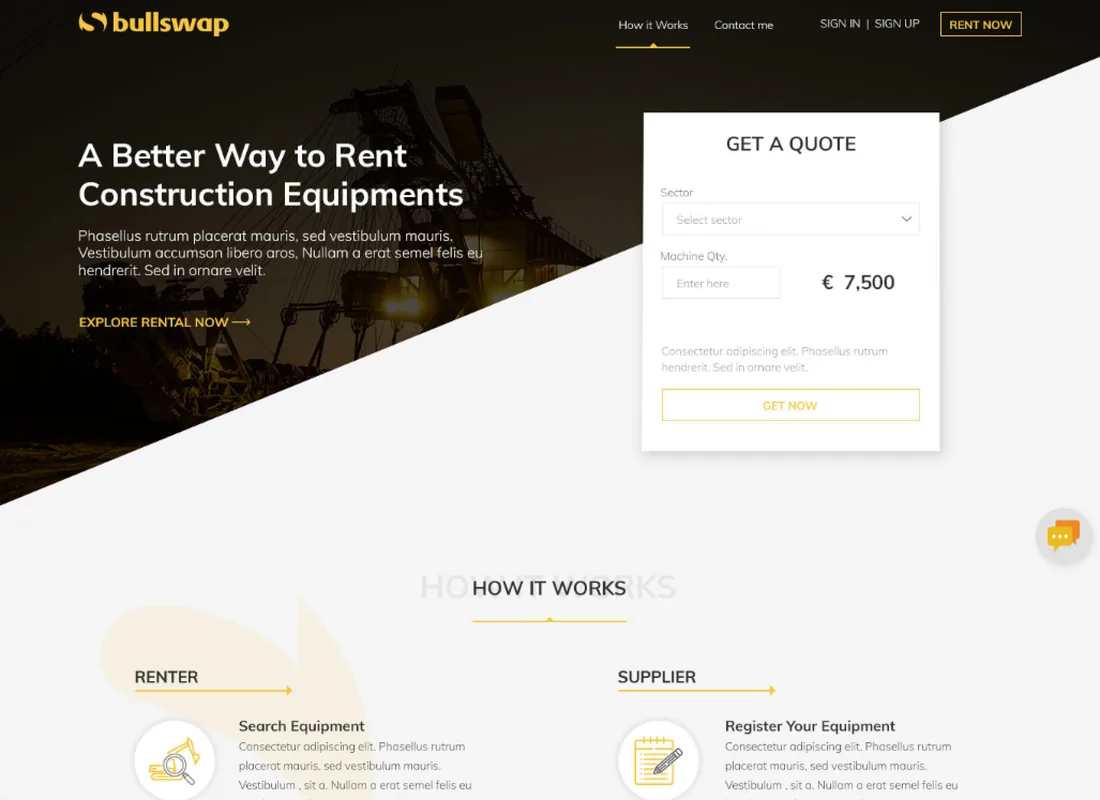
A closed B2B marketplace where construction companies rent heavy equipment from each other and put their own idle fleet out to work — one account, both sides of the deal.
Sector
- Construction equipment
- B2B rental
Sides
- Renting company
- Supplying company
What we did
- UX + UI design
- Web platform
- Marketplace flows
Surfaces
- Request
- Supplying
- My Equipment
What is Bullswap?
Heavy equipment is expensive to own and idle most of the year. Bullswap turns that idle fleet into supply and lets other contractors rent it — a marketplace where every company is both a renter and a supplier.
One account, both sides of the transaction
A construction company signs in once and can request equipment it needs this week while renting out the machines it is not using. The same dashboard carries its rental requests and its incoming supply orders side by side.
Why is renting heavy equipment between contractors so hard?
Equipment hire between companies runs on phone calls, forwarded photos and paper invoices. Nobody can see what is available nearby, on what terms, or whether the counterparty is credit-worthy.
| Renting a machine | Calls and paper | On Bullswap |
|---|---|---|
| Finding equipment | Ring around the yards you know | Search nearby supply by spec and date |
| Agreeing terms | Verbal, then re-typed | Request with jobsite, period and operator attached |
| The supplier's reply | A callback, if they remember | Accept, confirm supplier and message in-platform |
| Invoicing | A separate document by email | Invoice created and sent from the order |
| Trust | Whatever the handshake is worth | Screened members, insurance and fraud detection |
What does a rental look like end to end?
A request leaves the renting side, lands on a supplier, gets accepted, and runs as an on-rent order with its own invoice — all inside one workflow.
Request equipment
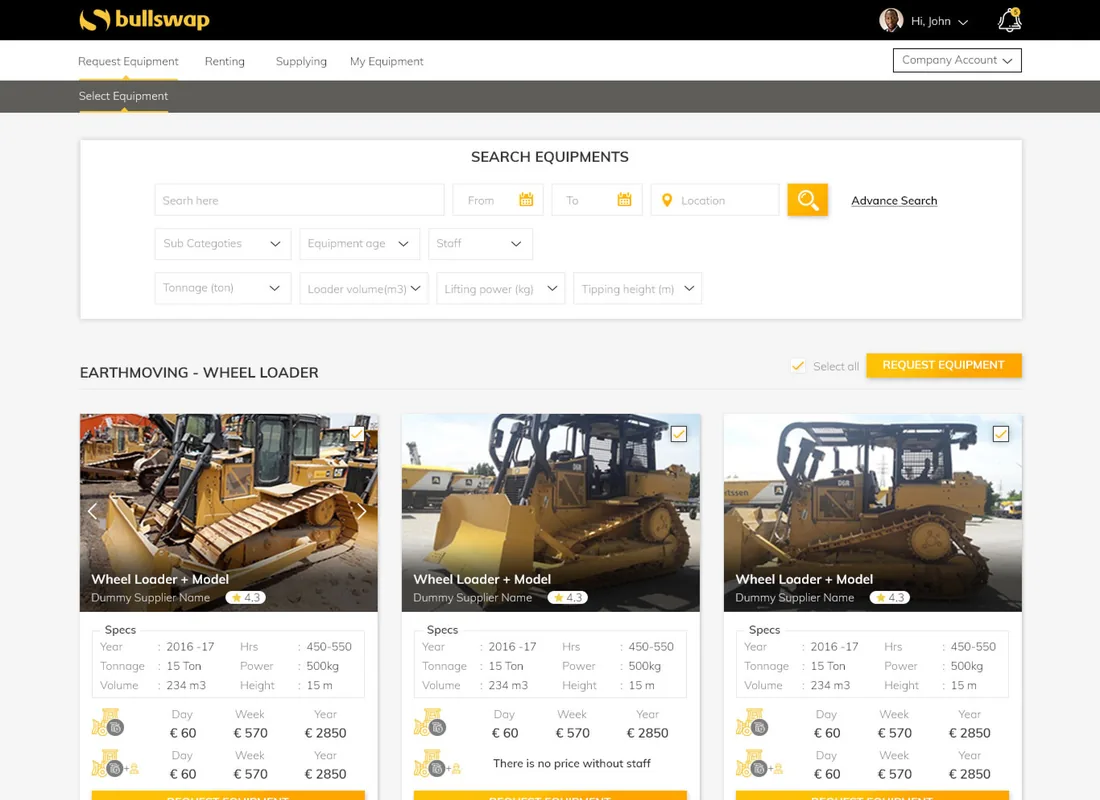
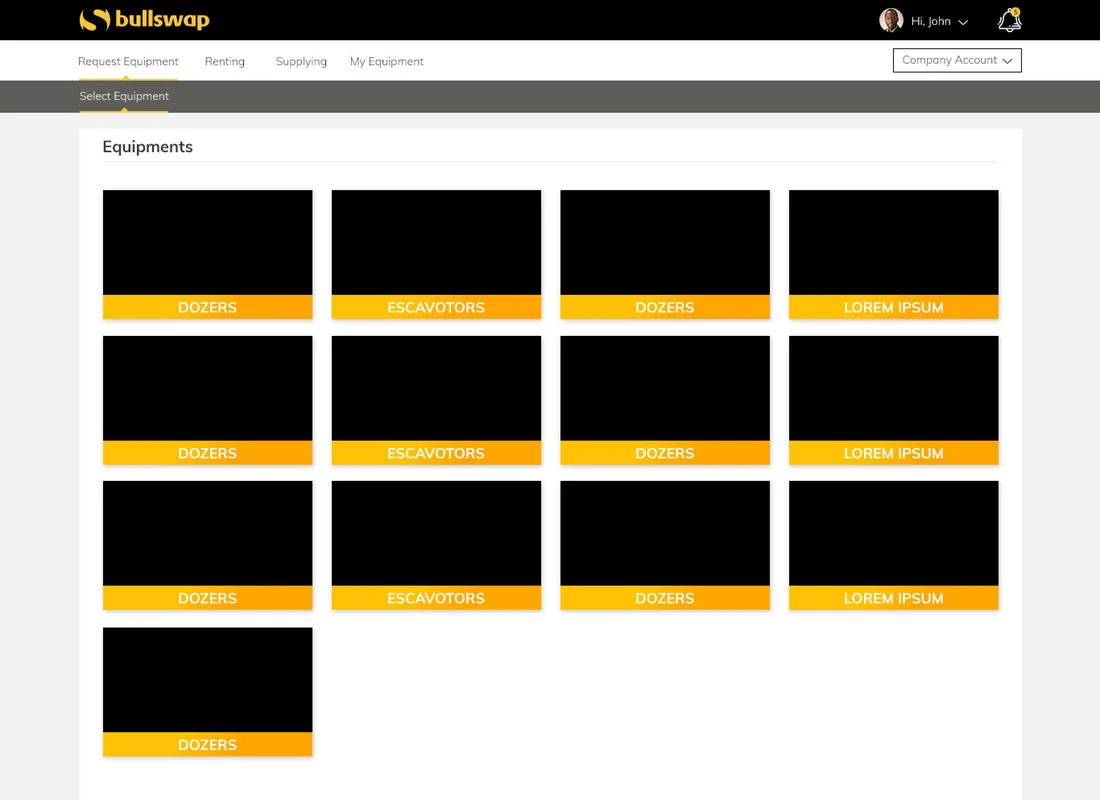
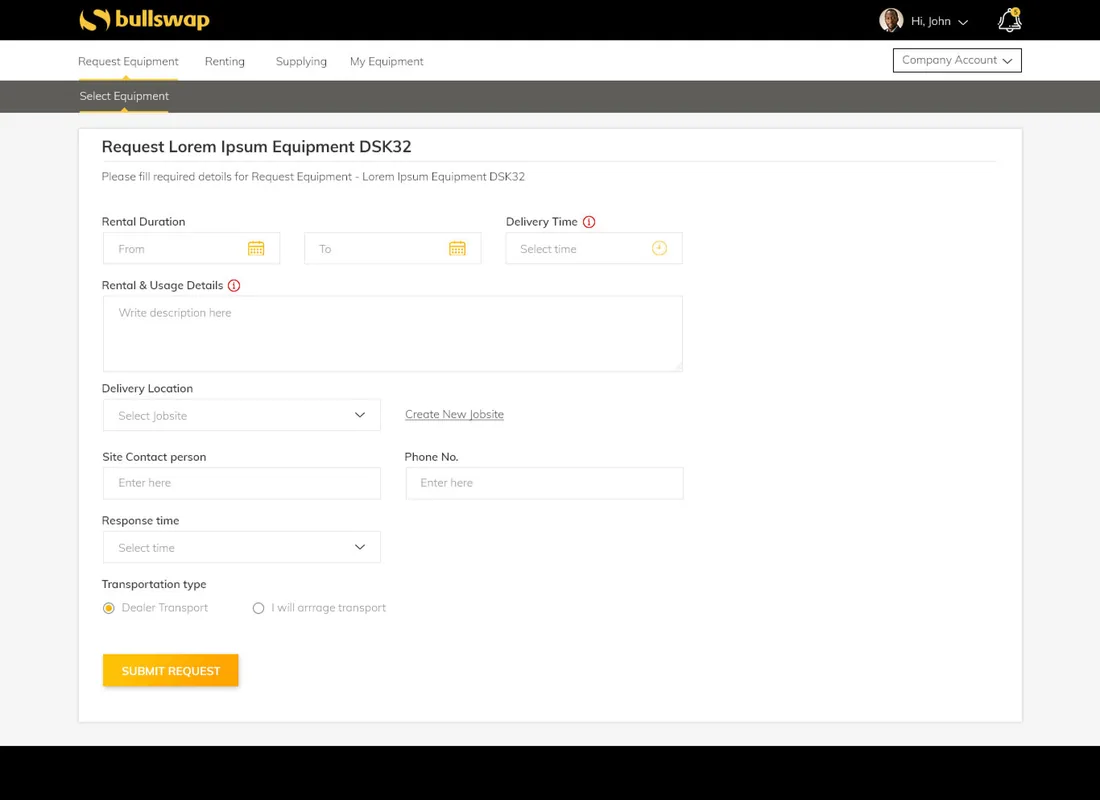
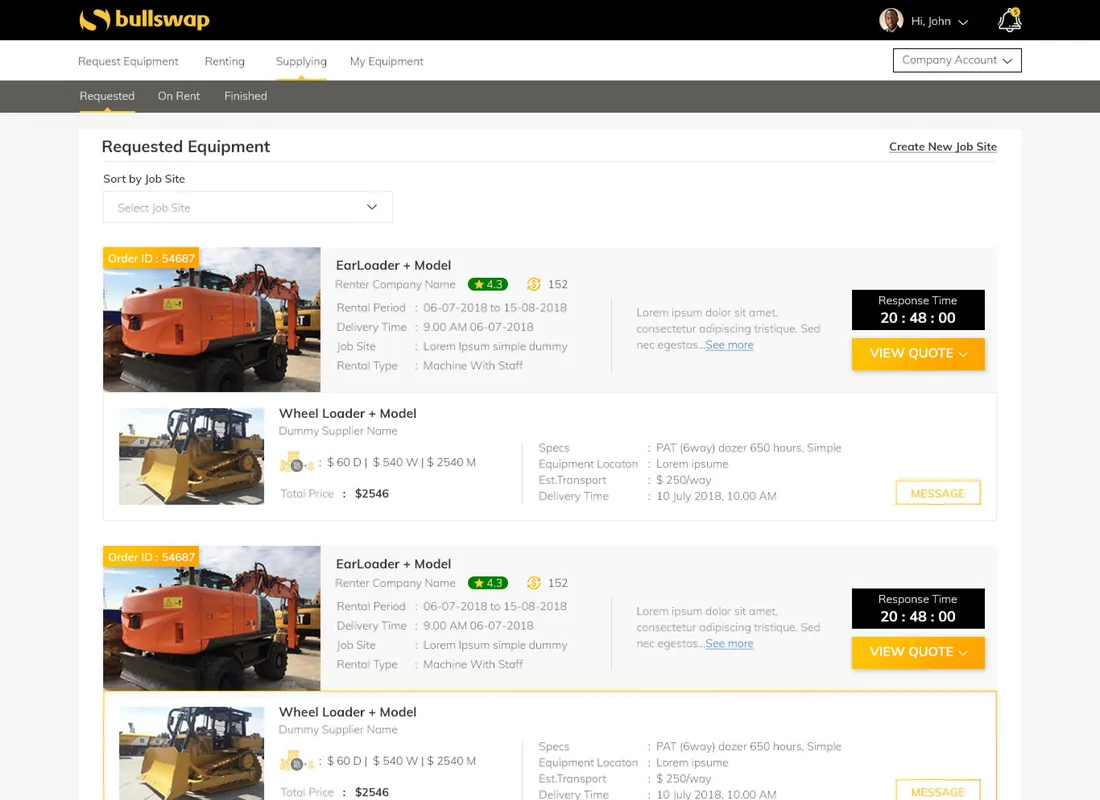
Renting sideCategory browse with spec filters, per-machine detail and image pop-ups, and a send-request flow carrying jobsite, rental period and response time.
- Spec filters
- Jobsite select
- Response time
Renting orders
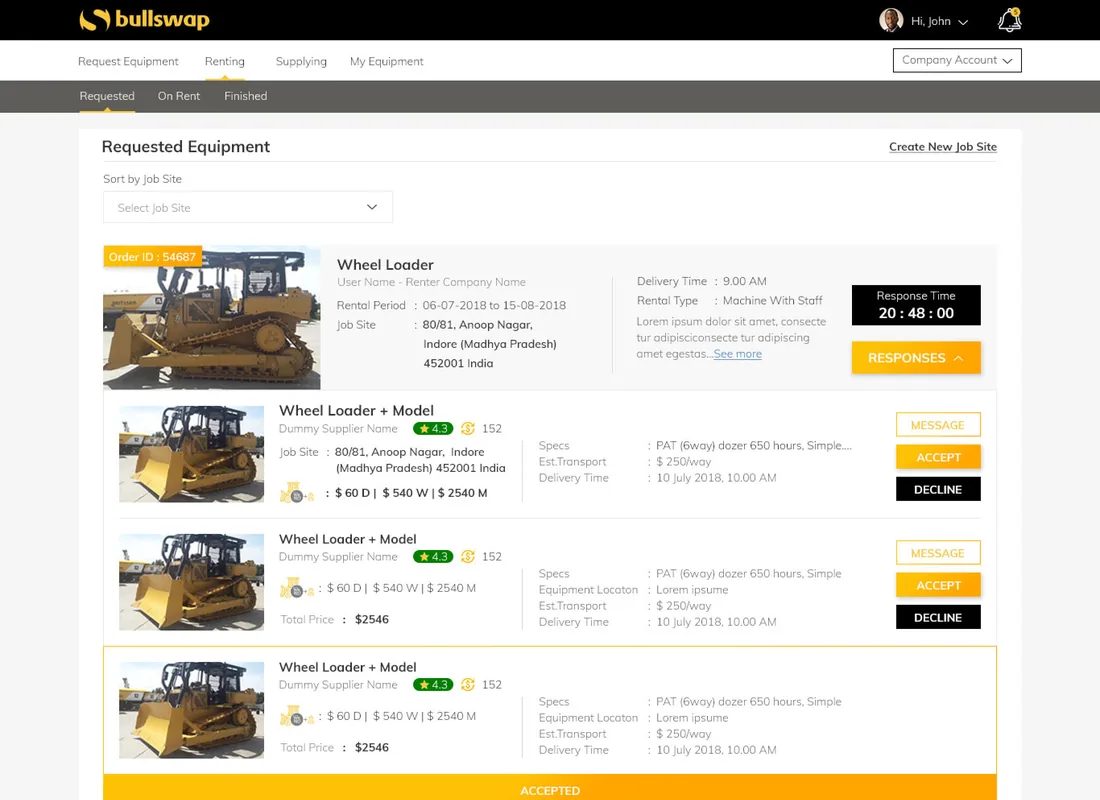
Renting sideSupplier responses, accept and confirm-supplier, in-platform messaging and new-jobsite creation.
- Accept quote
- Messaging
Supplying
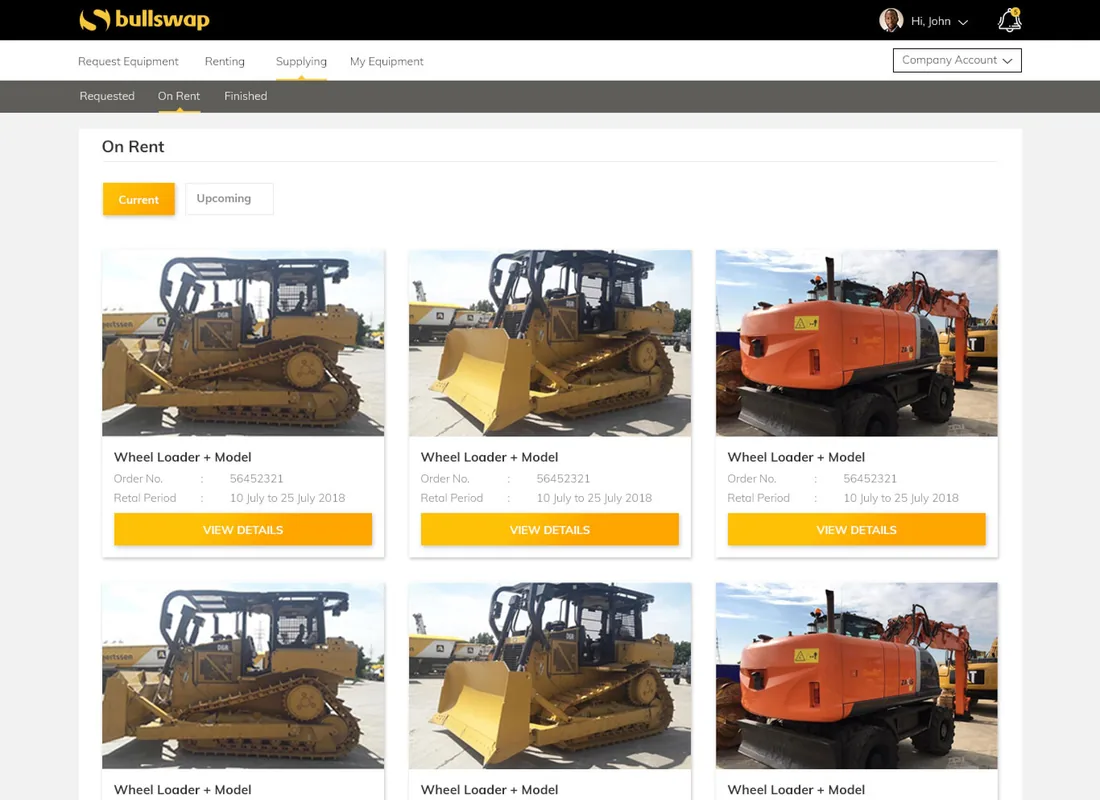
Supplying sideRequested, on-rent and finished tabs; quote a request; view details; and current versus upcoming rentals.
- Send quote
- On rent
Invoicing
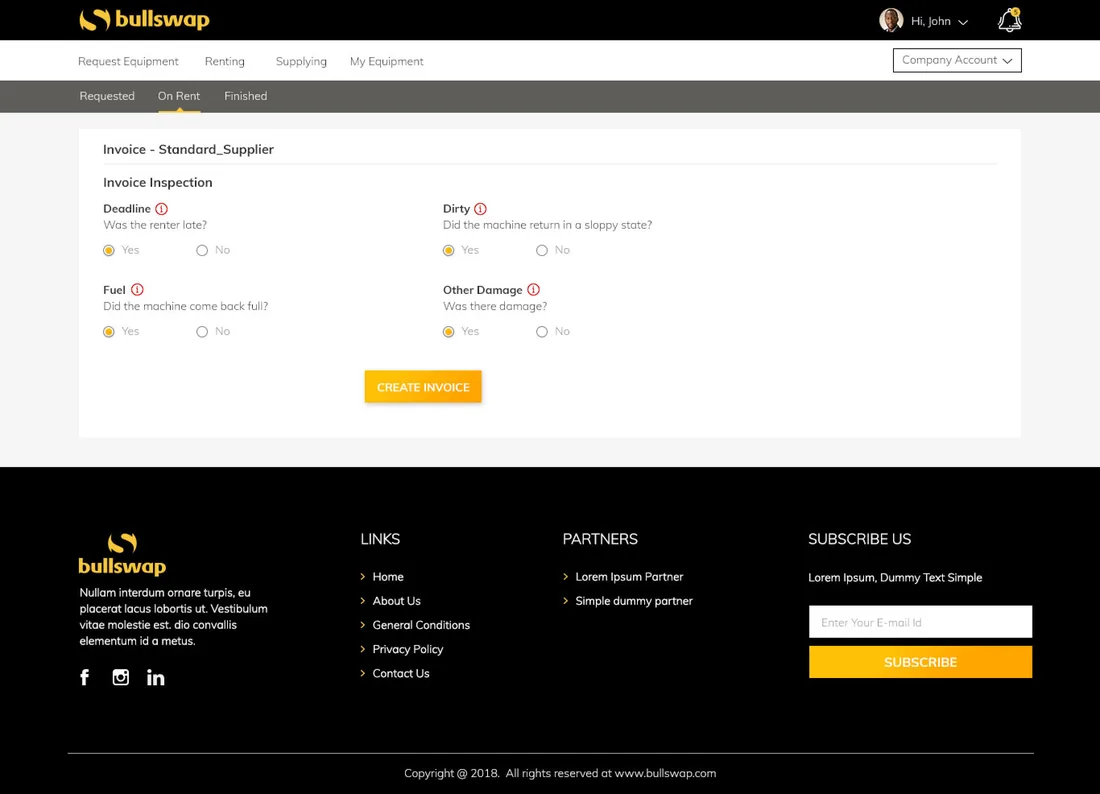
Supplying sideInvoices created and sent straight from an on-rent order, tied to the machine, the rental period and the agreed day, week or year rate.
- Create invoice
- Send invoice
- Rate tiers
My Equipment
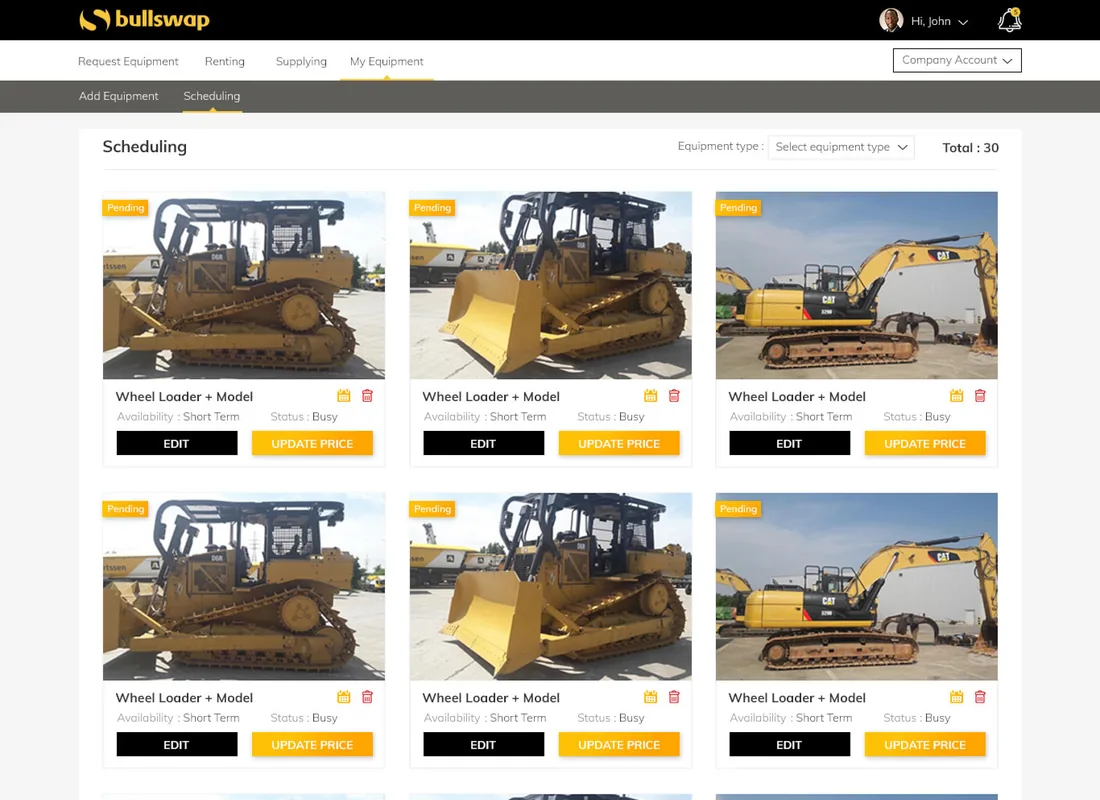
Both sidesAdd equipment with photos and insurance, set pricing and booking, and schedule when each machine is out.
- Scheduling
- Insurance
Trust & payments
PlatformA screened, closed B2B network wrapped in equipment insurance, credit insurance and a fraud-detection layer around secured payments.
- Screened members
- Insurance
Who is on each side of a Bullswap deal?
The platform is deliberately symmetrical — the company renting a machine and the company supplying it use the same account, just different tabs. A company admin governs both.
- Search & request equipment
- Attach jobsite & period
- Accept and confirm a supplier
- Message the counterparty
- Track on-rent orders
What does a two-sided rental marketplace actually need?
Bullswap's shape holds for any marketplace where the same members buy and sell. Five things separate one people trust from one they abandon.
- Symmetry, not two apps. If a member is both renter and supplier, they should switch sides with a tab, not a second login.
- Search on the real attributes. Heavy equipment is chosen by tonnage and lifting power, not keywords — the filters have to speak the trade's language.
- The job travels with the request. Jobsite, period and operator belong on the request itself, so the supplier never has to ask.
- Invoices born from the order. When billing is generated from the on-rent order, the numbers cannot drift from what was agreed.
- A trust layer between strangers. Screening, insurance and payment protection are what let two companies that have never met transact.
Building a rental marketplace
What contractors and operators ask us first about a platform like Bullswap.
Ask us yoursHow long does it take to build a two-sided rental marketplace?
A first working version usually takes eight to sixteen weeks, because a marketplace is really two products — the renting side and the supplying side — sharing one catalogue and one account. What moves the date most is how rich the search is and whether payments and invoicing are in the first release. We phase it so one side can transact before every edge case is built.
How much does a marketplace platform cost?
It depends on scope, and any number quoted before the flows are understood is a guess. The biggest cost drivers are the depth of the equipment catalogue and filters, whether in-platform payments and insurance are included, and how many roles act on each company account. Shanti Infosoft scopes it on a short call and returns a fixed quote within 48 hours.
How do you keep a B2B marketplace trustworthy?
Bullswap is a closed, screened network rather than an open listings board. Membership is vetted, equipment and credit insurance sit around each deal, and a fraud-detection layer wraps payments — so two companies that have never traded can still transact with recourse.
Can one company both rent and supply equipment?
Yes — that is the core idea. A single company account carries a renting side and a supplying side, so a contractor can rent the machine it needs this week while putting its own idle fleet out to work, all from one dashboard.
Related work
Building a marketplace with two sides?
Tell us how your business actually works and we will tell you honestly what it takes to build. See more of our work or what we do.
Book a 15-minute call