


One app,three marketplaces
A multi-sided on-demand mobile app for Australia that puts ride booking, goods delivery and gig jobs on one platform. Passengers and job creators post what they need, drivers bid to win it, and every job runs end to end, from request to counter-offer to completion.
A marketplace, not a dispatcher
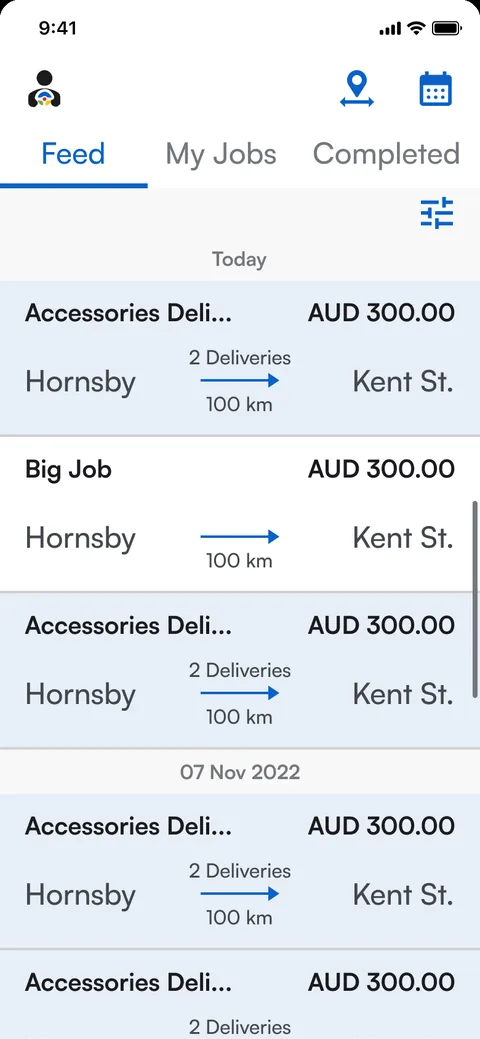
The defining choice is the bid. Instead of an algorithm assigning a driver at a fixed fare, a job goes to the feed, drivers offer their price and rating, and the person who posted it chooses, or counters. That one decision shapes every screen in the app, from the job feed to the driver's profile.
Post once, reach every driver
A ride or a delivery is posted to a live job feed that nearby drivers see, rather than being routed to a single assigned worker.
Price by bidding
Drivers bid with a fare and their rating; the job creator sorts by lowest fee or best rating and accepts, or sends a counter-offer.
Trust built into the profile
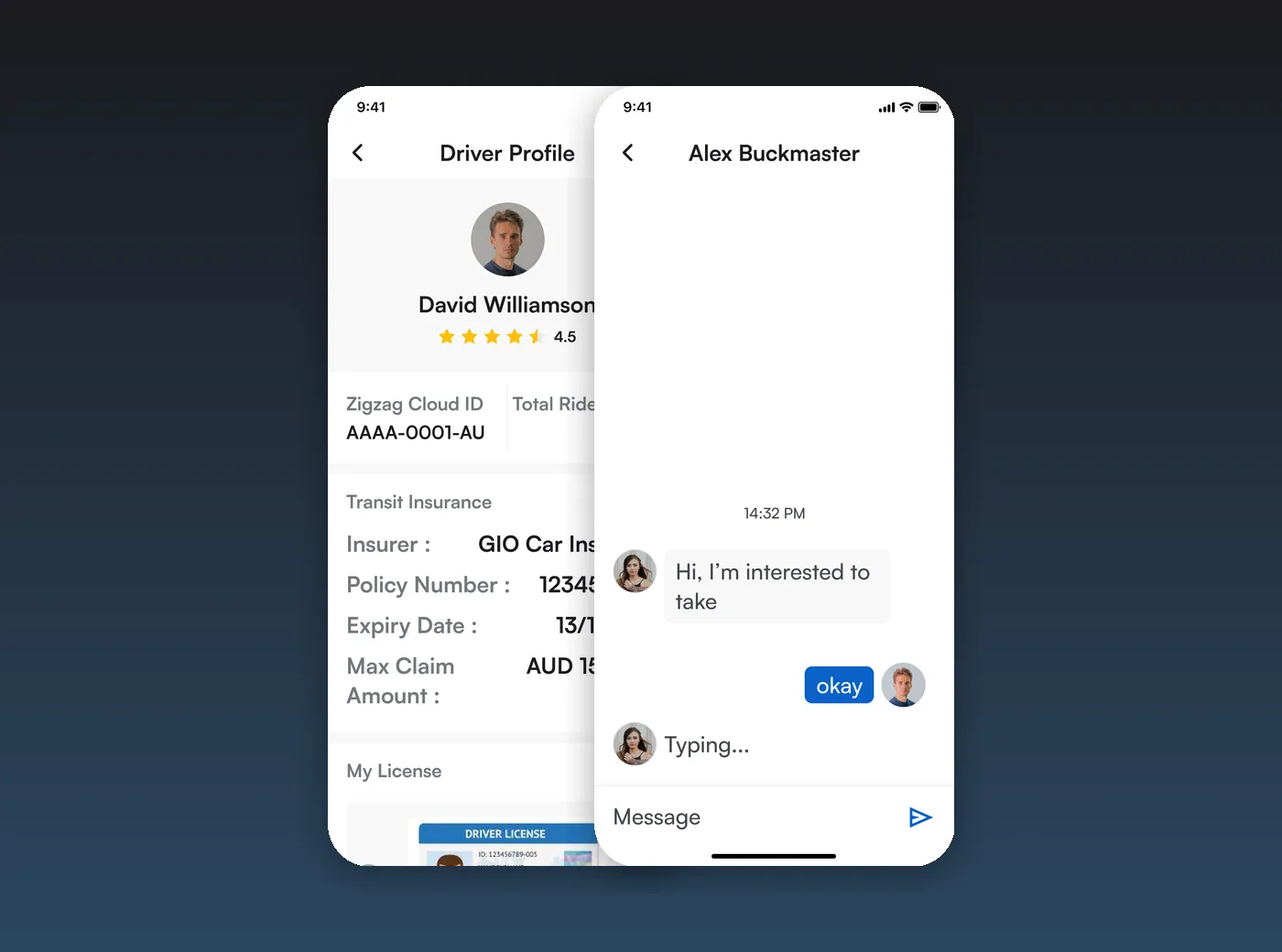
Every driver carries a verified profile, transit insurance, licence, vehicle and reviews, so a bid can be judged on more than price.
Why build one app across rides, delivery and jobs?
Running three separate apps fragments the drivers, the demand and the trust. A single marketplace with bidding at its core solves all three at once, but only if the app can hold very different job types in one coherent flow.
A ride booked now or scheduled, a delivery specified stop by stop, and a driver who can be vetted before a bid is accepted all have to share one flow — post, bid, accept, do, complete, pay — without the app splintering into three products wearing one skin.
job types — rides, deliveries and gig jobs — running through one shared post-bid-accept flow
Who does ZigZag Cloud serve?
Three sides share one app — a passenger booking a ride, a job creator posting a delivery, and a driver bidding to win it.
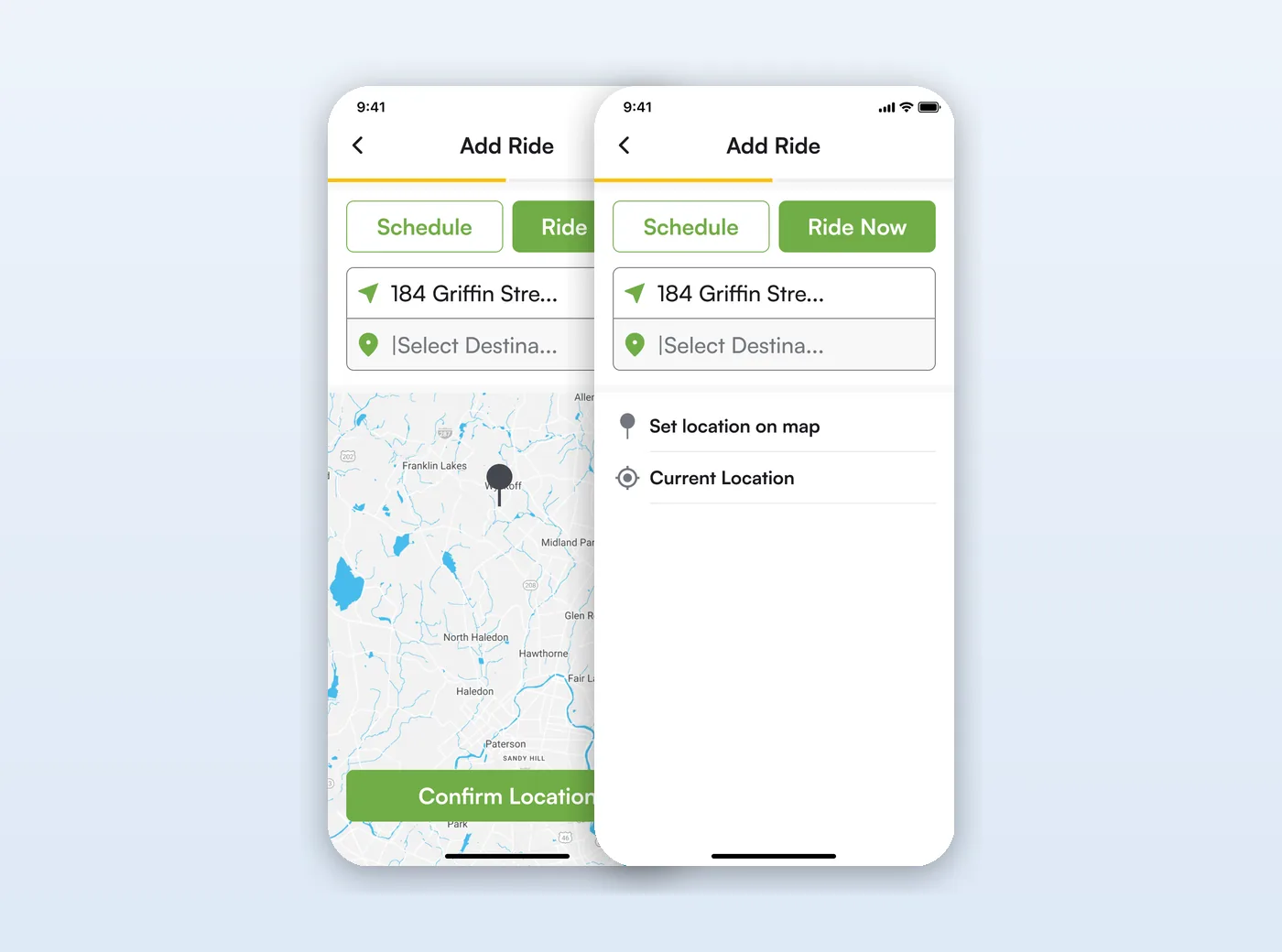
Booking a ride
Ride Now or Schedule, with map-based pickup, saved locations and a live passenger ride feed.
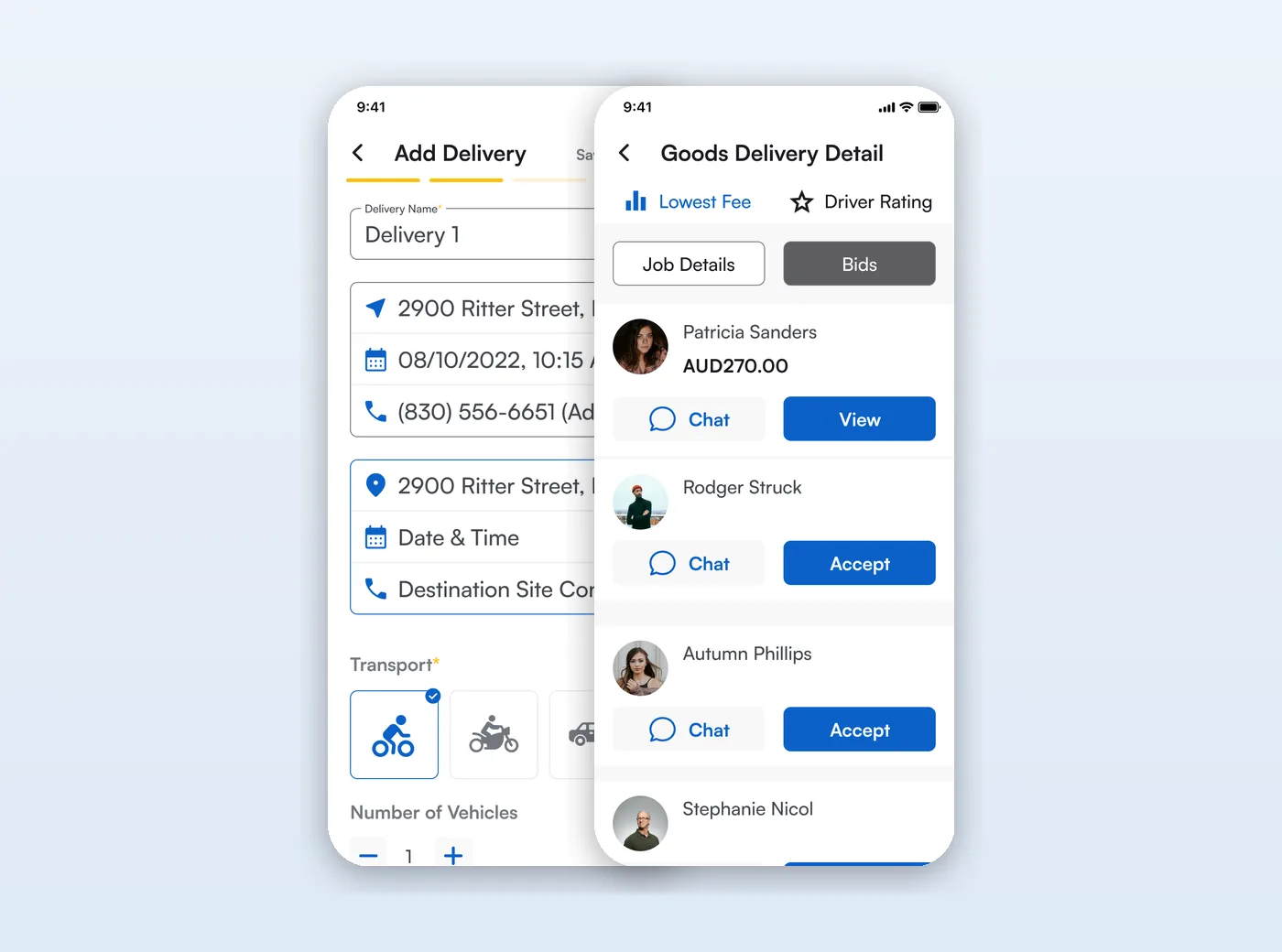
Posting a delivery
A multi-step delivery spec — pickup and drop-off, timing, transport type, vehicle count and a note to the driver.
Bidding to win it
A verified profile with rating, transit insurance, licence, vehicle and reviews, so a bid can be judged on more than price.
Why not just use three separate apps?
Running three separate apps fragments the drivers, the demand and the trust. Here is what one shared marketplace answers instead.
What does settling a bid actually look like?
A bid is only half the picture — chat sits on every job so a creator and driver can settle timing, vehicle fit or a special instruction before committing.
What holds three marketplaces together visually?
A single confident blue is the connective tissue, the colour of every primary action across rides, delivery and jobs, while service moments borrow a supporting green, amber or red so a user always knows which marketplace they are in. Satoshi, a clean geometric sans, keeps dense job cards, bid lists and multi-step forms readable on a small screen, which is where this product lives.
What does a multi-sided marketplace app need to get right?
These came out of designing an app that holds three job types and three kinds of user in one flow. They apply to any bidding or on-demand marketplace.
Decide how a job clears
Fixed fare or open bid is the single most defining choice; here bidding shapes the feed, the profile and the accept flow.
Make trust judgeable, not just a star
When price is a bid, the buyer needs insurance, licence, vehicle and reviews to weigh an offer properly.
Let different job types share one spine
A ride and a multi-stop delivery are very different, but posting, bidding, chat and completion can be one shared flow.
Keep the conversation in the app
On-job chat and counter-offers keep the negotiation, and the record of it, on the platform rather than in a side channel.
Design for three users at once
Passenger, job creator and driver see the same job from different angles; each needs a view built for their decision.
Draft, then commit
A complex request, like a delivery, should be saveable as a draft, so a user can build it without losing work or being forced to post half-formed.
Building a multi-sided marketplace app
Should an on-demand app use fixed pricing or bidding?
Can one app really handle rides, delivery and gig jobs together?
How do you build trust into a bidding marketplace?
How complex is a multi-sided marketplace to build?
What platforms should it launch on?
Building an on-demand marketplace with more than one side?
Tell us how your business actually works and we'll tell you honestly what it takes to build - the feed, the bidding, the trust layer. No deck, no pitch.