


The interfacefor a token sale
TheXchange is the web platform for a private crypto token sale. We designed the full buyer experience - an invitation-gated sign-up, a purchase calculator that turns dollars into tokens, a checkout that accepts five payment routes, and a receipt that lays the whole order out clearly.
A purchase flow built for a high-value moment
The platform pairs a narrative front-of-house - vision, story, events and news that explain the project - with a purchase back-of-house that has to be exact. A buyer signs up with an invitation token, uses a calculator to see how a dollar amount converts to tokens, chooses from five payment routes, agrees to the purchase terms, and lands on a receipt that records the order.
Access is gated by invitation
Sign-up and sign-in require an invitation token, and the purchase agreement confirms the buyer qualifies for the private sale, so the audience is controlled by design.
A calculator, not a guess
The buy screen converts a dollar amount into tokens at the live price and the applicable volume-discount tier, with a coupon field, so a buyer always sees exactly what they are getting.
Pay the way you want
Checkout accepts electronic transfer, Bitcoin, Ethereum, credit card and e-check, and the chosen route is recorded on the order summary.
Why is a token-sale checkout hard to design?
A private token sale asks a buyer to move a large sum through an unfamiliar process. Three problems shaped the screens.
Registration has to keep the sale private without reading like a wall of legal text, pricing has to show its own working rather than ask for trust, and the purchase itself has to leave a record a buyer can rely on afterwards.
stages carry a buyer from invitation to receipt, each one closing off a specific risk
What the checkout had to get right
A private sale asks a buyer to move real money through an unfamiliar process — the flow had to earn trust at every stage rather than assume it.
What the flow achieves
- Gate access early. Sign-up and sign-in run on an invitation token, so the audience is controlled from the first screen.
- Show the maths. The buy screen converts dollars into tokens at the live price and discount tier, with a coupon field.
- Offer a real choice of payment. Checkout accepts electronic transfer, Bitcoin, Ethereum, credit card and e-check.
- Leave a record. The order summary prints the order, the amount, the method and, for crypto, the on-chain detail.
Why it was hard
- The audience has to be controlled. A private sale is not open to everyone, without turning the first screen into a wall of legal text.
- The price is not one number. Token pricing moves with volume-discount tiers and coupons, so the calculator has to show its working.
- The purchase has to be accountable. A buyer commits through an agreement and one of several payment routes, and needs a receipt that stands as a record.
How does the receipt reassure a buyer?
The order summary is the screen a buyer keeps, so it has to say everything at once. Here is what it is telling them.
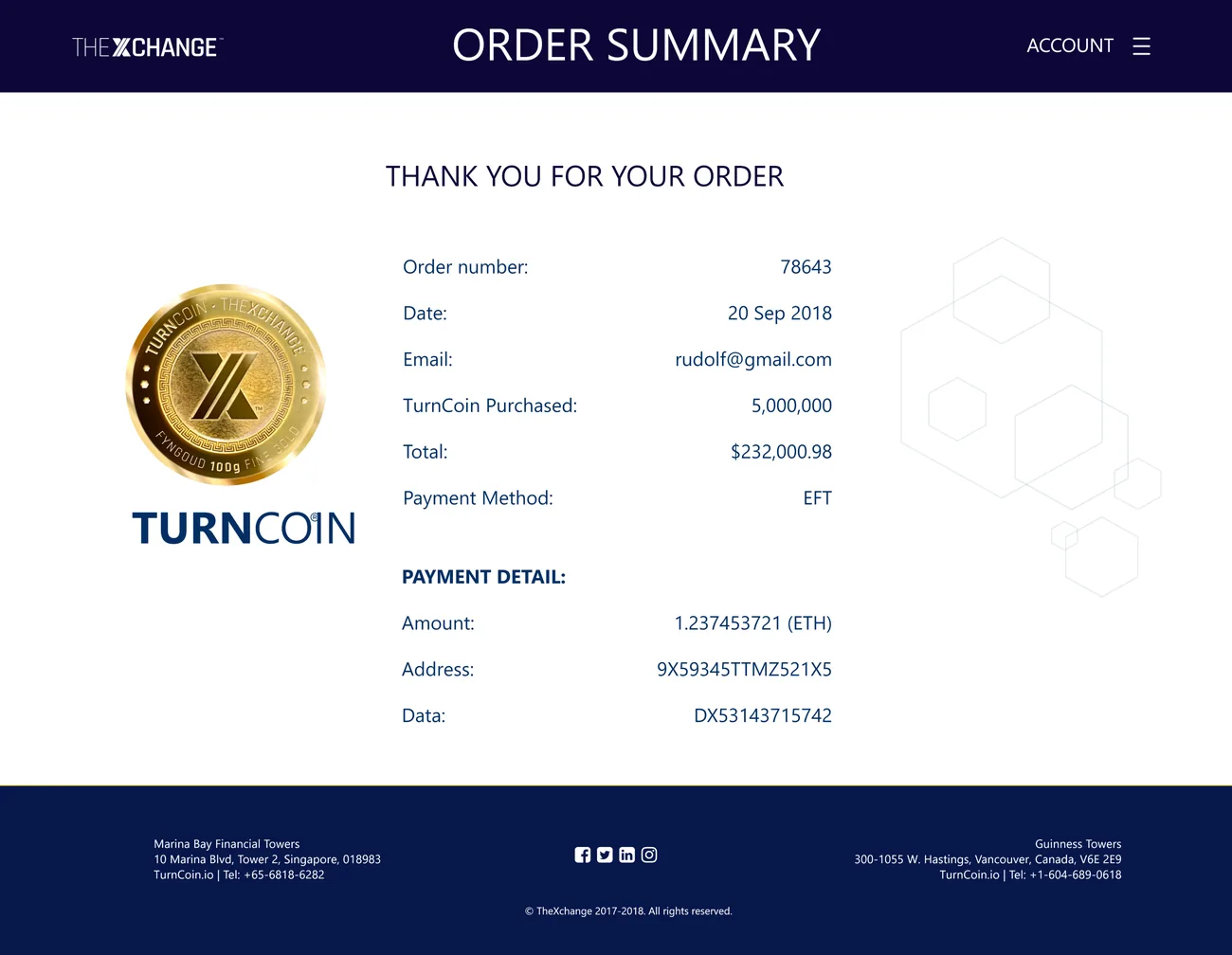
The token identity anchors the receipt, so a buyer always knows exactly what they have bought at the moment it matters most.
Order number, date, the amount of tokens purchased and the total sit together as a clean, scannable record.
The route the buyer paid by is printed on the summary itself, so the how of the payment is never ambiguous.
For a crypto route, the amount, wallet address and reference are shown, so the transfer can be checked against the chain.
The platform's registered offices anchor the footer, grounding a digital purchase in an identifiable business.
What does buying on TheXchange look like?
Four screens carry a buyer from an invitation to a receipt, each designed to keep a high-value purchase clear.
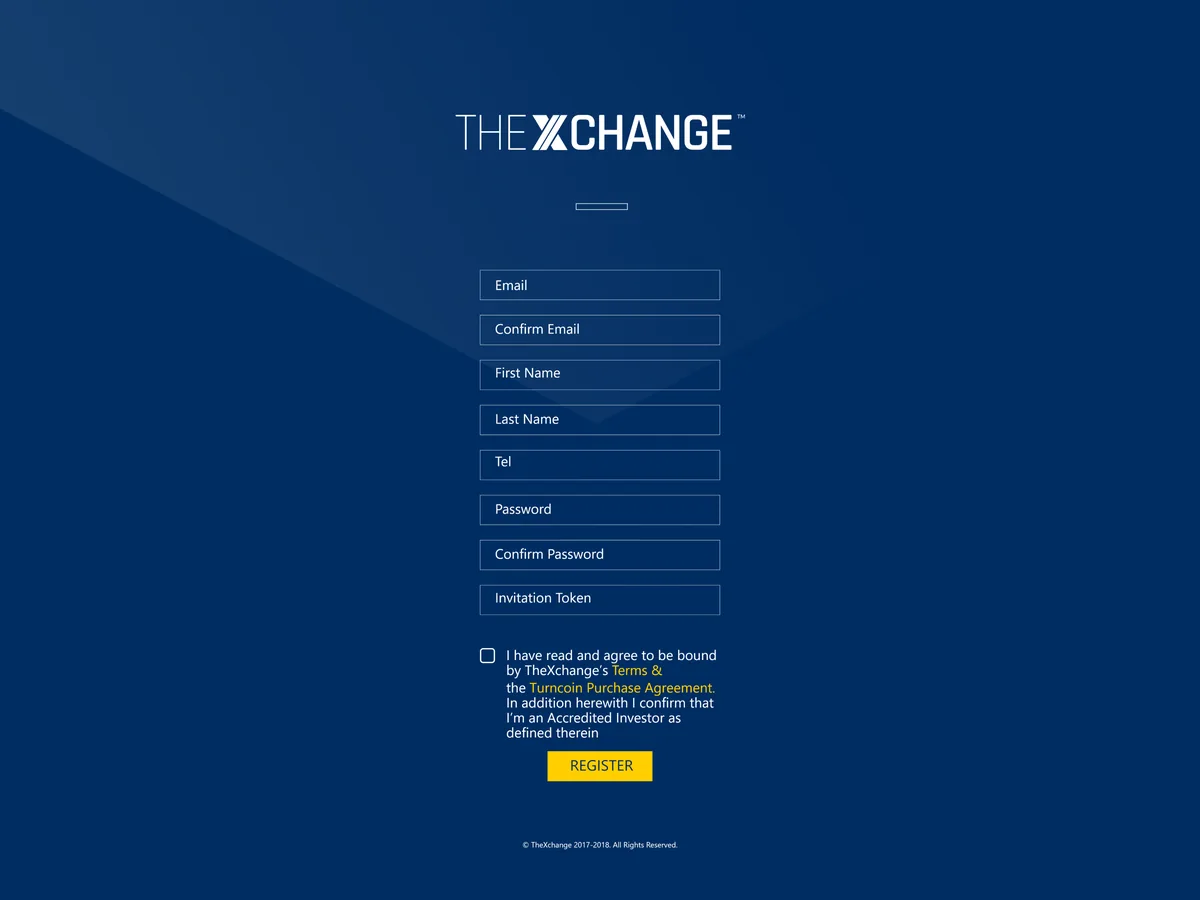
Registration collects contact details and an invitation token, and confirms the buyer agrees to the purchase terms, so the private sale stays private from the first screen.
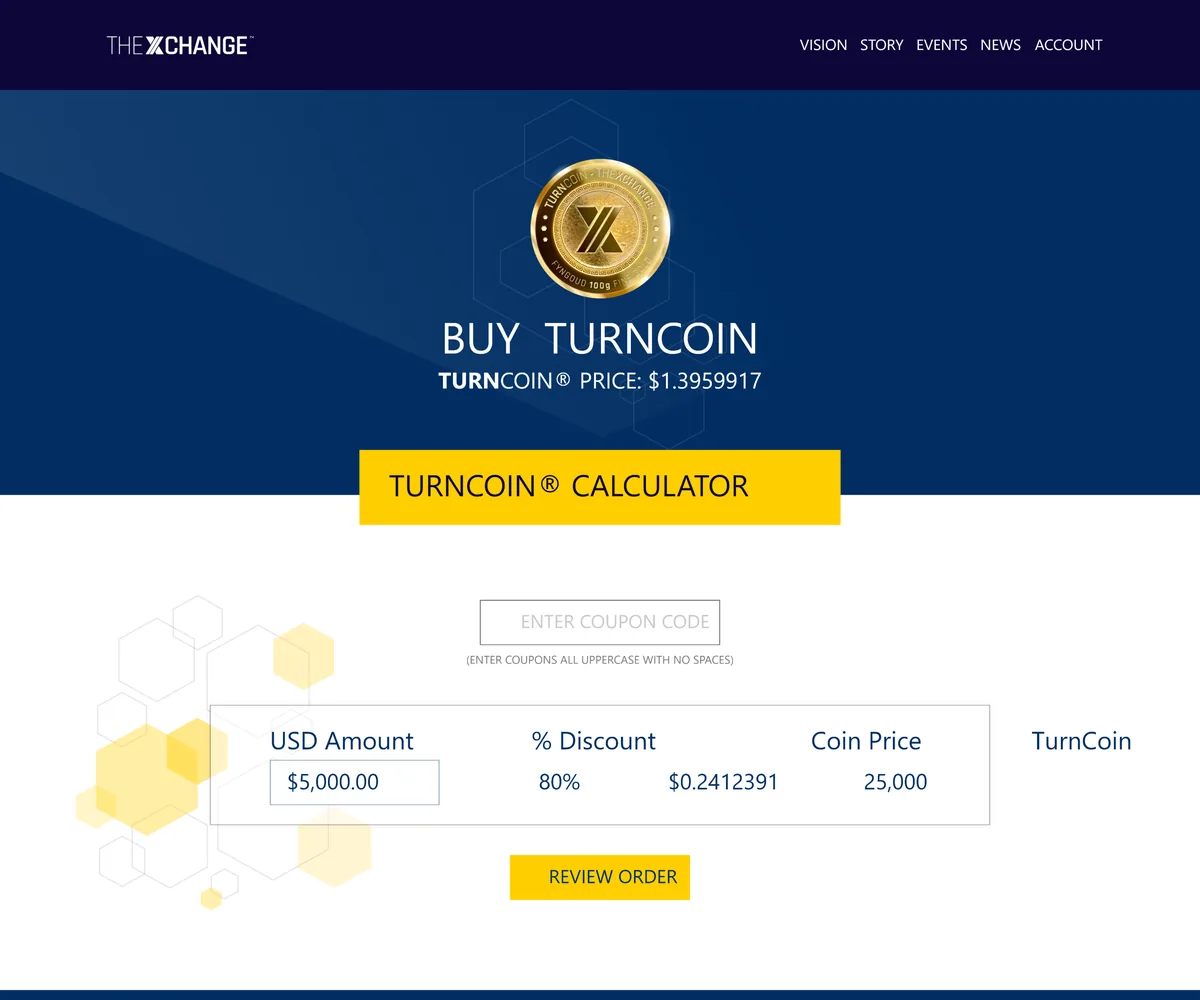
The buy screen shows the conversion live - a dollar amount, the volume-discount tier, a coupon field and the resulting token count - so the price is never a mystery.
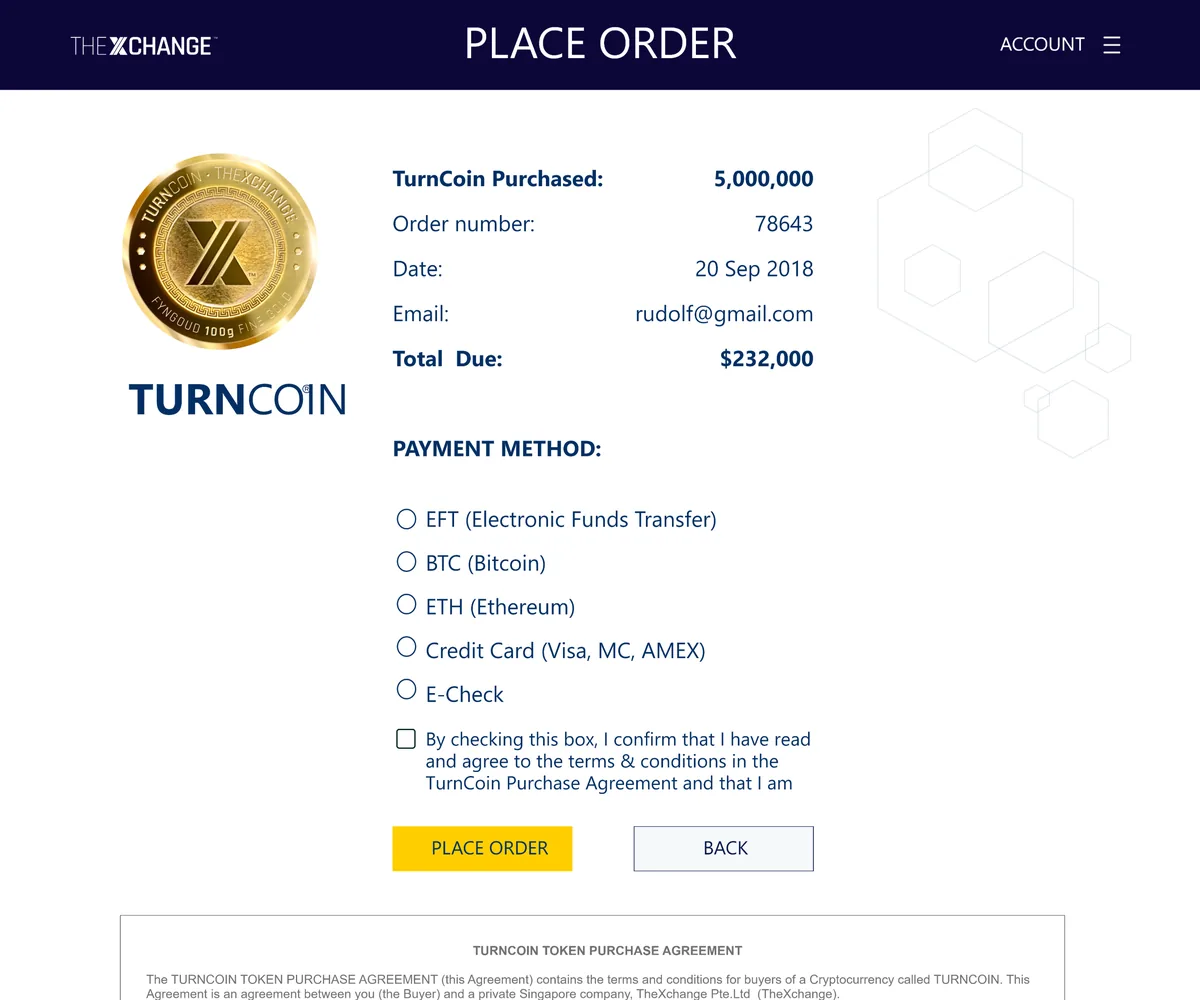
Place-order lays out five payment methods, captures agreement to the purchase terms, and confirms the order in one focused screen.
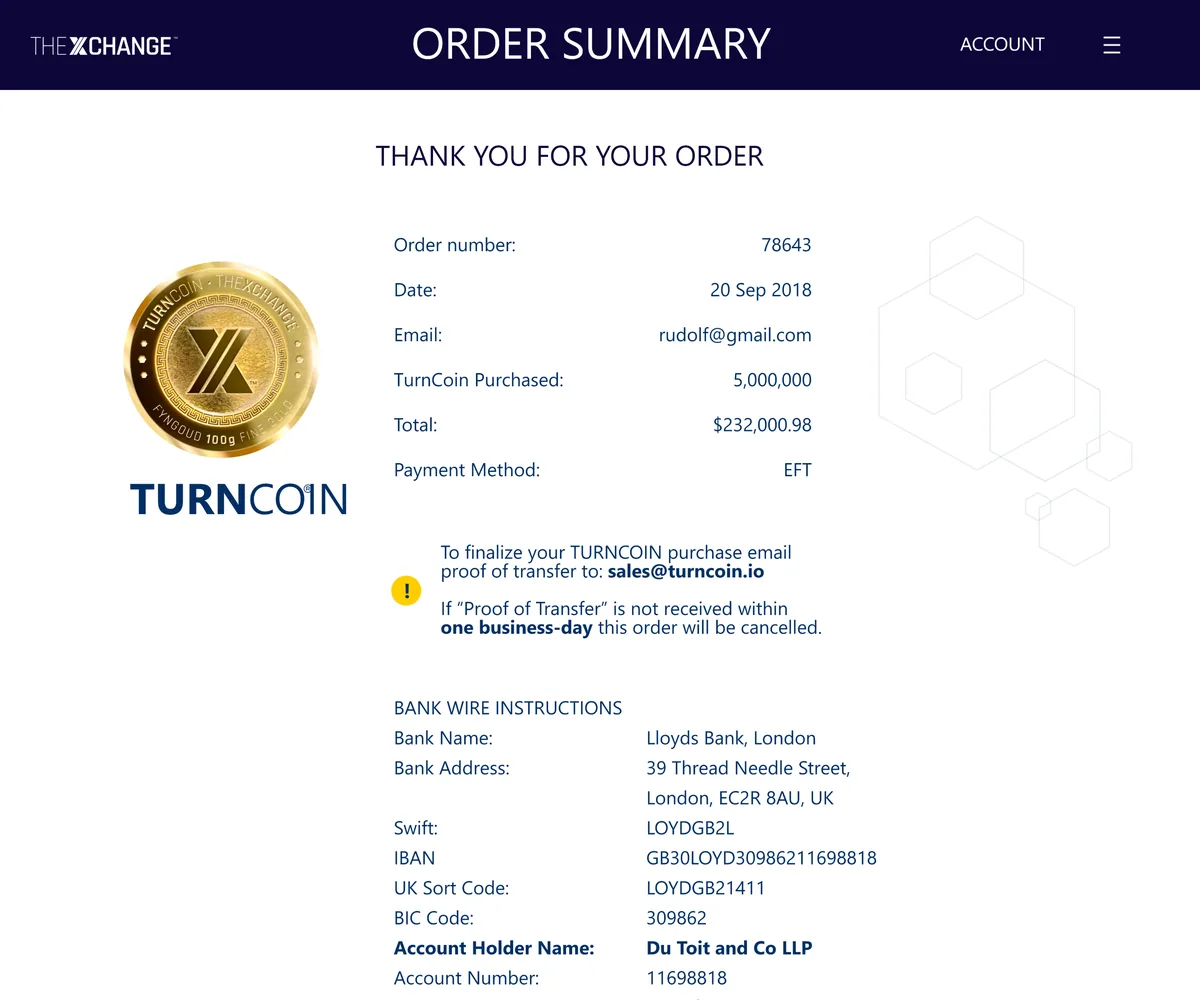
The order summary records the order, the amount, the total and the payment detail, giving a buyer clear proof of a completed purchase.
What makes a high-value purchase flow feel safe?
The principles behind TheXchange apply to any checkout where the amount is large and the buyer needs to trust the process.
Gate early, gently
Control who gets in with a token or invite before the flow starts, so eligibility is settled without burying the first screen in legal copy.
Show the maths
When price depends on tiers, discounts or conversion, let the buyer watch the number resolve rather than presenting a figure to trust on faith.
Make payment a single, clear choice
Lay out every route on one screen and record the selected one, so paying never feels like a detour into the unknown.
Capture consent in plain sight
Put the agreement at the point of commitment and acknowledge it explicitly, so the buyer knows what they signed.
End with a record
A clean, verifiable receipt is what turns a nervous purchase into a completed one - it is the last screen, and it has to reassure.
Designing a token-sale web platform
How do you design a checkout for a high-value purchase?
How do you keep a private sale private?
Why show a calculator instead of a fixed price?
What goes into designing a web platform like this?
Designing a high-value purchase flow?
Tell us how your business actually works and we'll tell you honestly what it takes to build - the flow, the calculator, the checkout. No deck, no pitch.