01
Post the job
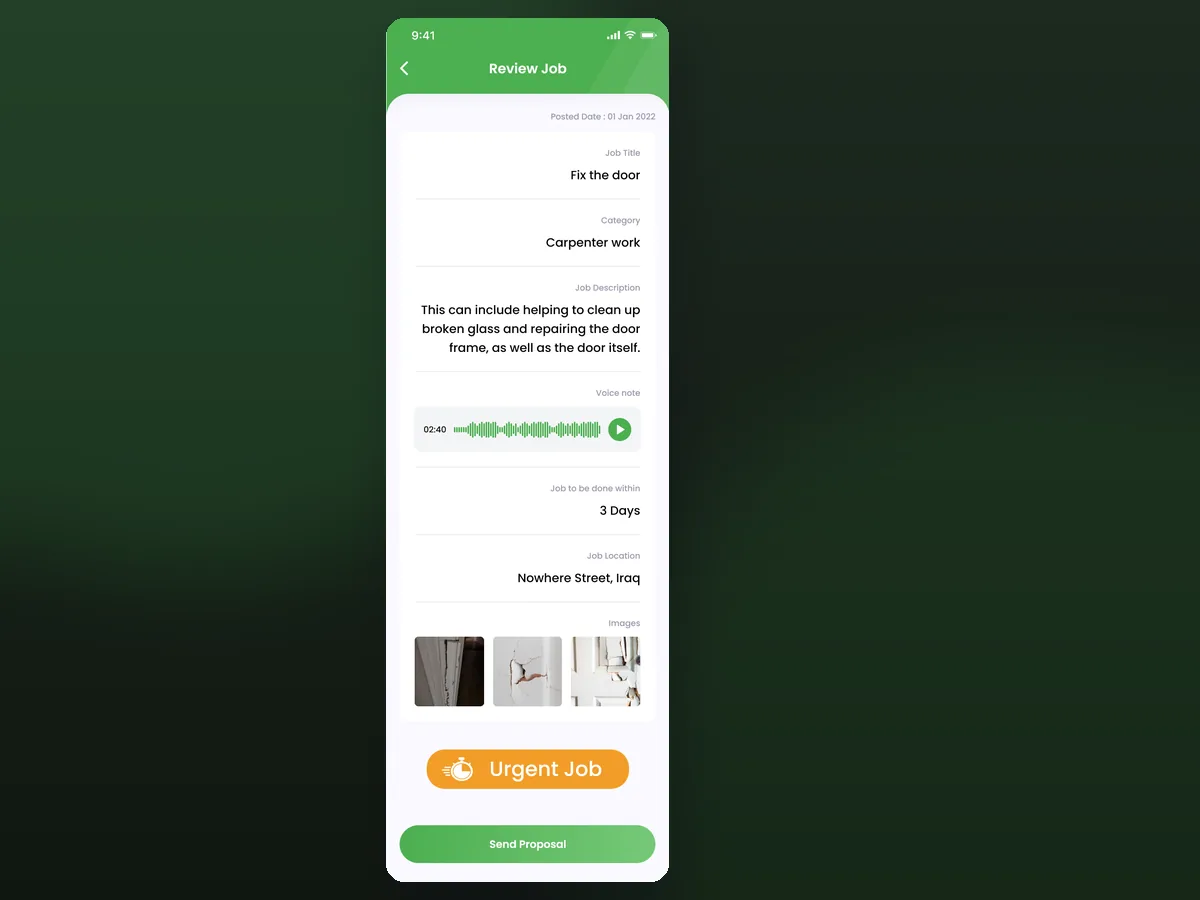
Title, category, a written description, a voice note, a deadline, a location and reference photos - enough for a provider to price it.
Posted→



A two-sided marketplace app where customers post a job - with photos and a voice note - and local service providers bid on it with a proposal. On the provider side sit the tools to run the work: available-job search, an opportunity-based bidding model, analytics, a wallet and subscriptions.
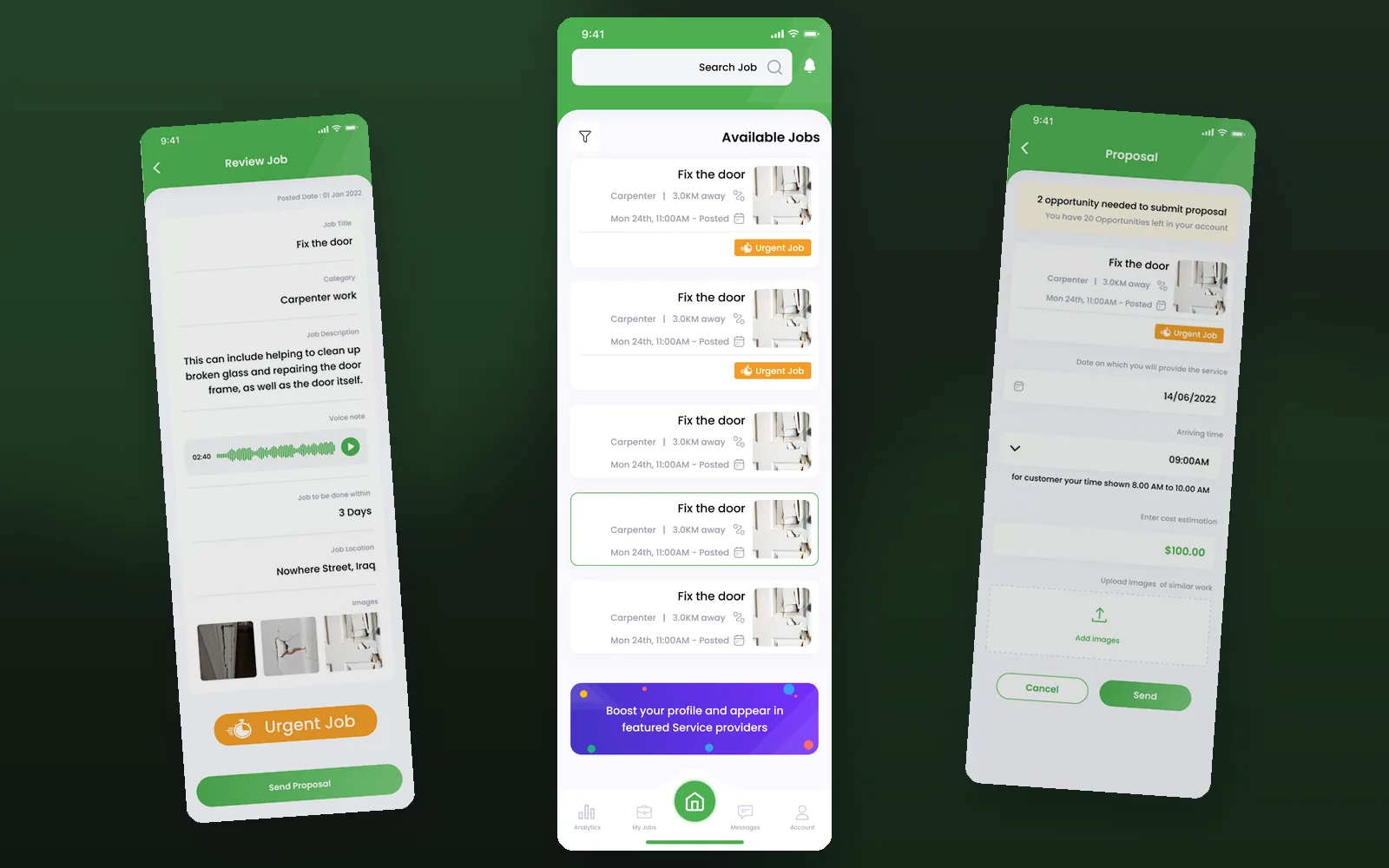
A customer wants the job done; a provider is running a business off it. The job post sits in the middle - the customer posts and picks, the provider searches, bids and delivers - so the same piece of work drives two experiences that never feel like the same screens.
A post carries a title, category, written description, a spoken voice note, a deadline, a location and reference photos - so a provider understands the work before they price it, not after they arrive.
Instead of a customer chasing quotes, providers browse available jobs and submit a proposal with a service date, an arrival window, a cost estimate and photos of similar work.
The provider side is a small operations app: an analytics dashboard, a wallet, service management, profile boosting and subscriptions - so a provider can actually run their week inside it.
Why is a two-sided services marketplace hard to get right?
Both sides have to win on the same job or the market collapses. Three things break a naive build: a job description too thin to price, a provider side with no reason to stay, and a bidding model that has to be fair without being free.
"Fix the door" is not enough to quote. Answer → a post that carries category, a written description, a voice note, a deadline, a location and photos.
Providers leave a marketplace that only sends them leads. Answer → analytics, a wallet, service management and boosting, so there's a reason to keep the app open between jobs.
Unlimited free bids drown customers in noise. Answer → an opportunity spent per proposal, topped up by a subscription tier.
subscription tiers - Free, Golden, Diamond - each buying a bigger monthly allowance of the opportunities providers spend bidding.
Both sides have to win on the same job or the market collapses. Four goals and three hard problems shaped the build.
A two-sided marketplace with 2 sides that never see the same screen - a customer posting a job, and a provider bidding to win it.
Describes the job once - title, category, a voice note, photos and a deadline - then compares proposals and picks one.
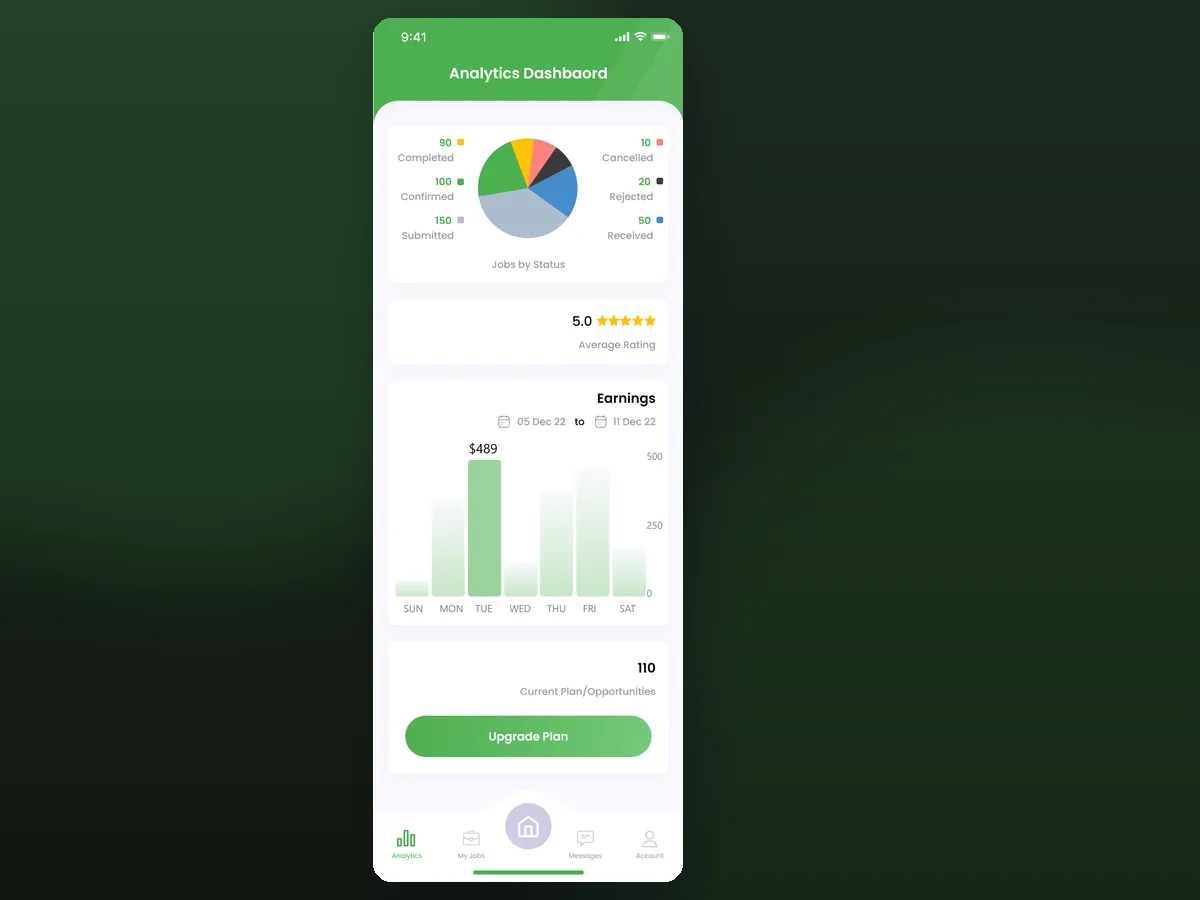
Runs a small business off the app: browses jobs, bids with a dated, costed proposal, and tracks earnings through analytics and a wallet.
Title, category, a written description, a voice note, a deadline, a location and reference photos - enough for a provider to price it.
Providers filter available jobs by category, distance and urgency, then submit a proposal with a service date, an arrival window and a cost estimate.
Each proposal spends one opportunity from the provider's subscription balance, so bids stay deliberate rather than blanket.
The customer compares proposals on date, price and past work, and accepts one to confirm the job.
Payment moves through the in-app wallet - saved cards, a running balance and a transaction history - so nothing is chased down after the fact.
keep scrolling — the deal glides left →
There's no inbox to check - a job post and a proposal are already a structured back-and-forth. Here's that exchange, laid out end to end.
A confident green carries the app against a soft mist background - the palette of a job getting done, not a generic marketplace blue.
Six things separate a services marketplace both sides stay on from one that empties out. They came out of building WorkTok, and they hold well beyond this one app.
If a provider cannot quote from the post, they pad the bid or skip it - so text, photos and a voice note beat a single caption box.
Analytics, a wallet and service management give providers a reason to open the app between jobs, not just when pinged.
An opportunity or credit per proposal keeps bidding deliberate, protects customers from noise, and funds the platform in one move.
A provider only wants nearby, timely work, so category, radius and an urgent flag are core, not advanced settings.
A wallet, saved cards and a transaction history keep opportunities, top-ups and payments in one place a provider can reconcile.
When each tier buys more of the thing providers actually use - opportunities to bid - the paywall feels like fuel, not a toll.
Tell us how your business actually runs and we'll tell you honestly what it takes to build - the job model, the bidding economy, the provider tools. No deck, no pitch.