01
Order placed
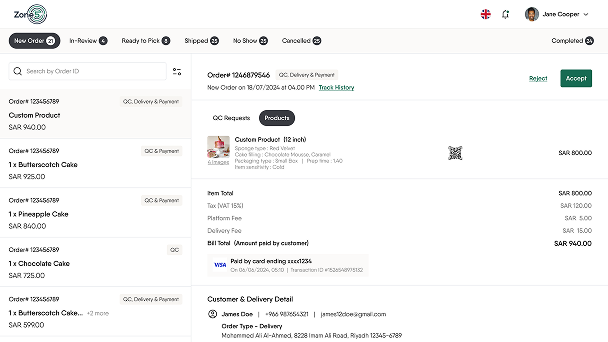
An order lands in the New Order stage from a customer or created by the merchant from the menu.
New order→



A bilingual multi-vendor commerce platform where a quality-control checkpoint sits inside the order lifecycle — a merchant prepares an item, submits it for QC, and a reviewer approves it before it can be packed, picked up and delivered.
Merchants manage a bilingual catalogue and take orders; a quality-control reviewer inspects prepared items against a request before they are packed; drivers collect and deliver; customers approve and pay. Four parties, one lifecycle, with QC in the middle of it.
Every review is a QC request carrying a request initiator and an assigned reviewer, so a passed or failed item is always attributable rather than anonymous.
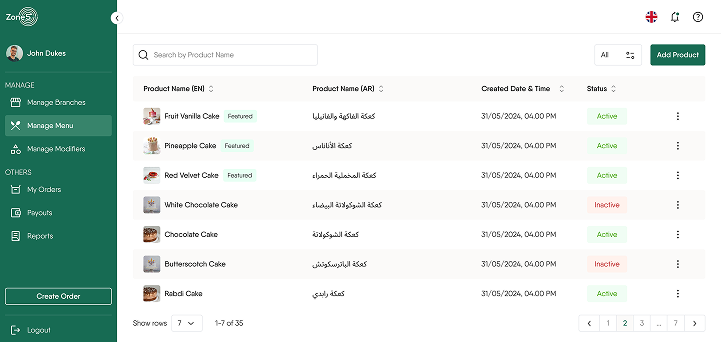
Products carry an English and an Arabic name side by side, and the interface reads both ways — built for a market that shops in two scripts.
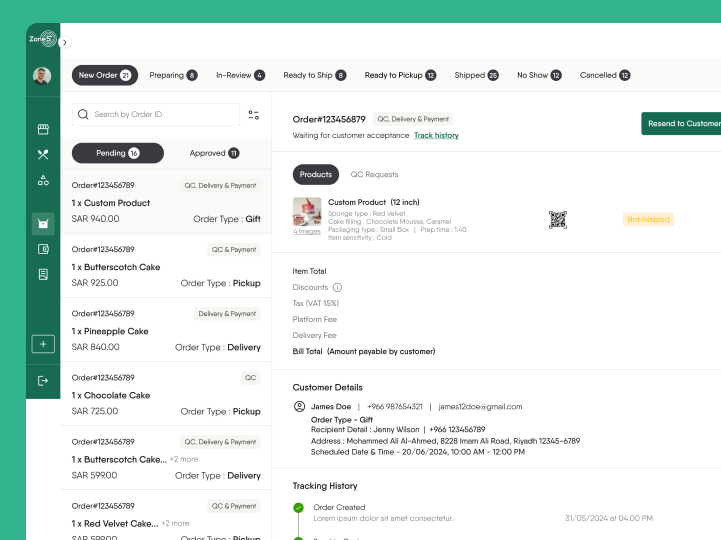
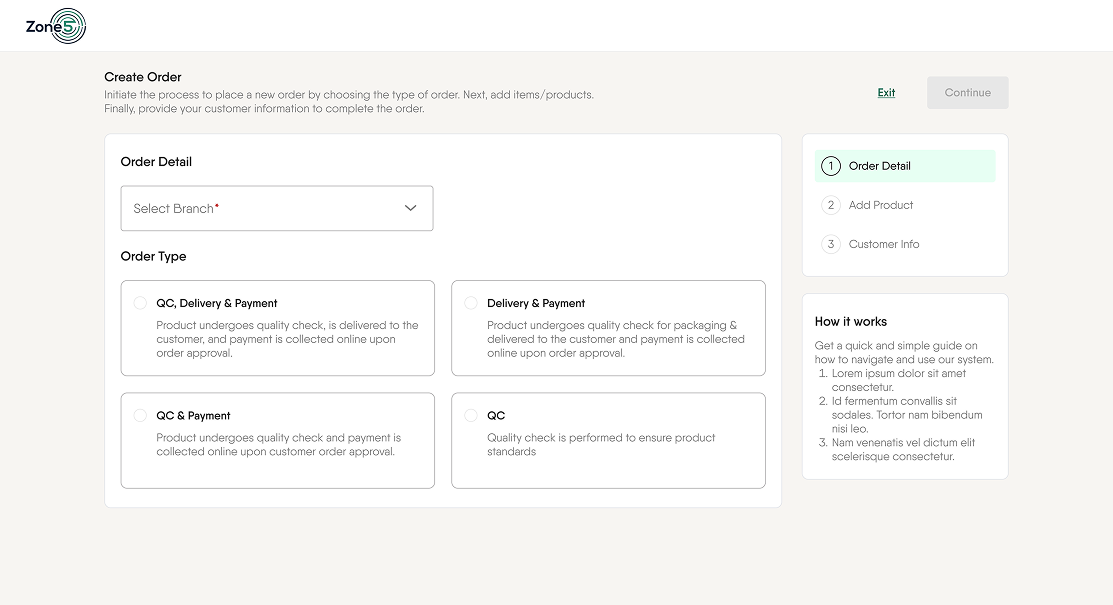
An order is tagged QC, QC & Payment or Delivery & Payment, and that tag decides which checkpoints it must clear before it completes.
Adding a review step to commerce is not a status flag — it changes who can move an order and when.
A review has to be able to stop the order. If QC is only a label, a prepared item ships anyway. The checkpoint has to actually hold dispatch until a reviewer passes it.
Four parties must not see each other's work. Merchant, reviewer, driver and customer each act on the same order from a different surface, and each needs only their slice of it.
Payment and delivery hang off the outcome. Whether payment is captured and delivery dispatched depends on the QC result, so the money and logistics react to the review.
things break if QC is treated as an afterthought.
The work was making one review step feel native to a whole marketplace — designing the order lifecycle first, then hanging catalogue, payment and payouts off it.
One order, 5 roles — each acting on the same lifecycle from a fenced-off surface, with QC in the middle.
Manages a bilingual catalogue, takes orders and prepares each item, then submits it for review before it can ship.
Inspects the prepared item in the In-Review queue against its request, and passes or rejects a full order or a single item.
Reviews the order detail, accepts or rejects it, and moves to payment and delivery from their own surface.

Collects a cleared order once it reaches Ready to Pick, and carries it through delivery to the customer.
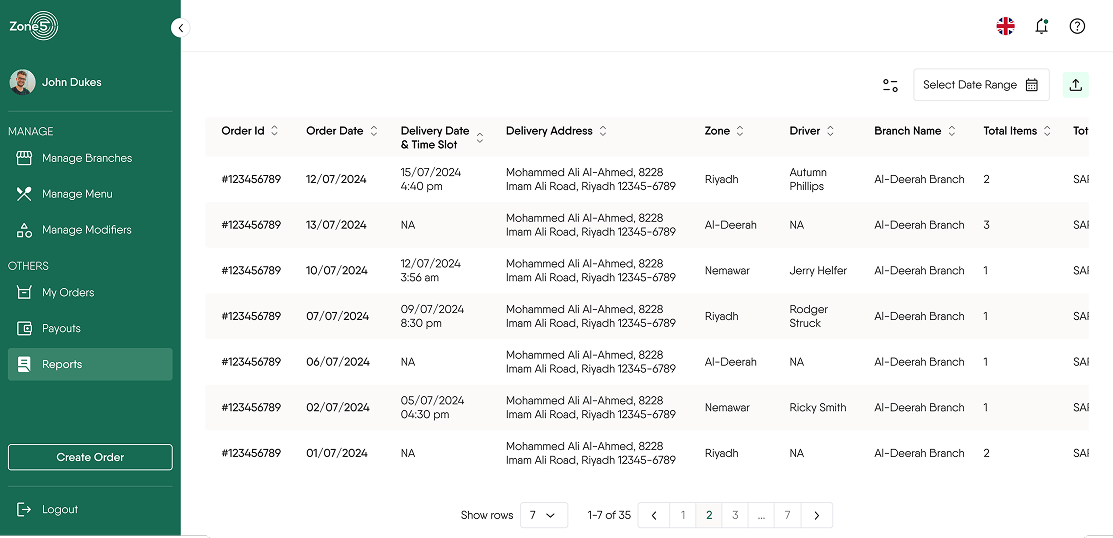
Reads performance by zone and branch across a date range, and settles merchant earnings through payout listings.
An order lands in the New Order stage from a customer or created by the merchant from the menu.
The merchant prepares the item against the order, whether it is a menu product or a custom request.
The prepared item is submitted for review as a QC request — a full order or an individual item.
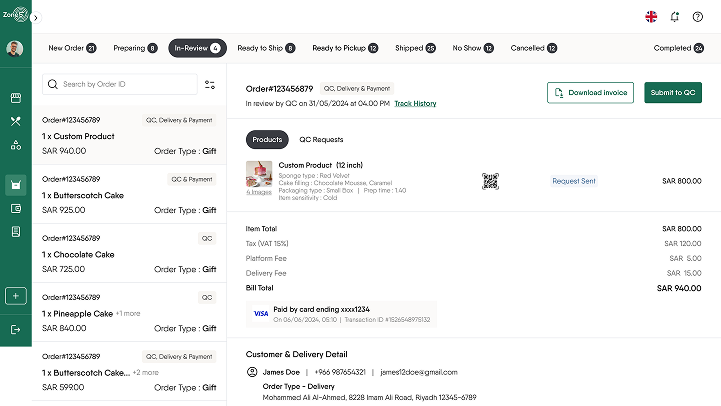
The assigned reviewer inspects the item in the In-Review queue and passes or rejects it against the request.
A passed item is packaged and moves to Ready to Pick; a rejected one goes back rather than forward.
A driver picks the cleared order up and carries it through delivery to the customer.
Payment settles per the order type and the order closes out as completed, feeding merchant payouts.
keep scrolling — the deal glides left →
What changes when review is a real object in the lifecycle, not a label nobody enforces.
“The order cannot advance until the review passes.”
“Nothing stops it shipping.”
The surfaces that carry the platform — the merchant's catalogue and order desk, the QC review, the customer's approval and the back-office reporting.
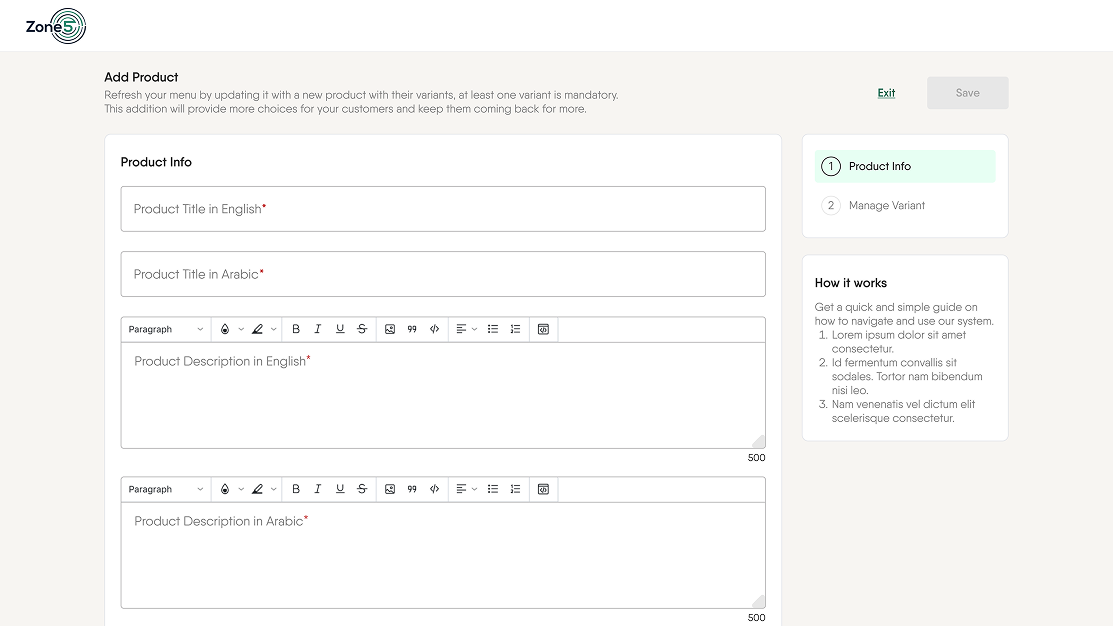
Products are managed with English and Arabic names, a featured flag, active status and branch scope — the merchant's storefront back office.
Adding a product covers package size, item sensitivity and modifier groups, so the catalogue can carry real configurable items.
Orders are built from the menu or as custom requests with their own questions and image uploads, then routed by order type.
The In-Review order shows its QC requests — request ID, product, initiator, reviewer and status — the moment the order is held for.
The customer reviews the order detail, accepts or rejects it and moves to payment and delivery from their own surface.
Reporting filters by zone and branch with a date range, and merchant earnings are tracked through payout listings and details.
A named person has to pass the item, and the money and the driver only move once they do — that one gate in the middle of the lifecycle is the platform.
Every number in this panel is delivered scope — what was designed, built and handed over on the multi-vendor commerce build for Multi-vendor commerce. It leaves out traffic, conversion and revenue on purpose: those figures belong to the client, and we don’t publish numbers we cannot stand behind.
A wider look at the merchant desk, the QC review, the customer approval and the money.
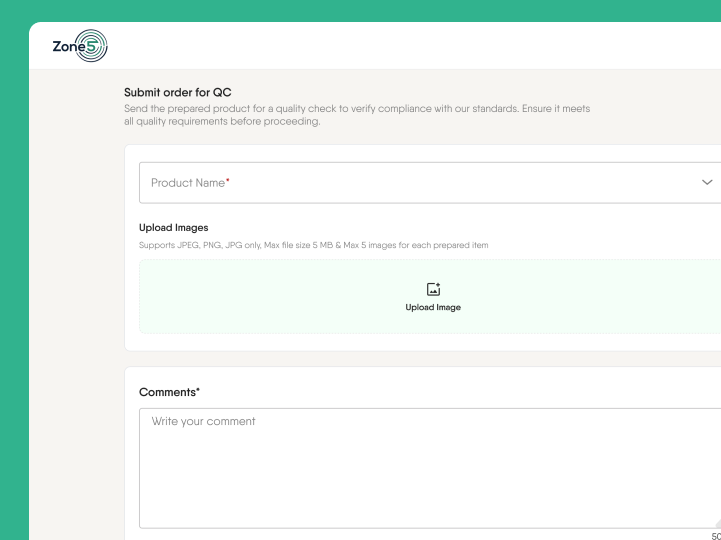
Submit to QC. The merchant uploads the prepared item and a comment before it goes to review.
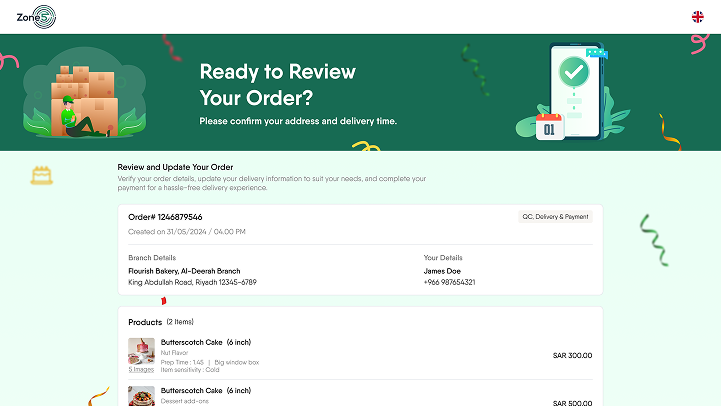
Order detail. QC requests, products and the paid total on one order.
Customer approval. Accept or reject the order, then move to payment and delivery.
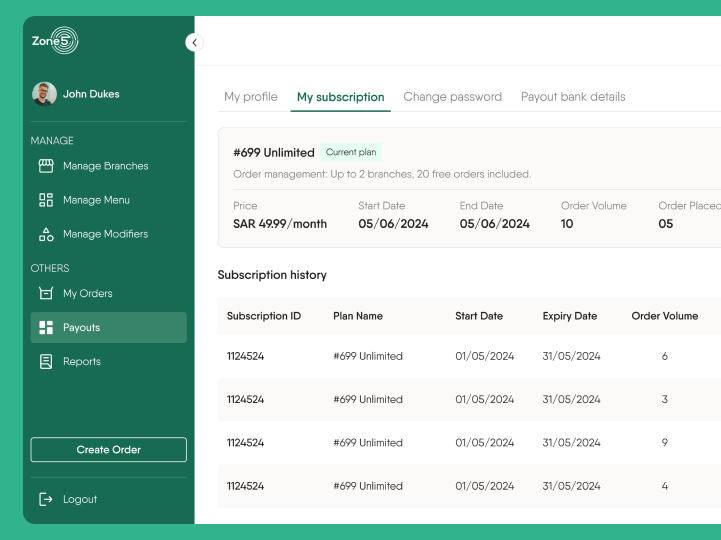
Merchant payouts. Sales period, payout amount and status, tracked per merchant.
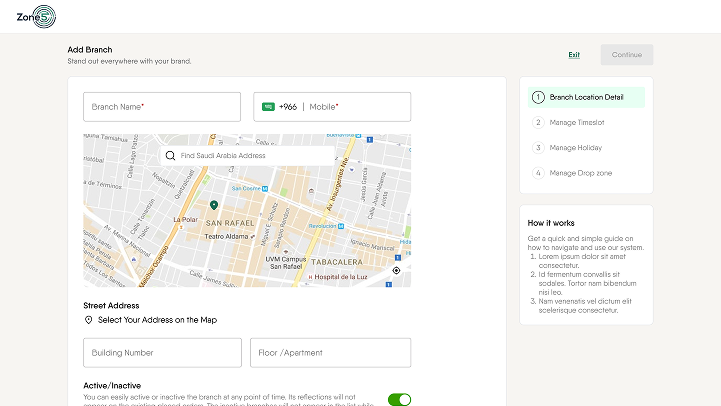
Q platform overview.
An operational, dependable system — a decisive green signals a passed review, amber holds an order in-review, coral flags a rejection, and a mono voice carries the request IDs and statuses.
Six things separate a platform where review is real from one where it is a label nobody enforces. They hold for any quality-gated commerce.
If a review cannot stop dispatch, it is decoration — the gate has to actually block the next step.
A QC request needs its initiator and its reviewer recorded, so a pass or a fail is attributable later.
Not every order needs every step, so the type has to decide which checkpoints and which payment path apply.
Merchant, reviewer, driver and customer act on one order from four fenced-off views.
When a market shops in two scripts, both names belong on the product, not bolted on afterwards.
If merchant earnings are reconciled off-platform, the order data and the money drift apart.
Tell us how your business actually works and we'll tell you honestly what it takes to build — the checkpoint, the roles, the payouts. No deck, no pitch.