


Internet worththe switch.
A direct-to-consumer website for a fibre internet provider serving Nova Scotia, Prince Edward Island and Newfoundland. It sells internet, TV and home phone, checks whether an address can be served, and takes a household from landing page to signed-up in about thirty seconds.
A storefront and a self-serve sign-up in one
The brand is loud and friendly on purpose, but underneath it is a working commerce flow: pick internet, add TV or home phone, confirm the address is serviceable, and order the gear. The whole thing is built to be finished on a phone in one sitting.
Serviceability before sign-up
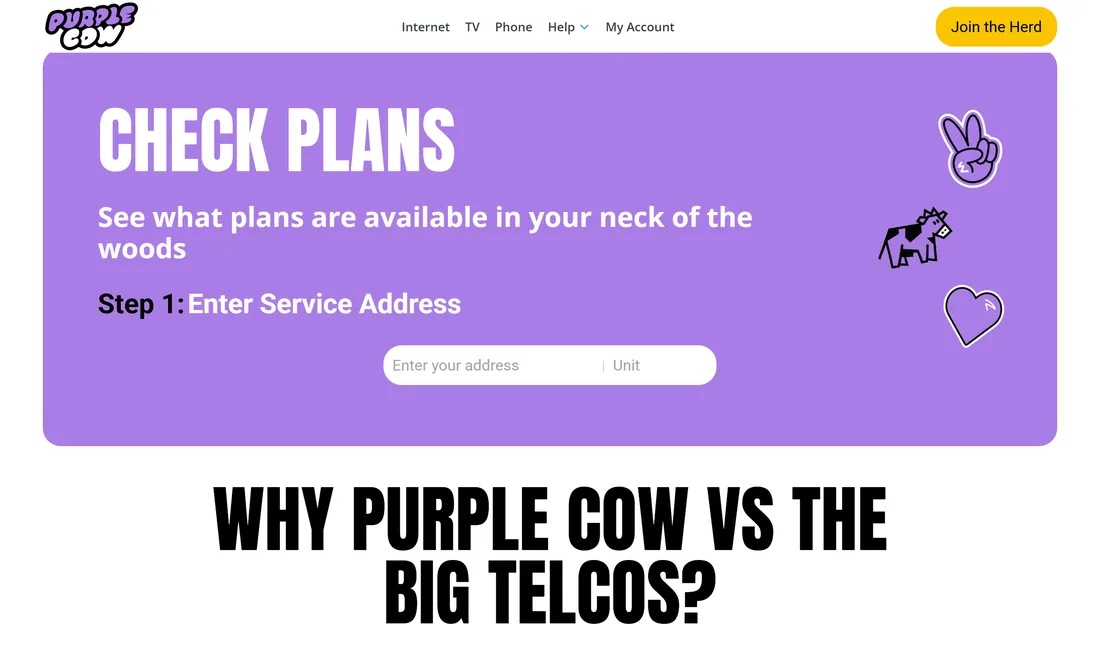
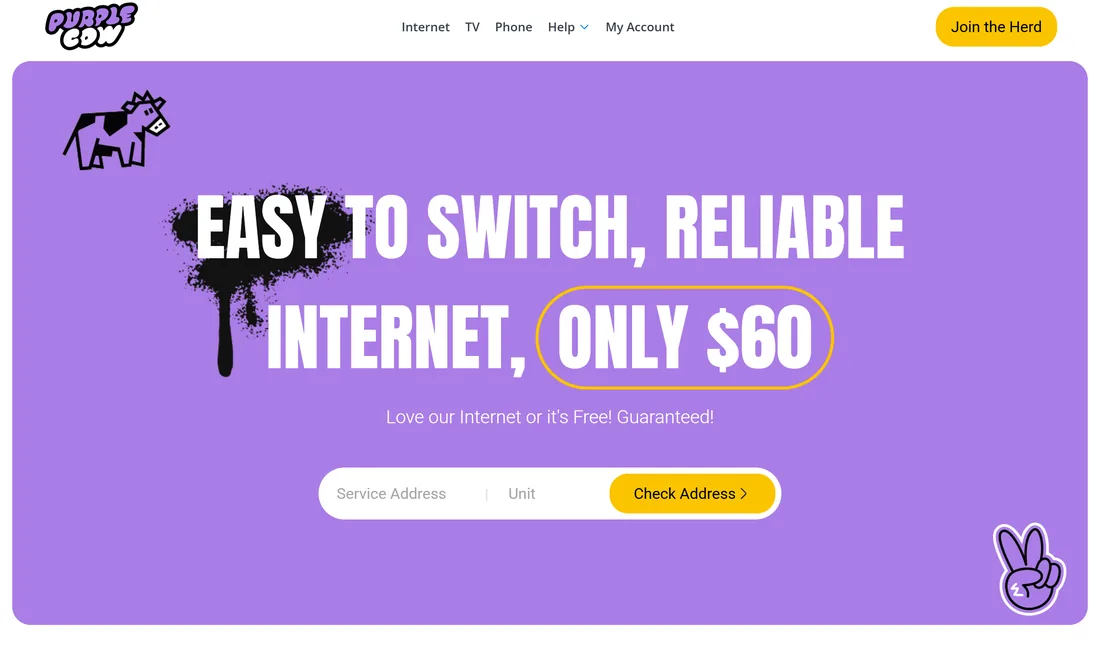
An address checker gates the flow up front, so a household learns whether they can be connected before they invest any time in a plan.
One price, held year over year
Internet starts at $60 a month and the site commits to that price staying flat, with no usage fees and no contract to trap anyone.
A guarantee that removes the risk
"Love our internet or it's free" is stated plainly on the hero, turning the biggest objection to switching providers into a reason to try.
Why is switching internet providers such a hard sell? Every objection has to be defused on a single page.
Changing ISP feels risky: hidden fees, install headaches, being locked in, and no idea whether the new service will actually be better.
Pricing that creeps. Teaser rates that jump after a year are the norm, so a fixed, held price has to be made obvious and believable, not buried in fine print. Answer → internet from $60, held year over year.
Install anxiety. People assume a technician, a wait window and a mess of cables. Answer → a self-install box that plugs in like a laptop, with a free technician visit if a household wants one.
Fear of being locked in. No contract and a money-back guarantee are the levers that turn a cautious visitor into a sign-up, so both lead rather than hide. Answer → love it or it's free, no contract.
things a switcher worries about before they'll commit — answered on one page, from serviceability to what happens if they hate it.
What the site had to answer
Most people meet an internet provider at the worst possible moment: mid-move, comparing plans, unsure whether their new address can even be served. The site has to answer that in seconds and make switching feel like the easy choice.
Make switching the easy choice
- Check serviceability first. An address checker gates the flow before a household invests any time in a plan.
- Hold the price. Internet from $60 a month, fixed year over year, with no usage fees.
- Remove the risk. "Love our internet or it's free" stated plainly on the hero, next to the price.
- Let add-ons ride the same order. TV and home phone attach to the internet sign-up, not a second call.
Why it was hard
- Teaser pricing is the industry norm, so a fixed price has to be made obvious and believable, not buried in fine print.
- People assume a technician visit and a mess of cables, when the real install is closer to plugging in a laptop.
- Every objection — price, contracts, install — has to be defused on a single page, not across a sales call.
- The whole flow, address check to order, has to be finished on a phone in one sitting.
What changes when every objection is answered up front
A challenger brand has to defuse hidden fees, install headaches and lock-in on a single page. Here is what that looks like next to the way most providers still sell.
Ask for the address, then the price
Address checker gates the sign-up up front · Internet from $60, held year over year · No contract, no usage fees · Self-install box, love it or it's free
Call first, find out later
Found out on a phone call · Intro rate, then a jump · Locked in, metered · Booked technician visit, cancellation fees
What can a household actually buy?
Three services, each with its own page and its own pricing, all reachable from one navigation and orderable in the same flow.
Fibre from $60, no games
Internet · The core planThe internet page leads with a single held price, a free Wi-Fi modem, no usage fees and no contract, so the plan can be understood at a glance.
33 channels and a TV app
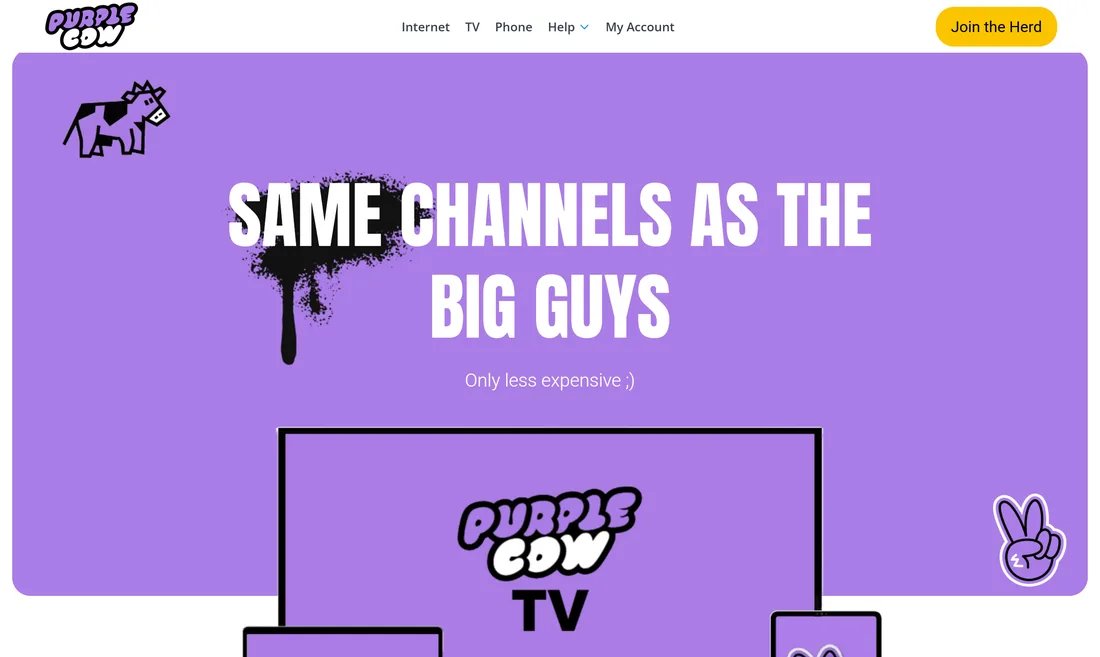
Television · Add-onTelevision is $25 a month for 33 channels including local news, streamed through an app on Apple, Google and Firestick devices, with cloud recording and pause.
Keep the number, drop the bill
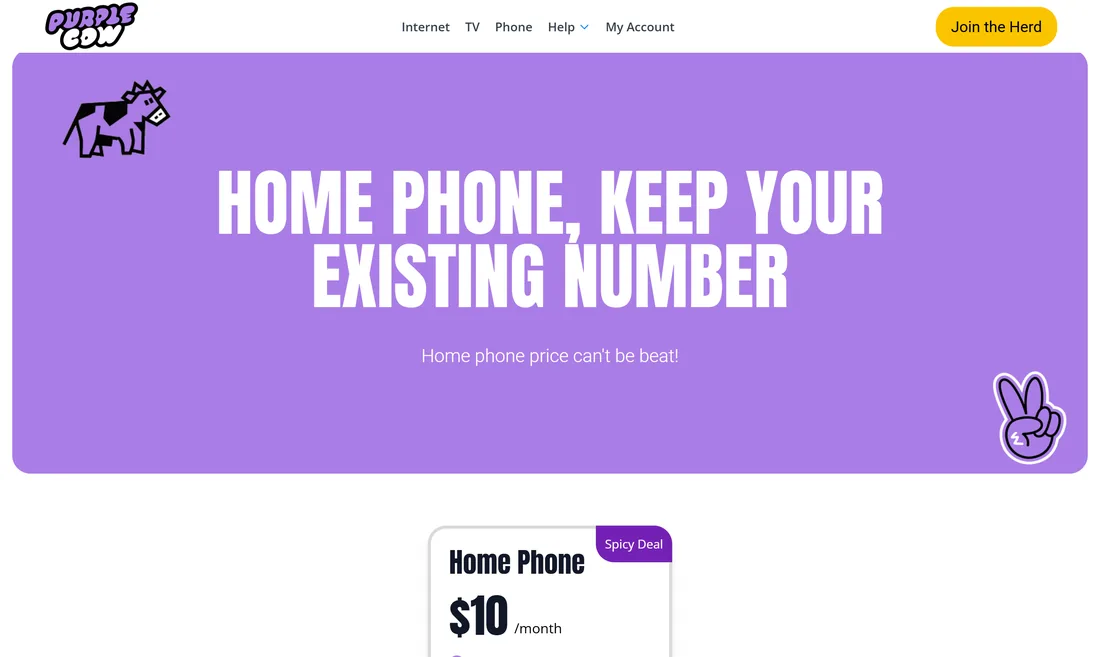
Home phone · Add-onHome phone is $10 a month with unlimited North American long distance, call display, call waiting and forwarding, and a household keeps its existing number.
Everything on one screen
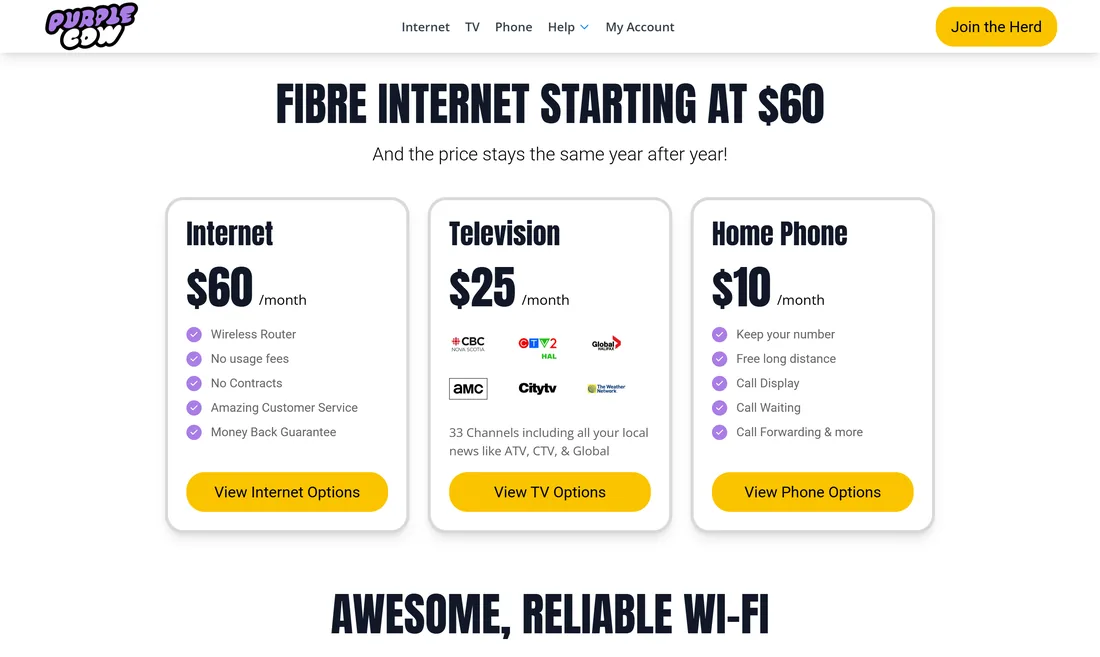
Plans · The storefrontThe plan trio sits together on the home page so a visitor can see internet, TV and phone pricing side by side before they start an order.
How does a household go from landing page to online?
The site's whole promise is that switching is trivial: a household checks its address, signs up online in about thirty seconds, and gets an all-in-one Wi-Fi box that plugs in like a laptop — with a free technician visit available if they'd rather not.
The scope, in one panel
Every number in this panel is delivered scope — what was designed, built and handed over for Purple Cow Internet. It leaves out traffic, conversion and revenue on purpose: those figures belong to the client, and we don’t publish numbers we cannot stand behind.
- Coverage
- Nova ScotiaPEI & Newfoundland
- Services sold
- InternetTV · Home phone
- Pricing
- Internet from $60/moFixed year over year
- Sign-up
- Online in ~30 secondsSelf-install
The look, and why
Telecom brands default to corporate blue and stock photos of families. This one goes the other way: a hand-drawn purple cow, a single high-visibility yellow reserved for the action, and a condensed poster face that makes a price feel like a headline.
What does a consumer ISP website need to get right?
These came out of building a provider site that has to sell, qualify and onboard in one visit. They hold for any subscription service sold direct to households.
Answer serviceability first.
Nothing else on the page matters if the visitor's address can't be connected, so ask for it before you pitch.
State the real price once.
A held, all-in number beats a teaser rate the moment a shopper has been burned before, and most have.
Sell the install, not just the plan.
The fear is the technician and the mess, so a self-install box needs its own space on the page.
Put the guarantee where the doubt is.
"Love it or it's free" belongs on the hero, next to the price, not in a footer nobody reads.
Let add-ons ride the same order.
TV and phone should attach to the internet sign-up, not force a second call or a separate flow.
Write it for a phone at the kitchen table.
This is finished mid-move, one-handed, so every step has to survive a small screen and a distracted reader.
Building a website for an internet provider
How do you build an address serviceability check into a sign-up?
How long does an internet provider website take to build?
Can one site sell internet, TV and home phone together?
Why go with such a bold, non-corporate brand for telecom?
Does it work on a phone?
Selling a subscription that people have to be talked into switching to?
Tell us how your business actually works and we'll tell you honestly what it takes to build — the storefront, the sign-up, the guarantee. No deck, no pitch.