


Sourcing,quote to award.
LinoDux is a two-sided B2B sourcing marketplace. Buyers build a request for quotation, send it to a chosen list of manufacturers, compare the quotes that come back, and award the work — a chain of emails and spreadsheets turned into one tracked workflow.
One RFQ, both sides of the table
A buyer and a supplier see the same request through different lenses. LinoDux is built as two fitted experiences over one data model, with a single toggle to switch from the buyer workspace to the supplier one.
Buyers build the request
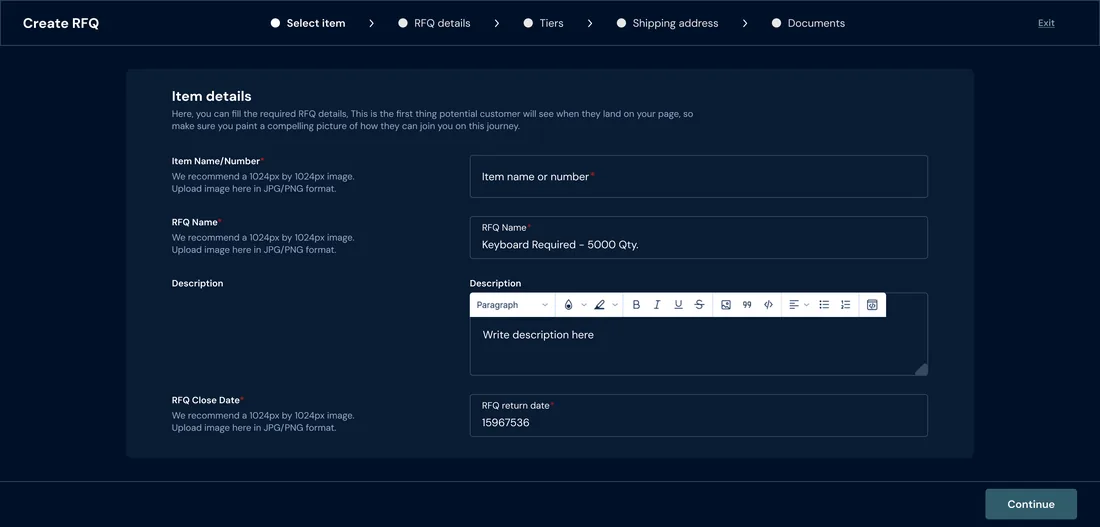
A five-step wizard captures the item, RFQ details, tiers, shipping address and supporting documents before a request goes out.
Suppliers quote in place
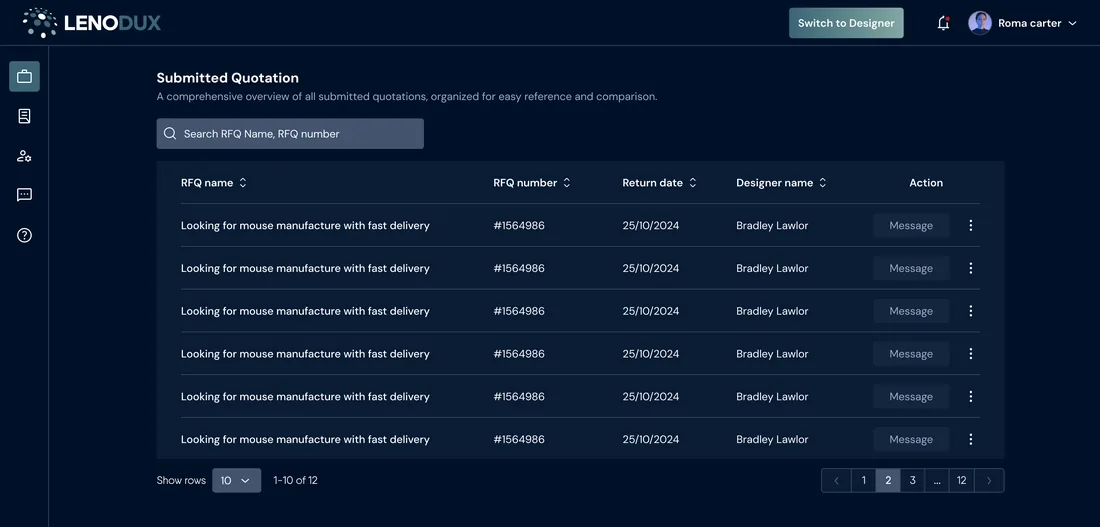
Manufacturers review incoming RFQs and submit tiered quotations from their own workspace, each tied back to the request.
Roles on each side
Admin, procurement and engineering roles on the buyer side; admin, quoter and engineer on the supplier side.
Why does manual sourcing get slow and error-prone?
Sending a request to many suppliers, collecting quotes in different shapes, and comparing them by hand is where sourcing loses days.
LinoDux structures each step so nothing is re-keyed and nothing is lost in an inbox — one request reaches a whole recipient list, quotations submit against it directly, and buyers and manufacturers each work from their own view of the same RFQ.
sides of one RFQ — buyer and supplier — sharing a single data model instead of two.
What LinoDux had to get right
A sourcing marketplace only works if nothing gets re-keyed and nothing gets lost between a request going out and a decision coming back.
One request, tracked end to end
- Reach a whole recipient list at once — members in-app, non-members invited by email.
- Structure every quote the same way so a compare sheet can line them up.
- Keep the conversation on the record — threaded on the RFQ, not a side email.
- Close into a searchable archive once an RFQ is awarded.
Why it was hard
- Two sides need two different workspaces over the same data model, switchable from one toggle.
- Roles differ on each side — admin, procurement and engineering for buyers; admin, quoter and engineer for suppliers.
- A shortlist has to narrow a field of suppliers before an award, not just list them flat.
- An awarded RFQ has to archive with its quotes, messages and documents intact.
Who is LinoDux built for?
Two sides of one request — buyer and supplier — sharing a single data model, switchable from one toggle.
The buyer
Builds a request through a five-step wizard, reviews quotations in a compare sheet, and awards the work.
The manufacturer
Reviews incoming RFQs and submits a tiered quotation from their own workspace, tied back to the request.
What changes when sourcing is tracked, not re-keyed
Six sourcing tasks, and what each looks like with a chain of emails and spreadsheets versus inside LinoDux.
What does each side actually work in?
The same request, shown two ways. Buyers post and compare; suppliers receive and quote — and either can switch sides from the header.
Every request in one place
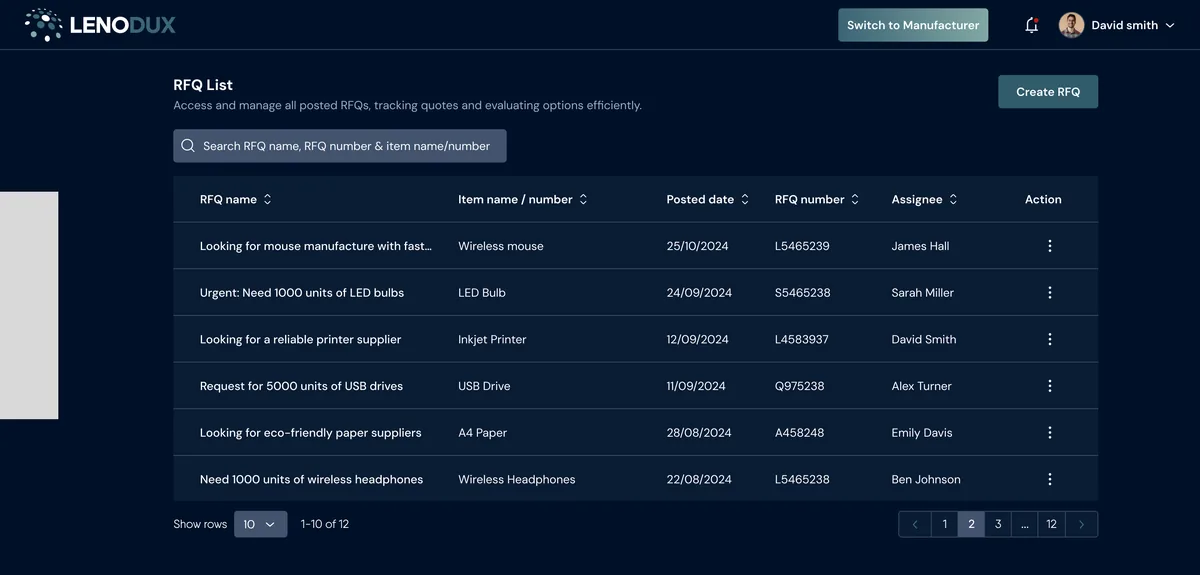
Buyer workspaceThe posted-RFQ list carries search across name, number and item, sortable columns for date and assignee, and a quick action on every row.
Build a request that reads well
Five-step wizardItem, RFQ details with a rich description editor, tiers, shipping address and supporting documents — captured step by step before the request goes out.
Send it to the right suppliers
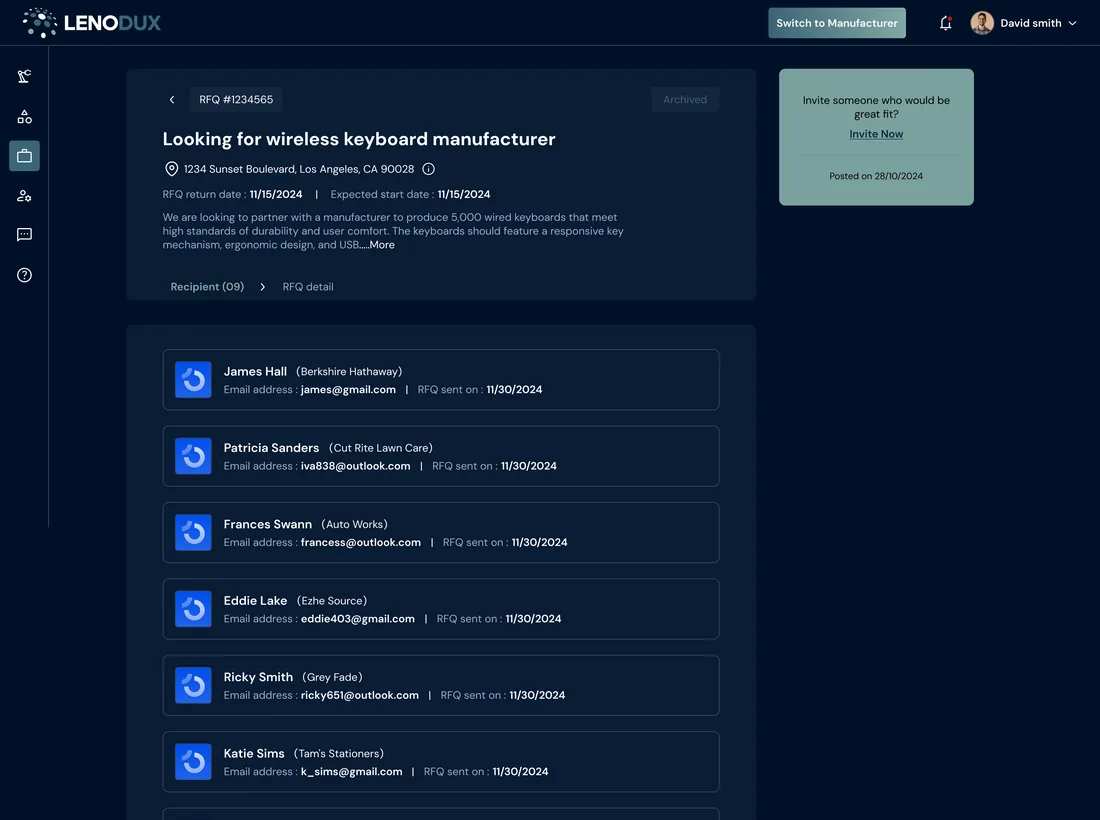
DistributionAn RFQ carries its own recipient list; members receive it in-app while non-members are invited by email, each with the date it was sent.
Quotes, organised to compare
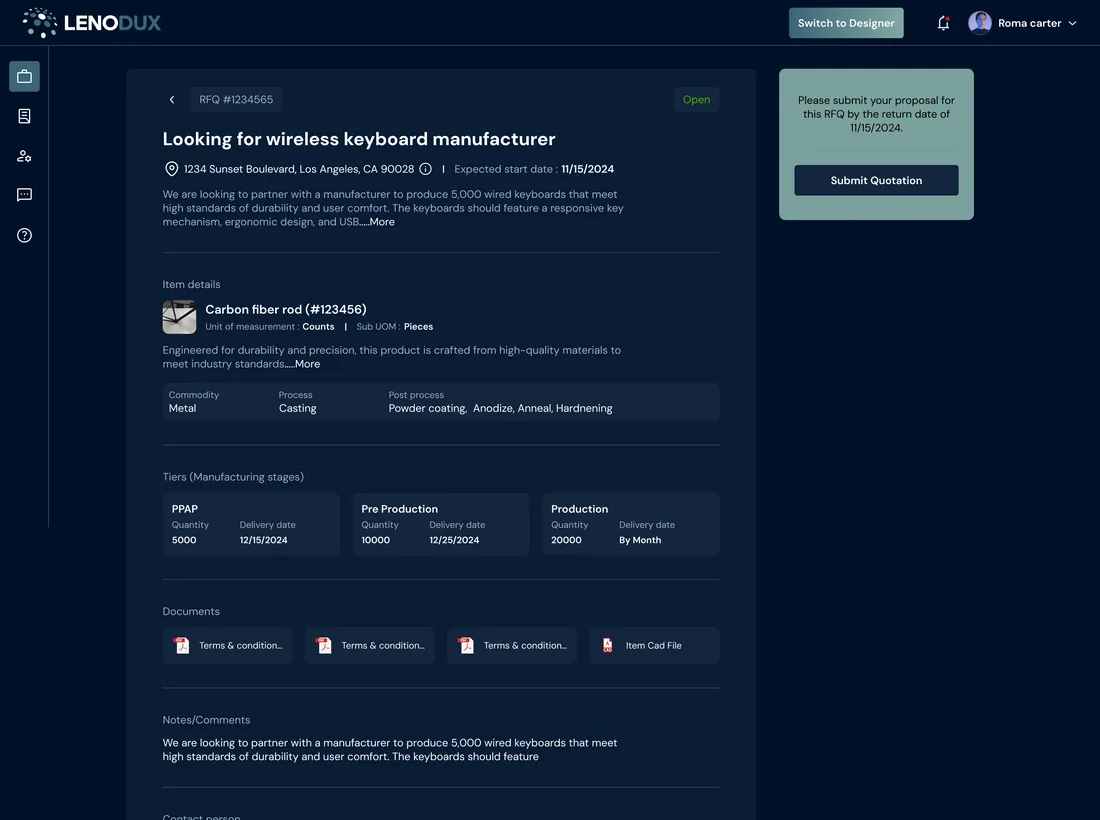
Supplier workspaceManufacturers track the quotations they have submitted, each tied to its RFQ, return date and buyer, with a message shortcut on every row.
The same RFQ, their lens
Manufacturer viewSuppliers open the full request, its items and terms, and act on it without ever seeing another supplier's response.
What does a B2B sourcing marketplace need to get right?
Six things separate a sourcing platform buyers and suppliers actually adopt from a directory they abandon. They came out of building LinoDux and hold for any RFQ-driven marketplace.
Distribution, not forwarding
One request has to reach a whole recipient list at once, with non-members invited in, or it is just email with extra steps.
Structured quotes that compare
Responses need a shared shape so a compare sheet can line them up — otherwise someone re-keys them by hand.
Conversation on the record
A question about a quote belongs threaded on the RFQ, not in a side email nobody else can see.
Roles that match each side
A buyer's procurement lead and a supplier's quoter need different powers over the same request.
A shortlist before a decision
Buyers need to narrow a field of suppliers before they award, not scroll a flat list.
A closed, searchable trail
An awarded RFQ should archive with its quotes, messages and documents intact, findable months later.
Building a B2B sourcing marketplace
How long does it take to build a B2B sourcing marketplace?
How is an RFQ platform different from a normal e-commerce marketplace?
Can it support separate roles for buyer and supplier teams?
How do buyers compare quotations from different manufacturers?
Can we onboard both buyers and suppliers on one platform?
Sourcing running on email and spreadsheets?
Tell us how your business actually works and we'll tell you honestly what it takes to build — the RFQ flow, the roles, the compare sheet. No deck, no pitch.