Case study · Boodle

Every account,one balance.

A personal-finance app for the New Zealand and Australian markets that connects a person's banks, cards, loans, investments, insurance and property into a single view — then turns that picture into spend tracking, budgets, savings goals and account-to-account transfers.
iOS + Android appNZD + AUDAccount aggregation
Boodle screenBoodle screen
What we designed and prototyped
NZD + AUD accountsCards & loansInvestments & insuranceSpend summarySavings goalsFund transfers
01 — The product

One aggregated picture, in two currencies

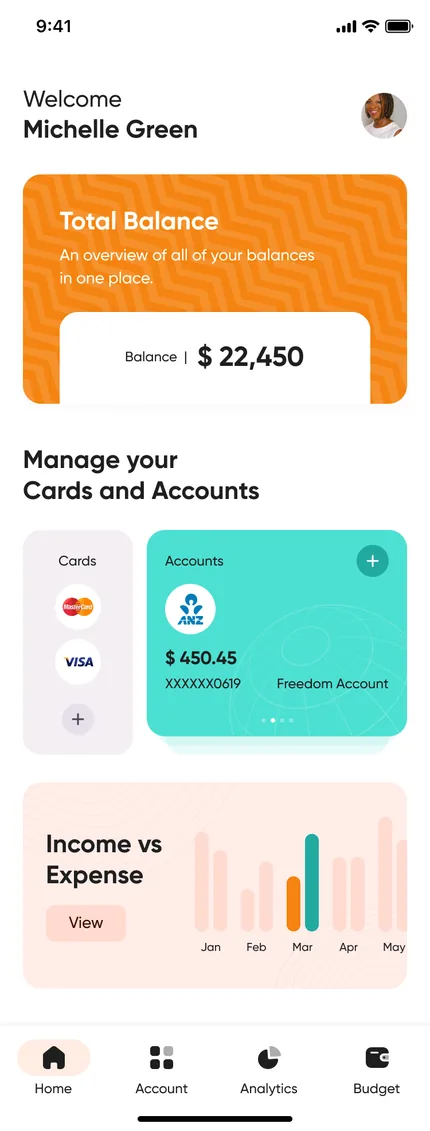
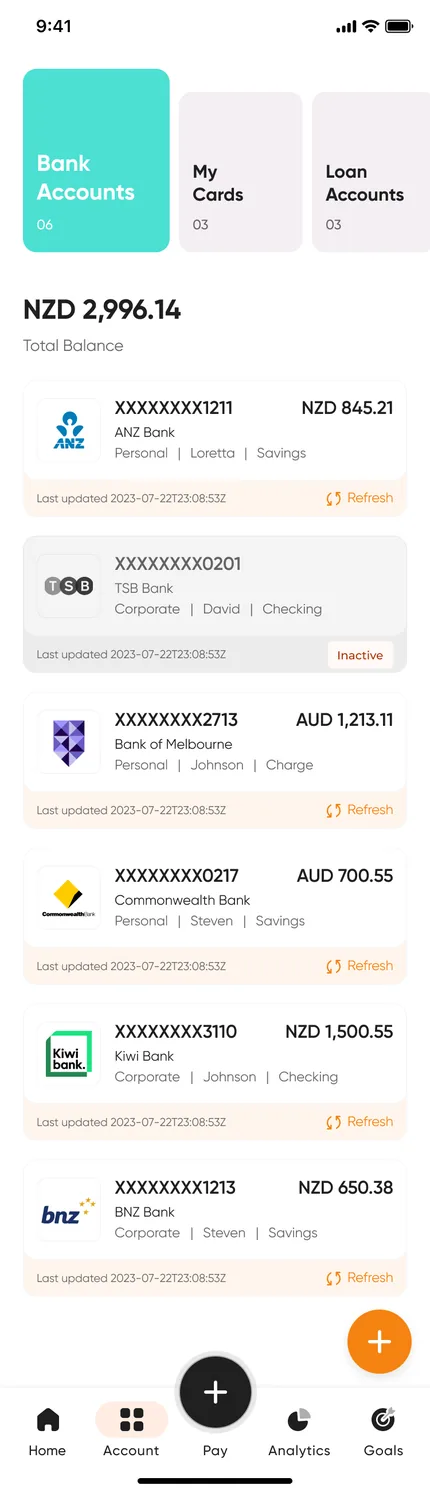
The app is built for people who bank across NZD and AUD accounts at the same time. Each connected account keeps its own currency, bank badge and last-updated stamp, and the home screen rolls them into a single total balance rather than making the user add it up in their head.

Real NZ and AU banks, side by side

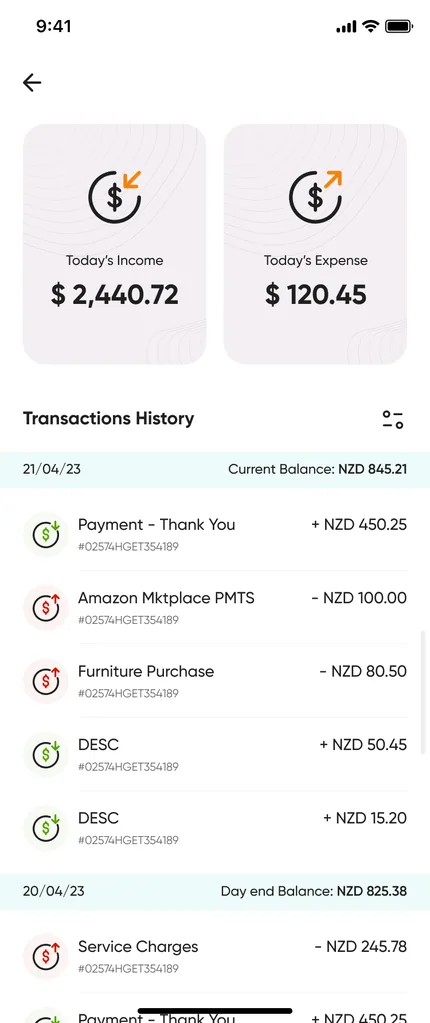
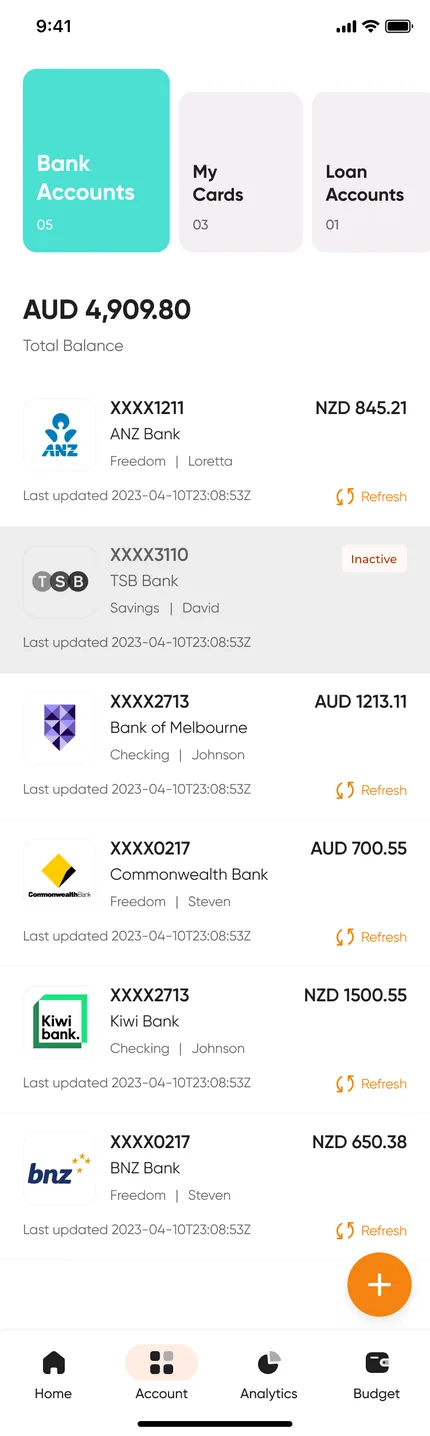
Accounts from banks across both countries sit in one list with per-account currency, a refresh action and a status flag, so a mixed NZD/AUD financial life reads as one thing.

Six kinds of money in one place

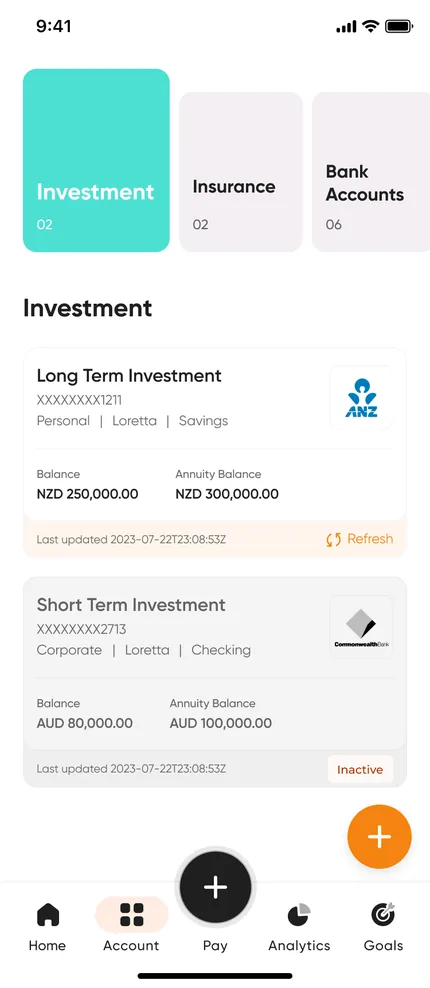
Beyond bank accounts, the app models cards, loans, investments, insurance and real estate as first-class asset types, because net worth is more than a checking balance.

The aggregate drives everything else

Once the accounts are connected, the same data powers spend analysis, budgets and goals — the aggregation is not the feature, it is the foundation for all of them.

02 — The problem

The problem is not any single account — it's that no app shows the whole picture, and the whole picture is what a person makes decisions on.

Money spread across several banks and two currencies means opening several apps and doing mental arithmetic just to know where you stand. Boodle closes that with one aggregated balance instead of a manual add-up.

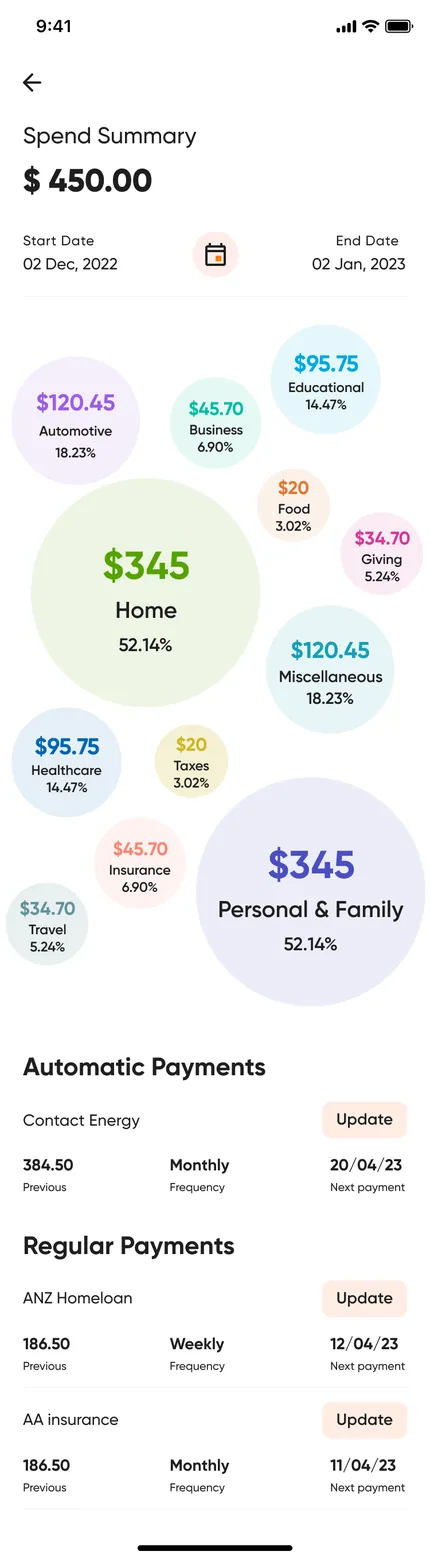
The gaps are specific: no single view of everything, spending that stays invisible until it's already spent, and saving with no structure behind it. Boodle answers each one — one balance, a categorised spend summary, and named goals with a target.

6

asset types rolled into one aggregated balance — bank accounts, cards, loans, investments, insurance and real estate.

03 — Goals & challenges

What Boodle had to bring together

A person's money sits behind several logins in two currencies. The goal was to put all of it on one balance instead of a mental tally across apps.

Goals

One balance, the whole picture

  • Aggregate every account — banks, cards, loans, investments, insurance and property, into one login.
  • Roll two currencies into one total — NZD and AUD accounts read as a single balance.
  • Turn spend into a pattern — categorised, with running percentages, not a scroll through a list.
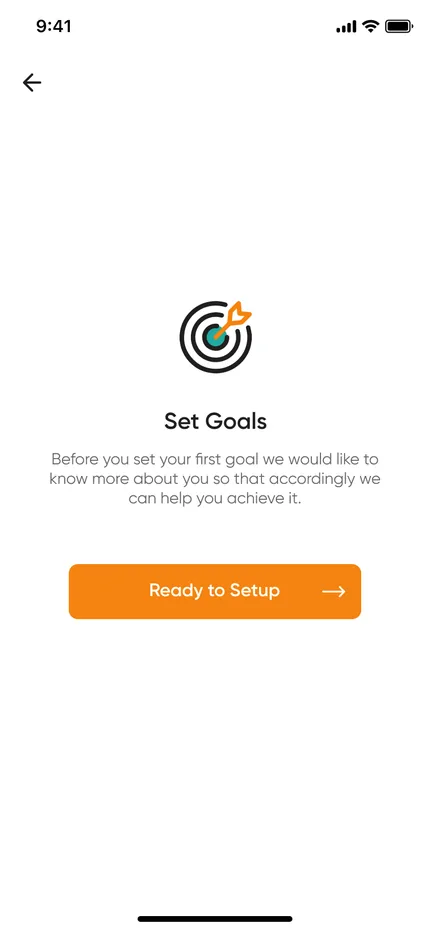
  • Give saving a target — a named goal the app tracks toward, not a number in your head.
Challenges

Why it was hard

  • Six different asset types — bank, card, loan, investment, insurance, property — had to read as one net-worth picture, not six separate screens.
  • Every connected account keeps its own currency; the home balance still has to total to one number.
  • Account data has to be aggregated through secure open-banking or provider connections, not stored bank passwords.
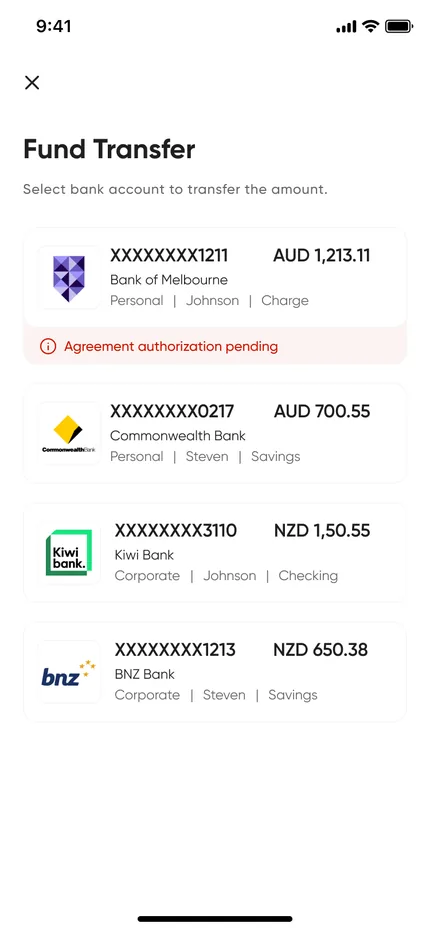
  • A transfer moves real money, so it needed an explicit authorisation step rather than a single tap.
04 — The money loop

How does Boodle turn scattered accounts into a plan?

User
01

Connect the accounts

The user links their NZD and AUD banks, cards, loans and assets into one profile.

Connect
App
02

See one balance

The home screen aggregates every connected account into a single total balance.

Aggregate
App
03

Understand the spend

The spend summary breaks outgoings into categories so patterns become visible.

Analyse
User
04

Set a savings goal

The user creates a named goal with a target for the app to track towards.

Save
User
05

Move the money

A transfer between linked accounts is initiated, gated by an agreement authorisation.

Transfer

keep scrolling — the deal glides left →

05 — Inside the app

What do you actually do in Boodle?

Every screen below is drawn from the real design. Together they trace the loop the app is built around: see everything, understand where it goes, then act on it.
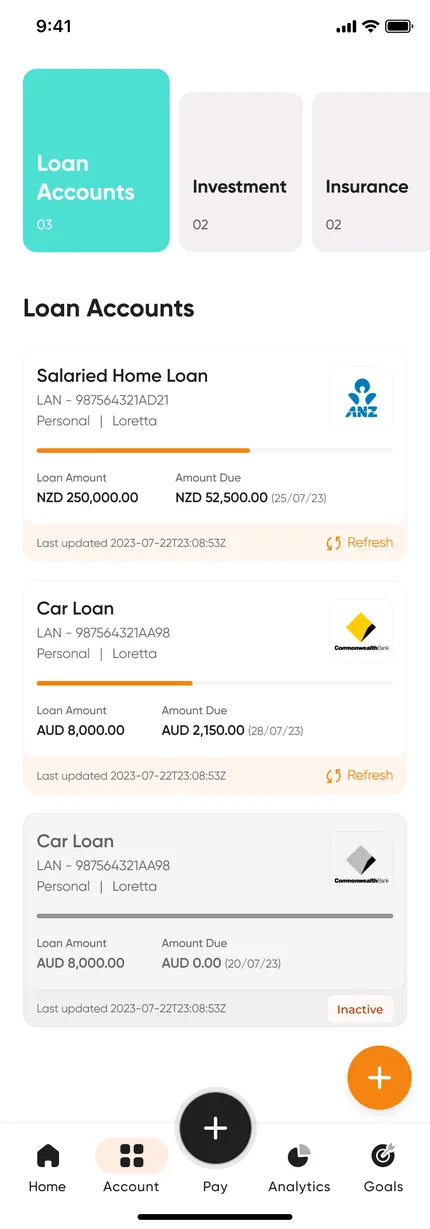
Boodle home screen with total balance and accountsBoodle accounts list with category pills and per-account balancesBoodle loan account detailBoodle investments screenBoodle spend summary with category bubblesBoodle daily tracker screenBoodle savings goals screenBoodle fund transfer account selection
FAQ

Building a personal-finance app

How do you build a personal-finance aggregation app?
The heart of it is aggregation: securely linking a person's accounts across multiple banks - and, as here, multiple currencies - into one normalised balance. Everything a user values sits on top of that: a categorised spend summary, budgets, savings goals and transfers. In production the account links run through an open-banking or aggregation provider, and the app's job is to turn that raw feed into one legible picture with a refresh and a status per account.
How much does a fintech app like this cost?
It depends mostly on how the account data is sourced and how much regulated functionality is in scope. A design and app build with aggregated balances, categorised spend and goals is one tier; adding live open-banking links, payments and KYC raises it because each brings compliance and integration work. Shanti Infosoft scopes it on a short call and returns a fixed quote so you can compare a real number.
Can one app handle both New Zealand and Australian accounts?
Yes, and that is exactly what Boodle is designed for. Each connected account keeps its own currency and bank, and the home screen rolls NZD and AUD holdings into a single total rather than forcing the user to convert or switch apps. Supporting two markets is mostly a matter of modelling currency per account from the start rather than assuming one.
Is aggregating bank accounts secure?
Account aggregation is built on regulated open-banking or provider connections rather than storing bank passwords, and the app holds read access to balances and transactions, not the ability to move money without an explicit, authorised step. In this design a transfer is gated behind an agreement authorization, which is the pattern we would carry into a production build.
Let's build

Have a fintech idea that lives across too many apps?

Tell us how your business actually works and we'll tell you honestly what it takes to build — the aggregation, the categorisation, the goals. No deck, no pitch.