


Buy, sell, ride
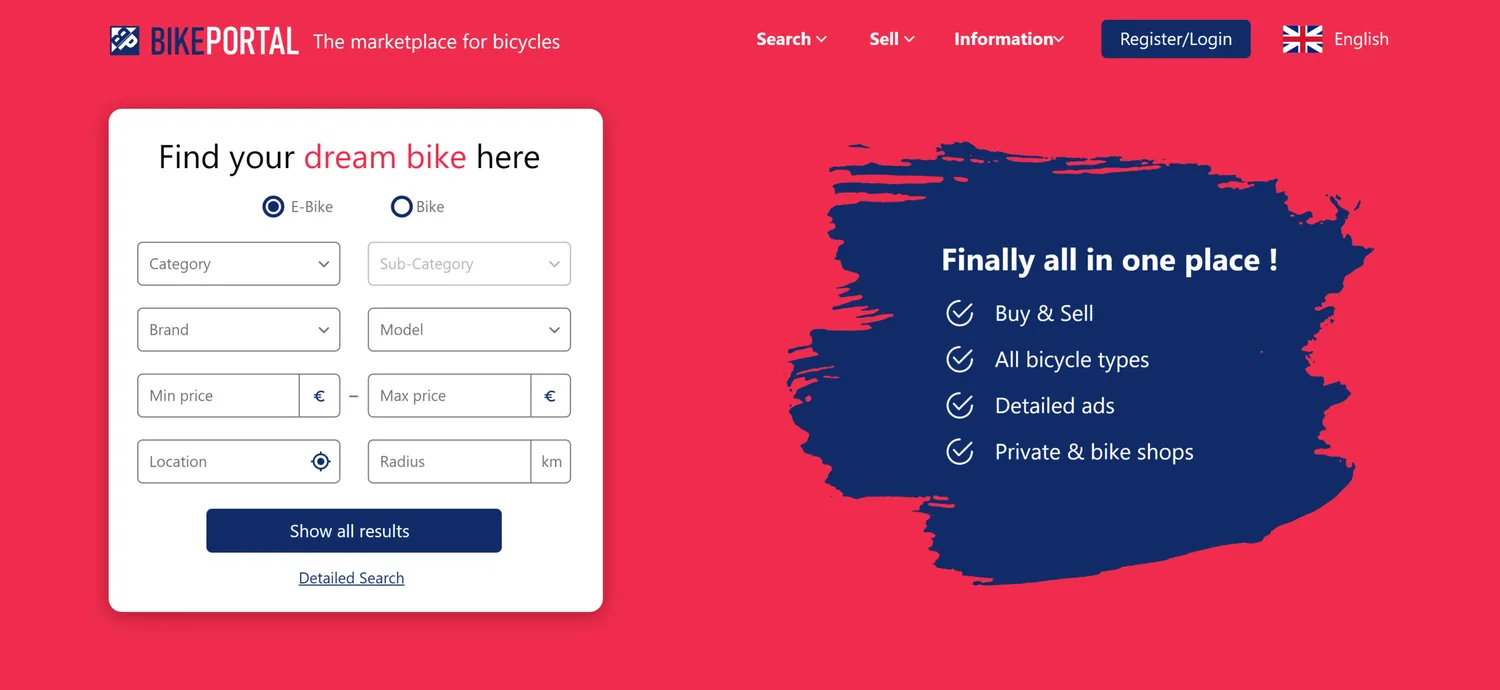
A marketplace for bicycles and e-bikes that puts private sellers and bike shops in one place. A guided finder for buyers, a step-by-step listing wizard for sellers, and a spec sheet detailed enough to buy a bike without seeing it.
Sector
- Bicycles & e-bikes
- Online marketplace
Who it serves
- Private sellers
- Bike shops & dealers
- Buyers
What we did
- UX + UI design
- Marketplace flows
- Front-end build
Built for
- Multi-language
- European market
What is Bike Portal?
Bikes get sold in general classifieds and social-media groups where nobody can filter by frame size, groupset or condition. Bike Portal is the opposite: a marketplace that treats a bicycle as the specified object it is, so a buyer can shortlist without a single message.
One marketplace for two very different sellers
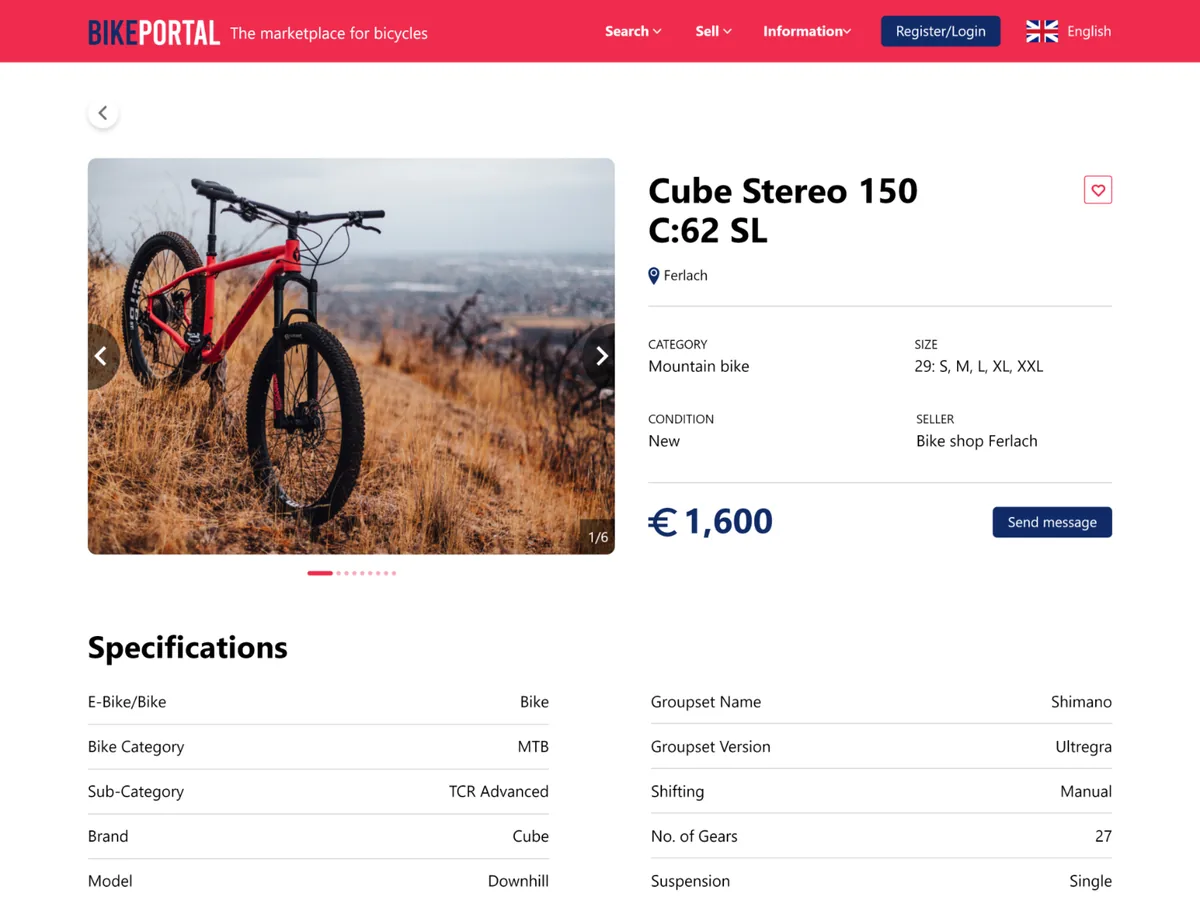
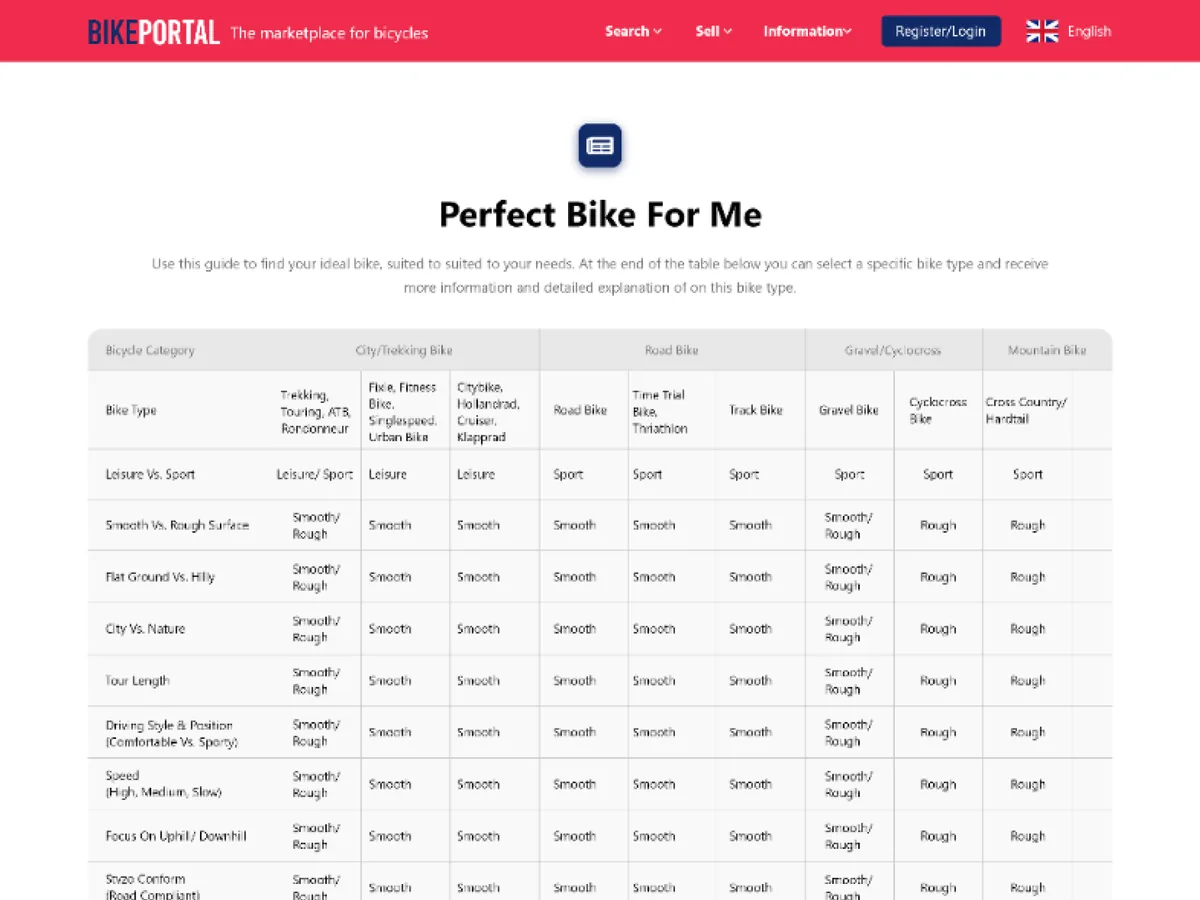
A private seller listing one bike and a shop managing an inventory have different needs, so each gets a fitting path - but both feed the same detailed listing a buyer sees. The guided finder narrows a large catalogue by type, brand, budget and distance before a buyer ever opens an ad.
Why is selling a bicycle online harder than it looks?
A bike is a high-value, highly-specified object bought largely on trust. Three things break a generic classifieds approach: the detail that decides a purchase, the distance that decides collection, and the difference between a one-off seller and a shop.
| Selling a bike privately | General classifieds & groups | On Bike Portal |
|---|---|---|
| Describing the bike | A caption and a few photos | A full structured spec sheet plus extras |
| Being found | Buried by newer posts | Listing and boosting packages to surface it |
| Filtering for a buyer | Keyword search, if any | Type, brand, model, price and radius |
| Judging condition | Ask in the comments | Condition, appearance and age in the listing |
| Reaching the seller | Public comment thread | A private contact form on the ad |
| Selling as a shop | A personal profile like anyone | A dealer account built for inventory |
What does the marketplace look like in use?
The screens a buyer and a seller move through, from the first search to a saved shortlist and a managed account.
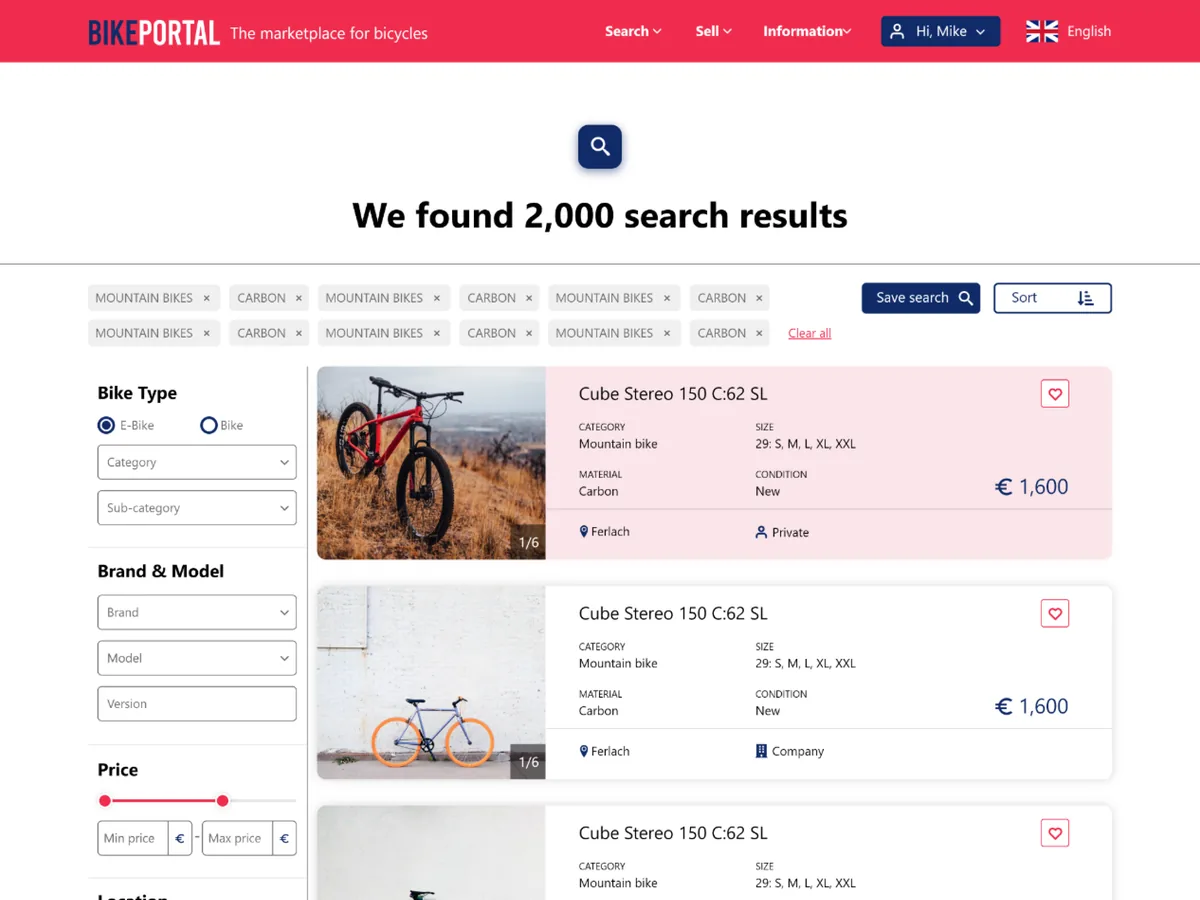
Search & discovery
2 pathsA quick landing search by type, category, brand, model and price with a location radius, a detailed search for everything else, sortable results and saved searches - plus a guided finder for buyers who start from need rather than model.
- Guided + detailed
- Radius search
- Saved searches
Listing wizard
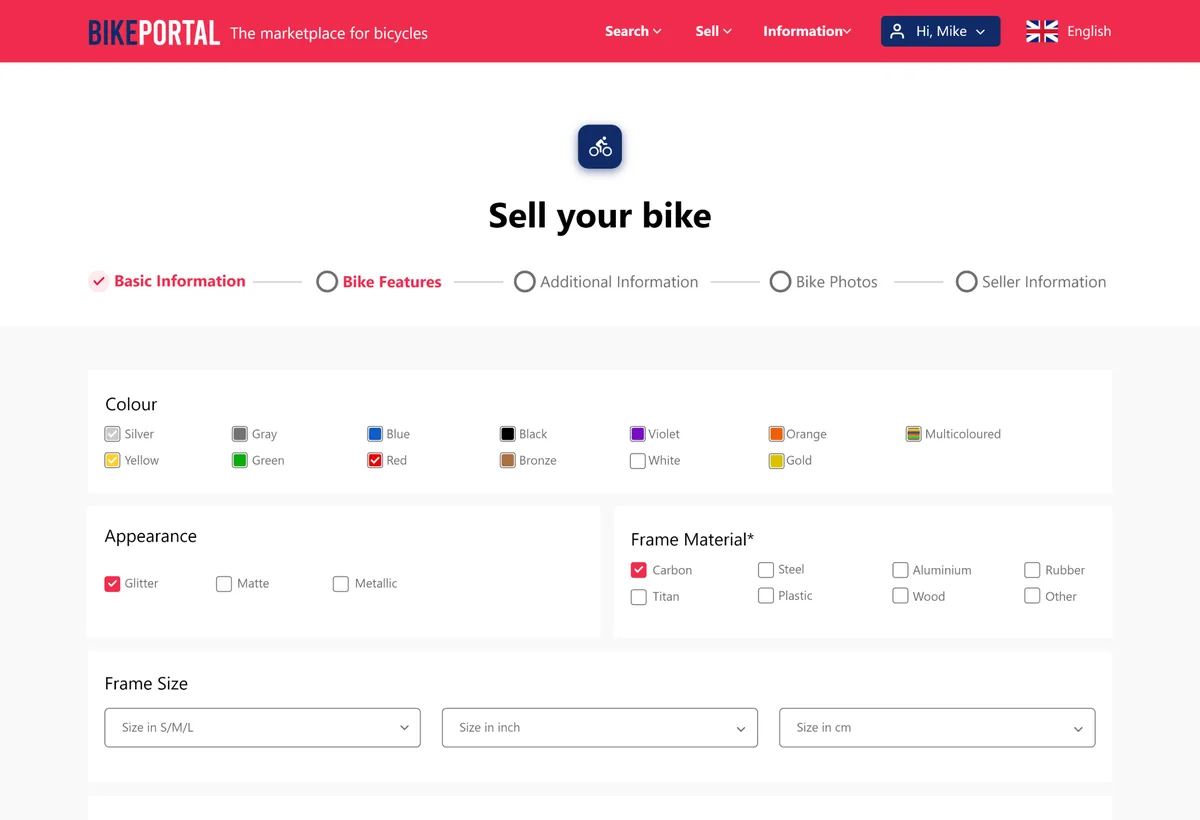
6 stepsThe step-by-step path that captures a full specification, an ordered photo gallery, extras and seller detail before an ad ever goes live.
- Structured spec
- Photo gallery
Packages & boosting
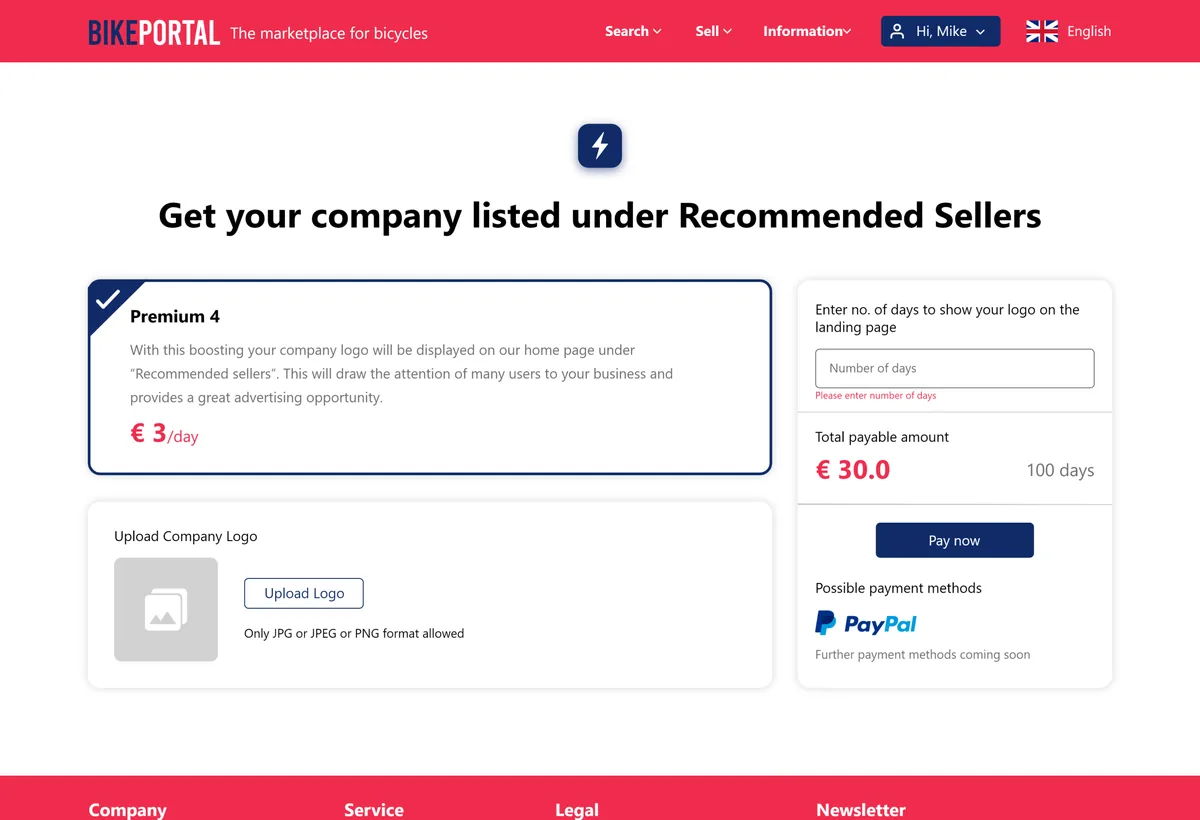
Paid tiersListing and boosting packages with card payment, so a seller can lift an ad above the category rather than wait for it to be found.
- Card payment
- Boost tiers
Messaging
On every adA private contact form on the bike detail page connects a buyer to a seller without a public thread, with the listing attached to the conversation.
- Buyer to seller
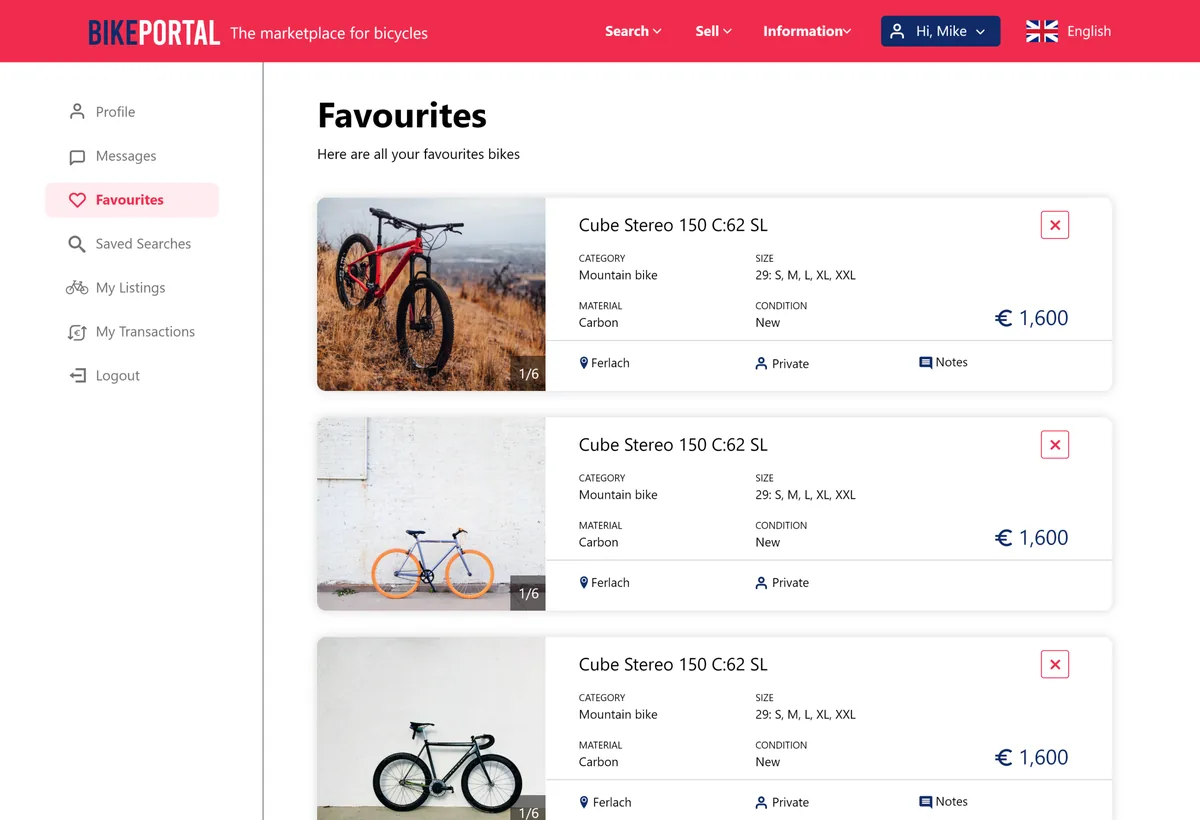
Favourites
With notesBuyers save bikes to a favourites list and attach private notes to each, so a shortlist survives past a single session.
- Personal notes
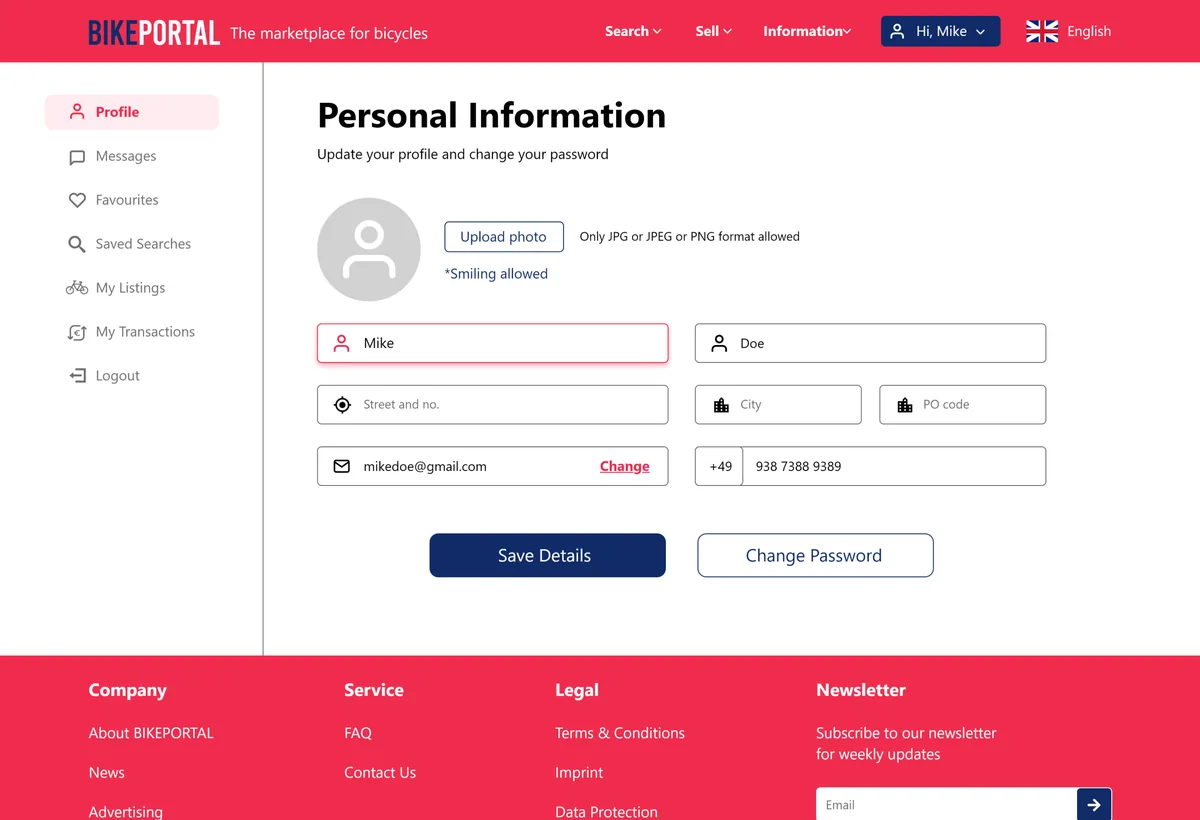
Accounts
2 typesIndividual and company accounts, each with my listings, messages, favourites, transactions and profile - and email and password management with verification. A dealer account is built to run an inventory rather than a single ad.
- Individual & company
- My listings
- Verified sign-in
How did we build it?
The build ran from one question: what is the smallest amount a buyer needs to trust a bike they cannot ride first, and how do we get a seller to supply exactly that without it feeling like a form?
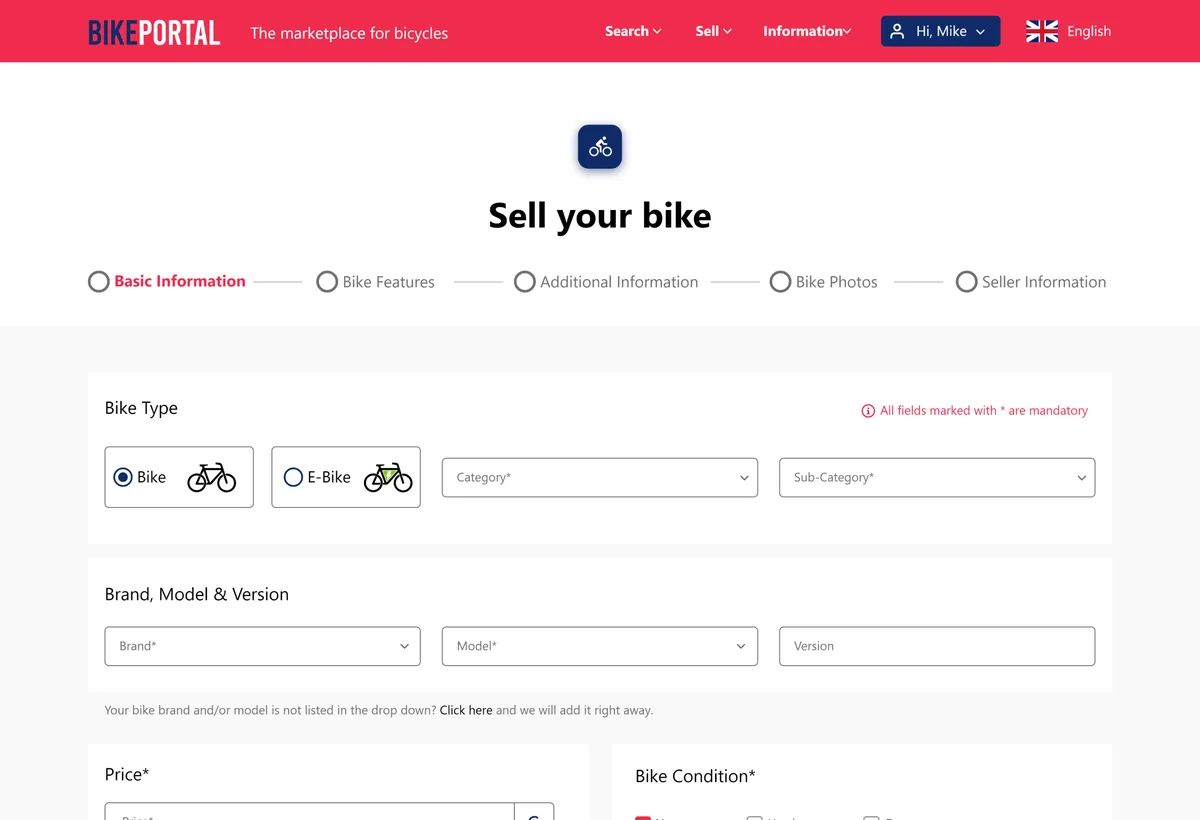
How does a bike go from a garage to a live listing?
The listing wizard walks a seller through the exact detail a buyer needs, in order, so the ad that goes live is complete rather than a caption someone will have to chase.
- 01
Type & category
The seller chooses e-bike or bike and the category and sub-category, which sets the specification fields the rest of the wizard will ask for.
Seller - 02
Bike features
Brand, model, frame size and material, groupset, gears, suspension, brakes and wheels are captured as a structured spec, not free text.
Seller - 03
Photos
Multiple images are uploaded and ordered, so the gallery on the finished ad leads with the shot the seller wants seen first.
Seller - 04
Additional & seller detail
Price, condition, location and the seller's own details are added, including the shop information for a dealer account.
Seller - 05
Preview
The seller sees the ad exactly as a buyer will, with the full spec sheet and gallery, before anything is published.
Seller - 06
Package & publish
A listing or boosting package is chosen and paid for, the ad goes live, and a confirmation shows it is now searchable.
Seller
Scroll the path sideways
Building a marketplace platform
The questions marketplace and classifieds teams ask us first, answered plainly.
Ask us yoursHow long does it take to build a marketplace like this?
A first production release at roughly this scope - a two-sided marketplace with a guided listing wizard, faceted search, accounts for individuals and dealers, messaging and paid promotion - is a several-month programme rather than a few weeks. What moves the date most is the number of distinct listing categories and how much of the payment and dealer tooling is in the first release.
How do you handle both private sellers and dealers on one platform?
Both are modelled against the same listing, so a buyer sees one consistent ad whoever posted it. The difference is in the account: a private seller gets a simple one-bike wizard, while a dealer account adds the inventory management, bulk listing and shop profile a business needs. Keeping the buyer-facing listing identical is what stops the marketplace feeling like two sites.
How does a classifieds marketplace make money?
Usually through the visibility sellers want rather than a cut of a sale that happens off-platform. Bike Portal uses listing and boosting packages: posting can be free or tiered, and a seller pays to lift an ad above the category. Transaction fees, dealer subscriptions and featured placements are other levers that can be layered on without changing the core flows.
How much does it cost to build a marketplace platform?
It depends on scope, and a feature list alone is not enough to quote from honestly. The main cost drivers are the number of listing categories and their spec fields, whether payments and dealer accounts are in the first release, and how much moderation and verification is required. Shanti Infosoft scopes it on a short call and returns a fixed quote within 48 hours.
Can the same platform work for cars, equipment or other classifieds?
Yes. The pattern - a structured, category-specific spec sheet, a guided listing wizard, faceted and radius search, buyer-seller messaging and paid promotion - carries across any high-consideration second-hand market, from cars and motorcycles to machinery and instruments. What changes is the specification per category; the marketplace architecture underneath stays the same.
Related work
Building a marketplace of your own?
Tell us how your business actually works and we will tell you honestly what it takes to build. See more of our work or what we do.
Book a 15-minute call